How to Remove Mold Spores From Home: A Clear Guide
People search how to remove mold spores from home expecting a product that wipes the air clean. The reality is more practical and more reassuring. You cannot remove every spore, because they enter constantly from outdoors, but you can drive indoor levels down to where they stay dormant and harmless. That comes from three moves: fixing moisture, cleaning active growth correctly, and filtering settled spores. This guide summarizes EPA and CDC guidance current as of 2026. For symptoms you think are mold-related, consult your physician; this article addresses the building, not your health.
Part of our Mold Removal & Remediation guide — start there for the full picture →
Is this mold, asbestos, or water damage? Get a free instant screen
Upload a clear photo of the suspect area. You'll get an instant AI screening opinion and what to do next. This is screening guidance, not a professional determination.
Screening guidance only. AI can be wrong. Confirm asbestos, mold type, or lead with lab testing or a licensed professional before acting.
How to Remove Mold Spores From Home: The Realistic Goal
The EPA and CDC agree there is no way to eliminate all mold spores indoors. They drift in through doors, windows, vents, and on clothing every day. A spore sitting on a dry surface does nothing. The danger only appears when sustained moisture lets it germinate into visible growth that releases far more spores. So removing spores really means two things: physically removing the colonies already growing, and reducing the airborne and settled load that remains.
That reframing matters because it points you at the right work. Chasing individual particles with sprays accomplishes little. Controlling water and cleaning growth accomplishes nearly everything. Homeowners can confirm a problem first using our guide on home mold testing before committing to a full cleanup.
Step One: Cut Off the Water
No moisture, no mold. Find the source before you clean anything: leaking supply lines under sinks, a roof leak staining a ceiling, condensation on poorly insulated walls, or groundwater in a basement. Front Range homes frequently hide dampness in crawlspaces and below-grade rooms where it festers unseen.
Repair the leak, then dry the area fast. The EPA advises drying wet materials within 24 to 48 hours, because that window decides whether dormant spores germinate. Cleaning a surface that stays wet only resets the clock. This step is non-negotiable in every scenario.
Step Two: Remove Active Growth
For hard, non-porous surfaces, scrub with detergent and water and dry thoroughly. The EPA notes bleach is not required for routine mold cleanup; soap and water handle most of it. If you do use a biocide, ventilate well and never combine bleach with ammonia-based cleaners.
Protect yourself, because cleaning launches spores into the air. The CDC recommends at least an N-95 respirator, gloves, and goggles without vent holes. Seal off the work area from the rest of the house with plastic sheeting so you contain the spores you stir up rather than spreading them down the hall.
Porous Materials Come Out
Moldy drywall, carpet, ceiling tile, and insulation usually cannot be cleaned reliably because growth penetrates the fibers. The practical answer is to cut out and bag the affected section. Bag it where it sits before carrying it through the house, which keeps spores from seeding new spots along the exit path.
Step Three: Reduce the Airborne and Settled Load
After the growth is gone, you can lower remaining spores. A HEPA air purifier captures particles in the spore size range and helps clear the air over hours of running. A HEPA vacuum removes settled spores from floors and surfaces instead of blowing them around the way a standard vacuum can. Wiping hard surfaces with a damp cloth lifts settled spores rather than aerosolizing them.
Filtration is a finishing touch, not a fix. Running a purifier in a still-damp room treats the symptom while new growth upstream keeps generating spores. Sequence matters: water first, growth second, filtration last.
Keep Levels Low for Good
Long-term control comes down to humidity and ventilation. The EPA recommends keeping indoor relative humidity below 60 percent, ideally 30 to 50 percent. A cheap hygrometer tells you where a room stands, and a dehumidifier holds damp spaces in range. Clean the dehumidifier reservoir often so it does not become a source.
Vent moisture at the point it is made. Run bathroom fans during and after showers, use the range hood while cooking, and make sure the dryer vents outdoors. These habits suppress spore growth more effectively than any spray, because they remove the water growth depends on. To understand the full scope of professional response, see our mold inspection and testing hub.
Methods That Waste Your Money
Several popular tactics underdeliver. Painting over mold seals active growth that later bleeds through. Ozone machines marketed as spore killers carry their own health concerns and ignore the moisture. Fogging treatments that promise to “remove spores” leave the leak untouched, so growth returns within weeks. Money spent here is money not spent on the repair that actually solves the problem.
Cleaning Specific Rooms and Surfaces
Different rooms hide spores in different places, and tailoring your approach to each one removes more of them. Bathrooms collect growth in grout, caulk, behind toilets, and along the ceiling above the shower, where steam condenses. Scrub the hard surfaces, replace moldy caulk rather than cleaning over it, and improve ventilation so the room dries between uses.
Kitchens hide spores under the sink, behind the refrigerator, and around the dishwasher, all spots where small leaks go unnoticed. Basements and crawlspaces are the hardest cases, since they trap moisture and often have porous concrete and exposed framing. Removing settled spores there means HEPA-vacuuming surfaces, addressing the humidity at its root, and discarding any soft stored goods that have absorbed growth.
Bedrooms and living areas usually carry only settled spores rather than active growth, so the work is gentler: damp-wipe hard surfaces, HEPA-vacuum carpet and upholstery, and launder fabrics. Matching the method to the room avoids both under-cleaning a problem area and over-treating a clean one.
Building Habits That Keep Spore Counts Low
Removal is a one-time event; habits are what keep the result. A few routines do most of the work. Wipe down shower walls after use and leave the bathroom fan running for fifteen minutes afterward. Check under sinks monthly for the small drips that start a colony. Keep furniture a few inches off exterior walls so air can move and condensation cannot pool.
Seasonal habits help too. In humid months, run a dehumidifier in the basement and empty it on schedule. After any spill or leak, dry the area within a day or two rather than letting it linger. These small, consistent actions cost almost nothing and prevent the moisture that lets settled spores germinate, which is the only way they ever become a real problem again.
When to Call a Professional
Tackle small areas yourself, but call a professional when growth covers a large surface, keeps returning, sits behind finished walls, or follows contaminated water or sewage. The EPA suggests professional remediation once affected material exceeds roughly ten square feet. A pro is also the right move when a household member has asthma or a weakened immune system, or when you cannot locate the moisture source on your own.
Professionals bring containment and filtration equipment that household cleanup lacks, including negative-air machines that prevent spores from escaping the work zone. For a large job, that containment is what keeps removal from turning into redistribution. Confirm the contractor’s credentials and ask how they will isolate the area before they disturb any material.
Protective Gear and Safe Disposal
Removing spores safely starts with protecting yourself, because the act of cleaning launches them into the air. The CDC recommends at least an N-95 respirator, gloves, and goggles without ventilation holes for any mold work. For larger jobs, add disposable coveralls you can bag afterward, and tie back the work area with plastic sheeting so disturbed spores stay contained.
Disposal matters as much as removal. Bag moldy materials at the spot where you remove them, seal the bag, and carry it directly outside rather than through living spaces. Double-bagging adds insurance against tears. Wipe down or discard the tools and rags used, and launder work clothes separately in hot water. People with asthma, allergies, or weakened immune systems should leave the work to someone else, since the temporary spike in airborne spores during removal can trigger symptoms.
Verifying the Spores Are Gone
After removal, confirm the work actually lowered the load rather than assuming it did. The first check is sensory: the musty odor should be gone and no new growth should appear over the following weeks. Returning odor or fresh spots means the moisture source was not fully fixed, which is the usual culprit behind a failed removal.
For a more objective check, a post-remediation air sample compared against an outdoor control can confirm that indoor spore levels have returned to a normal range. This is standard practice after professional remediation and useful for a significant DIY job, especially before a sensitive occupant returns to the space. The goal is not zero spores, which is impossible, but indoor levels that match or fall below the outdoor baseline, indicating the active source is gone and only ordinary background spores remain.
Equipment That Makes Removal More Effective
A handful of tools meaningfully improve a spore-removal effort beyond basic scrubbing. A HEPA vacuum is the most valuable, since it captures fine spores from floors, surfaces, and upholstery instead of recirculating them the way a standard vacuum can. A HEPA air purifier sized to the room steadily lowers the airborne load during and after cleanup, capturing spores stirred up by the work.
A dehumidifier and a hygrometer address the moisture side, holding humidity in the range that keeps remaining spores dormant and confirming you have actually reached it. Plastic sheeting and tape seal off the work area so disturbed spores stay contained, and a moisture meter verifies that a cleaned area has truly dried. None of these is expensive, and together they turn a rough cleanup into a controlled one, capturing more spores and preventing the conditions that would let the survivors regrow.
The Limits of Spore Removal
It helps to set realistic expectations about what spore removal can achieve. Because spores enter constantly from outdoors and exist in essentially all air, no home will ever be spore-free, and chasing that goal wastes effort and money. The honest target is to remove active growth, lower the airborne and settled load, and keep moisture low enough that the remaining background spores stay dormant.
Measured against that target, success looks like a home with no visible growth, no musty odor, and indoor spore levels at or below the outdoor baseline. Products that promise to eliminate every spore are selling a result that physics does not allow. Understanding this keeps homeowners from overspending on gimmicks and focuses the work where it actually pays off: removing colonies, filtering the air, and controlling the water that lets dormant spores become a problem in the first place.
References
- Mold Cleanup in Your Home — U.S. Environmental Protection Agency
- About Mold and Your Health — Centers for Disease Control and Prevention
- A Brief Guide to Mold, Moisture and Your Home — U.S. Environmental Protection Agency
Frequently asked questions
Can you remove all mold spores from a home?
No. Spores enter constantly from outdoors, so total removal is impossible. The realistic goal is to remove active growth, lower the airborne and settled spore load with HEPA filtration, and keep humidity low so remaining spores stay dormant.
What kills mold spores on surfaces?
For hard, non-porous surfaces, detergent and water with thorough drying handle most mold. The EPA says bleach is not required. Porous materials like drywall and carpet usually need to be cut out and discarded because cleaning cannot reach the embedded growth.
Does a HEPA air purifier remove mold spores?
A HEPA purifier captures many airborne spores but cannot remove them all or stop new ones from forming. It works only as a finishing step after you fix the moisture and clean visible growth.
How do I stop mold spores from coming back?
Keep indoor humidity below 60 percent, fix leaks promptly, dry wet materials within 24 to 48 hours, and ventilate bathrooms and kitchens. Removing the water source is what prevents dormant spores from regrowing.
If spores keep returning no matter how thoroughly you clean, Front Range homeowners can reach out to a qualified local inspector through our contact page to find the hidden moisture driving it.
Mold removal & cleanup picks
For a small, contained patch (under ~10 sq ft) these EPA-friendly removers handle surface mold. Larger or recurring growth warrants a professional assessment first.
| Product | Why | Buy |
|---|---|---|
 RMR-86 Instant Mold Stain Remover | Fast-acting on stains; ventilate and wear PPE. | Amazon — $29.99 |
 Concrobium Mold Control | No-bleach formula that also helps prevent regrowth. | Amazon — $11.26 |
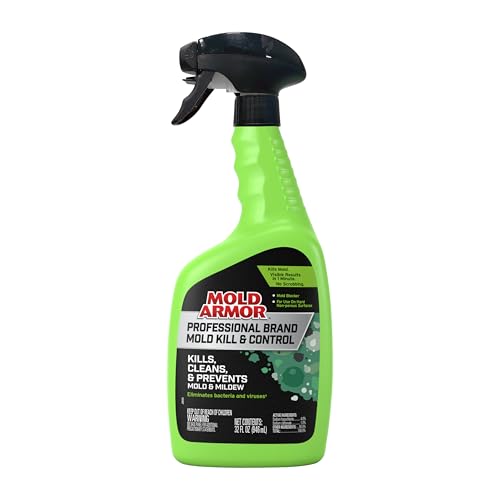 Mold Armor Mold & Mildew Remover | Widely stocked bathroom/surface remover. | Amazon — $22.98 |