Bathroom Black Mold vs Mildew: How to Tell and Treat
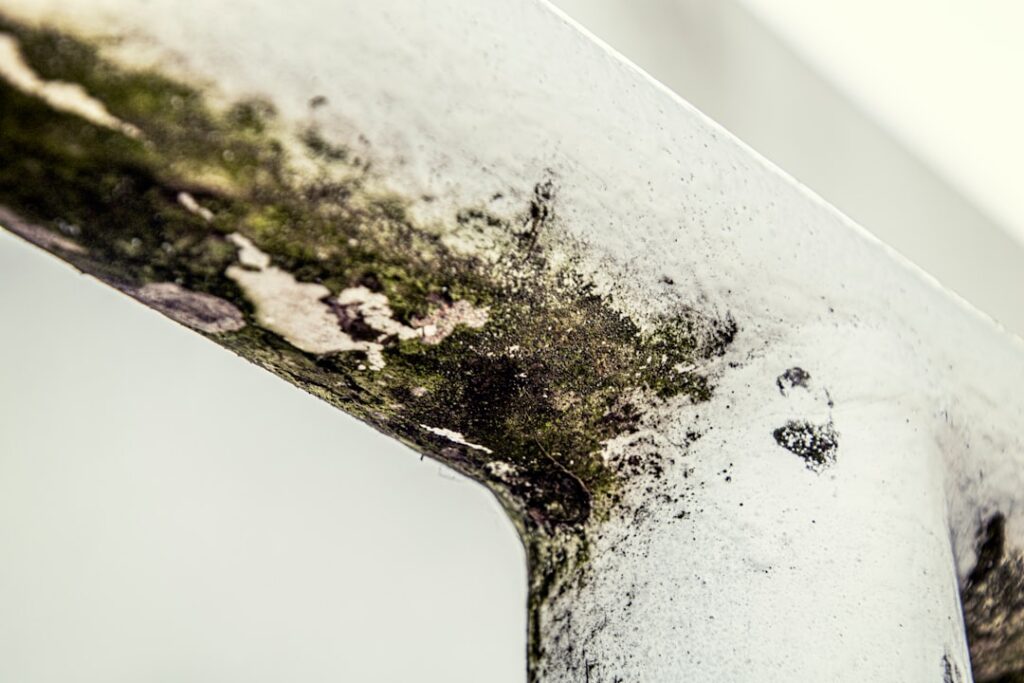
Few household problems get mislabeled as often as the dark spots in a bathroom. People use “black mold” and “mildew” interchangeably, but they describe different things, and confusing them leads to either overreaction or under-cleaning. The bathroom black mold vs mildew question really comes down to three issues: what you are actually looking at, how serious it is, and how to clean it without making the problem worse. This guide summarizes EPA and CDC guidance current as of 2026 to sort it out — consult your physician for any health symptoms and a certified professional for testing or large cleanups.
Is this mold, asbestos, or water damage? Get a free instant screen
Upload a clear photo of the suspect area. You'll get an instant AI screening opinion and what to do next. This is screening guidance, not a professional determination.
Screening guidance only. AI can be wrong. Confirm asbestos, mold type, or lead with lab testing or a licensed professional before acting.
Bathroom black mold vs mildew: the short answer
Mildew is a type of mold. The terms are not opposites — mildew is the common name for the flat, powdery surface growth that mold produces in its early stage, typically gray, white, or light brown, sitting right on top of a surface like grout or caulk. What people call “black mold” is mold that has grown thicker, darker, and often deeper, and it raises more concern because dark, slimy growth on chronically wet material can include species associated with allergic reactions.
The practical distinction: mildew is usually a thin, cleanable film on the surface, while a true mold colony has often penetrated porous material and signals a longer-standing moisture problem. The EPA does not draw a sharp scientific line between “mildew” and “mold” for cleanup purposes — both are mold, both need the moisture fixed — but the everyday usage tells you something about severity, which is why the comparison is worth making before you decide whether to grab a sponge or call a professional.
Why the labels get confused
The mildew-versus-mold confusion is partly linguistic. “Mildew” entered common use for the flat, powdery growth people scrub off bathroom surfaces, while “black mold” became shorthand for anything dark and alarming, fueled by years of headlines about “toxic” mold. Scientifically there is no separate organism called mildew in this context — it is mold in an early or surface-bound form. The everyday vocabulary persists because it captures something real about appearance and severity, even if it is not a biological distinction.
That gap between common usage and science matters for two reasons. It means a homeowner cannot rely on the label to judge risk, and it means the cleanup advice is the same whether you call it mildew or mold: fix the moisture, remove the growth, and keep the surface dry. Holding that in mind keeps the rest of this comparison practical rather than getting lost in terminology.
How to tell them apart in your bathroom
You can usually narrow it down by appearance and texture before reaching for any testing.
What mildew looks like
Mildew is flat and stays on the surface. It is typically powdery or fluffy, gray or white at first, sometimes yellowing or browning with age. In a bathroom it shows up on tile grout lines, along the silicone bead around the tub, on painted ceilings above the shower, and on window sills. Wiped with a damp cloth, mildew often lifts away because it has not bonded into the material. It tends to appear wherever condensation lingers and airflow is poor, which is why it favors the upper corners of a shower and the ceiling directly above it.
What bathroom black mold looks like
Black mold reads as darker, denser, and sometimes slimy or fuzzy rather than powdery. The color runs from dark green to near-black. It frequently grows where water sits longest — the lower corners of a shower, behind a leaking tub surround, into the paper face of drywall, or under flooring near a wax-ring leak. A key tell is that it resists wiping; the staining stays even after the surface film comes off, which means growth has worked into the grout, caulk, or board beneath. Our guide on black mold in the shower walks through the specific spots where it takes hold and why those locations stay wet.
A simple at-home check
Dab a small amount of household bleach diluted in water onto the spot with a cotton swab and wait a minute or two. If the dark area lightens quickly, it leans toward mildew or surface staining; if the spot stays dark and returns, it points to a deeper mold colony. This is a rough indicator, not a diagnosis. The EPA emphasizes that visual identification cannot confirm a species, and that distinction rarely changes the cleanup approach anyway — but the test does help you gauge how deep the problem runs.
Which is more serious for your health?
Both can affect health, and individual sensitivity varies more than the label does. The CDC notes that exposure to any indoor mold can cause symptoms in sensitive people — nasal congestion, throat irritation, coughing, eye irritation, and skin reactions — with stronger effects in those who have allergies, asthma, or weakened immune systems. Surface mildew on a well-ventilated tile wall presents a low exposure risk for most people. A thick, established colony spreading behind a wall or across a ceiling produces a heavier spore load and is the bigger concern.
The widely repeated idea that “toxic black mold” causes severe illness through mycotoxins is not well supported for typical residential exposure, according to the CDC and EPA, which both stress that the response should focus on removal and moisture control rather than species panic. That said, anyone with persistent symptoms that improve when they leave the home should talk with a physician. The site does not offer medical advice; these are general public-health points, and a doctor should evaluate health concerns directly.
What causes mold and mildew in bathrooms?
The cause is almost always the same: moisture plus poor ventilation. Bathrooms generate humidity faster than any other room, and without an exhaust fan that actually vents outside, that moisture condenses on cool surfaces and feeds growth within days. Common contributors include:
- No or undersized exhaust fan, or one that vents into an attic instead of outdoors.
- Failed grout or caulk that lets water wick into the wall behind tile.
- Slow plumbing leaks at the tub drain, supply lines, or toilet base.
- Cool exterior walls in older Front Range homes where uninsulated bathroom walls invite condensation in winter.
- Wet towels and bath mats left to sit, raising local humidity for hours.
Because the trigger is moisture, lasting prevention comes from drying the room: run the fan during and 20–30 minutes after showers, squeegee glass and tile, repair leaks promptly, and keep indoor humidity below the EPA’s recommended 60% (ideally 30–50%). A bathroom that dries out between uses rarely grows much of anything, which is why ventilation upgrades pay off more than any cleaner.
How to clean mildew and small mold areas safely
For surface mildew and mold patches under about 10 square feet, the EPA says most homeowners can clean it themselves. The method is straightforward, but the safety steps are not optional in a confined, poorly ventilated room.
- Protect yourself: wear an N-95 respirator, gloves, and eye protection. Open a window and run the exhaust fan.
- Clean non-porous surfaces — tile, glass, fiberglass — with detergent and water, scrubbing the growth away rather than just wiping the color off.
- Dry completely afterward. Residual moisture restarts the cycle within days.
- Replace porous materials that stay stained, such as silicone caulk or sections of drywall, since cleaning rarely reaches mold that has penetrated them.
On bleach: the EPA’s current position is that scrubbing with detergent and water is generally sufficient for hard surfaces, and that bleach is not required to kill mold. Bleach can lighten staining, but it does not remove growth from porous material and produces fumes that are hazardous in a closed bathroom. If you choose to use it, never mix it with ammonia or other cleaners, because the combination creates toxic gas. Our breakdown of using bleach on mold covers where it helps and where it falls short.
Re-caulking after cleanup
When mildew or mold has darkened the silicone bead around a tub or shower, cleaning rarely restores it because the growth is embedded in the caulk. The durable fix is to cut out the old caulk entirely, clean and dry the joint, and apply fresh mold-resistant silicone. Skipping this step is why so many bathrooms regrow a black line along the same seam within weeks — the spores are still living inside the old material. Fresh caulk on a dry, ventilated joint can stay clean for years.
When a bathroom mold problem needs a professional
Cleaning the surface fails when the real problem is behind it. Signs that the issue has outgrown a DIY scrub include growth that keeps returning in the same spot, a persistent musty smell with no visible source, staining that bleeds through fresh paint or caulk, soft or discolored drywall, or any indication that the colony extends behind the wall or under the floor. The EPA recommends professional help for mold areas larger than roughly 10 square feet, for contamination inside HVAC systems, and for any growth tied to sewage or flooding.
A professional assessment matters most when you cannot see the full extent. An inspector using a moisture meter and sometimes an infrared camera can find wet building materials behind tile or drywall without demolition, which is the difference between fixing the cause and repeatedly cleaning the symptom. Our parent guide to mold inspection and testing explains what that assessment includes, and homeowners deciding whom to call can compare options in our overview of professional mold remediation services.
Cost expectations
Surface mildew costs little more than cleaning supplies and an afternoon. A professional inspection in the Denver metro typically runs in the low-to-mid hundreds of dollars, while remediation of a localized bathroom colony — re-caulking, replacing a section of drywall, treating framing — generally falls in the high-hundreds to low-thousands depending on access and how far moisture has spread. These are general industry ranges, not quotes; the actual figure depends on the source of water and the materials involved. Catching mildew early and ventilating well is the cheapest mold strategy there is, since prevention costs a few dollars while remediation costs hundreds or thousands.
Preventing recurrence after cleanup
The cleanup is only half the job. To keep bathroom mold and mildew from returning: run an exhaust fan rated for the room’s size that vents outdoors, leave it on after showers, fix grout and caulk before they fail, address any plumbing drip immediately, and consider a small dehumidifier in basement bathrooms that stay damp. Glass shower doors and tile benefit from a quick squeegee, and spreading out wet towels rather than bunching them speeds drying. In older Colorado homes, adding insulation to cold exterior bathroom walls can stop the wintertime condensation that feeds growth. These habits cost almost nothing and do more than any cleaner to keep the problem from coming back. The recurring lesson across both mildew and black mold is that the bathroom is a moisture machine, and the only lasting defense is to make sure it dries out fully between uses — a goal that ventilation, sealed seams, and quick leak repair accomplish far more reliably than any product promising to kill mold on contact.
Choosing and sizing an exhaust fan
Because ventilation is the single biggest lever against bathroom mold, getting the fan right is worth a moment. Exhaust fans are rated in cubic feet per minute (CFM), and a common rule of thumb sizes the fan to the bathroom’s square footage — roughly one CFM per square foot for a standard-height room, with larger or higher-ceiling bathrooms needing more. A fan that is too weak never clears the moisture a hot shower produces, so the room stays damp long after you leave. Just as important, the fan must vent to the outdoors through a duct that terminates outside; a fan that dumps into the attic, a common shortcut in older homes, simply relocates the moisture problem and can seed attic mold. A timer switch that runs the fan for 20 to 30 minutes after a shower removes the human-error factor of forgetting to leave it on, and it is an inexpensive upgrade for a chronically damp bathroom.
The role of grout, caulk, and sealing
Many recurring bathroom mold problems trace back to the seams rather than the surfaces. Grout is porous and absorbs water over time; once it has soaked up moisture, mold can grow within it and resist surface cleaning. Sealing grout lines periodically with a penetrating grout sealer slows that absorption and makes the surface far easier to keep clean. Caulk is the other weak point — the flexible silicone bead around tubs, showers, and sinks is meant to keep water out of the wall cavity, and when it cracks, peels, or grows mold inside it, water gets behind the tile where you cannot clean it.
The durable fix for moldy caulk is replacement, not cleaning: cut out the old bead entirely, clean and fully dry the joint, and apply fresh mold-resistant silicone. Painting over mildew on a bathroom ceiling has the same trap — paint hides the stain briefly but the growth bleeds back through unless the surface is cleaned, dried, and the ventilation corrected first. Treating the seams and the airflow together, rather than scrubbing surfaces in isolation, is what finally breaks the cycle of regrowth that sends so many homeowners searching for answers in the first place.
References
- Mold Cleanup in Your Home — U.S. Environmental Protection Agency
- A Brief Guide to Mold, Moisture and Your Home — U.S. Environmental Protection Agency
- About Mold and Your Health — Centers for Disease Control and Prevention
- Mold and Dampness in the Home — American Lung Association
If bathroom mold keeps returning or you suspect water behind the wall, you can get connected with a vetted Front Range inspector through our contact page to find the moisture source before it spreads.