Bathroom Black Mold: Causes, Cleanup, and Prevention
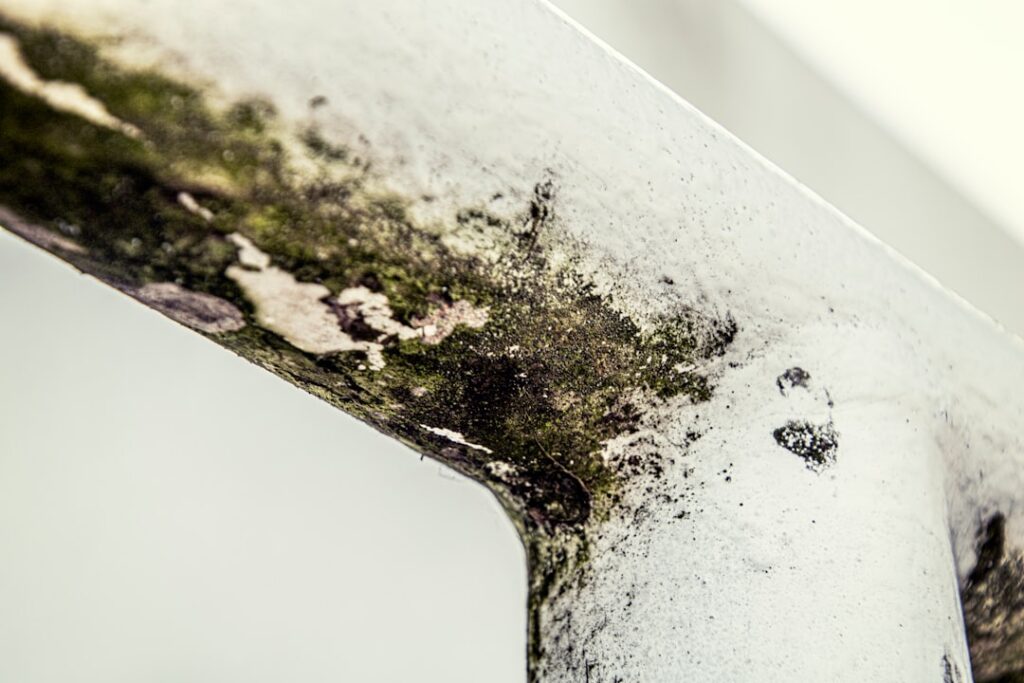
Bathrooms grow black mold more readily than any other room in a house, and for a simple reason: they combine constant moisture, warmth, and surfaces coated in a thin film of soap and skin oils that mold feeds on. Grout lines darken, caulk turns spotty, and ceilings speckle, often despite regular cleaning. Most bathroom black mold is a manageable, moisture-driven nuisance rather than a structural crisis, but it should be cleaned promptly and, more importantly, prevented at the source. This guide summarizes EPA and CDC guidance current as of 2026 and is educational only — consult a certified professional for testing and your physician for any health symptoms.
Is this mold, asbestos, or water damage? Get a free instant screen
Upload a clear photo of the suspect area. You'll get an instant AI screening opinion and what to do next. This is screening guidance, not a professional determination.
Screening guidance only. AI can be wrong. Confirm asbestos, mold type, or lead with lab testing or a licensed professional before acting.
What causes black mold in a bathroom?
Black mold in a bathroom is a moisture story. Every shower releases steam that condenses on cool surfaces — tile, grout, caulk, the ceiling — and if that moisture lingers, airborne spores germinate within a day or two. The bathroom’s warmth speeds growth, and the residue of soap, shampoo, and skin oils gives the mold an organic meal even on hard surfaces.
Specific conditions tip a bathroom into chronic growth. A missing, undersized, or never-used exhaust fan is the leading driver, since it lets humidity sit. Porous grout and aging caulk absorb water and hold it against the surface, which is why those seams blacken first. Standing water in corners, around the tub edge, and on shower floors creates a permanent damp zone. And poor air circulation in a closed, windowless bathroom keeps relative humidity high long after the shower ends.
The “black” color provokes worry about toxic species, but the CDC notes color does not reliably indicate the type of mold or its hazard. Common bathroom molds include ordinary species like Cladosporium and Aspergillus. The cleanup response is the same regardless, so identification matters less than action. The grout-specific case is detailed in black mold in shower grout.
Is bathroom black mold a health concern?
For most healthy people, a small amount of bathroom black mold is a nuisance, but exposure is not harmless. The CDC associates indoor mold with nasal stuffiness, throat and eye irritation, coughing, and worsened symptoms for those with asthma or mold allergies. Larger or long-standing growth produces more spores and more of the musty mVOCs that irritate airways.
Certain people should be more cautious: those with asthma, mold allergies, weakened immune systems, or chronic lung conditions, plus infants, older adults, and pregnant individuals. For them, someone else should do the cleanup, and they should stay out of the room while it is disturbed. If respiratory or allergy symptoms appear in the bathroom or ease when leaving home, that pattern deserves a physician’s attention. The fuller risk discussion lives in the guide on whether bathroom mold is dangerous, and the broader health context in the mold inspection and testing hub.
How to clean bathroom black mold safely
For a small surface patch, cleanup is manageable with the right precautions. Wear an N-95 respirator, gloves, and unvented goggles, run the exhaust fan, open a window, and keep at-risk household members out of the room.
Mist the moldy surface first so spores stay grounded rather than becoming airborne. On non-porous surfaces — glazed tile, fiberglass tubs, glass doors — detergent and water or a diluted bleach solution (about one cup per gallon) removes both the mold and the stain; a 3 percent hydrogen peroxide spray is a fume-free alternative. The product-to-surface matching is covered in choosing a spray to kill mold. Scrub with a nylon brush, wipe, and dry the area completely. The one rule never to break: do not mix bleach with ammonia or vinegar, because the fumes are dangerous in a closed bathroom. Porous grout and caulk that stay dark after cleaning are best cut out and replaced — the spores live inside the seam where surface cleaners cannot reach. If growth exceeds roughly 10 square feet or the drywall behind the tile is soft, the job moves beyond DIY.
When bathroom mold signals a bigger problem
Surface mildew on grout and caulk is the routine kind. Several signs indicate something deeper. Mold that returns within weeks of thorough cleaning means the moisture source persists. Growth that bleeds back through fresh paint or new caulk points to dampness in the material itself. Soft or crumbling drywall, warped baseboards, and mold spreading behind the vanity or under flooring indicate water intrusion rather than surface condensation.
A diffuse haze across the ceiling usually reflects a ventilation deficit, while a defined stain or ring — especially under a second-floor bathroom — can mean a plumbing or roof leak above. A persistent musty smell with no visible source suggests hidden growth inside a wall. In these cases surface cleaning is temporary, and the moisture source has to be found and corrected, sometimes with the affected materials removed. The companion guide on the black mold bathroom ceiling covers the steam-versus-leak distinction in detail.
Where black mold shows up in a bathroom first
Black mold colonizes a bathroom in a predictable order, and knowing the sequence lets homeowners catch it early. The grout lines and silicone caulk are usually first — they are porous or hold a surface film, they sit in the wettest zone around the tub and shower, and water pools in their seams. A thin dark line creeping along the caulk where the tub meets the wall is the classic opening move.
The ceiling is next, especially the section directly over the shower and any corner near an exterior wall, because rising steam condenses there and lingers. Window frames and sills in bathrooms collect condensation and grow mold along the seal. Behind and beneath fixtures — under the sink, around the toilet base, behind a vanity pushed against an exterior wall — mold hides where airflow is poor and small leaks go unnoticed. The shower track, door seals, and the underside of bottles and mats left on the shower floor host growth too. Mapping these typical sites turns a vague worry into a quick weekly scan: check the caulk, glance at the ceiling corners, look under the sink. Spotting black mold in its first location, the grout or caulk, while it is still a thin line is far easier to address than waiting until it has spread across the ceiling or into the drywall behind the tile.
Black mold versus mildew and soap scum
Not every dark mark in a bathroom is black mold, and misidentifying it leads to either overreaction or neglect. Mildew is an early-stage, surface-level mold growth — typically gray, white, or light brown, powdery, and flat. It wipes away relatively easily and is the most common bathroom growth. What people call “black mold” is more established growth that appears darker, can look slimy or fuzzy, and roots more stubbornly into porous seams.
Soap scum and hard-water mineral deposits are frequently mistaken for mold. Soap scum is a dull, grayish-white film that feels waxy and builds up on tile and glass; mineral scale is chalky and concentrates around fixtures and where water evaporates. Neither is alive, and both scrub off with the right cleaner without the moisture concern mold carries. A simple distinction: mold tends to grow in patterns following moisture and seams, has depth and sometimes texture, and returns after cleaning if the dampness persists, whereas scum and scale are uniform films that do not regrow once removed and the surface stays dry. The color alone is not decisive, since the CDC notes color does not indicate species or hazard. When the dark area is in a chronically wet seam, returns after cleaning, or carries a musty smell, treat it as mold and address both the growth and the moisture. When it is a uniform film on a surface that stays dry, it is more likely scum or scale and is purely cosmetic.
Preventing bathroom black mold from returning
Ventilation is the foundation. A properly sized exhaust fan — roughly one CFM per square foot of floor, with a minimum around 50 CFM for a typical bath — should run during the shower and for 20 to 30 minutes afterward, and it must vent outdoors, not into the attic. A timer switch removes the human-memory problem. Confirm the fan actually pulls air by holding a tissue to the grille.
Manage the moisture that remains. Squeegee shower walls and the door after use, wipe down wet surfaces, and keep indoor relative humidity below 60 percent, ideally 30 to 50 percent. Re-caulk gaps where water can seep behind tile, replace grout that has gone permanently dark, and fix dripping faucets and running toilets promptly. In Front Range homes, the dry outdoor climate keeps general humidity low, but a windowless bathroom without a working fan, or a home running an evaporative cooler in summer, still creates the damp conditions black mold needs. Control the moisture and the surfaces stay clean; ignore it and even daily scrubbing loses to the conditions.
Tackling black mold in grout and caulk
Because grout and caulk are where bathroom black mold usually starts and most stubbornly persists, they deserve a closer look. Both are porous or film-holding, so a surface spray often lightens them without killing the rooted growth, which then returns. The treatment that works depends on how established the growth is.
For early surface mold on grout, scrubbing with a stiff nylon brush and a cleaner — detergent, diluted bleach on intact grout, or hydrogen peroxide — removes most of it. A paste left to dwell on the line before scrubbing improves results. But grout that stays dark after cleaning has growth embedded in its pores, and the durable fix is to remove the top layer of grout from the affected joints and re-grout, sealing the new grout afterward to resist future moisture. Caulk is even less forgiving: silicone and acrylic caulk hold a surface film mold colonizes, and once it has gone black in the seams, cleaning rarely restores it. The reliable solution is to cut out the old caulk entirely, clean and dry the gap, and apply fresh mold-resistant caulk. Replacing blackened caulk takes an hour and a tube of sealant, and it eliminates a source that would otherwise reseed the surrounding area indefinitely. Treating grout and caulk as replaceable rather than endlessly cleanable is the shift that finally clears recurring bathroom black mold at its most common starting point.
When bathroom black mold needs a professional
Most bathroom black mold is within a homeowner’s reach, but a clear set of conditions should redirect the job to a professional. Growth exceeding the EPA’s roughly 10-square-foot guideline is the first trigger. So is mold that keeps returning despite thorough cleaning and a working, properly vented fan, which signals a moisture source the homeowner has not identified.
Physical changes to the structure raise the bar further: soft or crumbling drywall behind the tile, warped baseboards, or staining spreading behind the vanity or under the floor indicate water intrusion rather than surface condensation, and the affected materials likely need removal under containment. A defined stain or ring on the ceiling — especially beneath a second-floor bathroom or the roof — suggests a plumbing or roof leak above, where the source must be found before any cleaning will hold. A persistent musty smell with no visible patch points to hidden growth inside a wall or ceiling cavity. And the health line applies as everywhere: occupants with asthma, allergies, or weakened immune systems should not be doing the work. A professional brings containment, HEPA filtration, and the moisture diagnostics to trace a recurring problem to its source. For the ordinary grout-and-caulk patch, a homeowner is well equipped; for any of these escalating signs, an assessment costs far less than repeatedly cleaning a bathroom whose real problem is behind the surface.
References
- About Mold and Your Home — Centers for Disease Control and Prevention
- Mold Cleanup in Your Home — U.S. Environmental Protection Agency
- A Brief Guide to Mold, Moisture and Your Home — U.S. Environmental Protection Agency
If bathroom black mold keeps returning or you suspect a leak behind the tile in your Front Range home, reach out through our contact page to connect with a vetted local inspector.