Spray to Kill Mold: What Actually Works at Home

A bottle of spray promising to wipe out mold is one of the first things homeowners reach for when they spot a fuzzy patch in a bathroom corner or along a window sill. Some sprays genuinely kill surface mold and lift the stain; others only bleach the color while leaving living spores behind. Knowing which product matches which surface, and recognizing the point where a spray stops being enough, saves both money and a second cleanup. This guide summarizes EPA and CDC guidance current as of 2026 and is educational only — consult a certified professional for sizing remediation and your physician for any health symptoms.
Part of our Mold Removal & Remediation guide — start there for the full picture →
Is this mold, asbestos, or water damage? Get a free instant screen
Upload a clear photo of the suspect area. You'll get an instant AI screening opinion and what to do next. This is screening guidance, not a professional determination.
Screening guidance only. AI can be wrong. Confirm asbestos, mold type, or lead with lab testing or a licensed professional before acting.
Does a spray to kill mold actually work?
Yes, on small, non-porous surfaces a good spray to kill mold can do the job. The EPA defines a manageable area as roughly 10 square feet or less of contiguous growth — about the size of a bath towel. Within that limit, a properly applied biocide or detergent spray kills the visible colony and removes the staining when paired with scrubbing.
The catch is what the spray cannot reach. Mold sends thread-like hyphae into porous materials such as drywall paper, grout, and bare wood. A spray that sits on the surface for a minute kills what it contacts, but roots embedded a few millimeters deep often survive. That is why a sprayed spot can look clean for two weeks and then return. The product is rarely the problem; the moisture feeding the colony and the porosity of the material are.
Three outcomes are possible after spraying: the mold dies and the surface stays clean (non-porous material, moisture fixed), the stain fades but growth returns (porous material or persistent moisture), or nothing changes (the spray was wrong for the surface, or the patch is larger than it appeared). Matching expectations to the material prevents the frustrating cycle of re-spraying the same wall.
Which sprays kill mold, and how they differ
Several chemistries are sold as mold sprays, and they behave differently depending on whether a surface is porous or sealed.
Chlorine bleach solutions
Diluted household bleach (roughly one cup per gallon of water) kills surface mold on hard, non-porous materials such as glazed tile, fiberglass tubs, and sealed countertops. Bleach excels at removing the dark stain quickly. Its weakness is porous material: the water carrier soaks in and can actually feed regrowth while the chlorine evaporates off the surface. The CDC notes bleach is not always necessary for routine mold cleanup and that soap and water often suffice.
Hydrogen peroxide
A 3 percent hydrogen peroxide spray penetrates slightly better than bleach and is less harsh on grout and fabric. Apply, let it foam for about ten minutes, then scrub. It is a reasonable middle-ground product for tile, grout lines, and painted walls where bleach fumes are a concern.
Distilled white vinegar
Undiluted white vinegar is mildly acidic and reportedly kills a majority of common household mold species on contact. It works on more porous surfaces than bleach because it soaks in rather than sitting on top. The trade-off is the lingering odor and the fact that it does not remove the dark stain — you may kill the mold yet still see a gray shadow.
EPA-registered commercial mold sprays
Products labeled with an EPA registration number have been reviewed for the antimicrobial claims on the label. Borate-based and quaternary-ammonium sprays fall here. They tend to leave a residual film that discourages regrowth, which is useful in chronically damp spots once the underlying moisture is addressed. Follow the dwell time printed on the label exactly; cutting it short is the most common reason these products underperform.
How to spray a small mold patch safely
Personal protection comes first. The EPA recommends an N-95 respirator, rubber gloves, and eye protection without vents for any mold cleanup, because scrubbing aerosolizes spores. Open a window or run an exhaust fan, and keep anyone with asthma or a compromised immune system out of the room.
Work in order: mist the surface to wet the spores so they do not become airborne, apply the chosen spray, and let it sit for the full dwell time. Scrub with a stiff nylon brush, wipe with disposable rags, and dry the area completely. Bag the rags and brush rather than rinsing them in a sink that drains nearby. A common mistake is wiping while the surface is still dry — dry brushing launches spores into the air you are breathing. For a deeper walkthrough of removing growth from wallboard specifically, the guide on removing mold from drywall covers when paper-faced board has to come out.
Never mix bleach with ammonia or with vinegar. The combination releases toxic chloramine or chlorine gas, and the resulting fumes are genuinely dangerous in a closed bathroom. Use one product, ventilate, and rinse the brush before switching chemistries.
When a spray is not enough
Several signs mean the problem has outgrown a spray bottle. Mold covering more than about 10 square feet, growth that returns within weeks of cleaning, a persistent musty odor with no visible source, or staining that bleeds through fresh paint all point to moisture inside the wall cavity or to material that has to be removed rather than wiped.
Soft or crumbling drywall, warped baseboards, and mold spreading behind cabinets indicate water intrusion that a topical spray cannot fix. In those cases the material is removed under containment, the cavity is dried, and the moisture source — a leaking supply line, failed flashing, a humid crawlspace — is corrected. Spraying a wall whose back side is wet simply resets the clock. Homeowners weighing whether a stain is mold at all may find the comparison in black mold versus mildew on wood helpful before buying any product.
Front Range homes add their own wrinkle. The dry Colorado climate keeps general humidity low, but finished basements, bathrooms without working fans, and homes with evaporative coolers create damp pockets where mold thrives despite the arid air outside. A spray handles the visible bloom; the long-term fix is controlling that localized moisture.
Surface-by-surface: matching the spray to the material
The same bottle behaves differently depending on what it lands on, so a quick mental map of common surfaces saves wasted effort. The pattern is consistent: sealed, non-porous materials respond well to almost any spray, while porous materials defeat surface treatments no matter how strong the chemistry.
Glazed tile and fiberglass tubs
These are the easiest wins. The glaze and gel-coat do not absorb liquid, so the spray stays on the surface, kills the colony, and lifts the stain. Diluted bleach, peroxide, or an EPA-registered cleaner all work. Scrub the grout lines separately, since the grout between the tiles is porous even when the tile itself is not.
Grout and caulk
Grout is cement-based and absorbent; caulk holds a surface film that mold colonizes. A spray may lighten both, but mold rooted inside old grout or behind separating caulk usually returns. The durable fix is mechanical: cut out blackened caulk and re-apply, or for grout that stays dark, remove and re-grout the affected joints. Spraying alone treats the symptom.
Painted drywall and bare wood
Intact, glossy paint behaves somewhat like a sealed surface and can be wiped clean if caught early. Once mold penetrates flat paint into the paper facing, or grows on bare wood grain, the roots sit below where a spray reaches. Wood can sometimes be salvaged by scrubbing, drying, and sanding; paper-faced drywall that has absorbed mold is usually cut out and replaced.
Concrete and masonry
Basement and garage concrete is porous and alkaline. Mold on concrete often responds to scrubbing with detergent and a stiff brush, and the stain can be stubborn because it sits in the surface pores. The bigger issue on concrete is almost always the moisture wicking up through the slab, which a spray does nothing to address.
Common mistakes that make a spray fail
Most spray failures trace to a handful of avoidable errors rather than a defective product. The first is dry brushing before wetting — scrubbing a dry colony launches spores into the air and onto adjacent surfaces, seeding new growth elsewhere while you breathe the rest in. Always mist first.
The second is cutting the dwell time short. Biocidal sprays need contact time printed on the label, often several minutes, to actually kill the colony rather than just wet it. Wiping immediately removes the visible mold but leaves living spores behind. The third is over-wetting porous materials, which feeds the very problem you are fighting; on drywall and wood, damp is the enemy. The fourth is spraying over a moisture source that was never fixed — a sweating pipe, a failed seal, a humid room — which guarantees regrowth regardless of the product. And the fifth, the dangerous one, is mixing chemistries. Combining bleach with ammonia-based cleaners or with vinegar releases toxic gas. These mistakes, not the spray itself, explain most of the cases where homeowners conclude “nothing works.” Used on the right surface, with the right dwell time, after the moisture is addressed, a spray performs as intended.
Preventing regrowth after you spray
Killing the colony is only half the work. Mold needs moisture, and the surface that grew it will grow it again unless the dampness is gone. Run the bathroom exhaust fan during and for 20 to 30 minutes after every shower. Keep indoor relative humidity below 60 percent, ideally between 30 and 50 percent, which the EPA cites as the range that discourages mold. A small hygrometer makes this measurable rather than a guess.
Fix the obvious leaks — a dripping trap, a sweating cold-water pipe, a window that collects condensation. Caulk and grout that have gone black should be cut out and replaced rather than repeatedly sprayed, because the spores live inside the porous seams. For chronically damp areas, an EPA-registered spray with a residual film buys time, but it is not a substitute for ventilation. To understand the broader picture of inspection, testing, and when to bring in help, the mold inspection and testing hub ties these steps together.
DIY sprays versus professional treatment
A spray bottle and a professional remediation crew solve different sizes of problem, and conflating them leads to either wasted money or an under-treated home. A store-bought spray is the right tool for a small, visible patch on a surface you can reach and clean — a few square feet of tile, a window sill, a spot of grout — provided the moisture behind it is controlled. For that scale, paying a professional would be overkill.
Professional treatment becomes the appropriate choice once the problem exceeds the EPA’s roughly 10-square-foot guideline, involves porous materials that must be removed, stems from contaminated water, has spread into HVAC systems, or keeps returning despite repeated spraying. Professionals do not simply use a stronger spray; they bring containment, negative-air HEPA filtration, moisture diagnostics, and the ability to find and fix the water source — capabilities no aerosol can replicate. There is also a health consideration: anyone with asthma, allergies, or a weakened immune system should not be doing spray-and-scrub work in the first place. The honest framing is that a spray treats a symptom on a small, accessible surface, while professional remediation treats a system-level moisture problem. If a sprayed area keeps coming back, that recurrence is itself the signal that the problem has outgrown the bottle and the underlying moisture needs a proper diagnosis rather than another coat of cleaner.
Does spraying mold release more spores into the air?
A legitimate concern with any mold spray is whether the act of treating the colony stirs up spores you then breathe. It can, and the way you spray determines how much. Dry, agitated mold readily releases spores; that is why the first step is always to mist the surface lightly so the growth is damp before any scrubbing. Wetting weighs the spores down and keeps them from aerosolizing as you work.
The spray itself, applied as a gentle mist rather than a forceful blast, does not significantly launch spores if the surface is already damp. The bigger spore-release risks come from scrubbing a dry surface, using a pressure washer or forceful stream, or disturbing a large hidden colony. This is why protection — an N-95 respirator and unvented goggles — matters even for a small job, and why ventilation to move airborne particles outward is part of the routine. For people in sensitive-risk groups, the spore-release risk is reason enough to have someone else do the work. Applied correctly to a damp surface, with protection and ventilation, a spray adds little to the airborne spore load; applied carelessly to a dry, large, or hidden colony, it can make the air noticeably worse. The technique, not just the product, decides the outcome.
References
- Mold Cleanup in Your Home — U.S. Environmental Protection Agency
- About Mold and Your Home — Centers for Disease Control and Prevention
- A Brief Guide to Mold, Moisture and Your Home — U.S. Environmental Protection Agency
Frequently asked questions
Will a spray to kill mold remove the black stain?
Bleach and most commercial sprays lift the dark stain on non-porous surfaces like tile or fiberglass. Vinegar and peroxide often kill the mold but leave a gray shadow because they don't bleach the pigment. On porous grout the stain may need the material replaced.
Is vinegar or bleach better for killing household mold?
Bleach is better on hard, sealed surfaces and removes staining fast. Vinegar penetrates porous materials more effectively because it soaks in rather than sitting on top, but it leaves an odor and does not bleach the stain. Never mix the two.
How large a mold patch can I spray myself?
The EPA suggests roughly 10 square feet or less of contiguous growth is a do-it-yourself job. Larger areas, returning growth, or mold behind walls point to a moisture problem that a spray cannot fix and usually warrant a professional assessment.
Why does mold come back after I spray it?
Either the surface is porous and roots survived below the surface, or the moisture feeding the colony was never corrected. A spray kills what it touches, but persistent dampness from a leak, poor ventilation, or condensation grows the mold right back.
If a sprayed patch keeps returning or you suspect moisture inside a wall in the Denver metro or wider Front Range, reach out through our contact page to connect with a vetted local inspector before it spreads.
Mold removal & cleanup picks
For a small, contained patch (under ~10 sq ft) these EPA-friendly removers handle surface mold. Larger or recurring growth warrants a professional assessment first.
| Product | Why | Buy |
|---|---|---|
 RMR-86 Instant Mold Stain Remover | Fast-acting on stains; ventilate and wear PPE. | Amazon — $29.99 |
 Concrobium Mold Control | No-bleach formula that also helps prevent regrowth. | Amazon — $11.26 |
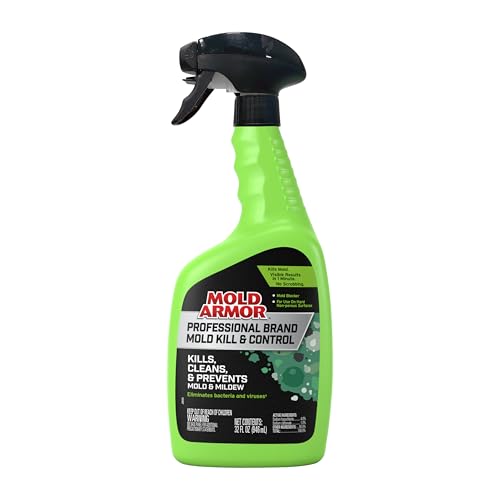 Mold Armor Mold & Mildew Remover | Widely stocked bathroom/surface remover. | Amazon — $22.98 |