What Kills Mold and Mildew: A Plain-Language Guide
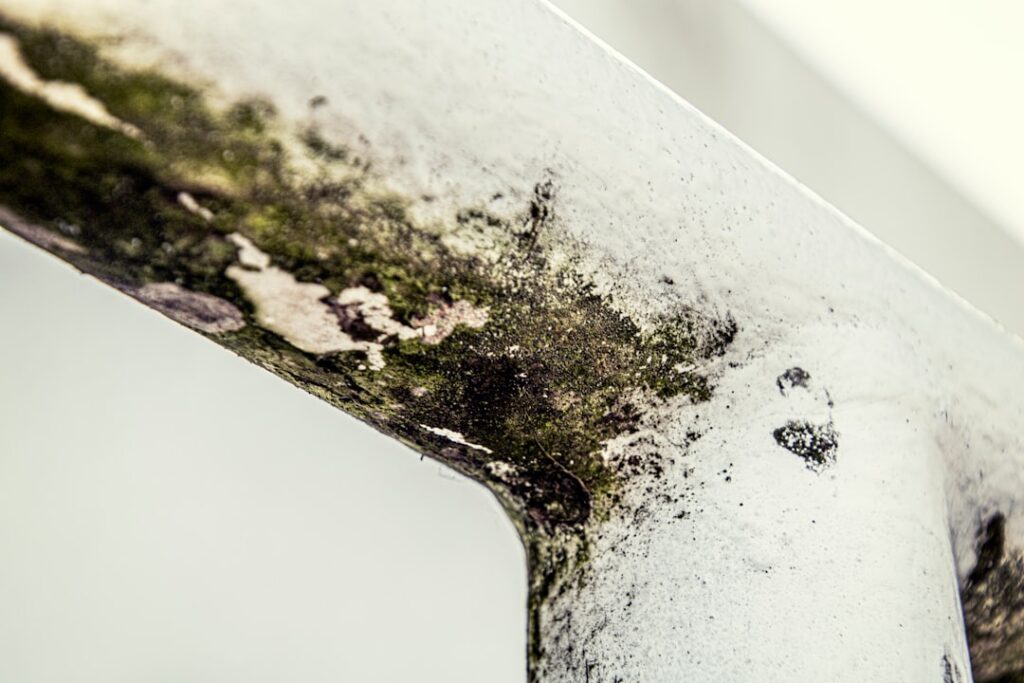
Mold and mildew look similar and grow in the same damp corners, but homeowners often reach for the wrong product and watch the stain return a week later. Knowing what kills mold and mildew — and, just as important, what only bleaches the surface — saves time and prevents recurring problems. This guide summarizes EPA and CDC guidance current as of 2026 and is informational only; consult a physician about health symptoms and a certified professional for large or hidden growth. The short version: the cleaning agent matters less than removing moisture and physically scrubbing the growth away.
Is this mold, asbestos, or water damage? Get a free instant screen
Upload a clear photo of the suspect area. You'll get an instant AI screening opinion and what to do next. This is screening guidance, not a professional determination.
Screening guidance only. AI can be wrong. Confirm asbestos, mold type, or lead with lab testing or a licensed professional before acting.
What actually kills mold and mildew?
Several common agents kill surface mold and mildew effectively: detergent and water with vigorous scrubbing, white vinegar, 3 percent hydrogen peroxide, and diluted bleach on non-porous surfaces. The EPA’s central recommendation is blunt — for hard surfaces, scrub with detergent and water and dry completely. Killing the mold is only part of the job; dead spores still cause allergic reactions, so they must be physically removed, not just neutralized in place.
Mildew, which is really an early, flat surface mold, yields to almost any of these. Established mold with visible texture needs more contact time and scrubbing. The agent you choose should match the surface: vinegar and peroxide are safer on grout and painted drywall, while bleach works on tile and glass but struggles to penetrate porous materials. For a side-by-side breakdown, the guide on the best way to kill mold compares each method by surface type.
Vinegar, peroxide, and bleach compared
White vinegar (around 5 percent acetic acid) is acidic enough to kill many household mold species and can penetrate slightly into porous surfaces. It is inexpensive, leaves no toxic residue, and works well on grout, caulk, and painted walls. Apply it undiluted, let it sit an hour, then scrub and wipe.
Hydrogen peroxide at 3 percent is an oxidizer that kills mold and lifts staining. Spray it on, wait ten minutes, and scrub. It is gentler on lungs than bleach and breaks down into water and oxygen.
Bleach kills mold on hard, non-porous surfaces and removes the dark staining quickly, which is why it is popular. The catch is that on porous materials like drywall and wood, the water in bleach soaks in while the chlorine stays on top, so roots survive and regrowth follows. The article on bleach and mold on each surface details where bleach helps and where it fails.
What does not work
Painting over mold, spraying air freshener, or wiping with a dry cloth do nothing but hide the problem. Fogging products that promise to “kill mold in the air” without source removal also fall short — the EPA stresses that you must fix the moisture and remove the growth, not just treat the air.
Why moisture is the real target
Mold and mildew cannot grow without water. Spores are everywhere in the air, indoors and out; they only colonize when a surface stays damp. That is why a cleaned spot returns within days if the leak, humidity, or condensation behind it continues. The EPA flags indoor relative humidity above about 60 percent as a growth driver, and recommends keeping it between 30 and 50 percent.
Before cleaning, find the water. Common Front Range culprits include basement wall seepage, bathroom fans that vent into attics, condensation on cold supply ducts, and ice-dam leaks in winter. Fix the source first, then clean, then dry thoroughly with fans or a dehumidifier. Skipping the moisture step guarantees a repeat. For bathrooms specifically, the guide on mold in the bathroom covers ventilation fixes that prevent regrowth.
A safe step-by-step cleaning method
For a manageable patch on a hard or semi-porous surface, the EPA-aligned process is consistent regardless of which agent you pick:
First, protect yourself — wear an N95 respirator, gloves, and eye protection, and open a window or run an exhaust fan. Second, contain loose materials and avoid dry-brushing, which scatters spores. Third, apply your cleaning agent and give it contact time (an hour for vinegar, ten minutes for peroxide). Fourth, scrub the growth off with a stiff brush. Fifth, wipe the surface clean and dry it completely with a fan. Finally, monitor the spot for a week; quick return means moisture is still present.
Do not mix cleaning chemicals. Combining bleach with ammonia or vinegar produces toxic gases. Use one agent, rinse, and let the surface dry before trying another.
When cleaning is not enough
Surface cleaning handles small, contained growth on solid materials. It is not the answer when mold has penetrated porous building materials or spread across a large area. The EPA recommends professional remediation for contaminated areas larger than roughly 10 square feet, and replacement — not cleaning — for soaked drywall, carpet padding, ceiling tile, and insulation.
Other red flags include mold that returns repeatedly after cleaning, a strong musty smell with no visible source, mold following a flood or sewage backup, and any occupant with asthma or a compromised immune system. In those cases the colony is likely larger or deeper than what is visible, and disturbing it risks spreading spores. A professional can assess hidden growth and address the moisture mechanism.
Mildew versus mold: does the treatment differ?
Practically, no. Mildew is surface growth that wipes off relatively easily and responds to vinegar or peroxide. Mold that has texture, has darkened the material, or has spread below the surface needs more aggressive scrubbing and, often, material removal. The same moisture-control rules apply to both, and both should be removed rather than left to dry in place.
The distinction matters mainly for setting expectations. Mildew on a shower wall or window frame is a maintenance task — a wipe-down with peroxide and better ventilation usually ends it. Mold that has darkened grout lines, softened drywall, or spread across more than a small patch is signaling a deeper moisture problem and possibly hidden growth. Treating the second case like the first is why people clean the same spot repeatedly without lasting success.
How surface type changes what works
Match the approach to the material. On glass, glazed tile, sealed countertops, and metal, almost any agent works because the growth sits on top and wipes away; dry the surface afterward and you are done. On grout and caulk, vinegar or peroxide penetrates the porous joints better than bleach, and badly stained or cracked caulk is usually best cut out and replaced rather than cleaned.
Painted drywall is the tricky case. Light surface mildew on intact, painted drywall can be cleaned gently with vinegar or detergent, but once the gypsum core or paper backing has absorbed water and grown mold, the colony lives behind the paint where no cleaner reaches. Soft, bubbled, or stained-through drywall should be replaced. Bare wood tolerates detergent scrubbing and thorough drying for surface growth, while rotted wood must be removed. Carpet, ceiling tile, and fiberglass insulation that have grown mold are porous and generally cannot be cleaned reliably — discard them. The guide on what kills mold on walls goes deeper on the drywall judgment call.
Preventing regrowth
Keep humidity between 30 and 50 percent with ventilation and, where needed, a dehumidifier. Run bathroom and kitchen exhaust fans during and after moisture-producing activities, and confirm they vent outside. Fix plumbing and roof leaks within 24 to 48 hours, the window the EPA cites before mold typically begins. Wipe down shower walls, address basement humidity, and keep gutters clear so water drains away from the foundation. Prevention is cheaper and far more effective than repeated cleaning.
Common mistakes that let mold return
Several recurring errors undermine otherwise-decent cleaning. The first is cleaning before fixing the water, which guarantees regrowth no matter how thorough the scrub. The second is relying on bleach for porous materials, where it bleaches the stain but leaves living roots underneath. The third is treating the surface of a material that should have been removed — soaked drywall, moldy carpet padding, fiberglass insulation — so the colony simply continues out of sight.
Other mistakes are about technique. Dry-brushing or scraping mold without misting it first flings spores across the room. Skipping personal protection exposes the worker to those spores. Closing up a wall or replacing trim before the framing has dried back to a safe moisture level traps dampness that restarts growth. And mixing cleaners — most dangerously bleach with ammonia or vinegar — creates toxic gas without improving results. Avoiding these is mostly a matter of sequence: fix the water, protect yourself, remove what cannot be cleaned, scrub what can, dry fully, then verify.
When to bring in a professional
DIY cleaning suits small, contained growth on solid surfaces. The EPA recommends professional remediation when the affected area exceeds roughly 10 square feet, when mold has penetrated porous materials, when it sits inside HVAC systems, or when it follows flooding or sewage. A persistent musty odor with no visible source, mold that returns after cleaning, and any occupant with asthma or a weakened immune system are also reasons to call in help. In those situations the visible patch is often the smaller part of a larger hidden problem, and disturbing it without containment spreads spores through the home. The guide on what mold abatement services cover describes when that step is worth the cost.
References
- Mold Cleanup in Your Home — U.S. Environmental Protection Agency
- About Mold and Health — Centers for Disease Control and Prevention
- A Brief Guide to Mold, Moisture and Your Home — U.S. Environmental Protection Agency
- Mold and Your Health — National Institute of Environmental Health Sciences
Front Range homeowners who keep seeing mold return after cleaning can get in touch through our contact page to connect with a qualified local inspector who can find the hidden moisture source.