Bleach on Mold: What Homeowners Should Know
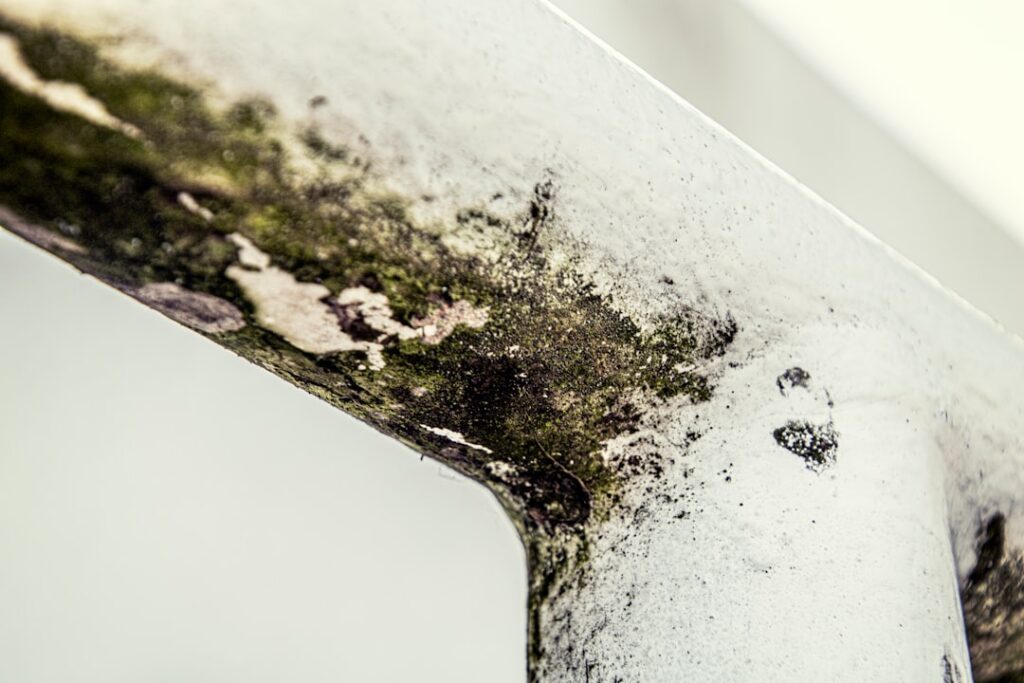
Reaching for a bottle of bleach is most people’s first instinct when mold appears, and the stain often vanishes so fast it feels like proof the bleach worked. The truth about bleach on mold is more complicated. On some surfaces it genuinely helps; on others it removes the color while the living mold persists underneath. Knowing the difference keeps you from celebrating a clean-looking wall that is quietly regrowing. This guide summarizes EPA and CDC guidance current as of 2026; consult a certified professional for testing decisions and your physician for any health symptoms.
Part of our Types of Mold guide — start there for the full picture →
Is this mold, asbestos, or water damage? Get a free instant screen
Upload a clear photo of the suspect area. You'll get an instant AI screening opinion and what to do next. This is screening guidance, not a professional determination.
Screening guidance only. AI can be wrong. Confirm asbestos, mold type, or lead with lab testing or a licensed professional before acting.
Does bleach actually kill mold?
Bleach can kill mold on hard, non-porous surfaces such as glazed tile, glass, sealed countertops, and bathtubs. On these surfaces the mold sits on top, so the bleach reaches and destroys it. The visible result and the biological result line up reasonably well in that case.
The problem arises on porous materials. Drywall, wood, grout, and unsealed masonry let mold send roots below the surface. Chlorine bleach is mostly water, and while the water soaks into the porous material, the active chlorine stays near the surface and dissipates. The result is a bleached, clean-looking face with living mold roots untouched beneath it.
Why bleach fails on porous surfaces
The EPA does not recommend routine bleach use for mold remediation on porous materials, and the mechanism explains why. Bleach’s chlorine evaporates quickly, so its killing power is short-lived, while the water component lingers in the porous material. That residual moisture can actually feed regrowth of the very mold the homeowner thought was gone.
This is the central trap with bleach: it is a pigment remover as much as a disinfectant. A wall that looks spotless after bleaching may show mold returning within weeks because the roots survived. Our deeper comparison of mildew versus black mold explains why surface-only mildew responds far better to cleaning than deeper, rooted growth.
The safety risks of using bleach
Bleach is not a benign household product. Mixing it with ammonia produces chloramine gas, and mixing it with acidic cleaners like some toilet-bowl or descaling products releases chlorine gas. Both can cause serious respiratory injury, and accidental mixtures happen when people combine cleaners hoping for a stronger effect.
Even used alone, bleach fumes irritate the eyes, lungs, and skin, particularly in a small, poorly ventilated bathroom. The CDC advises ventilation and protective gear when cleaning mold. If you do use bleach, never combine it with other products, open windows, and wear gloves and eye protection.
Bleach and your indoor air
Spraying bleach across a moldy surface can also disturb spores, sending them airborne during cleaning. For anyone with asthma or sensitivity, the combination of chlorine fumes and disturbed spores is a poor trade. A gentler, contained approach often protects indoor air better than an aggressive bleach scrub.
What the EPA recommends instead
For most household mold, the EPA emphasizes correcting moisture and physically removing the mold rather than relying on a biocide. On hard surfaces, detergent and water scrubbing followed by thorough drying often suffices. The mechanical removal of mold matters more than killing it chemically, because dead mold can still trigger allergic reactions.
On porous materials with significant growth, removal and replacement beats any spray. Moldy drywall and carpet padding are usually cut out rather than treated. Our guide to what kills mold permanently explains why moisture control, not a stronger chemical, is the durable answer.
Bleach alternatives that work better
Several alternatives outperform bleach on common surfaces. Undiluted white vinegar penetrates porous materials better and can kill many mold species when left to dwell. Hydrogen peroxide at household strength is effective on a range of surfaces and breaks down into water and oxygen rather than leaving harsh residue.
EPA-registered antimicrobial cleaners labeled for mold are formulated for the job and carry dwell-time instructions worth following. None of these substitute for fixing the moisture source. The mold inspection and testing hub covers how to find the leak or humidity problem that lets mold return regardless of which product you choose.
When cleaning of any kind is not enough
If mold covers more than roughly 10 square feet, follows flooding or sewage, or sits inside walls and HVAC systems, no over-the-counter product, bleach included, is the right tool. These situations call for containment and professional equipment that prevent spore spread during removal.
Recurrence is the clearest sign that surface treatment is failing. Mold returning to the same spot means the moisture problem is unsolved or the growth is rooted deeper than a spray can reach. At that point, an independent assessment beats buying yet another bottle of cleaner.
A safer cleaning routine for small patches
For a small, surface-level patch on a hard surface, work methodically. Ventilate the room, wear gloves and an N95 respirator, and pick a single product rather than mixing. Apply it, let it dwell for the labeled time, scrub gently, then rinse and dry the surface completely.
Dry is the operative word. Leftover moisture is what invites regrowth, so finishing with thorough drying and improved airflow does more for prevention than any chemical. If the patch returns, treat that as a signal to investigate moisture rather than escalate to harsher products.
Where the bleach myth comes from
The belief that bleach is the ultimate mold killer is widespread, and it is easy to see why. Bleach delivers a dramatic, instant visual result: a dark stain vanishes in seconds. That immediate feedback feels like proof, and the long history of bleach as a household disinfectant reinforces the assumption that it must be the strongest tool for any cleaning job.
The myth persists because the failure is delayed and invisible. The wall looks clean for weeks before mold reappears, by which point the connection to the bleach is easy to miss. Understanding that the color change and the kill are separate events is what breaks the myth and explains why professionals reach for different tools.
Bleach concentration and dilution
Even where bleach is used on hard surfaces, concentration matters and is often misunderstood. Household bleach is mostly water, and once diluted further for cleaning, the active chlorine drops. That chlorine is also volatile, meaning it off-gasses and weakens over time, so an old bottle or a heavily diluted solution may have far less killing power than expected.
This volatility compounds the porous-surface problem. As the chlorine evaporates from the surface of porous material, the remaining liquid carrying into the material is largely water. The result on drywall or wood is a brief surface effect followed by added moisture in the substrate, which is close to the opposite of what mold control requires.
Surfaces where bleach is acceptable
Bleach is not useless; it simply has a narrow appropriate range. On hard, non-porous surfaces such as glazed tile, glass, sealed countertops, sinks, and tubs, bleach can clean and disinfect surface mold effectively, because the growth sits on top and the chlorine reaches it before evaporating.
In these settings, used carefully and never mixed with other products, bleach is a reasonable choice among several. The key is recognizing the boundary: the moment the surface is porous, drywall, grout, wood, unsealed masonry, bleach stops being appropriate and gentler, more penetrating options or outright material removal take over.
Reading product labels and registrations
When choosing any mold product, the label tells you more than the marketing. EPA-registered antimicrobial cleaners carry a registration number and labeled directions, including the dwell time needed for the product to work. Following those directions, especially keeping the surface wet for the full dwell period, is what determines whether a product performs as claimed.
Marketing language like instant or maximum strength is not a substitute for the registration and directions. A registered product with clear instructions used correctly outperforms a stronger-sounding product used hastily. Reading the label also flags hazards, including the critical warning never to combine chlorine bleach with ammonia or acidic cleaners.
The mixing hazards in detail
The most serious risk with bleach is accidental chemical mixing, and it deserves a clear explanation. Combining chlorine bleach with ammonia, found in some glass and all-purpose cleaners, produces chloramine vapors that can cause severe respiratory injury. Mixing bleach with acidic products, including some toilet-bowl and descaling cleaners, releases chlorine gas, which is dangerous even in small amounts.
These reactions happen in poorly ventilated rooms exactly where mold cleaning occurs, such as bathrooms. The safe rule is absolute: use one product at a time, never combine cleaners, rinse surfaces between different products, and ventilate throughout. No mold-cleaning result is worth the risk of an accidental toxic gas exposure.
Building a long-term mold-control habit
Stepping back from bleach specifically, the durable answer to mold is not a product at all but a set of habits. Keeping indoor humidity below about 60 percent, ventilating wet rooms, fixing leaks promptly, and drying surfaces that get wet starve mold of the moisture it needs regardless of which cleaner sits under the sink.
This reframing helps homeowners spend their effort where it pays off. The cleaner, whether bleach on tile or a gentler option on other surfaces, handles the visible patch in the moment. The moisture habits prevent the next patch from forming. A home kept dry needs very little mold cleaning of any kind, which is the real goal behind every product comparison.
Bleach and porous grout in showers
Grout is a frequent battleground for the bleach question, since it is porous and constantly damp in a shower. Bleach can lighten moldy grout dramatically, which feels like success, but the porous grout holds moisture and the mold roots within it, so the growth often returns. The whitened grout masks rather than resolves the problem.
For grout that stays moldy despite bleaching, the more durable answers are mechanical: scrubbing with a brush and a penetrating cleaner, re-sealing the grout once clean, or in stubborn cases replacing it. Moldy silicone caulk, which is even more porous, usually needs cutting out and re-applying with a mold-resistant product rather than any amount of bleaching.
Environmental and surface damage from bleach
Beyond its limits on mold, bleach can damage the surfaces and surroundings it touches. It discolors and weakens many fabrics, corrodes some metals over time, and can break down certain finishes and grout sealers with repeated use. Overspray harms nearby materials, and the fumes are hard on respiratory passages in tight spaces.
These drawbacks add to the case for gentler alternatives on most surfaces. Hydrogen peroxide and registered cleaners accomplish the surface-mold task with less collateral damage and fewer fumes. Reserving bleach for the narrow set of hard, non-porous surfaces where it genuinely works, and using it carefully, avoids the unintended harm that casual whole-house bleaching can cause.
The bottom line on bleach and mold
The honest summary is narrow but useful. Bleach can clean and disinfect surface mold on hard, non-porous surfaces like glazed tile and glass, used alone and never mixed. On porous materials, drywall, wood, grout, and unsealed masonry, it bleaches the color while leaving roots alive and adding moisture, so it is the wrong tool.
For the porous majority of mold problems, physical removal, gentler penetrating cleaners, and material replacement outperform bleach, and moisture control prevents the next outbreak. Knowing exactly where bleach helps and where it fails lets homeowners use it appropriately rather than relying on it as a universal mold killer it was never able to be.
References
- Mold Cleanup in Your Home — U.S. Environmental Protection Agency
- A Brief Guide to Mold, Moisture and Your Home — U.S. Environmental Protection Agency
- About Mold and Health — Centers for Disease Control and Prevention
- Indoor Environmental Quality: Mold — National Institute for Occupational Safety and Health
Frequently asked questions
Does bleach kill mold?
Bleach kills mold on hard, non-porous surfaces like glazed tile and glass, where the mold sits on top. On porous materials such as drywall and wood, it mainly removes the color while leaving living roots beneath, which is why the EPA does not recommend it for those surfaces.
Why does mold come back after I use bleach?
Bleach's chlorine evaporates quickly while its water content soaks into porous material, leaving roots alive and adding moisture that can feed regrowth. If the underlying leak or humidity is not fixed, mold returns regardless of the product used.
Is it safe to use bleach on mold?
Used alone with ventilation and gloves, bleach is manageable on hard surfaces, but never mix it with ammonia or acidic cleaners, which create toxic gas. Fumes irritate the lungs, and spraying can disturb spores, so a gentler contained approach is often safer.
What works better than bleach on mold?
Undiluted white vinegar, household hydrogen peroxide, and EPA-registered antimicrobial cleaners penetrate better and leave less harsh residue. None replace fixing the moisture source, which is the only thing that prevents mold from returning.
If you are on the Front Range and bleach keeps failing to stop mold from returning, reach out through our contact page for a connection to a vetted local inspector who can find the moisture behind it.