Bleach on Black Mold: When It Works and When It Fails
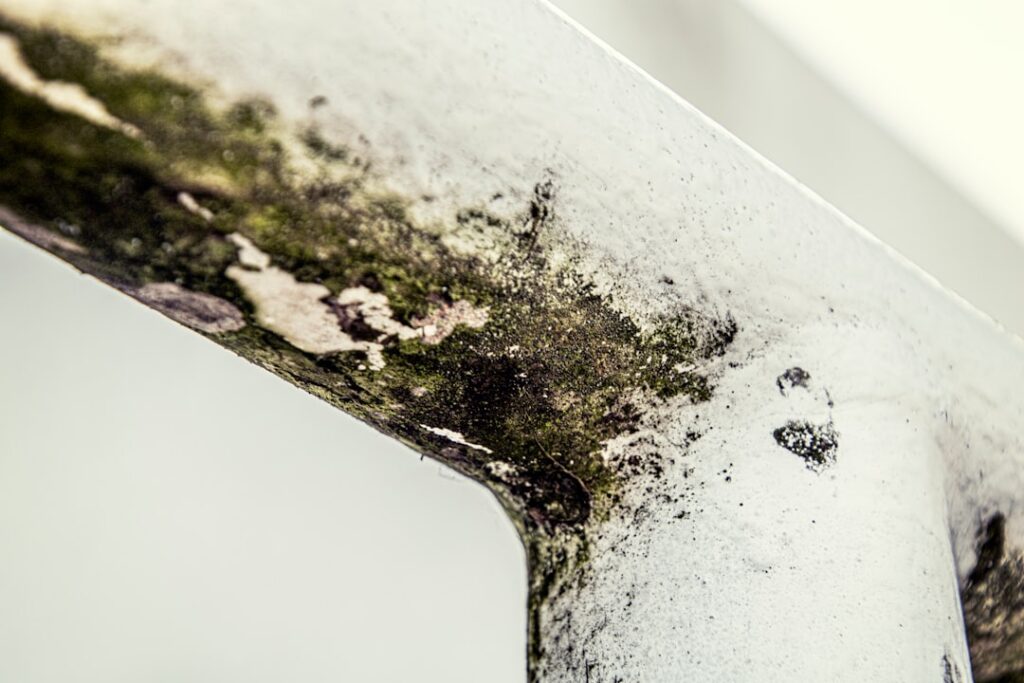
Bleach is the reflex remedy for black mold — cheap, available, and dramatic at erasing a dark stain. Yet whether bleach actually solves a mold problem depends almost entirely on the surface it is applied to. On glazed tile it works well; on bare wood or paper-faced drywall it often bleaches the color while leaving the colony alive underneath. Understanding why bleach on black mold succeeds in some spots and fails in others is the difference between a one-time cleanup and a recurring stain. This guide summarizes EPA and CDC guidance current as of 2026 and is educational only — consult a certified professional for remediation decisions and your physician for any symptoms.
Part of our Black Mold & Your Health guide — start there for the full picture →
Is this mold, asbestos, or water damage? Get a free instant screen
Upload a clear photo of the suspect area. You'll get an instant AI screening opinion and what to do next. This is screening guidance, not a professional determination.
Screening guidance only. AI can be wrong. Confirm asbestos, mold type, or lead with lab testing or a licensed professional before acting.
Does bleach kill black mold?
Bleach kills surface mold on hard, non-porous materials, and it removes the stain at the same time. On glazed ceramic tile, fiberglass tubs, sealed countertops, glass, and finished metal, a diluted chlorine bleach solution destroys the visible colony and lifts the dark pigment in one pass. For those surfaces it is a legitimate, effective choice.
The problem appears on porous materials. Black mold roots — thread-like hyphae — grow down into wood grain, grout, and the paper facing of drywall. Bleach is mostly water with sodium hypochlorite dissolved in it. The chlorine kills what it touches on the surface and then evaporates, but the water carrier soaks into the porous material and can actually feed the roots that survived below. Within a couple of weeks the stain often returns, sometimes darker than before. The EPA’s longstanding guidance is that bleach is generally not required for routine mold cleanup, and that soap, water, and scrubbing are adequate for most non-porous surfaces.
So bleach does kill black mold — but only the part it can reach. On a sealed surface that is the whole colony. On a porous one it is just the visible cap of something rooted deeper.
Where bleach works and where it fails
Surfaces where bleach is a good choice
Glazed bathroom tile, fiberglass and acrylic tubs and surrounds, glass shower doors, sealed stone or laminate counters, and finished metal fixtures all qualify. These materials do not absorb the water carrier, so the bleach stays on the surface, kills the mold, and removes the stain. Wipe dry afterward and the result holds as long as the area stays dry.
Surfaces where bleach falls short
Bare or painted wood, unsealed grout, drywall, ceiling tile, carpet, and upholstery are porous. Bleach may whiten the visible stain, creating the illusion of success, while the root structure survives in the material below. On these surfaces vinegar or a peroxide product penetrates better, though even those have limits once the material is saturated. The honest assessment in whether hydrogen peroxide kills black mold walks through the porous-surface trade-offs in detail. For wood specifically, the guide on getting rid of black mold on wood explains why sanding sometimes beats any liquid.
How to use bleach on black mold safely
The standard dilution for surface mold is about one cup of household bleach per gallon of water. Stronger is not better; concentrated bleach produces more fumes without killing more effectively, and it can damage finishes and grout.
Wear an N-95 respirator, unvented goggles, and rubber gloves, and ventilate the room with an open window or running fan. Mist the moldy surface first so spores do not become airborne, apply the solution, let it dwell for several minutes, scrub with a nylon brush, and wipe the surface dry. Dispose of rags in a sealed bag rather than rinsing them where the runoff drains nearby.
The single most important safety rule is to never mix bleach with ammonia or with vinegar. The reaction releases chloramine or chlorine gas, which is genuinely toxic in a closed bathroom and has sent people to emergency rooms. Use one product at a time, and if you switch chemistries, rinse everything thoroughly first.
When bleach is the wrong tool entirely
Several situations call for stopping the bleach bottle and reassessing. If the mold covers more than roughly 10 square feet, the EPA’s threshold for a do-it-yourself job has been crossed and professional remediation is the safer route. If the stain returns within weeks despite repeated cleaning, the moisture source has not been addressed and bleaching the surface only resets the cycle.
Soft, crumbling, or stained drywall means mold has penetrated the board, and the affected section needs to be cut out and replaced rather than wiped. Mold behind cabinets, inside wall cavities, or accompanied by a persistent musty odor with no visible source signals hidden moisture that bleach cannot touch. In all of these cases the colored stain is a symptom, and chasing the symptom with chlorine wastes effort while the real problem — water — continues. The broader mold inspection and testing resource explains how the source is located and corrected.
The chemistry: why bleach struggles on porous materials
Understanding why bleach behaves the way it does turns a frustrating mystery into a predictable rule. Household bleach is a solution of sodium hypochlorite dissolved in water. The hypochlorite is the active killer; the water is just the carrier. On a non-porous surface, the whole solution sits on top, the hypochlorite contacts and kills the mold, and the water evaporates away. The result is clean.
On a porous surface, the two components separate. The hypochlorite ion is large and reactive and tends to stay near the surface, where it kills what it touches and then breaks down. The water, by contrast, soaks deep into the material — into wood grain, grout pores, and drywall paper. So the chlorine treats the surface while the water carries moisture down to the root structure. Since mold’s defining requirement is moisture, bleaching porous material can leave the surviving roots better hydrated than before. This is the mechanism behind the maddening pattern where a bleached spot looks pristine for two weeks, then returns darker. It is not that the bleach was weak; it is that the chemistry physically cannot reach the part of the colony that regrows, and the water it leaves behind helps that part recover.
This is also why concentrating the bleach does not help. A stronger mix puts more hypochlorite on the surface, where the problem already is not, while delivering the same penetrating water to the roots, where the problem is. More fumes, no more kill depth.
Bleach versus other mold-killing options
Set against the alternatives, bleach occupies a narrow but real niche. Vinegar’s mild acetic acid soaks into porous materials along with the water, so it reaches more of the colony on wood and grout, though it leaves an odor and does not bleach the stain. Hydrogen peroxide foams as it breaks down, which helps lift growth from textured surfaces, and it produces no harsh fumes, making it a sensible choice for grout, fabric, and painted walls where bleach is too aggressive. EPA-registered commercial products often leave a residual film that discourages regrowth, useful in chronically damp spots once the moisture is controlled.
Plain detergent and water deserve mention because the EPA considers them adequate for most non-porous mold cleanup — the physical scrubbing removes the colony, and no biocide is strictly required. The honest comparison is that bleach is fast and effective on sealed surfaces and stain removal, mediocre to counterproductive on porous ones, and never a fix for the underlying moisture. Choosing the product is less important than choosing it for the right surface and pairing it with a moisture repair.
What to do instead, and how to prevent regrowth
For porous surfaces, removing the material is often more reliable than any spray. Moldy grout can be cut out and re-grouted; paper-faced drywall that has absorbed mold is replaced; bare wood can sometimes be saved by HEPA-vacuuming, scrubbing with detergent, drying fully, and sanding off residual staining. The goal is to physically remove the colony, not just decolorize it.
Whatever the surface, the durable fix is moisture control. Keep indoor relative humidity below 60 percent, run bathroom and kitchen exhaust fans, repair leaks promptly, and dry any wet material within 24 to 48 hours before mold can establish. Front Range homes stay dry outdoors most of the year, but bathrooms, finished basements, and homes with evaporative coolers create damp pockets where mold returns regardless of the arid climate. Bleach has its place on sealed surfaces; lasting prevention comes from keeping materials dry.
Common myths about bleach and black mold
A few persistent beliefs about bleach lead homeowners astray, and naming them directly clears up the confusion. The first myth is that bleach kills mold “at the root.” On porous materials it does not — the hypochlorite stays near the surface while only the water penetrates, so the roots in wood grain or drywall paper survive. The visible kill is real; the deep kill usually is not.
A second myth is that a stronger bleach mix works better. Concentration adds fumes and finish damage without increasing kill depth, since the limiting factor is penetration, not potency. The standard one-cup-per-gallon dilution is what the guidance supports. A third myth is that bleaching the stain away means the mold is gone — color removal and colony death are different things, and a bleached-clean surface can still harbor living growth, especially on porous material. A fourth is that bleach prevents mold from returning; it leaves no meaningful residual barrier on its own, and without fixing the moisture, the area recolonizes. The most dangerous myth is that mixing bleach with another cleaner boosts its power. Combining bleach with ammonia or vinegar produces toxic gas, a genuine hazard rather than a stronger cleaner. Stripping away these myths leaves a simple, accurate picture: bleach is a fast surface cleaner and stain remover for sealed materials, not a deep-penetrating, mold-preventing cure-all.
When black mold calls for a professional
Reaching for bleach is fine for a small patch on a sealed surface; several situations call for stepping back and bringing in a professional instead. The EPA’s roughly 10-square-foot guideline is the clearest line — growth larger than about a bath towel exceeds what spot-cleaning can safely handle and warrants containment.
Beyond size, mold stemming from sewage or floodwater, growth inside HVAC systems, structural materials that are soft or rotted, mold hidden inside wall cavities, and any case where cleaning fails to stop the return all point to a problem bleach cannot solve. Recurrence in particular is diagnostic: a stain that comes back after thorough cleaning means either the material is porous and rooted or the moisture source persists, and both are reasons to find the cause rather than apply more chlorine. There is also a health dimension — occupants with asthma, allergies, or weakened immune systems should not perform mold work. A professional brings containment, HEPA filtration, moisture diagnostics, and the ability to identify and correct the water source, which is the part that makes removal last. The practical rule of thumb is that if a bleach bottle has not solved the problem after one careful, correct attempt on an appropriate surface, the next step is a moisture assessment, not a second bottle.
References
- Mold Cleanup in Your Home — U.S. Environmental Protection Agency
- A Brief Guide to Mold, Moisture and Your Home — U.S. Environmental Protection Agency
- About Mold and Your Home — Centers for Disease Control and Prevention
Frequently asked questions
Does bleach actually kill black mold or just whiten it?
On hard, non-porous surfaces like tile and fiberglass, bleach kills the mold and removes the stain. On porous materials like wood and drywall, it often only bleaches the visible color while roots survive below, so the stain returns within weeks.
What is the right bleach dilution for mold?
About one cup of household bleach per gallon of water. Stronger mixtures produce more fumes without killing more mold and can damage finishes. Always ventilate, wear an N-95 respirator and gloves, and never combine bleach with ammonia or vinegar.
Why does black mold come back after I bleach it?
Either the surface was porous and the roots survived below where bleach couldn't reach, or the moisture feeding the mold was never fixed. Bleach kills surface growth but does not address water intrusion or humidity, which regrows the colony.
Should I bleach mold on drywall?
Generally no. Drywall paper is porous, so bleach soaks in and may feed regrowth while only whitening the surface. Mold-affected drywall usually needs the damaged section cut out and replaced, with the moisture source corrected.
If black mold keeps returning after cleaning or you suspect moisture inside a wall in the Denver metro or Front Range, reach out through our contact page to connect with a vetted local inspector.