Bleach Black Mold: What Homeowners Need to Know
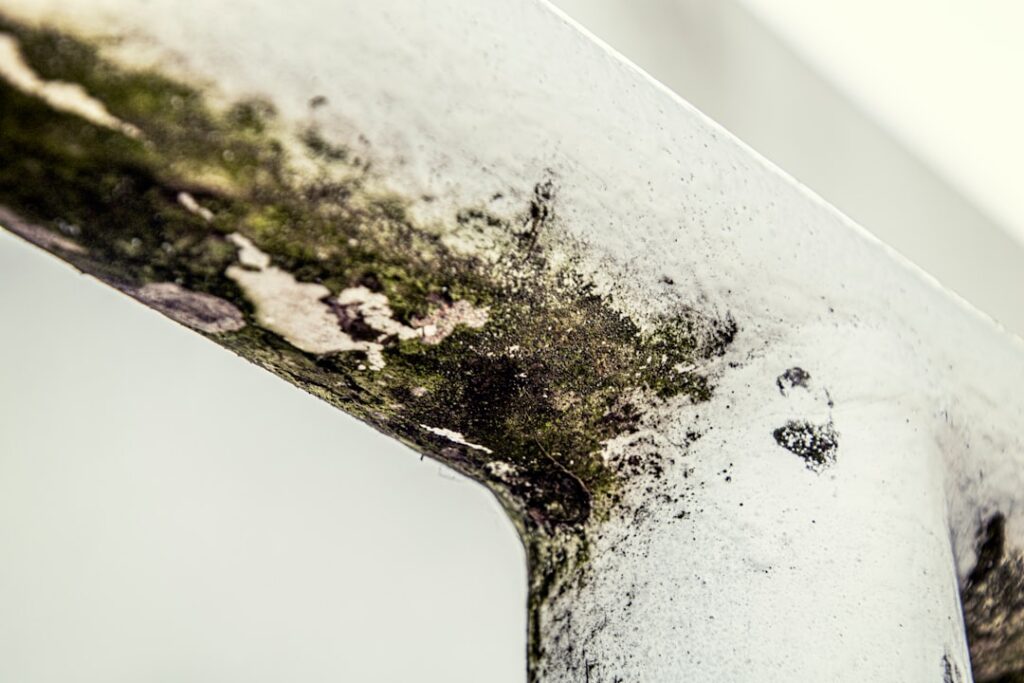
Bleach is the first thing most people reach for when they see a black spot spreading across a wall or tub surround. It is cheap, it is everywhere, and it makes stains vanish fast. But the question of whether to bleach black mold has a more complicated answer than the bottle suggests, and using it on the wrong surface can leave the real problem alive beneath a clean-looking finish. This guide summarizes EPA and CDC guidance current as of 2026 and is educational only; consult your physician about health symptoms and a certified professional for large or hidden contamination.
Part of our Black Mold & Your Health guide — start there for the full picture →
Is this mold, asbestos, or water damage? Get a free instant screen
Upload a clear photo of the suspect area. You'll get an instant AI screening opinion and what to do next. This is screening guidance, not a professional determination.
Screening guidance only. AI can be wrong. Confirm asbestos, mold type, or lead with lab testing or a licensed professional before acting.
Does Bleach Kill Black Mold?
On hard, non-porous surfaces, household bleach kills surface mold effectively. Tile, glass, sealed countertops, sinks, and tubs all respond well: the bleach contacts the growth, kills it, and removes the dark staining. For these surfaces, bleach is a reasonable choice.
The complication is porous material. Drywall paper, bare wood, grout, and caulk absorb water, and black mold sends rootlike structures below the surface. Chlorine bleach is mostly water with the active chlorine sitting on top; it bleaches the visible color but does not penetrate to reach the embedded growth. The EPA notes that bleach is not necessary to routinely kill mold and that the goal is removal, not just disinfection.
So bleach can make porous mold disappear visually while the colony survives below, ready to darken the surface again within weeks. That return is the most common complaint from homeowners who relied on bleach alone.
Why “Black Mold” Deserves Context
The phrase usually refers to Stachybotrys chartarum, a dark, slimy mold that grows on very wet, cellulose-rich materials such as soaked drywall and wood. It earned a fearsome reputation, but the CDC stresses that no mold should be allowed to grow indoors regardless of color, and that the health response is the same: remove it and fix the moisture.
Many dark molds people call “black mold” are other species entirely. You cannot identify the type by sight, and from a cleanup standpoint it does not matter. What matters is the surface it grows on and how much area it covers, because those determine whether bleach is even the right approach. For help confirming what you are looking at, see our guide on how to spot black mold.
How to Use Bleach on Black Mold Safely
When bleach is appropriate, on a hard surface and a small area, technique and safety come first.
Protect Yourself
The EPA recommends an N-95 respirator, gloves, and eye protection. Bleach fumes irritate the lungs, and scrubbing releases spores. Ventilate the room well by opening windows and running an exhaust fan.
Mix and Apply Correctly
A common dilution is roughly one cup of bleach per gallon of water. Apply to the surface, let it dwell, then scrub and wipe away the residue. Do not let the bleached residue dry in place; remove it.
Never Mix Chemicals
Bleach combined with ammonia or with certain acidic cleaners produces toxic gases. Use bleach alone, and rinse and dry the area thoroughly afterward so leftover moisture does not feed new growth.
When Bleach Is the Wrong Choice
Several situations call for a different approach. On moldy drywall, the paper facing is porous and the growth roots into it; cutting out and replacing the affected section is more reliable than bleaching. The same applies to saturated wood framing that has been wet long enough to support deep growth, and to crumbling grout or old caulk, which are usually easier to remove and replace.
Scale matters too. The EPA generally treats mold covering more than about 10 square feet as a job beyond routine cleaning. Mold inside HVAC ducts, behind finished walls, or under flooring is out of reach of any surface treatment. Our guide on the best way to kill black mold covers when removal beats cleaning.
Bleach Versus Other Options
Hydrogen peroxide at 3 percent kills many molds, penetrates porous surfaces slightly better than chlorine bleach, and produces no harsh fumes. Detergent and water with thorough scrubbing physically removes mold and is endorsed by some agencies for non-porous surfaces because removal, not chemical killing, is the actual objective.
For homeowners who prefer a ready-made product, a commercial mold cleaner spray adds surfactants that help lift residue. None of these, including bleach, fixes a moisture problem or reaches embedded growth in porous material.
The Step Bleach Cannot Replace
Even perfect cleaning fails if the water source remains. Black mold appears because something stays wet: a leaking pipe, a shower with no exhaust fan, condensation on a cold wall, or groundwater in a basement. Bleach the surface and the mold returns until that moisture is corrected.
Find and fix the source first. The CDC advises drying wet building materials within 24 to 48 hours to prevent mold from establishing. The parent mold inspection and testing hub explains how professionals trace hidden moisture that keeps mold coming back no matter how often you clean.
Preventing the Return of Black Mold
Removing black mold, by whatever method, is only durable when paired with moisture control. After cleaning a hard surface or removing affected porous material, the next task is making sure the conditions that grew the mold do not persist. In a bathroom, that means running an exhaust fan during and after showers, squeegeeing wet walls, and repairing any leaking fixtures.
In a basement, prevention centers on keeping the space dry: a dehumidifier through the humid months, indoor humidity held between 30 and 50 percent, and exterior water managed with proper grading, clean gutters, and extended downspouts. Around plumbing, fixing slow leaks promptly removes the hidden moisture that feeds black mold behind cabinets and walls.
The CDC’s guidance to dry wet materials within 24 to 48 hours is the principle to internalize. Black mold is opportunistic; it appears wherever water lingers on an organic surface. Deny it that water and it loses its foothold, no matter how many spores float through the air. A homeowner who treats the cleanup and the moisture fix as a single project, rather than two separate ones, is the one who does not find the same dark patch returning a month later.
Health Considerations
Black mold exposure can cause nasal congestion, throat and eye irritation, coughing, and wheezing, and it can aggravate asthma. People with allergies, asthma, or weakened immune systems face higher risk, and the CDC advises this group avoid mold cleanup entirely. If symptoms appear or persist, especially respiratory ones that ease away from home, raise them with a physician rather than self-treating.
Where the “Just Use Bleach” Advice Comes From
The reflex to reach for bleach has deep roots, and understanding why it persists helps explain why it so often disappoints. For generations, bleach was the household answer to almost any cleaning or disinfecting need, and on the hard surfaces people most often cleaned, sinks, tubs, tile, it genuinely worked. The advice was sound for those surfaces and got passed down as a universal rule.
The trouble is that the rule outran its evidence. As homes filled with porous materials like paper-faced drywall and as people began trying to clean mold rather than just disinfect surfaces, the limits of bleach became clear. Agencies adjusted their guidance accordingly. The EPA now notes that bleach is not necessary to routinely kill mold and that the actual objective is removal, language that reflects a shift away from the old bleach-for-everything assumption.
This history matters because the outdated advice still circulates widely online and by word of mouth. A homeowner following it on moldy drywall is not being careless; they are following guidance that was reasonable for a different surface. Recognizing that the “just use bleach” rule was built for hard, non-porous surfaces, and stops being good advice once porous materials are involved, is the key to using bleach where it helps and skipping it where it wastes effort.
Why Bleach Fails on Porous Surfaces
The reason bleach disappoints on drywall, wood, and grout comes down to chemistry and physics. Chlorine bleach is mostly water carrying sodium hypochlorite, the active ingredient. On a porous material, the water component soaks in while the chlorine, which is the part that kills mold, stays largely on the surface and dissipates quickly.
Black mold on porous material sends rootlike structures, called hyphae, below the surface. The bleach’s chlorine cannot reach them, so it kills only what is on top and bleaches the visible staining away. The colony beneath survives, and the water that the bleach left behind can even feed it. Within days or weeks, the surface darkens again.
This is why so many homeowners describe a frustrating cycle of bleaching the same spot repeatedly. They are treating the symptom, the visible stain, while the living growth and the moisture feeding it remain untouched. On porous materials, the durable answer is removal of the affected material and correction of the moisture, not another round of bleach.
Bleach Safety in Detail
Bleach is a powerful oxidizer, and its safety considerations deserve more than a passing mention. The most serious hazard is mixing. Combining bleach with ammonia produces chloramine gas; combining it with acidic cleaners such as some toilet bowl or tile products can release chlorine gas. Both can cause severe respiratory harm. The rule is simple: use bleach alone, and never combine cleaning products.
Ventilation is essential. Bleach fumes irritate the eyes, nose, throat, and lungs, and the irritation builds in a closed bathroom or basement. Open windows and run an exhaust fan throughout the job. Protective gear matters too: an N-95 respirator guards against both fumes and the spores that scrubbing releases, while gloves and eye protection prevent skin and eye contact.
People with asthma or respiratory sensitivity should be especially cautious, and the CDC advises that those with asthma, allergies, or weakened immune systems avoid mold cleanup altogether. If a small bleaching job triggers coughing or eye irritation, that is a signal to stop, ventilate, and reconsider whether the task is appropriate to do yourself.
How to Bleach Mold on Hard Surfaces Correctly
When the surface is non-porous and the area is small, a careful routine gets the best result. Start with protective gear and ventilation. Mix roughly one cup of bleach per gallon of water, or follow the product label. Pre-clean heavy soil with detergent first, because organic material reduces bleach’s effectiveness.
Apply the solution to the surface and let it dwell so the chlorine has time to act. Scrub with a brush to loosen the growth and staining, then wipe away the residue rather than leaving it to dry. Rinse if the surface will contact food or skin, and most importantly, dry the area thoroughly. A clean but still-damp surface invites new growth, defeating the whole effort.
This routine works on tile, glass, sealed counters, and tubs. It does not transform bleach into a porous-surface solution; technique cannot overcome the chemistry that keeps chlorine from penetrating drywall and wood.
The Bigger Picture: Moisture First
Whatever cleaner you choose, the lasting fix is always the moisture source. Black mold appears because something stays wet, a leaking supply line, a shower with no exhaust fan, condensation on a cold wall, or groundwater pushing into a basement. The colony is a symptom of that water.
Identifying and correcting the source is what stops the cycle. Sometimes it is obvious, like a dripping pipe. Other times it is hidden behind a wall or under a floor, signaled only by a musty smell or recurring stains. The CDC’s guidance to dry wet materials within 24 to 48 hours captures the principle: control the water, and mold loses its foothold. Bleach, peroxide, detergent, or any product treats only what is visible today. Until the moisture is addressed, black mold will keep returning no matter which bottle is on the shelf.
References
- Mold Cleanup in Your Home — U.S. Environmental Protection Agency
- About Mold and Health — Centers for Disease Control and Prevention
- A Brief Guide to Mold, Moisture and Your Home — U.S. Environmental Protection Agency
Frequently asked questions
Does bleach kill black mold for good?
On hard, non-porous surfaces like tile and glass, bleach kills surface mold and removes staining. On porous materials such as drywall, wood, and grout, it bleaches the color but does not reach the embedded growth, so the mold often returns.
Should I bleach moldy drywall?
Generally no. Drywall paper is porous and black mold roots into it, so bleaching only removes the surface color. Cutting out and replacing the affected section is more reliable than trying to clean it.
Is bleach safe to use on mold?
For small jobs on hard surfaces, yes, with an N-95 respirator, gloves, eye protection, and good ventilation. Never mix bleach with ammonia or acidic cleaners, and people with asthma or weakened immune systems should avoid cleanup.
Why does mold come back after I bleach it?
Because the moisture source is still active. Bleach treats the visible surface but cannot fix a leak, condensation, or basement dampness. Until the water problem is corrected, mold will return.
If black mold keeps reappearing in your Front Range home despite repeated cleaning, get in touch through our contact page to connect with a vetted inspector who can find the moisture behind it.