Bathroom Mildew: What Homeowners Should Know
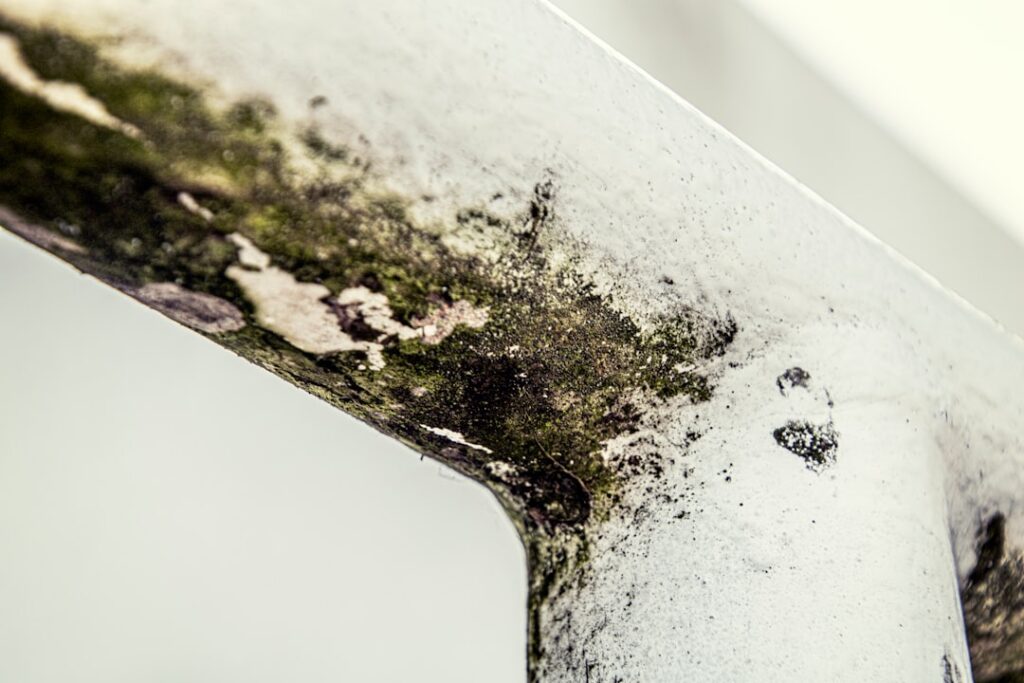
Mildew is the thin, often powdery growth that creeps across bathroom walls, ceilings, and grout, usually appearing gray, white, or pinkish before it darkens. It is the most common fungal nuisance in a home because the bathroom hands it a constant supply of moisture. Understanding bathroom mildew, how it differs from heavier mold, and why it keeps coming back is the first step toward keeping it off your walls. This guide summarizes EPA and CDC guidance current as of 2026 and is educational only; it is not a substitute for a certified mold professional and offers no medical diagnosis. The focus here is identification and the humidity habits that actually break the cycle, rather than just scrubbing the same spots over and over.
Part of our Types of Mold guide — start there for the full picture →
Is this mold, asbestos, or water damage? Get a free instant screen
Upload a clear photo of the suspect area. You'll get an instant AI screening opinion and what to do next. This is screening guidance, not a professional determination.
Screening guidance only. AI can be wrong. Confirm asbestos, mold type, or lead with lab testing or a licensed professional before acting.
What Bathroom Mildew Actually Is
Mildew is a common, informal term for a type of mold that grows flat against a surface, typically as a thin coating rather than the raised, fuzzy mass people picture as “mold.” In a bathroom it favors grout, painted walls, ceilings, window frames, and the edges of fixtures. Like all mold, it is a fungus, and the CDC treats mold and mildew under the same general guidance because they share the same biology and the same trigger: moisture combined with organic material such as soap film, skin cells, and dust.
The practical reason the distinction matters is severity. Surface mildew on a hard, non-porous wall is usually easy to wipe away and is more a cosmetic and comfort issue than a structural one. The same growth left to thrive, or growth that has penetrated porous material, behaves like any other mold problem. So while “mildew” sounds milder, the right response is to clean it promptly and, more importantly, to fix the dampness that produced it.
Mildew Versus Heavier Mold
Telling surface mildew from a deeper mold problem helps you judge urgency. Mildew tends to stay flat, light-colored, and on the surface, and it wipes off non-porous materials with reasonable effort. Heavier mold is often raised, darker, slimy or fuzzy, and may have penetrated the material so it returns immediately after wiping. If growth keeps coming back in the same spot, smells strongly musty, or sits on soft, water-damaged drywall, it is no longer just surface mildew. Our comparison of mold versus mildew on walls breaks down the visual cues in more detail.
Why Bathroom Mildew Keeps Coming Back
Recurrence frustrates homeowners more than the mildew itself, and the reason is almost always unaddressed humidity. A bathroom generates a burst of moisture with every shower, and if that moisture has nowhere to go, surfaces stay damp for hours. The EPA recommends keeping indoor relative humidity below 60 percent, and a closed bathroom after a hot shower easily exceeds that. Mildew simply regrows on the same chronically damp surfaces.
Three conditions drive most repeat mildew. Inadequate ventilation tops the list, whether from a missing fan, an underpowered one, or a fan that vents into the attic instead of outdoors. Surfaces that stay wet are second, including grout that never dries, a tub surround that holds water, and towels or mats left bunched and damp. Cold surfaces are third, since exterior bathroom walls and uninsulated ceilings collect condensation. Cleaning addresses none of these, which is why the mildew returns on schedule.
Cleaning Bathroom Mildew Safely
For the small surface areas typical of mildew, the EPA’s do-it-yourself threshold of under roughly ten square feet applies comfortably. The CDC still recommends an N95 respirator, gloves, and eye protection when disturbing any mold growth, since scrubbing releases spores into a poorly ventilated room.
Run the exhaust fan and open a window before you begin. On grout, tile, and painted walls, distilled white vinegar is a strong first choice: spray it on, leave it at least an hour, scrub with a stiff brush, and wipe clean. Three percent hydrogen peroxide works similarly and helps fade staining. Avoid mixing any products together, since combining bleach with ammonia or acids creates toxic gases. Dry every surface when you finish, because a dry surface is one mildew cannot use. Mildew on failing caulk usually means cutting out the old caulk and replacing it with fresh mold-resistant silicone, since growth roots into the material.
For the regular upkeep that keeps mildew from ever building up, a lighter touch suffices. A weekly spray of vinegar on the grout and corners, left briefly and wiped, prevents establishment without the hour-long dwell a real cleaning needs. Keeping a squeegee in the shower and a microfiber cloth under the sink makes the daily drying habit frictionless. The goal of routine cleaning is not to fight an established colony but to deny mildew the chance to start, which takes far less effort than a full scrub-down once growth has taken hold.
Habits That Stop Mildew for Good
Because mildew is a humidity problem wearing a cosmetic disguise, prevention is mostly about moisture management, and the habits are simple. Run the exhaust fan during every shower and for twenty to thirty minutes afterward, and verify it actually exhausts outdoors. Squeegee glass and tile after showering to remove standing water. Hang towels and bath mats so they dry fully instead of staying damp. Fix dripping faucets and running toilets, and wipe down the tub surround periodically.
Keeping whole-home humidity in the 30 to 50 percent range supports the bathroom too, and a small dehumidifier helps in homes that run damp. Colorado’s dry outdoor air is an advantage Front Range homeowners can lean on by airing out the bathroom, but a sealed room with a weak fan will still grow mildew regardless of the climate outside. For a fuller routine, our guide on preventing mold in the bathroom lays out the maintenance steps that keep regrowth from gaining a foothold.
When Mildew Signals Something Bigger
Most bathroom mildew is exactly what it appears to be, but a few signs suggest a deeper issue. A persistent musty odor with no visible source can mean growth behind tile or inside a wall. Peeling paint, bubbling wallpaper, soft drywall, or staining that spreads despite cleaning point to moisture inside the assembly rather than just on it. Treating those as ordinary mildew wastes effort, because the real problem is hidden.
Where Bathroom Mildew Tends to Settle
Mildew is predictable, and knowing its favorite locations lets you catch and prevent it efficiently. The ceiling above the shower collects rising steam and is often the first place mildew appears, especially in a room with weak ventilation. Wall corners with poor airflow stay damp longer than open surfaces. The grout near the floor and along the tub stays wet from splashing. Window frames and sills in bathrooms collect condensation, and the cool surface of an exterior wall draws moisture out of humid air.
Less obvious spots harbor mildew too. The back of a toilet tank, the underside of fixtures, the edges of bath mats, the folds of a shower curtain liner, and behind shampoo bottles on a ledge all trap moisture out of sight. A quick weekly pass over these hidden zones, not just the obvious tile, keeps mildew from establishing a foothold where it can spread before you notice it. Familiarity with these locations turns prevention from a vague intention into a short, targeted routine.
Mildew and Indoor Comfort
Beyond the visible spots, persistent bathroom mildew is often a comfort and odor issue that affects the whole home. A musty bathroom can push its smell into adjacent rooms through the door and the HVAC return, and the dampness that feeds the mildew also makes the room feel clammy. Addressing it improves not just appearance but how the space feels and smells day to day. The same humidity control that discourages mildew, ventilation and keeping surfaces dry, also makes the bathroom more pleasant to use, so the effort pays off on more than one front.
Seasonal Patterns on the Front Range
Colorado’s climate shapes when bathroom mildew flares. The dry outdoor air for much of the year is an ally, since opening a window genuinely helps a bathroom dry out. But winter changes the math: windows stay shut, homes are sealed and sometimes humidified, and cold exterior bathroom walls invite condensation. That combination can make winter the worst season for bathroom mildew even in a dry state. Leaning harder on the exhaust fan during the cold months, and watching humidity with a small gauge, compensates for the loss of easy window ventilation.
When to Call a Professional
Reach out to a certified inspector or remediation contractor when growth covers more than about ten square feet, when it returns repeatedly despite good cleaning and ventilation, when there has been a leak that soaked drywall or subfloor, or when a musty smell persists with no visible cause. Households with anyone who has asthma, allergies, or a weakened immune system should seek assessment sooner. Surface mildew is manageable for most homeowners, but recurring growth is the bathroom telling you the moisture problem has not been solved, and a professional can find the source and confirm the fix.
The encouraging reality is that bathroom mildew is among the most preventable household mold issues, because its drivers are well understood and within reach. Ventilation, surface drying, and prompt leak repair address the dampness directly, and the cleaning techniques mop up whatever appears in between. A homeowner who treats mildew as a signal about moisture, rather than merely a stain to scrub, gradually stops fighting the same spots and instead keeps the conditions that feed mildew from forming. That shift in approach, from reactive cleaning to managing the room’s moisture, is what separates a bathroom that battles mildew endlessly from one that simply stays clean. The practical steps cost little and take little time, which is the most encouraging part of the picture. A working exhaust fan, a squeegee, towels hung to dry, prompt attention to drips, and an occasional vinegar wipe of the trouble spots add up to a routine measured in minutes rather than hours. Set against the alternative of repeated deep scrub-downs and the gradual damage chronic dampness does to caulk, grout, and paint, the small daily effort is plainly the better trade, and it keeps the wettest room in the house from becoming the moldiest.
Building a Simple Anti-Mildew Routine
Keeping bathroom mildew at bay is less about heroic cleaning and more about a few light habits performed consistently. The daily layer takes under a minute: run the fan during and after showering, squeegee the wet walls and glass, and hang towels and mats to dry rather than leaving them bunched. These small actions remove the standing water mildew depends on before it can establish, which is far easier than removing growth after the fact.
The weekly layer is a quick wipe of the trouble zones, a vinegar spray on the grout and corners, a pass over the window sill and fixture bases, and a check of the spots where mildew hides, like the shower curtain liner and the back of the toilet. The occasional layer covers the deeper maintenance: laundering or replacing the liner, descaling fixtures, resealing grout once or twice a year, and cleaning the exhaust fan housing. Spreading the work across these tiers keeps any single effort small and prevents mildew from ever building to the point of a major scrub-down.
The reason this routine works is that it changes the underlying condition rather than just removing symptoms. Mildew is a moisture problem, and a bathroom whose surfaces dry between uses simply does not offer mildew what it needs to grow. Homeowners who commit to the daily drying habit often find that the recurring mildew that frustrated them quietly stops appearing, not because they cleaned harder, but because they removed the dampness that fed it. That shift, from fighting mildew to preventing it, is what makes the difference over the long run.
References
- A Brief Guide to Mold, Moisture and Your Home — U.S. Environmental Protection Agency
- About Mold and Health — Centers for Disease Control and Prevention
- Mold Cleanup in Your Home — U.S. Environmental Protection Agency
Frequently asked questions
What is the difference between bathroom mildew and mold?
Mildew is an informal term for mold that grows flat and light-colored on surfaces, usually easy to wipe off non-porous materials. Heavier mold is often raised, darker, and may penetrate the material. Both are fungi with the same trigger, so the response is the same: clean it and fix the moisture.
Why does bathroom mildew keep coming back?
Recurring mildew means surfaces stay too damp, usually from poor ventilation. Without a fan that vents outdoors, humidity lingers for hours after showers. Running the fan, squeegeeing surfaces, hanging towels to dry, and keeping humidity below 60 percent break the cycle.
How do I clean bathroom mildew safely?
For small areas, spray distilled white vinegar or three percent hydrogen peroxide, let it dwell, scrub, and wipe dry while wearing an N95, gloves, and eye protection. Run the fan for ventilation, and never mix cleaning products together.
If bathroom mildew keeps returning despite good habits, a vetted Front Range inspector can find the moisture source behind it; get in touch through our contact page.