Mold Stain Remover: What Homeowners Need to Know
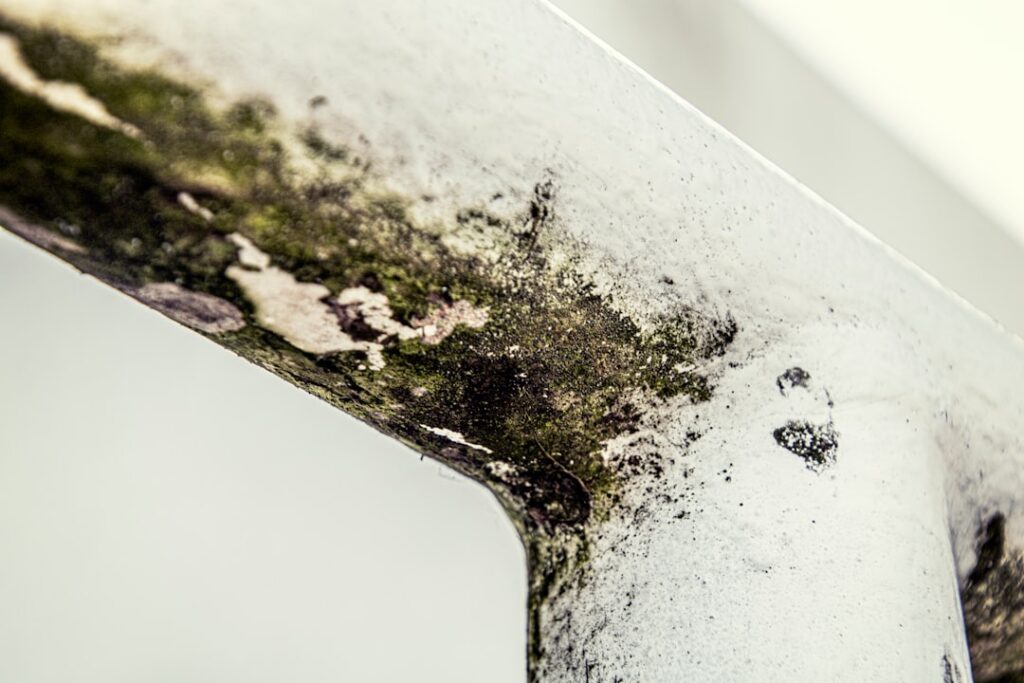
Even after mold is dead and scrubbed away, a dark or discolored mark often remains on grout, wood, or painted surfaces. That is where a mold stain remover comes in. These products target the pigment left behind rather than living growth, and using one correctly means understanding an important distinction: removing a stain is not the same as solving a mold problem. This guide summarizes EPA and CDC guidance current as of 2026 and is educational only. Consult a certified professional for large or hidden contamination, since a stain treatment addresses appearance, not the moisture that caused the growth.
Is this mold, asbestos, or water damage? Get a free instant screen
Upload a clear photo of the suspect area. You'll get an instant AI screening opinion and what to do next. This is screening guidance, not a professional determination.
Screening guidance only. AI can be wrong. Confirm asbestos, mold type, or lead with lab testing or a licensed professional before acting.
What is a mold stain remover and how does it work?
A mold stain remover is a product formulated to lift or bleach out the discoloration that mold leaves on a surface. Mold pigments, particularly the melanin in dark molds, can soak into porous materials and persist long after the organism is gone. Stain removers attack that pigment, usually through one of two mechanisms:
- Oxidizing agents such as sodium hypochlorite (chlorine bleach), hydrogen peroxide, or sodium percarbonate, which chemically break down the colored compounds.
- Surfactants and acids that loosen and lift staining along with surface residue.
The key point is sequence and purpose. A stain remover is the finishing step after the mold has been killed and physically removed, not a replacement for that work. Spraying a stain remover on active, living mold without first removing the growth and fixing the moisture leaves the underlying problem intact while the surface briefly looks clean. The EPA’s framework puts moisture correction and physical removal first; cosmetic restoration comes last. For the removal step itself, see our guide on how to get rid of mold.
Understanding why the stain persists at all helps set expectations. Dark molds produce melanin, the same class of pigment that colors human skin and hair, and melanin is chemically stable and resistant to ordinary cleaning. On a non-porous surface like glazed tile, that pigment sits on top and lifts off with the growth. On porous materials like grout, wood, and concrete, the pigment soaks into the pores and bonds with the material, which is why a surface can be scrubbed completely mold-free and still show a gray or black shadow. A stain remover’s job is to break down or bleach that bonded pigment, which is a different chemical task than killing a living organism, and it is why the two functions are handled by different products and different steps.
Killing mold versus removing the stain
These are two separate jobs, and conflating them is the most common mistake homeowners make.
Killing mold means destroying the living organism. Removing mold means physically taking the growth off the surface, which matters because the EPA notes that dead spores still cause allergic reactions. Removing the stain means erasing the leftover discoloration for appearance’s sake. A surface can be mold-free yet still stained, and a stained surface can still harbor living mold underneath if the moisture was never corrected.
This is why a stain remover should never be the first or only tool. The proper order is: fix the moisture, remove the growth, dry the surface, then treat any remaining stain. Skipping straight to the stain remover on porous materials risks bleaching the surface while living mold persists in the substrate, an outcome our coverage of whether bleach kills mold explains in detail for chlorine-based products.
The practical danger of treating them as one step shows up most often with bleach-based products marketed as combined mold-and-stain removers. They genuinely lighten the stain quickly, which creates a powerful but misleading impression of success on porous surfaces. The homeowner sees a clean wall and assumes the problem is solved, while living mold continues in the material beneath, fed by the water in the product and by whatever moisture caused the original growth. Weeks later the stain returns, and the cycle repeats. Recognizing that the disappearing stain is a cosmetic result, not proof of a solved mold problem, is the single most useful insight when using any of these products.
Types of mold stain removers
Products fall into a few practical categories, each suited to different surfaces.
Chlorine-based removers
Sodium hypochlorite products bleach out dark stains quickly on hard, non-porous surfaces like tile and glazed grout. They work fast on discoloration but carry the fume and mixing hazards of bleach, and they should never be combined with ammonia or acidic cleaners. They are less effective at restoring deeply stained porous materials.
Oxygen and peroxide-based removers
Hydrogen peroxide and sodium percarbonate products oxidize stains with fewer harsh fumes than chlorine and are gentler on many materials. They tend to need a longer dwell time but are a good choice for surfaces where chlorine is too aggressive.
Wood-specific brighteners
Oxalic-acid-based wood brighteners are formulated to lift dark mold and water staining from bare wood, such as deck boards, framing, and trim, without the heavy bleaching that can lighten the surrounding wood unevenly. These are the right tool when the stain is on wood rather than tile, a scenario our guide to mold on wood addresses more fully.
How to use a mold stain remover safely
Whichever product you choose, the safe-use steps are consistent:
- Confirm the mold is already dead and physically removed, and the surface is dry.
- Ventilate the room and wear gloves and eye protection; add an N95 respirator if any growth might be disturbed.
- Read the label, since dwell time and dilution vary by product and surface.
- Test a small inconspicuous area first to check for damage or unwanted lightening.
- Apply, allow the labeled dwell time, then scrub gently and rinse or wipe per the instructions.
- Never mix products; combining chlorine with ammonia or acids can create toxic gas.
Some stains, especially deep ones in porous materials, will not fully disappear no matter the product. At that point the realistic options are sealing and painting over the area or replacing the material. A stain that resists every treatment can also be a clue that the material absorbed more water and mold than the surface suggested.
When a stain means a bigger problem
A stubborn or returning mold stain is worth reading as a signal. If discoloration keeps reappearing after cleaning and treatment, living mold is almost certainly still active, fed by uncorrected moisture. The EPA recommends professional remediation when mold covers more than about 10 square feet, when it followed sewage or flooding, when it is hidden in walls or HVAC, or when an occupant has asthma, a serious allergy, or a weakened immune system. No stain remover addresses any of those situations.
Front Range homeowners often see recurring stains on basement walls and bathroom ceilings where humidity, snowmelt intrusion, or a swamp cooler keeps surfaces damp. The broader mold inspection and testing hub covers when a recurring stain warrants a professional moisture assessment rather than another bottle of remover.
What to do when the stain will not come out
Some stains resist every product, and at that point a homeowner has a few honest choices. The first is to accept that the mold is dead and removed but the discoloration is permanent in that material, then prime and paint over it with a stain-blocking primer that prevents the old stain from bleeding through the new finish. This works well on framing, trim, and walls where appearance is the only remaining issue and the wood or surface is structurally sound.
The second choice is replacement, which is the right call when the stain reflects deep penetration in a porous material that may also still harbor living mold, or when the material has been weakened. A persistently stained piece of drywall or a water-swollen section of trim is usually better replaced than repeatedly treated. The third path applies when stains keep returning despite removal and treatment: that pattern points to active moisture and likely living mold, and the answer is a moisture investigation rather than a stronger remover. Recognizing which of these three situations applies prevents both the frustration of endless reapplication and the expense of replacing material that only needed a coat of primer.
Matching the remover to the surface
The right stain remover depends as much on the surface as on the stain itself, and using the wrong one can damage the material. On glazed tile, glass, and sealed countertops, an oxidizing remover lifts the discoloration quickly because the pigment never penetrated deeply. On grout and unsealed masonry, the same products work but may need a longer dwell time and repeated applications, since the pigment soaked into the pores; resealing grout afterward helps resist future staining.
Wood is the surface that most often calls for a specialized product. Heavy chlorine bleach can lighten the wood unevenly and raise the grain, so an oxalic-acid wood brightener, the same class of product used to restore weathered decks, is usually the better choice for lifting mold stains from bare wood without bleaching the surrounding area. Natural stone such as marble and limestone is the surface to be most cautious with, since acidic products etch it and harsh oxidizers can dull the finish; a stone-safe cleaner is essential there. Fabrics and grout each have their own considerations as well. The common principle is to test any remover on a small, hidden area first, because reversing damage to a finish is far harder than removing a stain.
Stain removal as part of the bigger picture
It helps to place stain removal where it belongs in the overall response to mold: at the very end, as a finishing touch, after the real work is done. The sequence that produces lasting results runs in a specific order. First, find and correct the moisture source, since nothing else holds without it. Second, physically remove the living growth, because dead spores still cause allergic reactions and killing alone is not enough. Third, dry the area thoroughly so the mold cannot simply return. Only then, fourth, does stain removal come into play, addressing the cosmetic discoloration that survives the cleanup.
Approaching it this way prevents the most common disappointment with stain removers, which is using them as a shortcut and watching the stain return. A remover applied to a still-damp surface over living mold buys nothing but a brief cosmetic improvement. A remover applied to a clean, dead, dry surface as the final step delivers exactly what it promises: a restored appearance with no underlying problem left to resurface. Understanding the product as the last item on a checklist rather than the first tool reached for is what turns a stain remover from a source of frustration into a satisfying finish to a job that was actually done right.
For homeowners weighing whether to buy a dedicated stain remover at all, the practical answer depends on the surface and the stake involved. On hard, non-porous surfaces, an ordinary oxidizing cleaner or even a careful bleach application often handles both the growth and the stain, so a specialized product may be unnecessary. The case for a dedicated remover is strongest on materials prone to deep, stubborn staining, such as grout, bare wood, and concrete, where a purpose-formulated product, or a wood-specific brightener, lifts pigment that general cleaners leave behind. Spending a few dollars on the right product for those surfaces is reasonable; spending it in the hope that any product will fix an underlying mold or moisture problem is not. Keeping the purchase decision tied to the stain rather than to the mold keeps expectations realistic and the result satisfying.
References
- Mold cleanup in your home — U.S. Environmental Protection Agency
- Mold cleanup and remediation guidance — Centers for Disease Control and Prevention
- A brief guide to mold, moisture and your home — U.S. Environmental Protection Agency
If a mold stain keeps returning to the same Front Range wall or ceiling despite treatment, active moisture is the likely cause. Reach out through our contact page to connect with a vetted local inspector.