Yellow Mold on Ceiling: Causes, Risks, and Cleanup
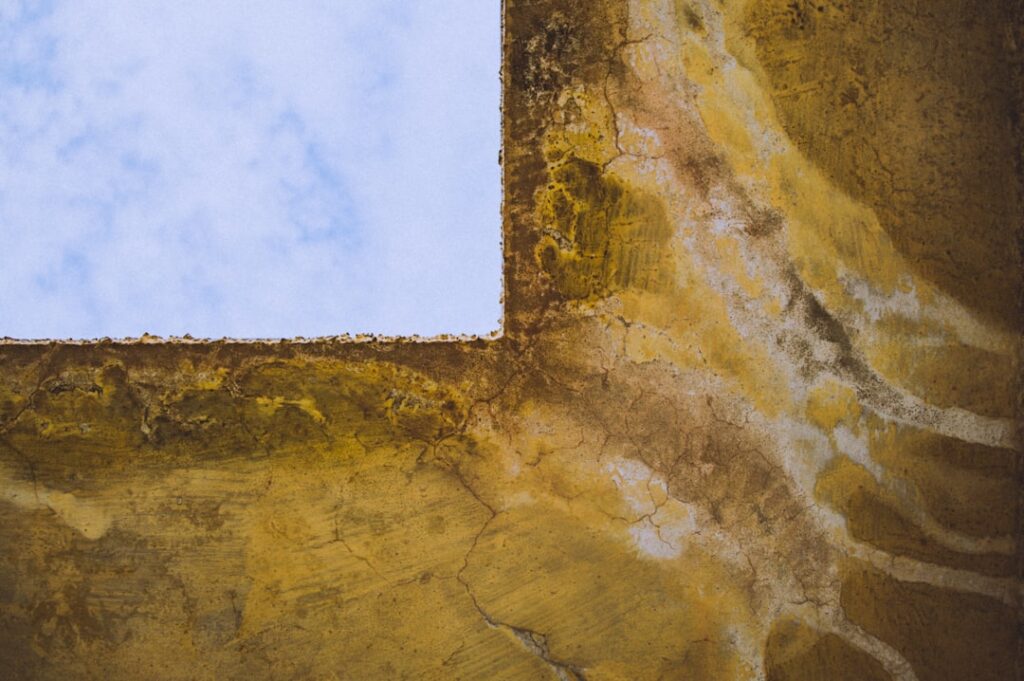
A yellowish stain or fuzzy patch spreading across a ceiling almost always means water is getting in from above, and the discovery raises understandable concern. Yellow mold on ceiling surfaces can come from several species, and the color alone says little about the danger; the urgent message is the moisture behind it. A ceiling is a horizontal surface that catches and holds water from roof leaks, attic condensation, and upstairs plumbing, so growth there often points to a problem you cannot see. This guide summarizes EPA and CDC guidance current as of 2026; consult your physician about any symptoms and a certified professional for testing decisions.
Is this mold, asbestos, or water damage? Get a free instant screen
Upload a clear photo of the suspect area. You'll get an instant AI screening opinion and what to do next. This is screening guidance, not a professional determination.
Screening guidance only. AI can be wrong. Confirm asbestos, mold type, or lead with lab testing or a licensed professional before acting.
What causes yellow mold on a ceiling?
Yellow mold on a ceiling forms where the ceiling material has been repeatedly or persistently wet. Several molds appear yellow, including some Aspergillus species and the yellow slime mold Fuligo septica, and certain growths look yellow simply because of the surface, the lighting, or the colony’s age. Color cannot identify a species; only a lab can. Some yellow staining is not mold at all but tannin bleed, water-mineral deposits, or nicotine residue, so the first task is confirming whether it is living growth.
The moisture sources for ceiling mold are fairly predictable. A roof leak is the classic cause, with water tracking along framing before it shows up as a ceiling stain often some distance from the actual entry point. Attic condensation, common when warm humid air meets a cold roof deck, drips onto the ceiling below. Upstairs bathroom and plumbing leaks soak the ceiling from above. Poorly vented bathrooms and kitchens let steam condense on the ceiling itself. The EPA’s core principle holds: control the moisture or the mold returns. Bathroom ceilings are a frequent site, and our guide on getting rid of mold on a ceiling covers the cleanup technique in detail.
Is yellow mold on a ceiling dangerous?
As with mold of any color, the health response depends more on the person and the exposure than on the pigment. The CDC notes that mold exposure can cause nasal congestion, throat and eye irritation, coughing, and wheezing, and that people with asthma, allergies, or weakened immune systems may react more strongly. None of these effects is specific to yellow mold, and there is no scientific basis for treating yellow as more or less dangerous than other colors.
The greater concern with ceiling mold is what it implies about hidden damage. A wet ceiling means saturated drywall, possibly wet insulation in the cavity above, and the risk of growth on framing out of sight. Prolonged moisture can weaken the ceiling structurally, and a sagging, soft ceiling poses a physical hazard. Because the visible patch is often smaller than the wet area above it, ceiling mold frequently signals a larger hidden problem that a surface wipe will not solve.
How to clean yellow mold on a ceiling safely
If the affected area is small, the ceiling material is sound, and you have confirmed and stopped the moisture source, a careful cleaning may be appropriate. Protect yourself: ceiling work means debris falling toward your face, so wear an N95 respirator, eye protection, and nitrile gloves, and lay down drop cloths.
Cleaning a painted ceiling
For a small patch on a sealed, painted ceiling, dampen the area to limit airborne spores, then clean with soap and water or white vinegar; the CDC notes bleach is not required for routine hard-surface cleaning. A diluted bleach solution can lift stubborn staining, but never mix bleach with vinegar or ammonia. Work in short sections, dry the area, and watch for whether the stain returns, which would indicate the moisture source is still active or that growth has penetrated the drywall.
Drywall is porous, so if the ceiling is soft, crumbling, sagging, or the mold has soaked through rather than sitting on painted surface, cleaning will not work and the affected section needs to be cut out and replaced. The EPA recommends professional remediation for affected areas larger than about 10 square feet, and a stained ceiling often hides more wet material than is visible. For broader hard-surface technique, our walkthrough on how to clean mold on walls applies to ceilings as well.
When to call a professional
Bring in a professional when the moisture source is a roof or hidden plumbing leak you cannot locate, when the ceiling is sagging or soft, when the affected area exceeds roughly 10 square feet, or when growth likely extends into the attic or wall cavity. These situations involve hidden wet materials and structural questions that a homeowner cannot safely evaluate from below.
A roofer or plumber may be needed to stop the water, and a mold professional to assess how far growth has spread and to remediate it. Front Range homes are prone to ice-dam roof leaks in winter and attic condensation problems, both of which commonly produce ceiling stains. Because the visible mold is usually the tail end of a larger wet area, an inspection that traces the moisture to its origin prevents the frustrating cycle of repainting a ceiling that keeps staining through.
Tracing the moisture above a stained ceiling
The single most important fact about ceiling mold is that the visible stain rarely sits directly below the water’s entry point. Water enters at one spot, travels along the top of the drywall, the framing, or the vapor barrier, and emerges where it finally pools or drips, which can be feet away from the source. This is why painting over a ceiling stain so often fails: the paint covers the symptom while the water keeps tracking from an entry point that was never found.
Tracing the source means thinking about what is above the ceiling. If there is an occupied floor above, a bathroom, a laundry, or a kitchen overhead is a prime suspect for a plumbing or fixture leak, and the stain may sit downhill from where a pipe or drain is failing. If the attic is above, the candidates are roof leaks, often around penetrations like vents, chimneys, and skylights, and attic condensation, where humid indoor air rising into a cold attic condenses on the underside of the roof deck and rains back down. On the Front Range, winter ice dams are a frequent culprit, forming when roof heat melts snow that refreezes at the cold eaves and backs water up under the shingles. Following the moisture uphill from the stain, checking the attic with a flashlight for wet sheathing or stained insulation, and inspecting the roof for the nearest penetration usually narrows the source. Because some of this requires getting into the attic or onto the roof safely, the tracing step is often where a professional inspection earns its keep.
What hides above a moldy ceiling
A stained ceiling is a window into a cavity the homeowner cannot see, and what lies above often determines how serious the job becomes. The ceiling drywall itself, once wet, may be soft, sagging, or crumbling, and saturated drywall cannot be cleaned and reused; it has to be cut out. Above it, the insulation in the joist cavity or attic floor may be soaked, and wet insulation both loses its R-value and grows mold, so it frequently needs removal and replacement.
The framing, the ceiling joists and the roof structure, can also harbor growth where it has stayed wet, and prolonged moisture raises the possibility of wood-decay fungi that weaken structural members. A ceiling that has been wet long enough to grow visible mold has usually held that moisture against these hidden materials for some time, which is why the repair is so often larger than the stain suggests. This is also why a sagging or spongy ceiling is treated as a safety concern, not just a cosmetic one: wet drywall and compromised framing can fail and fall. The lesson is that ceiling mold is best understood as the visible edge of a hidden wet zone, and the real scope of the problem lives in the cavity above, which is exactly what a moisture-focused inspection is designed to reveal before you commit to a repair.
Preventing yellow mold on ceilings
Prevention is moisture management above and below the ceiling. Maintain the roof and flashing, and inspect after storms, heavy snow, and ice-dam season. Ensure the attic is properly ventilated and insulated so warm humid air does not condense on the cold roof deck and drip down. Vent bathroom and kitchen exhaust fans to the outside, not into the attic, and run them long enough to clear steam.
Keep indoor humidity below the roughly 50 percent the EPA recommends, address upstairs plumbing leaks promptly, and respond to any ceiling water stain quickly rather than painting over it, since a covered leak keeps spreading. Drying a wet ceiling within 24 to 48 hours can prevent mold from establishing at all. Catching the moisture early, before it produces visible growth, is far cheaper than replacing soaked drywall and insulation later. A dry ceiling simply does not grow mold, so every prevention measure circles back to keeping water out.
Is it mold, or just a water stain?
Not every yellow or brownish mark on a ceiling is mold, and distinguishing growth from staining changes how you respond. A water stain is the mineral and residue deposit left behind when water passes through the ceiling material and evaporates; it is typically flat, has a defined ring or tide line, and does not have texture. Tannins leaching from wood framing above can produce yellow-brown ceiling stains, and old nicotine residue or simple dirt can mimic discoloration too. These marks indicate that water reached the ceiling at some point, which is itself worth investigating, but they are not living growth.
Mold, by contrast, usually has some texture, fuzzy, speckled, or slightly raised, and is often accompanied by a musty smell. It tends to spread and may darken or change over time, and it recurs in damp conditions even after the surface is cleaned. A practical, cautious check is to dab a small spot with a diluted bleach solution on a cotton swab: if the discoloration lightens quickly, it may be a stain, while mold tends to return. The reason the distinction matters is that a pure water stain points to a past or intermittent leak that you should still trace and fix, whereas active mold means the material has been wet long enough to grow growth and likely hides more moisture and growth above. Either finding is a reason to investigate the source, but mold raises the urgency and the likelihood that drywall and insulation above need removal. When the answer is genuinely unclear, especially over a large area or with any sagging, an inspection settles it without guesswork and identifies the moisture behind whichever it turns out to be.
A practical caution applies either way: do not simply repaint over a yellow ceiling mark, even a dry one, without first finding why it appeared. Stain-blocking primer can hide a discoloration, but if the underlying leak or condensation is still active, the moisture continues to work above the paint, and the stain or growth reappears, often worse, while the hidden materials keep deteriorating. The right order is to identify and stop the moisture, address any wet or moldy material above, confirm the cavity has dried, and only then prime and repaint. Skipping straight to cosmetics is the most common mistake with ceiling marks, and it is why so many homeowners find themselves repainting the same spot season after season. Treating the mark as information about a hidden condition, rather than as a blemish to cover, is what leads to a repair that actually holds.
References
- Mold Cleanup in Your Home — U.S. Environmental Protection Agency
- About Mold and Health Effects — Centers for Disease Control and Prevention
- Mold and Indoor Air Quality — National Institute of Environmental Health Sciences
A stained ceiling usually hides more wet material than you can see, so tracing the moisture matters. Our mold inspection hub explains how an assessment finds the source, and Front Range homeowners can reach a vetted local inspector through our contact page.