Is Penicillin Mold? What Homeowners Need to Know
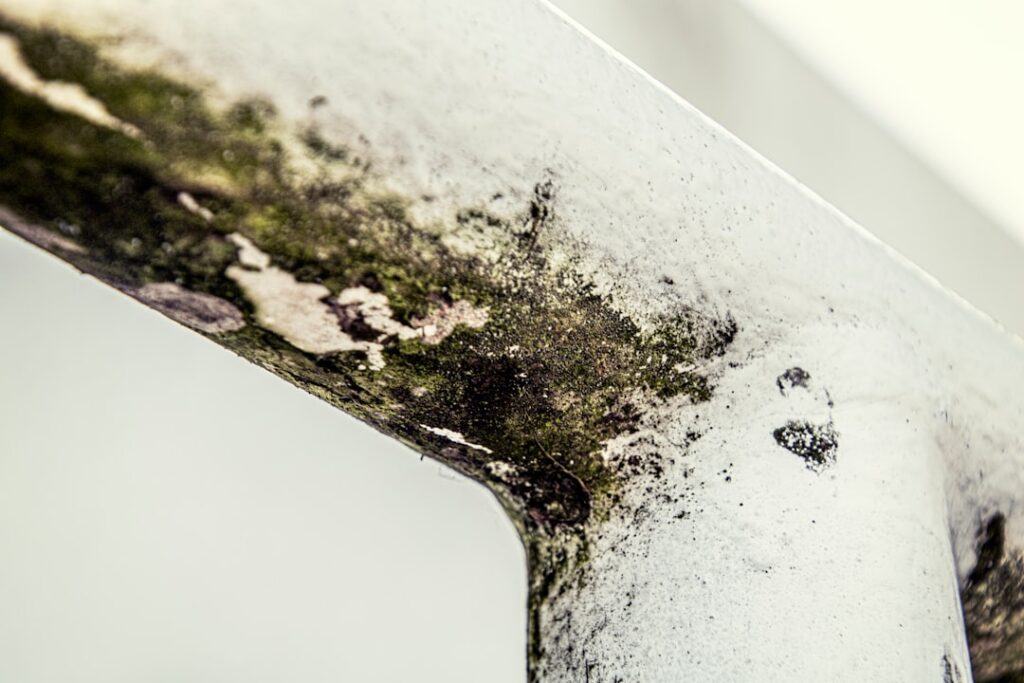
The shared name confuses many people: if penicillin comes from a mold, is the blue-green patch on the bread the same thing as the antibiotic? The question, is penicillin mold, mixes up a purified drug with the living organism that produces a related compound. Penicillin is a substance derived from Penicillium mold, but the mold itself is not medicine, and a household colony should be treated as a moisture problem. This guide summarizes EPA and CDC guidance current as of 2026; consult your physician for symptoms and any medication questions, and a certified professional for testing and removal decisions.
Is this mold, asbestos, or water damage? Get a free instant screen
Upload a clear photo of the suspect area. You'll get an instant AI screening opinion and what to do next. This is screening guidance, not a professional determination.
Screening guidance only. AI can be wrong. Confirm asbestos, mold type, or lead with lab testing or a licensed professional before acting.
Is Penicillin Mold? The Direct Answer
No, penicillin is not mold. Penicillin is an antibiotic compound originally derived from a mold in the Penicillium genus, most famously Penicillium chrysogenum (historically Penicillium notatum). The mold produces the compound as a byproduct of its metabolism; scientists then isolate and purify that compound into the drug.
So there is a relationship, but they are not the same thing. The mold is a living fungus that grows on damp surfaces and food. Penicillin is a refined chemical, manufactured under controlled industrial conditions and dosed precisely as medicine. Eating or breathing mold does not deliver a usable, safe dose of antibiotic, and the household mold is not therapeutic in any way.
How Penicillin Comes From Mold
The story begins with Alexander Fleming’s 1928 observation that a Penicillium mold contaminating a bacterial culture had killed the surrounding bacteria. The mold was producing a compound, later named penicillin, that interferes with bacterial cell-wall formation.
Turning that observation into medicine took years of work. Researchers identified the active compound, found higher-yielding mold strains, and developed industrial fermentation and purification methods to mass-produce a pure, standardized drug. Modern penicillin is made by growing selected Penicillium strains in controlled tanks, then extracting and purifying the antibiotic. None of that resembles a mold colony growing on your wall, which is why the household form is covered alongside other species in our guide on Penicillium mold in homes.
Why Household Penicillium Is Not Medicine
Several reasons explain why a home colony provides no medical benefit:
- Wrong compound mix: wild mold produces variable, unpurified substances, not a controlled antibiotic dose.
- No dosing control: medicine requires precise, consistent amounts; mold offers neither.
- Other byproducts: molds can produce allergens and other compounds you would not want to ingest.
- Contamination: household growth coexists with dust, bacteria, and other molds.
The takeaway is clear: never treat moldy food as a source of antibiotic, and discard it instead. The famous origin story is history, not a home remedy.
Other Molds That Produce Useful Compounds
Penicillium is the most famous example of a mold yielding a beneficial compound, but it is not the only one, and seeing the broader picture reinforces why the organism and the product are distinct. Molds and fungi have given medicine and food several valuable substances, all extracted and refined under controlled conditions rather than consumed as raw growth.
Beyond penicillin, other Penicillium species and related fungi have contributed compounds used in medicine and food production. Certain molds are deliberately cultured to make particular cheeses, the blue veining in some cheeses comes from controlled Penicillium growth in a food-safe process. Fungi have also been sources of compounds developed into other pharmaceuticals over the decades. In every case, the useful substance is produced by a specific organism under deliberate, controlled cultivation, then isolated for use.
The common thread is control. None of these examples suggests that random household mold is beneficial or edible. The cheese-making mold is a specific strain grown under food-safety conditions; the medicinal compounds are purified in laboratories. A patch of mold on a wall or a fuzzy spot on forgotten leftovers shares none of that careful context. The lesson, again, is to separate the controlled production of a useful compound from the uncontrolled growth of mold in a home, the latter being simply a moisture problem to address, as our guide on Penicillium mold describes.
Is Penicillium Mold Dangerous?
The CDC notes that exposure to damp, moldy environments can cause upper-respiratory symptoms in some people, including congestion, throat irritation, coughing, and wheezing. Penicillium is a recognized allergen, and people with mold allergies or asthma may react to its spores. Those with weakened immune systems face higher risk from many molds.
For most healthy people, normal background levels of Penicillium spores, present in nearly every indoor environment, do not cause illness. A visible colony still warrants cleanup because it signals active moisture. There is also a separate medical consideration: people allergic to the penicillin antibiotic are not necessarily allergic to the mold in the same way, and any drug-allergy questions belong with a physician. Persistent symptoms should always be evaluated medically.
The Journey From Mold to Medicine
To fully answer whether penicillin is mold, it helps to follow the actual path from the living organism to the bottle of antibiotic, because every step in that journey separates the two. The distance between a mold colony and a dose of medicine is enormous, both in process and in substance.
The journey begins with growing a carefully selected strain of Penicillium under sterile, controlled conditions, nothing like the random contamination of a home. As the mold grows, it secretes penicillin along with many other metabolic byproducts into its surroundings. The next steps extract that crude mixture and then purify it, removing the mold itself, the other compounds, and any contaminants, until only the standardized antibiotic remains. Finally, that purified compound is formulated into precise, measured doses.
Each stage strips away something that makes household mold unsuitable as medicine: the uncontrolled growth, the unknown mix of byproducts, the contamination, the absence of dosing. By the time penicillin reaches a patient, it is a refined chemical, not a fungus. This is why the answer to “is penicillin mold” is no, and why the famous origin story should never be read as a suggestion that moldy food has medicinal value. The household form remains simply a moisture-driven mold, part of the family covered in our guide on Penicillium mold.
Recognizing Penicillium in the Home
Penicillium typically appears as a powdery, blue-green to gray-green colony, often with a white or yellow growing edge. It is one of the most common indoor molds and a frequent source of the musty smell after water damage. Common locations include water-damaged drywall, damp basements, HVAC systems, and decaying food.
Appearance alone cannot confirm the genus, since several molds share that blue-green look. Laboratory analysis is the only reliable identification, but for cleanup it rarely matters. As our guide on mold color explains, hue is only a rough clue. The EPA’s position is consistent: visible mold means a moisture problem, and the species name does not change the cleanup.
How to Handle Penicillium Growth
Treat a Penicillium colony like any other indoor mold:
- Find and stop the moisture source first.
- Keep indoor relative humidity below 50 percent with ventilation or a dehumidifier.
- For areas under about 10 square feet, clean hard surfaces with detergent and water while wearing an N95, gloves, and eye protection.
- Discard porous materials such as soaked drywall and carpet padding, and throw out moldy food entirely.
- Dry the area completely to prevent regrowth.
- Call a professional for large areas, HVAC contamination, or recurring growth.
Because Penicillium grows quickly on wet materials, drying a water-damaged area within 24 to 48 hours is the most effective prevention.
The Difference Between Allergy and Infection
The penicillin-and-mold question often tangles together two separate health ideas that deserve to be kept apart: an allergy to the antibiotic, and a reaction to the mold. They are not the same, and conflating them causes needless worry.
A penicillin drug allergy is a reaction of the immune system to the medication, ranging from a rash to, rarely, a severe response. It is a medical matter diagnosed and managed by a physician, and it concerns the purified drug, not household mold. Being allergic to the antibiotic does not automatically mean you will react to Penicillium mold spores, because the immune system responds to different things in each case.
A mold allergy, by contrast, is a reaction to inhaled spores, producing the nasal, throat, and respiratory symptoms the CDC associates with damp environments. Someone can have a mold allergy without any drug allergy, and the reverse. The practical point for homeowners is to treat them as distinct: manage household mold by controlling moisture and cleaning appropriately, and take any drug-allergy questions to a physician. Neither problem is solved by confusing it with the other.
Why the Penicillin Story Causes Confusion
The persistent confusion around this topic has understandable roots, and unpacking them helps homeowners reason more clearly. The core issue is that one organism, Penicillium mold, lent its name to one of medicine’s greatest achievements, and the shared name implies a closeness that does not exist in everyday terms.
School lessons often present the discovery as “penicillin comes from mold,” a true but compressed statement that leaves out the years of laboratory refinement between a contaminated petri dish and a usable drug. That shorthand plants the idea that the mold itself is somehow medicinal, which leads to the occasional and dangerous notion that moldy food might be beneficial. It is not; wild mold offers no controlled dose and carries other byproducts.
A second source of confusion is the assumption that a famous “good” mold must be harmless everywhere. In reality, Penicillium is a common indoor allergen and an indicator of moisture problems when it grows on building materials. Holding two ideas at once, that the genus gave the world an antibiotic and that a colony on your wall is still a moisture problem to clean, resolves the contradiction. The household form belongs to the same family covered across the mold inspection and testing hub.
Putting the Name in Perspective
The link between penicillin and Penicillium is a genuine and important piece of medical history, but it should not shape how homeowners treat mold. The antibiotic that transformed medicine came from years of laboratory refinement, not from a colony on a wall. A home colony is simply a sign of excess moisture that needs correcting.
Understanding the distinction prevents two mistakes: assuming household mold is harmless because of its medicinal cousin, and fearing it as uniquely toxic. The measured response, control the moisture and clean appropriately, applies here as it does across the mold inspection and testing hub.
A practical way to hold both truths at once is to separate the organism from the product entirely. Penicillin the drug is a triumph of laboratory refinement, dosed precisely and purified completely; Penicillium the mold is a common, moisture-loving fungus that belongs on the cleanup list when it appears indoors. The shared name links a fascinating discovery to an everyday nuisance, but it does not link their properties. Treat the colony on the wall as you would any mold, find the water, remove the growth, dry the area, and leave questions about the antibiotic, including any drug allergy, to a physician. That clean separation is the most useful thing to carry away from the question.
References
- About Mold and Health — Centers for Disease Control and Prevention
- A Brief Guide to Mold, Moisture and Your Home — U.S. Environmental Protection Agency
- Mold and Your Health — National Institute of Environmental Health Sciences
- Mold and Dampness — American Lung Association
If a blue-green colony has you uncertain about the moisture behind it, Front Range homeowners can get in touch with a vetted local inspector through our contact page for an independent assessment.