What Does Mildew Look Like: A Plain-Language Guide
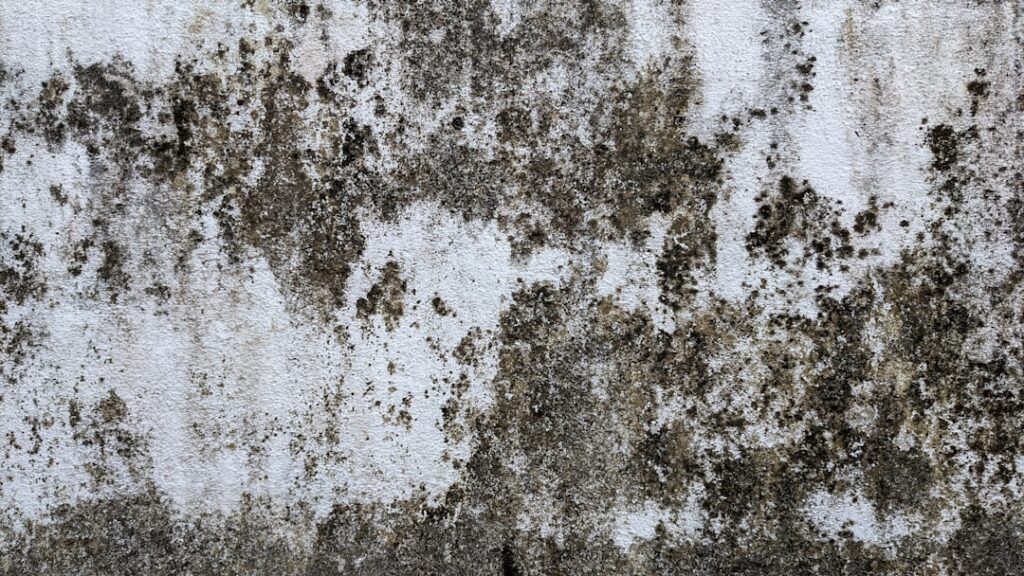
Mildew is one of the first signs of a moisture problem, yet many homeowners are unsure whether the patch they are looking at is mildew, heavier mold, or just soap scum. So what does mildew look like, and how can you tell it apart from more serious growth? Mildew typically appears as a flat, powdery coating in white, gray, or yellow, usually on damp surfaces with poor airflow. This guide summarizes EPA and CDC guidance current as of 2026; consult your physician for symptoms and a certified professional for testing and removal decisions.
Part of our Types of Mold guide — start there for the full picture →
Is this mold, asbestos, or water damage? Get a free instant screen
Upload a clear photo of the suspect area. You'll get an instant AI screening opinion and what to do next. This is screening guidance, not a professional determination.
Screening guidance only. AI can be wrong. Confirm asbestos, mold type, or lead with lab testing or a licensed professional before acting.
What Does Mildew Look Like?
Mildew is the flat, surface-level form of mold. It starts as small specks and spreads into a thin, powdery or downy film. Early growth is often white or light gray, then darkens to yellow, brown, or black as it matures. Unlike heavier mold, mildew sits on top of a surface rather than digging into it, which is why you can usually wipe it off a hard, nonporous material.
The texture is the giveaway. Mildew feels powdery or slightly fuzzy and lies flat. Heavier mold tends to be raised, fuzzy, or slimy, with deeper color saturation. Both are fungi and both signal dampness, but mildew is generally the earlier, easier-to-remove stage.
Colors and Textures to Recognize
Mildew’s appearance shifts with age and surface:
- White or light gray: typical early growth, powdery and dry-looking.
- Yellow to tan: common on fabrics, paper, and leather.
- Black or dark brown: older mildew, often confused with “black mold.”
- Downy or powdery surface: the texture that distinguishes mildew from glossy soap scum or hard water deposits.
Color is not a reliable way to judge how dangerous a growth is, as our guide on what mold color reveals explains. Dark mildew is not automatically toxic, and light mildew is not automatically harmless. Treat the texture and location as better indicators than hue alone.
Where Mildew Commonly Appears
Mildew favors surfaces that stay damp and where air does not circulate. In Front Range homes, look for it in:
- Shower walls, tile grout, and around tub caulk.
- Windowsills and frames where winter condensation collects.
- The rubber gasket and detergent drawer of front-load washers.
- Basement storage boxes, especially cardboard.
- Closets with poor airflow and on leather or fabric goods.
- Houseplant soil and the leaves of plants kept too wet.
Because Colorado’s climate is generally dry, mildew here is often seasonal, appearing during snowmelt, when a humidifier runs all winter, or in a bathroom with a weak exhaust fan. A persistent musty smell often accompanies it; our guide on tracing a mildew smell covers how to find the source when growth is hard to see.
Mildew Versus Heavier Mold
Distinguishing mildew from established mold helps you gauge urgency.
Mildew
- Flat, powdery, surface-bound.
- White, gray, or yellow when young.
- Wipes off hard surfaces, usually without staining beneath.
Heavier mold
- Raised, fuzzy, or slimy.
- Deep green, black, or blue.
- Penetrates porous materials and often leaves a stain after cleaning.
If a patch has grown into drywall, leaves a stain you cannot remove, or keeps returning, it has likely moved past surface mildew. Our explainer on whether mildew is mold covers the overlap between the two terms in more detail.
How Mildew’s Appearance Changes With Age
Mildew does not look the same on day one as it does weeks later, and recognizing its progression helps you judge how long a problem has been developing. The visual evolution is fairly consistent across surfaces, even as the exact look varies by material.
In its earliest stage, mildew appears as scattered tiny specks, often white or pale gray, easy to dismiss as dust. These specks are the first colonies establishing on a damp surface. As they grow and merge, the patch becomes a more continuous film, still relatively flat and powdery but now clearly a coating rather than stray dots. The color often deepens during this phase, shifting toward yellow, tan, or darker gray.
Mature mildew that has been left untreated darkens further, sometimes to brown or black, and may begin to take on a slightly fuzzy texture as it works toward the surface of porous materials. At this point it is approaching the threshold where everyday language would call it mold rather than mildew. Catching it at the speckled or early-film stage makes cleanup trivial; letting it reach the dark, textured stage means it has likely penetrated grout, caulk, or drywall and will resist a simple wipe. The progression itself is a clock, telling you how long moisture has been present, a clue that complements the visual cues in our guide on mold color.
Mildew Look-Alikes
Several non-fungal marks get mistaken for mildew:
- Soap scum: a waxy, often whitish film on tile that feels smooth, not powdery.
- Hard-water deposits: crusty mineral buildup around faucets and drains.
- Efflorescence: white crystalline powder on masonry, which is mineral rather than living.
- Soot or dust film: dark smears that wipe to a streak rather than lifting as growth.
A quick test: mildew is usually accompanied by a musty smell and a powdery or downy texture, while mineral and soap deposits are odorless and either crusty or waxy. When the patch smells musty and reappears in damp conditions, mildew is the likely answer.
Spotting Mildew Before You Can See It
Often the first sign of mildew is not visual at all but a smell, and learning to act on that early cue lets you catch growth before it spreads into something harder to remove. Mildew produces the same musty, earthy odor as other molds, and that smell frequently arrives before any patch is visible.
A musty odor concentrated in a closet, bathroom, basement, or near a window points to mildew establishing on a surface you have not yet noticed, or in a spot you cannot easily see, behind stored boxes, under a sink, along the back of a windowsill. Trusting the nose and investigating the source, rather than reaching for an air freshener, turns the smell into an early-warning system. Air fresheners only mask the odor while the growth continues.
Other pre-visual clues support the smell. A room that feels persistently damp or clammy, condensation that lingers on windows, or fabrics and stored items that smell musty all indicate the conditions mildew needs. Checking these areas when you notice the signs, and confirming dampness with a simple humidity gauge, often reveals early mildew that a quick cleaning and a moisture fix will resolve. Catching it at this stage is the entire goal of the proactive approach behind the mold inspection and testing hub.
Health Considerations
The CDC notes that exposure to damp, moldy environments, including mildew, can cause symptoms in sensitive people, such as nasal stuffiness, throat irritation, coughing, and eye irritation. People with allergies, asthma, or weakened immune systems may react more strongly. For most healthy people, a small mildew patch is a minor concern, but it still warrants cleaning because it spreads and signals dampness.
Any persistent respiratory symptom should be discussed with a physician rather than self-diagnosed. The presence of mildew is a prompt to control moisture, not a reason to assume a serious health threat.
What Mildew Looks Like on Different Surfaces
Mildew’s appearance shifts depending on what it grows on, so recognizing it means knowing how it presents across the materials in a home. The same organism can look quite different on tile than on fabric or a windowsill.
On tile and grout
It starts as black or gray speckling in grout lines and along caulk, often in the lower corners of a shower where water pools. On glossy tile it appears as a powdery film that wipes off, while in porous grout it embeds and can stain.
On fabric and leather
Mildew shows as fuzzy white, gray, or yellow patches, sometimes with a faint downy texture, and almost always with a musty smell. On leather it can look like a light dusting that returns after wiping if the item stays damp.
On windowsills and walls
Near windows that sweat in winter, mildew appears as dark specks along the sill and the bottom of the frame, spreading onto the adjacent wall if condensation persists. On painted drywall it begins as scattered spots that merge over time.
Across all these surfaces, the constants are a flat-to-downy texture, a musty odor, and a tie to dampness. Recognizing those shared traits matters more than memorizing each surface, and it helps separate mildew from the look-alikes covered below. Color alone, as our guide on mold color stresses, is the least reliable clue.
How Mildew Progresses Into Heavier Mold
Mildew is best understood as an early stage that can advance if ignored, and seeing that progression helps homeowners judge urgency. Left on a damp surface, surface mildew has time to work into porous materials. On tile that means migrating from the glossy face into the grout and caulk; on a wall it means moving from a surface film into the paper face of the drywall.
As it penetrates, the growth changes character. The flat, powdery film becomes raised and fuzzy, the color deepens, and cleaning no longer removes it cleanly, leaving a stain behind. At that point you are dealing with what most people simply call mold, and the response shifts from a quick wipe to possibly removing material or, for larger areas, calling a professional. The EPA’s general 10-square-foot threshold for do-it-yourself cleanup becomes the relevant benchmark.
The takeaway is that mildew is a window of opportunity. Catching and cleaning it while it is still surface-bound, and fixing the moisture that feeds it, prevents the harder problem it becomes when ignored. Our explainer on whether mildew is mold covers this continuum in more detail.
What to Do When You See Mildew
Because mildew is surface-bound, it usually cleans up easily:
- Ventilate and wear gloves and an N95 if the patch is more than trivial.
- Scrub hard surfaces with detergent and water, or a diluted bleach for stubborn nonporous patches.
- Dry the surface completely to prevent regrowth.
- Launder washable fabrics in hot water if the fabric allows.
- Replace grout or caulk that is stained through.
- Fix the underlying moisture, weak ventilation, a leak, or high humidity, if mildew keeps returning.
Mildew is the easiest fungus to manage and a useful early warning. Catching it before it becomes entrenched mold is the goal of the broader mold inspection and testing hub.
Recognizing what mildew looks like is ultimately about acting early. Because it begins as flat, powdery specks before deepening into darker, fuzzier, harder-to-remove growth, the appearance itself is a timeline. A patch caught at the pale, powdery stage cleans up in minutes and signals a moisture issue you can correct before it worsens. The same patch ignored for weeks becomes embedded growth that resists cleaning and may have penetrated grout or drywall. Learning the visual cues, and pairing them with the musty smell that often arrives first, turns mildew from a recurring nuisance into an early-warning system that protects the home from heavier mold.
References
- Mold Cleanup in Your Home — U.S. Environmental Protection Agency
- About Mold and Health — Centers for Disease Control and Prevention
- Mold and Dampness — American Lung Association
- Mold and Your Health — National Institute of Environmental Health Sciences
Frequently asked questions
What does mildew look like?
Mildew appears as a flat, powdery or downy film, usually white or gray when young and darkening to yellow, brown, or black with age. It sits on the surface rather than penetrating it, so it often wipes off hard, nonporous materials.
How do I tell mildew from heavier mold?
Mildew is flat, powdery, and surface-bound, while heavier mold is raised, fuzzy, or slimy and penetrates porous materials, often leaving a stain after cleaning. If a patch has grown into drywall or keeps returning, it has likely progressed beyond mildew.
Is mildew the same as soap scum?
No. Soap scum is a smooth, waxy film and hard-water deposits are crusty and odorless, while mildew is powdery or downy and usually carries a musty smell. The smell and texture are the easiest ways to tell them apart.
Is mildew harmful?
For most healthy people a small mildew patch is a minor concern, but the CDC notes damp, moldy environments can cause nasal, throat, and eye irritation in sensitive people. Clean it promptly and address the moisture, and consult a physician about persistent symptoms.
If mildew keeps coming back and you suspect a hidden moisture source, Front Range homeowners can get in touch with a vetted local inspector through our contact page.