Aspergillus Niger: Black Mold Facts for Homeowners
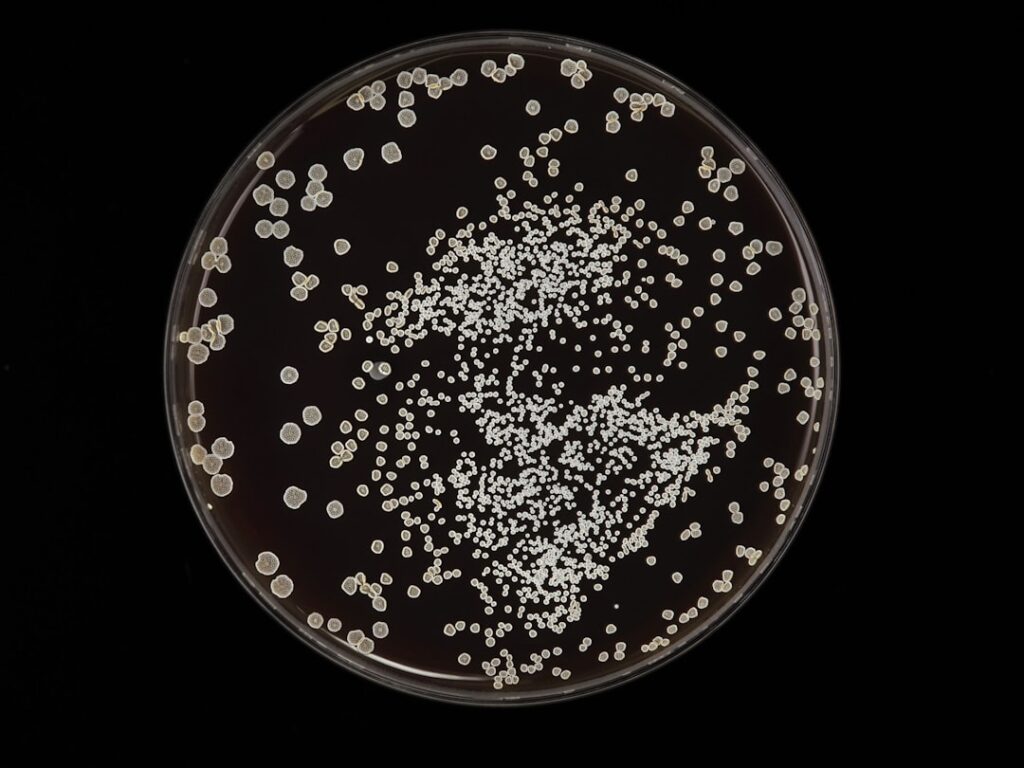
Aspergillus niger is a black-spored mold that most people have seen without knowing its name. It is often described as the dark, sooty growth on the papery skin of onions, on some stored fruits and foods, and on damp surfaces indoors. Because its spores are black, it is regularly mistaken for the mold that headlines call “toxic black mold,” which is usually a reference to a different genus entirely. The same species also has a long industrial history: researchers describe it as the main workhorse for large-scale citric acid production. This guide explains what Aspergillus niger is, where it tends to grow, how it fits into the Aspergillus and Penicillium categories seen on lab reports, what CDC says about health effects, and how to approach cleanup and moisture control at home. It summarizes CDC, EPA and NIH-hosted sources current as of 2026 for general education. It is not medical advice; anyone with symptoms or a weakened immune system should talk with a physician.
Part of our Types of Mold guide — start there for the full picture →
Dealing with mold or water damage? Talk to a remediation pro now.
📞 Call (833) 723-1134What Aspergillus Niger Is
Aspergillus is a large genus of molds. CDC’s aspergillosis page states that there are approximately 180 species of Aspergillus, that fewer than 40 of them are known to cause infections in humans, and that Aspergillus fumigatus is the most common cause of human Aspergillus infections. CDC lists A. niger among the other common species, alongside A. flavus and A. terreus. The broader genus is covered in the Aspergillus overview.
The species name “niger” is Latin for black, a reference to the color of its spores. In general descriptions, colonies often start pale and then turn dark as spore-bearing heads mature, giving a speckled or powdery black surface. Under magnification, Aspergillus species share a characteristic spore-bearing structure, but distinguishing one species from another reliably usually requires a laboratory. Two related species are covered separately in the guides to Aspergillus flavus and Aspergillus nidulans.
Where it lives in nature
In general terms, Aspergillus niger is widely described as common in soil, on decaying plant material and on stored foods. It is frequently cited as a cause of black mold on onions and garlic, and on some fruits, nuts and grains in storage. These descriptions are hedged general knowledge; exact prevalence varies with climate, storage conditions and food type.
CDC’s aspergillosis page states more broadly that Aspergillus spores are common in indoor and outdoor environments, that it may not be possible to completely avoid breathing in some Aspergillus spores, and that most people breathe in Aspergillus spores every day without getting sick. CDC’s general mold page lists Aspergillus, along with Cladosporium and Penicillium, as among the most common indoor molds.
Aspergillus Niger at a Glance
The table below collects the main points in one place. Items marked as general are hedged background; items attributed to an agency or review reflect what those sources state.
| Aspect | Detail |
|---|---|
| Classification | A species in the genus Aspergillus; CDC lists A. niger among common Aspergillus species |
| Appearance | General: black, powdery or speckled colonies, sometimes over a paler base |
| Common outdoor and food sources | General: soil, decaying vegetation, onions and some stored foods |
| Indoor conditions | Grows where there is moisture; EPA states no mold will grow without water or moisture |
| Typical indoor surfaces (general) | Damp drywall, window sills, bathroom grout and caulk, refrigerator gaskets, stored food, wet cardboard |
| Health relevance | CDC: most people do not get sick from Aspergillus; people with weakened immune systems or lung diseases are most at risk of aspergillosis |
| Allergy | CDC: mold can cause stuffy nose, wheezing and itchy eyes in sensitive people; people with asthma or mold allergies may react more severely |
| Industrial role | NIH-hosted review: considered the main workhorse for large-scale citric acid production |
| Confused with | Stachybotrys chartarum, often called “toxic black mold,” and other dark molds such as Cladosporium |
| Home response | CDC: no need to know the type; clean it up and fix the moisture problem |
Where Aspergillus Niger Grows in Homes
Like every indoor mold, Aspergillus niger needs moisture to grow. EPA’s Brief Guide to Mold, Moisture and Your Home states that there are many types of mold and none of them will grow without water or moisture, and that the key to mold control is moisture control. CDC’s mold page notes that mold grows on paper, cardboard, ceiling tiles and wood, and can also grow in dust, paints, wallpaper, insulation, drywall, carpet, fabric and upholstery.
Kitchens and food storage
In kitchens, black growth on onions, garlic or other stored produce is a common sighting. Spoiled food is a source of spores, and it belongs in the trash. Food mold is a separate topic from building mold, but a pantry or produce bin that repeatedly grows mold can point to a humidity or ventilation problem. Refrigerator door gaskets, drip trays and the area behind and beneath appliances can also stay damp enough for growth.
Bathrooms and window areas
Bathrooms concentrate moisture from showers and baths. Dark growth on grout, caulk and ceilings in poorly ventilated bathrooms may include Aspergillus species among others. Windows that collect condensation in cold weather, a common winter pattern along the Colorado Front Range, can support growth on sills, frames and nearby drywall.
Water-damaged materials
After a leak or flood, drywall paper, wood, carpet backing and cardboard boxes can all host mold. EPA advises drying water-damaged areas and items within 24 to 48 hours to prevent mold growth. Basements, crawl spaces, under-sink cabinets and areas near roof or plumbing leaks are typical locations.
HVAC components
Air conditioning drip pans and drain lines that stay wet can support growth. EPA’s Brief Guide recommends keeping drip pans clean and drain lines flowing, and notes that if the HVAC system may be contaminated with mold, homeowners should consult EPA’s separate guidance on air duct cleaning.
For help comparing what different molds look like on common surfaces, see the household types of mold pictures and the mold identification chart.
Aspergillus/Penicillium on Lab Reports
Homeowners who order air sampling often see a line on the report labeled “Aspergillus/Penicillium” or “Pen/Asp” rather than a specific species. This reflects a practical limitation of common spore-trap analysis: under a standard microscope, the small, round spores of Aspergillus and Penicillium can look very similar, so many labs report them as one combined group. Identifying Aspergillus niger specifically generally requires culture-based or other more detailed laboratory methods. These are general lab practices, and individual laboratories differ in how they report results.
Reading the combined category
- Presence alone is expected. CDC notes that Aspergillus spores are common indoors and outdoors and that there is always some mold around, so a nonzero count is normal.
- Comparison matters more than the number. Inspectors often compare indoor counts with an outdoor sample taken at the same time. Indoor counts that are notably higher than outdoors, or a different mix of types, may suggest an indoor source.
- The result does not name the species. A high “Asp/Pen” count does not by itself say whether A. niger, A. fumigatus, a Penicillium species or a mix is present.
How Penicillium differs
Penicillium is a separate genus that shows up in the same lab category. In general descriptions, Penicillium colonies are often blue-green or green rather than black, and the genus is well known from blue-green mold on citrus fruit and bread. Indoors, both genera are associated with damp materials, and CDC lists both among the most common indoor molds. Because the combined spore count cannot separate them, a report showing elevated Aspergillus/Penicillium is best read as a signal to look for moisture and hidden growth, not as a diagnosis of a particular species or a particular health risk.
Is testing needed at all?
CDC’s mold page says that if mold is seen or smelled, it should be removed, and that there is no need to know the type of mold. EPA’s Brief Guide takes a similar position. Testing tends to be most useful when a musty odor exists without visible growth, when hidden damage is suspected after a water event, or when documentation is needed for a real estate transaction or for a physician. How mold groups are organized is covered in the guide on the classification of mold.
Health Effects: Allergy and Aspergillosis
Two different health concerns often get blended together in discussions of Aspergillus niger: general allergic and irritant reactions to mold, and aspergillosis, which is an infection. They affect different people in different ways.
Allergic and irritant reactions
CDC’s mold page says exposure to damp and moldy environments may cause a variety of health effects, or none at all. For some people, mold can cause a stuffy nose, sore throat, coughing or wheezing, burning eyes or skin rash, and people with asthma or mold allergies may have severe reactions. CDC also summarizes a 2004 Institute of Medicine finding of sufficient evidence linking indoor mold exposure with upper respiratory tract symptoms, cough and wheeze in otherwise healthy people, asthma symptoms in people with asthma, and hypersensitivity pneumonitis in susceptible individuals. EPA’s Brief Guide adds that molds produce allergens, irritants and, in some cases, potentially toxic substances called mycotoxins. These statements apply to mold in general; they are not specific to Aspergillus niger.
Aspergillosis
CDC defines aspergillosis as an infection caused by breathing in spores of Aspergillus, a common mold. According to CDC:
- Most people do not get sick from Aspergillus, and for people with healthy immune systems, breathing in Aspergillus is not harmful.
- People with weakened immune systems or lung diseases are most at risk, and symptoms range from mild to life-threatening.
- Cough and shortness of breath are common symptoms across types of aspergillosis.
- Invasive aspergillosis, the most severe form, occurs when infection spreads from the lungs to other parts of the body, and people who recently had an organ or stem cell transplant are at risk.
- Aspergillosis cannot spread between people or between people and animals.
- Treatment depends on the type of infection and usually includes antifungal medication.
CDC identifies A. fumigatus as the most common cause of human Aspergillus infections and lists A. niger among other common species. For households that include someone receiving chemotherapy, a transplant recipient, or a person with chronic lung disease, mold in the home is worth discussing with the care team, which can advise on precautions. General mold symptoms are covered in the guide to black mold symptoms.
Black Mold Confusion: Aspergillus Niger vs Stachybotrys
“Black mold” is a color description, not a species. Many molds produce dark spores or pigments, and Aspergillus niger is one of the most familiar. The phrase “toxic black mold” in popular media usually refers to Stachybotrys chartarum, a different genus that is generally associated with materials that have stayed wet for a long time, such as soaked drywall paper and cellulose products.
General differences
- Texture (general): Aspergillus niger colonies often look powdery or speckled, while Stachybotrys is often described as slimy or wet-looking when moist and sooty when dry.
- Moisture (general): Stachybotrys is typically associated with chronic, heavy water damage, while Aspergillus species can establish themselves under somewhat less extreme dampness.
- Other dark molds: Cladosporium is another common dark mold indoors and outdoors; see the guide on Cladosporium mold in the house. The fuzzy black growth on bread is usually a different organism again, covered in the guide to black bread mold.
Visual identification is unreliable, and the practical response does not depend on it. CDC’s guidance that there is no need to know the type of mold before removing it applies equally to all of these. Any dark growth on building materials indicates moisture that needs attention. More species profiles are in the mold types hub.
Citric Acid and Industrial Uses
Aspergillus niger has an unusual dual reputation. The same species that blackens onions is a major industrial organism. A 2025 open-access review hosted on the NIH’s PubMed Central, titled “An overview of key industrial product citric acid production by Aspergillus niger and its application,” describes citric acid as the world’s largest consumed organic acid, used across food, beverage, pharmaceutical, cosmetic and environmental applications. The review states that citric acid is mostly produced by microbial fermentation and that Aspergillus niger is considered the main workhorse for large-scale production.
The review attributes this to several advantages, including the organism’s ability to use a wide range of raw materials, a high capacity for citric acid accumulation, easy handling and relatively low fermentation cost. It also traces the history to 1917, when James Currie successfully used A. niger for citric acid production, followed by commercial production using surface fermentation.
What that means for consumers
Manufactured citric acid is a purified chemical product of a controlled fermentation process; it is not the same thing as mold growing in a home. Whether citric acid should be considered “black mold” is addressed in the guide on whether citric acid is black mold. The review does not address indoor mold exposure, and its industrial findings should not be read as a statement about household health risks either way.
Cleanup and Moisture Control
Because the type of mold does not change the response, Aspergillus niger in a home is handled the same way as other household mold: fix the water, clean or remove the growth, and keep conditions dry.
Small areas
EPA’s Brief Guide says that if the moldy area is less than about 10 square feet, many people can handle the job themselves. CDC’s mold page says mold can be removed from hard surfaces with household products, soap and water, or a bleach solution of no more than 1 cup of household laundry bleach in 1 gallon of water. CDC warns never to mix bleach with ammonia or other cleaners, to open windows and doors for fresh air, and to wear rubber boots, rubber gloves and goggles. EPA’s Brief Guide suggests scrubbing mold off hard surfaces with detergent and water and drying completely, and notes that absorbent materials such as ceiling tiles and carpet may need to be thrown away if they become moldy. EPA also suggests people may want to wear an N-95 respirator to limit exposure to airborne mold during cleanup.
Larger areas or vulnerable occupants
If there has been a lot of water damage or mold covers more than 10 square feet, EPA directs readers to more extensive guidance for larger buildings. Households with immunocompromised members have additional reason to avoid disturbing mold themselves and to consider professional remediation, following the advice of their medical providers.
Moisture control
- EPA recommends keeping indoor humidity below 60 percent, ideally between 30 and 50 percent; CDC’s page suggests no higher than 50 percent.
- Use exhaust fans in kitchens and bathrooms that vent outdoors, and vent clothes dryers outside.
- Fix roof, wall and plumbing leaks, and dry water-damaged materials within 24 to 48 hours.
- Keep air conditioning drip pans clean and drain lines flowing.
- Store produce such as onions in a cool, dry, ventilated spot and discard moldy items promptly.
EPA’s Brief Guide notes that the water or moisture problem must be completely fixed before cleanup can be considered finished. For a full overview of inspection and testing options, see the mold inspection pillar guide.
When to Bring in an Inspector
Most small patches of dark mold on a bathroom ceiling or a window sill can be handled with the cleanup steps above. A professional inspection tends to add value in situations where the moisture source or the extent of growth is unclear. Typical triggers include:
- A persistent musty odor with no visible growth, which can point to mold inside walls, under flooring or in a crawl space.
- Repeat growth in the same spot after cleaning, which usually means the moisture source has not been found.
- A recent leak or flood where drywall, insulation or subflooring stayed wet beyond EPA’s 24 to 48 hour drying window.
- Growth larger than about 10 square feet, the size EPA uses as a rough threshold for when more extensive guidance applies.
- Vulnerable occupants, such as someone with a weakened immune system or chronic lung disease, where a physician has asked about mold at home.
- A home purchase, where documentation of conditions can inform negotiations and repair planning.
A useful inspection focuses on moisture as much as mold. Expect an inspector to look at plumbing, roof and window leaks, grading and drainage, ventilation and humidity, and to use tools such as moisture meters and, where useful, thermal imaging. Air or surface sampling may be recommended in some cases, with the understanding described above that results such as a combined Aspergillus/Penicillium count are one piece of evidence rather than a verdict. The written findings should point toward specific repairs, because removing mold without fixing the water source usually means the growth returns.
References
- CDC: Aspergillosis Basics
- CDC: Mold
- U.S. EPA: A Brief Guide to Mold, Moisture and Your Home
- NIH PubMed Central: An overview of key industrial product citric acid production by Aspergillus niger and its application (2025)
Frequently asked questions
Is Aspergillus niger the same as toxic black mold?
No. Aspergillus niger is a black-spored Aspergillus species. The phrase toxic black mold usually refers to Stachybotrys chartarum, a different genus. Both are handled the same way at home: fix the moisture and clean up the growth.
Is Aspergillus niger dangerous to healthy people?
CDC says most people breathe in Aspergillus spores every day without getting sick and that people with weakened immune systems or lung diseases are most at risk of aspergillosis. Mold can still trigger allergy or asthma symptoms in sensitive people.
Can soap and water remove Aspergillus or Penicillium mold?
CDC says mold can be removed from hard surfaces with household products, soap and water, or a diluted bleach solution. Porous materials that stay moldy may need to be discarded, and the moisture source must be fixed.
Why does a mold report say Aspergillus/Penicillium?
In common spore-trap analysis, the small round spores of these two genera look very similar under a microscope, so many labs report them as one combined group. Identifying a specific species usually needs more detailed lab methods.
Is citric acid made from black mold?
An NIH-hosted review describes Aspergillus niger as the main workhorse for large-scale citric acid production by fermentation. The finished citric acid is a purified product, not mold growing in a home.
Seeing dark growth that keeps coming back near a window or under a sink? Share a photo and a short description of the area, and we can help decide whether an inspection or moisture check is the right next step.
DIY mold test kits
A test kit can confirm whether a suspect patch is mold and (with lab analysis) what type — though visible mold over ~10 sq ft generally warrants a professional.
| Product | Why | Buy |
|---|---|---|
 DIY Mold Test (lab included) DIY Mold Test (lab included) | Surface + air-sampling options. | Amazon — $49.99 |
 Healthful Home 5-Minute Mold Test Healthful Home 5-Minute Mold Test | Rapid screening strips. | Amazon — $35.47 |
 Mold Test Plates (DIY petri dishes) Mold Test Plates (DIY petri dishes) | Settle-plate style sampling you culture at home. | Amazon — $22.99 |