Is Citric Acid Black Mold? What the Ingredient Really Is
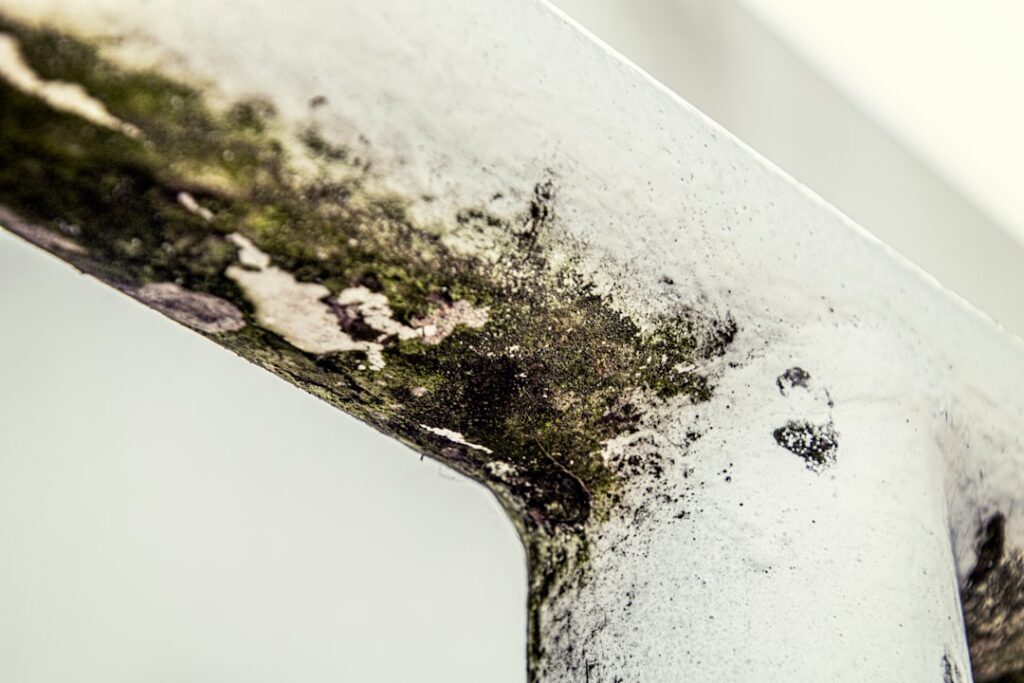
A post goes around every so often claiming that the citric acid in soda, candy and canned tomatoes is “really black mold.” It is a catchy line, and like many catchy lines it mixes something true with something misleading. People who search is citric acid black mold usually want two answers: whether the ingredient itself is mold, and whether it has anything to do with the dark spots on a bathroom ceiling or under the kitchen sink. This guide separates the manufacturing story from the ingredient, looks at the debated allergy claims without making medical ones, explains how Aspergillus niger relates to mold in homes, and covers what citric acid can and cannot do as a household cleaner. It draws on EPA and CDC mold guidance and published research archived by the National Institutes of Health for general education only. It is not medical advice; anyone with food reactions or symptoms should talk with a doctor.
Part of our Black Mold & Your Health guide — start there for the full picture →
Is this mold, asbestos, or water damage? Get a free instant screen
Upload a clear photo of the suspect area. You'll get an instant AI screening opinion and what to do next. This is screening guidance, not a professional determination.
Screening guidance only. AI can be wrong. Confirm asbestos, mold type, or lead with lab testing or a licensed professional before acting.
Is Citric Acid Black Mold? The Short Answer
No, citric acid is not black mold. Citric acid is a simple organic acid, the same compound that gives lemons and limes their sour taste. The connection people point to is real, though. Most of the citric acid sold as a food ingredient and cleaning product is not squeezed from citrus fruit. It is made industrially by fermentation, and the organism most widely used for that fermentation is Aspergillus niger, a fungus whose colonies are black.
A 2024 review in the Journal of Industrial Microbiology and Biotechnology, archived on the NIH’s PubMed Central, describes citric acid as mostly produced by microbial fermentation and calls A. niger the main workhorse for large-scale production. The same review describes how citric acid is recovered and purified from the fermentation broth using methods such as precipitation, solvent extraction and adsorption.
So the accurate version of the claim is this: the mold is the factory, not the product. The fungus produces the acid, the acid is separated and purified, and the finished ingredient is generally understood to contain no live mold. That is roughly comparable to how many other food ingredients and medicines are made with microbes without the final product being a microbe. For the bigger picture on household mold, see our mold inspection guide and the black mold hub.
How Manufactured Citric Acid Is Made
Citric acid occurs naturally in citrus fruits, berries and many vegetables, and it is part of normal human metabolism. Extracting it from fruit at the scale industry needs would be impractical, so manufacturers turned to fermentation in the early twentieth century. The research review cited below describes fermentation as the most cost-effective and well-developed production route and reports that more than 90 percent of global citric acid production is achieved this way.
In broad strokes, the process works like this:
- Feedstock. A sugar source such as molasses, corn-derived glucose or other carbohydrate is prepared as the growth medium.
- Fermentation. Selected production strains of A. niger are grown under tightly controlled conditions. Under those conditions, the fungus converts sugar into large amounts of citric acid and releases it into the liquid.
- Separation. The fungal biomass is separated from the liquid broth.
- Recovery and purification. Citric acid is recovered from the broth and purified, then crystallized and dried into the white powder or granules sold as an ingredient.
The review also notes that the WHO and FAO expert committee approved citric acid as GRAS, an abbreviation for “generally recognized as safe,” and that it is widely used in food, pharmaceuticals and cosmetics. Production strains used by industry are selected for high output. The details of strain selection and quality control are beyond the scope of a home-inspection guide, but the core point stands: the end product is a purified chemical, not a culture of mold.
Best At Home Mold Test Kit: our top 3 picks
| Product | Best for | Key features | Price | Buy |
|---|---|---|---|---|
| Varify 6-Pack | All-round DIY plate kit |
| $13.39as of Nov 25, 2026 9:07 pm GMT+0000 | Buy now →Check current price |
| KAYENQO 12-Test | Testing many rooms |
| $21.65as of Nov 25, 2026 9:07 pm GMT+0000 | Buy now →Check current price |
| Detekt Indoor Air Quality Kit | HVAC vents |
| $36.99as of Nov 25, 2026 9:07 pm GMT+0000 | Buy now →Check current price |


Prices are Amazon’s listed prices as of the time shown and change often; check Amazon for today’s price. As an Amazon Associate we earn from qualifying purchases.
Claim vs Reality: Citric Acid and Black Mold
The table below lines up the most common claims against what the available evidence supports. Where the evidence is limited or debated, it says so.
| Claim | Reality |
|---|---|
| “Citric acid is black mold.” | Citric acid is an organic acid. Most manufactured citric acid is produced by fermentation with Aspergillus niger, a black-colored mold, but the purified ingredient is a chemical, not the mold itself. |
| “Citric acid contains live mold.” | Purified citric acid is separated from the fungus and broth during manufacturing. It is generally understood to contain no live mold, though trace residues are a topic some researchers have raised. |
| “Citric acid causes mold allergies.” | Debated. A small published case series suggested some people may react to manufactured citric acid and called for further study. That is not proof of a general effect, and individual reactions are a question for a doctor. |
| “The A. niger in citric acid is the black mold in my shower.” | Indoor black spots can be many different molds. The production strains stay in industrial fermenters; household mold comes from moisture and spores already present in the environment. |
| “Citric acid kills black mold.” | Citric acid is effective at dissolving mineral deposits. It is not an EPA-registered mold killer unless a specific product’s label says it is registered for that use. |
| “Citric acid from lemons is different from the citric acid in food.” | The molecule is the same. The difference is the source and the manufacturing process, not the chemistry of the acid. |
The Allergy and Sensitivity Debate
Much of the online concern traces back to a 2018 paper in Toxicology Reports, also archived on PubMed Central. It presented four case reports of people who described repeated inflammatory reactions, including respiratory symptoms, joint pain and digestive symptoms, after consuming foods, beverages or vitamins containing manufactured citric acid. The authors noted that A. niger is a known allergen and suggested that residues from manufacturing might play a role, and they concluded that the safety of manufactured citric acid warrants further study.
It is worth being precise about what that paper is and is not. Four case reports are a signal for researchers to look into, not a demonstration that citric acid causes illness in the general population. The authors themselves framed it as a call for more research. Citric acid remains in wide use and is recognized as safe by major food-safety bodies, as the industrial review notes. Online articles sometimes stretch the case series into a sweeping claim; the evidence does not stretch that far.
What this means in practice is modest. Anyone who notices a consistent reaction to foods or products containing citric acid should keep a record and discuss it with a doctor or allergist. That is a personal medical question, and a home-inspection guide cannot answer it. It is also separate from the question of whether a house has a mold problem.
Aspergillus niger in Homes
A. niger is a common mold in the wider environment. It is widely reported in soil and on decaying plant material, and it is familiar to many people as the black, sooty growth on onions and some stored fruits. Indoors, Aspergillus species in general can show up on damp materials, in dust, and in places that stay wet.
That does not make every black spot in a house A. niger, and it does not link household mold to citric acid. Indoor “black mold” is a label people apply to many different molds that happen to be dark. EPA’s Brief Guide explains that mold is usually not a problem indoors unless spores land on a wet or damp spot and begin growing. CDC notes that mold can look like spots of many different colors and that, if you see or smell mold, you should remove it, regardless of type. The type matters far less than the moisture feeding it.
Common places for dark household mold include shower caulk, the rubber gasket of a front-loading washer, under kitchen and bathroom sinks, window sills with condensation, and basement walls. If you are dealing with one of these, our guides to black mold in the sink, black mold in a washing machine and black spot mold cover where it comes from and how to deal with it. For surface marks that linger after cleaning, see mold stains.
CDC lists possible health effects of damp and moldy environments, ranging from none at all to a stuffy nose, sore throat, coughing or wheezing, burning eyes or skin rash, with more severe reactions possible in people with asthma or mold allergies. People with weakened immune systems or chronic lung disease may face higher risks. Those effects relate to living with mold growth and dampness, not to eating citric acid.
Citric Acid as a Household Cleaner
Citric acid powder is sold as a cleaner for kettles, coffee makers, dishwashers, faucets, shower glass and toilet bowls. Its real strength is dissolving mineral scale, the white, chalky buildup that hard water leaves behind. Many homeowners use it for exactly that, and it does that job well.
Does citric acid kill mold?
This is where claims get ahead of the evidence. An acidic solution may make a surface less hospitable to some microbes, and some commercial products combine citric acid with other ingredients and carry disinfectant claims. But plain citric acid from a bag is not, by itself, an EPA-registered mold killer. In the United States, products that claim to kill mold or other microbes are generally regulated as pesticides and carry an EPA registration number on the label. If a product does not show that registration and list mold or mildew on its label, it is best treated as a cleaner, not a disinfectant.
That distinction may matter less than it sounds. EPA’s mold cleanup guidance focuses on physical removal: scrub mold off hard surfaces with detergent and water, and dry completely. EPA’s Brief Guide notes that the use of a biocide such as chlorine bleach is not recommended as a routine practice during mold cleanup, and that dead mold may still cause allergic reactions in some people. In other words, the goal is to remove growth and fix moisture, not merely to kill spores.
Where citric acid helps in mold-prone spots
- Removing scale and soap film from shower glass and tile, which takes away a surface that holds moisture and residue.
- Descaling a front-load washer and its dispenser, alongside wiping the gasket dry, which addresses part of what keeps the machine damp.
- Clearing mineral buildup around faucets and drains so water drains instead of pooling.
Hard-water scale is common in many homes, and descaling has real value there. Just do not expect citric acid alone to solve a recurring mold problem.
Safety basics
Citric acid is milder than many cleaners, but it is still an acid. Wear gloves, avoid getting powder or strong solutions in your eyes, and test on a small area first. Acids can etch natural stone such as marble and limestone, and can damage some metal finishes. Never mix acid cleaners with bleach, because the combination can release chlorine gas. EPA’s guidance likewise warns never to mix bleach with ammonia-containing products. Ventilate while cleaning, as you would with any product.
A simple descaling routine for a shower
For glass and tile with white scale, many people dissolve a small amount of citric acid powder in warm water, following the product’s directions, apply it with a sponge or spray bottle, let it sit briefly, then scrub and rinse thoroughly. Drying the surface with a squeegee or towel afterward is the step that matters most for mold, because it removes the standing water that growth depends on. If dark spots remain in grout or caulk after descaling, that is a sign of growth in the material itself, and cleaning with detergent or replacing the caulk is the next step.
Comparing Citric Acid With Other Common Mold Remedies
Citric acid often appears in lists alongside vinegar, hydrogen peroxide, dish soap and commercial sprays. Each has a role, and none replaces fixing the moisture source.
- Detergent and water is what EPA recommends for scrubbing mold off hard surfaces. Our guide on whether soap kills mold explains why removal matters more than killing.
- Vinegar is another acid often used for light surface cleaning; the pros and cons are covered in vinegar for mold.
- Hydrogen peroxide is sometimes used on stains and light growth; see hydrogen peroxide mold removal for how it is applied.
- Commercial products labeled for mold carry specific directions and contact times; our overview of sprays that kill mold explains how to read those labels.
Whatever product is used, EPA’s general advice holds: fix the water problem, clean and dry hard surfaces, and recognize that porous materials such as ceiling tiles and carpet may need to be thrown away if they become moldy. EPA indicates most people can handle areas smaller than about 10 square feet themselves; beyond that, or after significant water damage, more caution and possibly professional help are warranted.
Natural vs Manufactured Citric Acid on Labels
Ingredient lists do not usually say where citric acid came from. “Citric acid” on a soda can, a jar of salsa or a bag of cleaning powder refers to the same compound, and in most packaged products it is the manufactured kind. The 2018 case series cited below makes this point directly: the citric acid used extensively as a food and beverage additive is manufactured, not the naturally occurring form in fruit.
That matters for two groups of people. Those who believe they react to the manufactured ingredient sometimes try avoiding it, which is a conversation to have with a doctor rather than a website. And those worried about mold in their home can set the label question aside entirely, because what is in a pantry has no bearing on whether a wall cavity is wet. A box of citric acid on a shelf will not seed mold in the kitchen, and avoiding it will not prevent mold in the basement.
It is also worth knowing that “natural flavor,” “lemon juice concentrate” and “ascorbic acid” are different ingredients. Ascorbic acid is vitamin C, a separate compound that is sometimes confused with citric acid in online posts.
Signs Your House Has a Real Mold Problem
If the citric acid question started because of black spots somewhere in the house, the more useful focus is the house itself. EPA’s Brief Guide states that the key to mold control is moisture control. A few signs suggest a problem worth investigating:
- A musty, earthy smell that lingers in a closet, basement or cabinet, especially one that returns after cleaning.
- Recurring growth in the same spot within days or weeks of scrubbing it away.
- Water stains, peeling paint or warped materials on walls, ceilings, floors or cabinet bases.
- Condensation on windows, walls or pipes, which EPA says can be a sign of high humidity and should prompt quick drying.
- High indoor humidity. EPA suggests keeping indoor humidity below 60 percent, ideally between 30 and 50 percent, and notes that an inexpensive humidity meter can check it.
Along the Colorado Front Range, the air is dry much of the year, so household mold usually points to a specific water source such as a plumbing leak, a roof or window leak, a basement with drainage issues, or a bathroom without an effective exhaust fan. Finding and fixing that source does more than any cleaner, citric acid included.
Why the Myth Spreads and How to Check Similar Claims
The citric acid story has the ingredients of a viral claim: a common product, a scary-sounding word, and a kernel of truth. A few habits help sort out similar claims about mold:
- Separate process from product. Being made with the help of a microbe is not the same as containing that microbe.
- Look at the evidence size. A handful of case reports is a reason for study, not a conclusion.
- Check who is speaking. Government health agencies and peer-reviewed research carry more weight than an anonymous post.
- Watch for a sales pitch. Mold fear is sometimes used to sell supplements, detox programs or testing that is not needed.
- Bring it back to moisture. For a house, the meaningful question is almost always where the water is coming from.
Our related article on citric acid and black mold covers the same topic from a slightly different angle and may help if a specific claim still seems unclear.
More Questions About Citric Acid and Mold
Is citric acid safe to eat if it is made with mold?
Yes, manufactured citric acid is considered safe to eat, and the FDA classifies it as generally recognized as safe. It is produced by fermenting sugars with Aspergillus niger, then filtering and purifying the acid so the mold itself is removed from the final product. The finished ingredient is chemically identical to citric acid found naturally in lemons and limes. A small number of people report sensitivities to foods containing manufactured citric acid, and anyone with recurring reactions should talk to a doctor or allergist.
Is citric acid or vinegar better for cleaning mold?
Vinegar is generally the more commonly recommended household option for killing common surface molds, while citric acid is better known for removing hard water scale and soap scum. Both are mild acids, and both work best on hard, non-porous surfaces. In showers, citric acid can remove the mineral film that helps mold hold on, making mold cleanup easier. Neither reaches deep growth in porous materials like drywall. Scrubbing and drying matter more than which acid is used, and neither should be mixed with bleach.
Can citric acid damage surfaces in a bathroom?
Yes, citric acid can damage some bathroom surfaces if used carelessly. It can etch natural stone such as marble, limestone, and travertine, and it may dull some grout and certain metal finishes with repeated use. It is generally safe on glazed ceramic tile, porcelain, glass, and most chrome fixtures when rinsed off afterward. Testing a small hidden area first, using diluted solutions, and rinsing thoroughly reduce the risk. Checking the manufacturer’s cleaning guidance for fixtures and stone is a good habit.
Is Aspergillus niger dangerous in a house?
Aspergillus niger can grow indoors on damp materials and food, appearing as black or dark brown growth, and it can cause allergy symptoms in sensitive people. In people with weakened immune systems or certain lung conditions, Aspergillus species can occasionally cause infections. For healthy adults, household growth is treated like any other mold: remove it, fix the moisture source, and protect vulnerable household members. Industrial strains used for citric acid production are handled in controlled facilities and are not a source of household mold.
References
- An overview of key industrial product citric acid production by Aspergillus niger and its application (Journal of Industrial Microbiology and Biotechnology, 2024) — National Institutes of Health, PubMed Central
- Potential role of the common food additive manufactured citric acid in eliciting significant inflammatory reactions: a series of four case reports (Toxicology Reports, 2018) — National Institutes of Health, PubMed Central
- A Brief Guide to Mold, Moisture and Your Home — U.S. Environmental Protection Agency
- About Mold — Centers for Disease Control and Prevention
Frequently asked questions
Is citric acid black mold?
No. Citric acid is an organic acid. Most manufactured citric acid is produced by fermenting sugar with Aspergillus niger, a black-colored mold, but the acid is separated and purified afterward, and the finished ingredient is generally understood to contain no live mold.
Why do people say citric acid comes from mold?
Because industrial citric acid is mostly made by fermentation, and Aspergillus niger is the main organism used. The mold acts as the factory that produces the acid; the purified ingredient is a chemical, not the mold itself.
Can citric acid cause an allergic reaction?
A small 2018 case series described four people who reported reactions to manufactured citric acid and called for more research. That is not proof of a general effect. Anyone who notices consistent reactions should discuss them with a doctor or allergist.
Does citric acid kill mold in the bathroom?
Citric acid is good at dissolving mineral scale and soap film, but plain citric acid is not an EPA-registered mold killer. EPA recommends scrubbing mold off hard surfaces with detergent and water, drying completely, and fixing the moisture source.
Is the black mold in a house the same as the mold used to make citric acid?
Not necessarily. Indoor black spots can be many different molds, and they grow because of moisture and spores already present in the environment, not because of citric acid. CDC advises removing mold regardless of type.
Does citric acid prevent mold in food?
Citric acid helps preserve some foods by increasing acidity, which slows the growth of many microbes, but it does not reliably prevent mold on its own. Foods still need proper refrigeration, sealing, and storage. Moldy foods should be handled according to USDA guidance regardless of added citric acid.
Is citric acid natural or synthetic?
Most citric acid sold in food and cleaning products is made by fermentation using Aspergillus niger and sugar, so it is produced by a natural biological process but manufactured industrially. It is chemically the same as the citric acid in citrus fruit. Labels may list it simply as citric acid regardless of source.
How do you clean with citric acid powder?
To clean with citric acid powder, dissolve about one to two tablespoons in a cup or two of warm water, apply to hard water scale or soap scum, let it sit for several minutes, scrub, and rinse. Wear gloves, avoid natural stone, and never mix citric acid with bleach, which can release chlorine gas.
Dark spots keep showing up even after a good cleaning? Contact our team with a description of where the growth appears and how often it returns, and we can help you figure out the moisture source and whether an inspection is worthwhile.