Is Black Mold Common? What Dark Mold in Homes Really Means
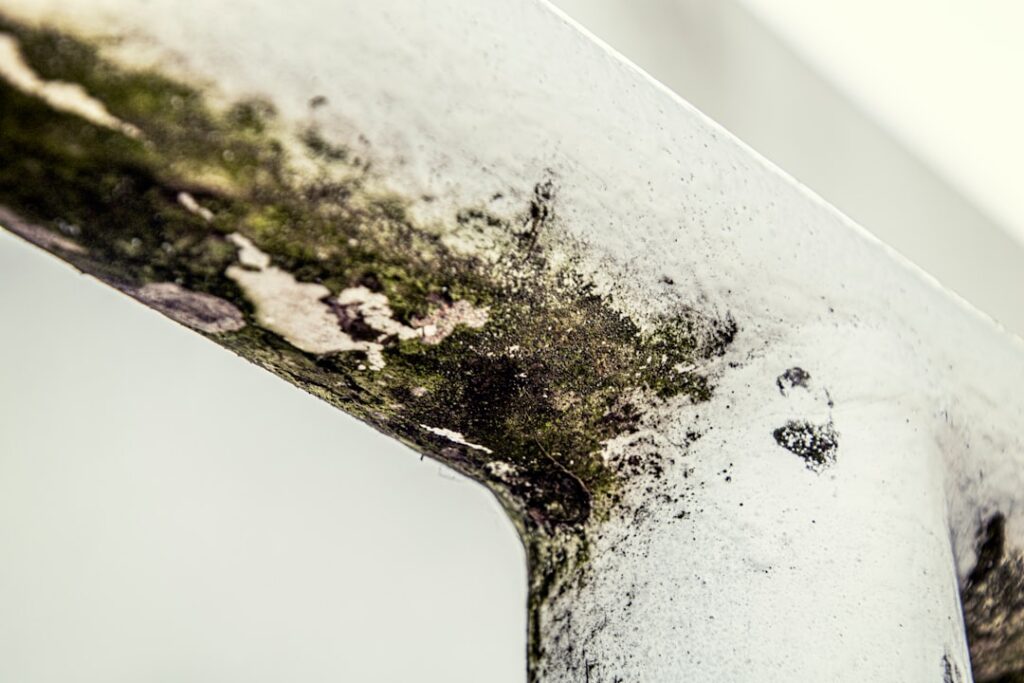
Finding dark spots on a bathroom ceiling, a window frame or a basement wall usually leads to the same worried search: is black mold common, or is this something rare and dangerous? The honest answer has two parts. Dark-colored mold in general is common in homes, because many ordinary molds are dark and they grow wherever moisture lingers. The specific mold that headlines call “toxic black mold,” Stachybotrys chartarum, is generally considered less common, because it typically needs materials that stay wet for an extended period. This guide explains the difference, where dark mold tends to appear, what federal health agencies say about risk, and why the color of a patch matters much less than the moisture behind it. It summarizes EPA and CDC guidance available in 2026. It is educational only and does not replace an inspection by a qualified professional or advice from your physician about symptoms.
Part of our Black Mold & Your Health guide — start there for the full picture →
Is this mold, asbestos, or water damage? Get a free instant screen
Upload a clear photo of the suspect area. You'll get an instant AI screening opinion and what to do next. This is screening guidance, not a professional determination.
Screening guidance only. AI can be wrong. Confirm asbestos, mold type, or lead with lab testing or a licensed professional before acting.
Is Black Mold Common? The Short Answer
If “black mold” means any mold that looks black or very dark, then yes, it is common. Molds are a normal part of the environment, indoors and outdoors, and many of the molds that grow on damp household surfaces produce dark pigments. A gray-black speckle on shower caulk or a dark smudge on a cold window sill is typical of what homeowners see.
If “black mold” means Stachybotrys specifically, the picture changes. It is usually described in building science and mycology literature as a slower-growing mold that favors cellulose-rich materials, such as the paper facing on drywall, ceiling tiles and wood, that have been wet for a prolonged period. That is why it tends to be associated with long-running leaks, flooding and chronic water damage rather than routine bathroom humidity. It does occur in homes, but it is less likely to be the explanation for a small dark spot that appeared after a few humid weeks. Without lab analysis, nobody can confirm which mold a patch is just by looking at it.
The most useful takeaway is that both situations call for the same first step: find and fix the moisture, then clean or remove the growth. Our mold inspection section covers the full assessment process, and the black mold hub gathers our guides on dark-colored growth in one place.
“Black Mold” Is Not a Species
Much of the confusion comes from the name itself. EPA’s introductory mold course states plainly that “black mold” is not a species or specific kind of mold, and neither is “toxic mold.” The course explains that the news media sometimes use those terms to refer to molds that may produce mycotoxins, or to a specific mold, Stachybotrys chartarum. It also notes that molds come in many colors, including white.
In other words, “black mold” is a color description that people attach to many different organisms. Several unrelated molds can look black, dark green, olive, gray or brown depending on their age, the surface they are growing on, moisture levels and light. The same mold can also look different on drywall than on grout or wood. That is one reason color-based identification at home is unreliable.
It also explains why other color comparisons can be misleading. Our guides comparing green mold vs black mold and white mold vs black mold go through what each color label usually means in practice, and why neither one tells you how risky a particular patch is. For a look at how scientists actually group molds, see our article on the classification of mold.
Which Dark Molds Are Common Indoors?
CDC’s mold overview lists the most common indoor molds as Cladosporium, Penicillium and Aspergillus. CDC also notes that mold is found both indoors and outdoors and can enter a home through open doorways, windows, vents and heating and air conditioning systems, or be carried in on clothing, shoes and pets.
Of those common genera, Cladosporium is often described in mycology references as olive-green, dark brown or black, which makes it a frequent candidate when homeowners see dark growth on windows, painted surfaces or bathroom fixtures. Penicillium and Aspergillus are more often described as blue-green, green, gray or yellowish, but colonies can darken as they age or as dust and debris collect on them. Other dark molds, such as Alternaria, are also widely reported in homes and outdoors. None of this is a reliable field guide, because colony color varies, but it shows why dark mold is such a common sight: several of the molds most likely to be found indoors can look dark.
Stachybotrys sits in a different category. It is usually reported as greenish-black and often slimy when wet, becoming powdery as it dries. Building science sources generally describe it as needing materials to stay wet for longer than many other molds do, which makes it more of an indicator of serious, persistent water problems than of everyday humidity.
CDC also lists Stachybotrys chartarum among its mold topics. The key point for homeowners is that CDC’s general advice does not change by mold type: remove the mold and fix the moisture, whatever species it turns out to be.
Where Dark Mold Shows Up in Homes
Because mold follows water, dark mold tends to appear in the same places over and over. EPA’s mold course identifies common sites for indoor mold growth including bathroom tile and grout, basement walls, areas around windows and around sinks. It lists common sources of moisture such as roof leaks, condensation due to high humidity or cold spots in a building, slow leaks in plumbing fixtures, humidification systems and flooding. The course chapter on finding mold adds that areas that are always or often damp, such as bathrooms, laundry and utility rooms and basements, are common locations for mold growth in homes.
Typical dark-mold locations include:
- Shower grout, caulk and ceilings. Steam and poor exhaust ventilation keep these surfaces damp. Spotty, speckled growth is common; see our guide to black spot mold.
- Window frames and sills. Condensation on cold glass in winter feeds dark growth along the bottom of the frame and on window tracks.
- Basement walls and corners. Cool surfaces, ground moisture and limited airflow create persistent dampness.
- Under sinks and behind appliances. Slow drips from supply lines, drains or ice-maker connections can go unnoticed for months.
- Exterior walls behind furniture. Cold wall surfaces with blocked airflow can collect condensation.
- Attics and crawlspaces. Roof leaks, poor ventilation and bathroom fans vented into the attic can wet sheathing and framing.
- Behind walls after leaks. This is where the more water-loving molds are most likely to establish themselves, because damage can stay hidden and wet.
On the Colorado Front Range, the dry climate means ambient humidity alone is less likely to drive mold than in humid regions. Most dark growth here traces back to a specific moisture source: a leak, poor bathroom ventilation, winter window condensation, ice dams, a crawlspace issue or water damage that was not dried quickly. That makes the source easier to find in many cases, which is good news for prevention.
For photo examples of the growth patterns homeowners typically find, see our gallery of household types of mold pictures.
Comparison Table: Dark Mold Situations and How Common They Are
The frequency descriptions below are deliberately hedged. They reflect typical patterns reported in general building and mold guidance, not measured statistics for any area, and individual homes vary widely.
| Dark mold situation | How common (hedged) | What to do |
|---|---|---|
| Speckled dark growth on shower grout, caulk or bathroom ceiling | Very common in bathrooms with limited ventilation | Clean with detergent and water, replace failed caulk, run an exhaust fan vented outdoors |
| Dark growth on window frames and sills | Common where winter condensation forms | Clean and dry, reduce indoor humidity, improve air circulation at the window |
| Dark patches on basement walls or corners | Common in damp or poorly ventilated basements | Find the moisture source, manage drainage and humidity, clean or replace affected materials |
| Growth under sinks or behind appliances | Fairly common where slow leaks go unnoticed | Repair the leak, dry the area, replace water-damaged cabinet floors or drywall |
| Greenish-black growth on drywall after a long leak or flood | Less common; associated with prolonged wetness | Stop the water, remove damaged porous materials, get professional help for larger areas |
| Dark film that wipes off evenly with no moisture source | Often not mold at all (dust, soot or ghosting) | Compare with look-alikes; consider a lab tape-lift if still unsure |
Things That Look Like Black Mold but Are Not
Part of the reason black mold seems so common is that many dark household deposits are mistaken for it. EPA’s course chapter on finding mold makes the point that not everything that looks like mold is mold, and gives examples such as paint on the backside of drywall or wood, alkaline crystals on soil or concrete walls, and carpet stains. Common look-alikes in homes include:
- Dust and dirt on supply registers, return grilles and the tops of trim.
- Candle or appliance soot on ceilings and around fireplaces or vents.
- Ghosting, the dark lines that follow framing or carpet edges where airborne particles deposit.
- Water stains and tannin bleed from wood.
- Mildew-like surface growth that is flat and easily wiped, which is still mold but typically superficial.
Our guides to what looks like black mold but isn’t and black mold vs dust cover the visual clues in more detail. As a rule of thumb, ask whether the location has a moisture source. If it does not, and the deposit wipes away evenly, it is more likely to be something other than mold.
Health Effects: What CDC and EPA Say
Because “toxic black mold” headlines are frightening, it helps to look at what federal health agencies actually say.
CDC notes that for people who are sensitive to molds, exposure can lead to symptoms such as stuffy nose, wheezing, and red or itchy eyes or skin, and that people with chronic lung disease or weakened immune systems may face more serious problems, including lung infections. CDC also summarizes a 2004 Institute of Medicine finding that there was sufficient evidence to link indoor mold exposure with upper respiratory tract symptoms, cough and wheeze in otherwise healthy people, with asthma symptoms in people with asthma, and with hypersensitivity pneumonitis in susceptible individuals.
EPA’s Brief Guide explains that molds produce allergens, irritants and, in some cases, potentially toxic substances called mycotoxins, and that inhaling or touching mold or mold spores may cause allergic reactions in sensitive individuals. EPA’s mold course adds that some, but not all, molds may produce mycotoxins under some conditions, and that mold does not have to be alive to cause an allergic reaction.
The practical implication is that the health concern is not limited to one “black” species. Any mold growing indoors can cause problems for sensitive people, and dark color is not a reliable signal of toxicity. Our guides to black mold symptoms and black mold exposure cover what people commonly report and when to involve a doctor. Anyone with ongoing symptoms that seem related to the home should speak with a physician.
Why Moisture Matters More Than Color
EPA’s Brief Guide states that there are many types of mold and none of them will grow without water or moisture. It also notes that molds are usually not a problem indoors unless spores land on a wet or damp spot and begin growing. That is the most important point in this entire topic. Whether a patch is black, green, white or gray, it exists because something is wet.
Focusing on moisture has several advantages:
- It addresses the cause. Cleaning without drying the area only removes the visible part, and growth returns.
- It finds hidden growth. Visible spots are often the edge of a larger area inside walls, under flooring or in cavities that stayed wet.
- It works for every mold type. There is no need to identify the species to know that a leak must be fixed.
- It prevents the less common, water-loving molds. Prompt drying is the best defense against growth that depends on long-term wetness.
EPA recommends drying water-damaged areas and items within 24 to 48 hours to prevent mold growth, and suggests keeping indoor humidity below 60 percent, ideally between 30 and 50 percent. CDC’s prevention advice is to keep humidity as low as you can, no higher than 50 percent, use exhaust fans that vent outside, make sure clothes dryers vent outside, and fix leaks in roofs, walls or plumbing.
Does Home Age or Type Change How Common Dark Mold Is?
Homeowners often assume older houses are the main place dark mold turns up, but the age of a home is less important than how it handles water. A few general patterns are worth knowing, with the caveat that every house is different.
- Older homes may have aging roofs, original plumbing, less effective bathroom ventilation, single-pane windows that collect condensation, and foundations without modern damp-proofing. Each of these can create the persistent moisture that dark molds need. On the other hand, many older homes are leakier, which can let interior moisture escape.
- Newer homes are often built tighter for energy efficiency. That is generally a good thing, but in a tight house, moisture from cooking, showers and occupants has fewer places to go unless mechanical ventilation is working and used. Materials that got wet during construction and were enclosed before drying can also support growth inside wall cavities.
- Finished basements combine cool surfaces, possible ground moisture and porous finishes such as drywall and carpet. They are a frequent location for hidden growth behind walls and under flooring.
- Rentals and multi-unit buildings can have leaks that start in a neighboring unit or a shared wall, so the source may not be visible from inside the affected unit.
For buyers, dark spotting noticed during a showing or home inspection is a prompt to ask questions rather than a verdict. Was there a past leak? Is the bathroom fan vented outdoors? Are there signs of water staining nearby? A small, explainable patch on a window sill is a very different finding than staining across a basement wall with a musty smell. If the source is unclear, a qualified inspector can check moisture levels with meters and look for the conditions that would let growth return after cleaning.
For renters, EPA’s Brief Guide notes that if persistent water problems are not addressed, residents may want to contact local, state or federal health or housing authorities, or their state health department.
Should Dark Mold Be Tested?
Many homeowners want to know whether a dark patch is “the bad one” before deciding what to do. Federal guidance generally discourages testing just to answer that question. CDC states that it does not recommend mold testing, explaining that health effects differ from person to person, so sampling and culturing cannot tell you whether someone might become sick. CDC adds that no matter what type of mold is present, it needs to be removed, and that good sampling can be expensive with no set standards for acceptable amounts in a home.
EPA’s Brief Guide takes a similar position: in most cases, if visible mold growth is present, sampling is unnecessary. Testing can still have a role, for example when the source of a musty odor is unclear, when hidden growth is suspected, when a lab is needed to confirm whether a dark deposit is mold or something else, or when documentation is needed after cleanup. For budget-conscious options and their limits, see our guide to an affordable mold test.
What to Do If You Find Dark Mold
- Find the water. Look for leaks, condensation, poor ventilation or past water damage near the growth.
- Fix the source. Repair leaks, improve exhaust ventilation, manage humidity and correct drainage.
- Size up the area. EPA says that if the moldy area is less than about 10 square feet, in most cases homeowners can handle the job themselves. Larger areas or extensive water damage call for professional guidance.
- Protect yourself. EPA recommends gloves, goggles and an N-95 respirator during cleanup.
- Clean or remove. EPA advises scrubbing mold off hard surfaces with detergent and water and drying completely. Porous materials such as ceiling tiles and carpet may have to be discarded. Do not paint or caulk over mold.
- Dry and monitor. Make sure the area stays dry, and watch for regrowth or musty odors.
If growth keeps returning, covers a large area, follows flooding or a long leak, or anyone in the home has health concerns, a professional mold assessment can help locate hidden moisture and define the scope of cleanup.
References
- U.S. EPA. Mold Course Chapter 1: Introduction to Molds
- U.S. EPA. Mold Course Chapter 3: Finding Mold and Moisture
- U.S. EPA. A Brief Guide to Mold, Moisture and Your Home
- Centers for Disease Control and Prevention. Mold: What to Know
Frequently asked questions
How common is black mold in homes?
Dark-colored mold is common, because several ordinary indoor molds can look black or very dark and grow wherever moisture lingers. Stachybotrys, the mold often called toxic black mold, is generally considered less common because it usually needs materials to stay wet for a prolonged period.
Is all black mold toxic?
No. EPA states that black mold is not a species and neither is toxic mold. Some molds may produce mycotoxins under some conditions, but color does not reveal that. Any indoor mold can cause problems for sensitive people, so all of it should be removed and the moisture fixed.
What are the most common indoor molds?
CDC lists Cladosporium, Penicillium and Aspergillus as the most common indoor molds. Some of these can appear dark, which is one reason dark growth is such a frequent sight in bathrooms, basements and around windows.
Should dark mold be tested to see if it is Stachybotrys?
Usually not. CDC does not recommend routine mold testing, and EPA says sampling is generally unnecessary when mold is visible. Whatever the species, the response is the same: fix the moisture and remove the growth. Testing can help in specific cases, such as suspected hidden mold.
Why does black mold keep coming back in the same spot?
Recurring growth almost always means the moisture source is still there, such as poor bathroom ventilation, condensation, or a slow leak. Cleaning removes the visible mold, but without drying the area it returns. Fix the water problem first, then clean.
Seeing dark growth that keeps returning? Get in touch here and we can help connect you with a qualified Front Range mold inspector who can track down the moisture behind it.