What Looks Like Black Mold But Isn’t: A Plain Guide
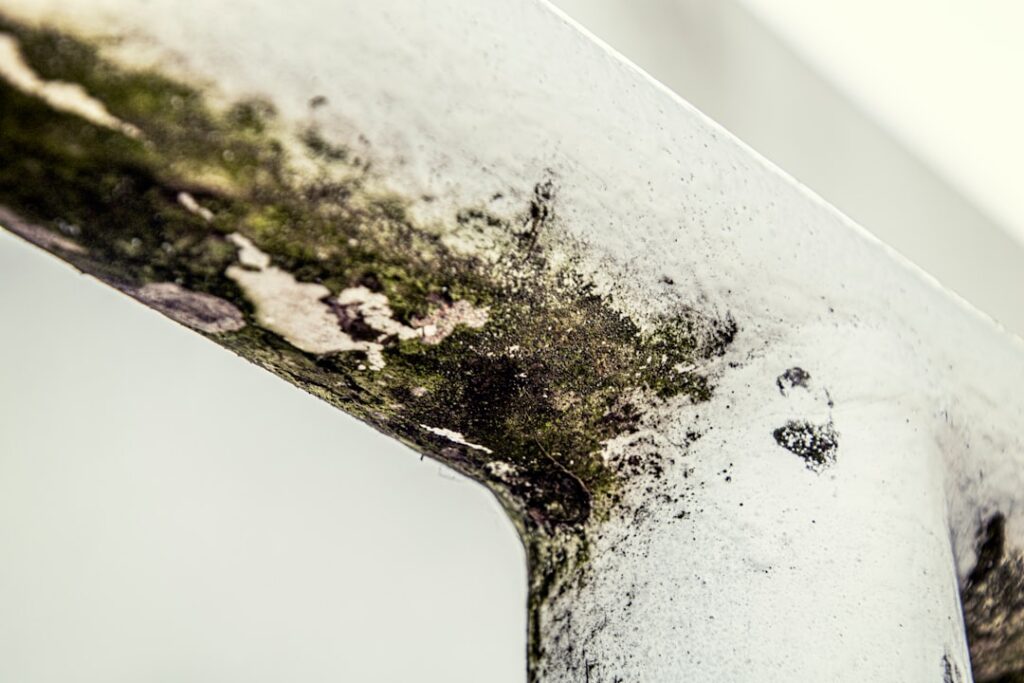
What looks like black mold but actually isn’t includes a surprising range of non-fungal phenomena that homeowners regularly misidentify. Efflorescence, soot, condensation dirt streaks, insect frass, mildew, and pure dust accumulation all produce visual signatures that can be mistaken for Stachybotrys at first glance. Distinguishing each from actual mold matters because the remediation approach differs dramatically — efflorescence needs masonry-moisture diagnosis rather than mold cleanup, soot needs combustion-source repair, and frass needs pest control. This guide summarizes EPA and CDC guidance current as of 2026 and walks through the most common non-mold look-alikes with a practical decision tree. For symptoms tied to suspected exposure, consult your physician, and for any patch that does turn out to be mold and exceeds roughly 10 square feet, defer to an IICRC-certified remediation professional.
Is this mold, asbestos, or water damage? Get a free instant screen
Upload a clear photo of the suspect area. You'll get an instant AI screening opinion and what to do next. This is screening guidance, not a professional determination.
Screening guidance only. AI can be wrong. Confirm asbestos, mold type, or lead with lab testing or a licensed professional before acting.
Why Non-Mold Look-Alikes Get Mistaken for Black Mold
Several environmental phenomena share characteristics with black mold growth: dark coloration, patchy distribution, presence on building surfaces, and association with moisture or other anomalies. Homeowners primed to look for mold often see mold in every dark patch they find. The CDC notes that the iconic image of black mold (greenish-black slimy patches on drywall) is only one possible pattern, which leaves room for confusion when the visible patch does not match the classic description but is still dark and patchy.
Correctly identifying non-mold look-alikes saves money on unneeded mold testing and remediation. It also redirects the homeowner toward the actual underlying problem — a soot stain from a chimney leak does not improve until the chimney issue is repaired. For the related comparison covering the species look-alikes within the mold category, the mold inspection and testing hub covers the full identification workflow.
Efflorescence — The Mineral Salt Deposit
Efflorescence is crystalline mineral deposit that forms when water migrates through masonry (concrete block, brick, stucco, mortar) carrying dissolved salts, then evaporates at the surface leaving the salts behind. Common locations include basement concrete walls, brick chimney exteriors, retaining walls, and outdoor pavement. The visual appearance ranges from fluffy white to gray to dark gray-black depending on the mineral content and accumulated dirt.
Distinguishing efflorescence from black mold: the spray-water test is decisive. Mist the patch with plain water. Efflorescence dissolves into the water — the patch lightens immediately and the dissolved salts run as visible streaks. Mold does not dissolve; the patch remains visually unchanged or even darkens slightly as the surface wets. The substrate is also a clue: efflorescence forms on masonry (concrete, brick, mortar); mold rarely grows directly on masonry without an intermediate organic layer.
The remediation approach is masonry-moisture diagnosis rather than mold cleanup. Efflorescence indicates water is migrating through the masonry, which usually requires foundation drainage improvement, exterior waterproofing, or interior dehumidification. Scrubbing off the efflorescence without addressing the moisture source produces recurring deposits within weeks.
Soot — The Combustion Residue
Soot is carbon-based residue from incomplete combustion, deposited on indoor surfaces near fireplaces, woodstoves, candles, malfunctioning gas appliances, and chimney-leak entry points. The visual appearance is typically uniform gray-black coating on walls, ceiling, or trim near the combustion source. The color is more uniform than mold growth, and the distribution often follows air-current patterns from the combustion point outward.
Distinguishing soot from black mold: smell is a key clue. Soot smells like soot — a slight smoky character that is recognizable. Mold smells musty — a distinctly different mVOC profile. Rubbing the surface with a clean white cloth: soot transfers readily to the cloth; mold transfers some color but the pattern is different. The location pattern matters too: uniform coating extending from a combustion source points to soot; patchy growth following moisture-edge patterns points to mold.
The remediation approach is combustion-source diagnosis and cleaning rather than mold cleanup. Chimney inspection, gas appliance inspection, and combustion safety testing (CO levels, draft) address the source. Surface cleaning with appropriate cleaners handles the visible residue. For the broader identification context on the various dark patterns homeowners encounter, mold that looks like black mold covers the within-mold-category look-alikes.
Condensation Dirt Streaks
Window-frame condensation that runs down walls or trim picks up airborne dust, soot, and grime as it travels, depositing the contaminants in characteristic vertical streaks. The visual appearance is dark vertical lines below window sills, around HVAC supply registers, and along cold-side wall surfaces. The pattern follows gravity rather than wet-edge migration.
Distinguishing condensation dirt from black mold: the vertical-streak pattern is diagnostic. Mold rarely produces clean vertical streaks; it produces patchy growth following the wet edge. The texture also differs — condensation dirt is dry powder when wiped; mold has a different texture (slimy when wet, powdery only when dormant). Rubbing with a damp cloth removes condensation dirt cleanly; mold often resists single-pass cleaning.
The remediation approach is condensation control: window-frame insulation improvement, storm-window addition, ventilation balancing, and humidity control during heating season. Surface cleaning resolves the visible streaks; the cleaning is only durable if the condensation source is addressed.
Insect Frass — Droppings From Wood-Destroying Pests
Insect frass (droppings from termites, carpenter ants, powderpost beetles, or similar pests) accumulates as dark powdery deposits near pest activity. Common locations include along sill plates with termite activity, under wooden trim with carpenter ant galleries, near baseboards with powderpost beetle exit holes, and inside basement structural framing.
Distinguishing insect frass from black mold: the texture is gritty rather than soft. Pile structure differs — frass accumulates as fine grit or pellets; mold grows as a coating on the surface. Location patterns differ too — frass typically appears below or near small holes, gaps, or joints in wood; mold grows directly on wet surfaces. Carpenter ant frass sometimes contains identifiable insect parts (legs, wing fragments) visible under magnification.
The remediation approach is pest control rather than mold cleanup. Confirming the pest identification (often requires a pest-control professional or termite inspector), treating the active infestation, and assessing wood damage are the priority steps. The wood damage from wood-destroying insects can be more structurally serious than mold growth on the same wood.
Mildew — A Different Mold Category
Mildew is technically a subset of mold, but in everyday usage refers to surface-only fungal growth on shower curtains, tile grout, painted surfaces, and damp fabric — typically Cladosporium or other allergenic species. The term mildew often gets contrasted with mold to indicate surface-only growth rather than substrate-penetrating colonies. The visual appearance ranges from black to gray-green, typically on non-cellulose surfaces.
Distinguishing mildew from genuine black mold (Stachybotrys): substrate match is decisive. Mildew on tile, grout, paint, and vinyl is not Stachybotrys regardless of how dark it looks. Mildew is allergenic — capable of triggering symptoms in sensitized individuals — but is not toxigenic at residential exposure levels. The cleanup approach for mildew is surface scrubbing with detergent or bathroom-mildew cleaner, plus improvement of the underlying humidity or ventilation issue. No structural remediation is needed.
Decision Tree to Distinguish Each Type
The practical decision tree for a homeowner facing a suspect dark patch:
- Step 1 — Substrate check. Masonry (concrete, brick, mortar)? Likely efflorescence; do spray-water test. Wood (especially near joints or holes)? Possible insect frass; check for small exit holes nearby. Tile, grout, paint, vinyl? Likely mildew or surface mold. Drywall paper or unsealed wood? Possible Stachybotrys.
- Step 2 — Texture and smell. Powdery and dry? Probably soot, condensation dirt, or efflorescence. Slimy or active-looking? Probably mold growth. Musty smell? Mold (any species). Smoky smell? Soot.
- Step 3 — Spray water and observe. Patch dissolves into the water? Efflorescence. Patch wipes off cleanly with damp cloth? Surface dirt, soot, or condensation streaks. Patch resists cleaning? Mold growth or stubborn mildew.
- Step 4 — Location pattern. Vertical streaks below windows or registers? Condensation dirt. Uniform coating near fireplace or appliance? Soot. Pile of grit below wood joints? Insect frass. Patchy growth following wet edge? Mold.
Most homeowners can reach a confident probable identification within five minutes using the decision tree. Where the tree leaves ambiguity, lab testing of a tape-lift sample produces definitive identification for about $30-50.
Spider Webs and Dust Accumulation
Two additional look-alikes deserve mention because they fool homeowners more often than expected. Spider webs in basement corners and behind unused furniture accumulate dust and debris over months until they appear as dark patches. The wispy structure under a flashlight beam usually gives them away, but in low light or after photography they can resemble mold growth on the wall behind. A gentle dusting with a microfiber cloth removes both the web and the visible patch.
Heavy dust accumulation on cold-side wall surfaces, behind appliances, and along baseboards forms dark patches that look mold-like at a distance. The texture is dry and powdery, and the patches wipe off cleanly with a damp cloth. The clue is that dust accumulation is uniform across nearby surfaces rather than concentrated at moisture-edge locations. Improving cleaning frequency in the affected area resolves the appearance.
Stains From Prior Water Damage
Old water stains from past leaks often persist as dark discoloration on drywall, plaster, or ceiling tiles long after the underlying moisture problem was resolved. The stain comes from suspended materials in the leaked water — minerals, dirt, or rust — that deposited as the water evaporated. The dark color resembles mold but the texture is flat and the pattern usually shows concentric rings from the wet-edge migration during the original leak.
Distinguishing old water stains from active mold: moisture meter readings on the substrate read dry on old stains and elevated on active mold growth. Texture is flat and paint-like on stains; growth-like and three-dimensional on mold. Visual inspection at high magnification (a phone camera zoom often suffices) shows no hyphae structure on stains.
The remediation approach for old water stains is cosmetic: stain-blocking primer followed by topcoat repaint usually resolves the visible problem. The underlying source should already have been addressed in the original incident, but verification matters — recurring stains indicate the source was not adequately resolved.
When the Look-Alike Is Actually a Bigger Problem
Some non-mold look-alikes indicate underlying problems that are worse than the mold a homeowner feared. Efflorescence indicates water migrating through masonry — often a precursor to foundation deterioration or basement water intrusion problems. Insect frass indicates active wood-destroying pest infestation, which can compromise structural framing in ways that visible mold rarely does. Soot indicates combustion problems that may also include carbon monoxide risk, which is a more immediate health concern than residential mold for most households.
The pragmatic implication: misidentifying mold as something benign is the more common mistake, but misidentifying something serious as mold also happens. When a homeowner finds a dark patch and assumes mold, then dismisses the patch after lab testing confirms no mold, they may miss the actual underlying problem the patch was signaling.
When to Call a Professional
Professional involvement helps when the homeowner cannot confidently classify the look-alike. Mold inspectors who hold the InterNACHI Certified Mold Inspector credential or the ACAC CMI/CIE designations can usually distinguish mold from efflorescence, soot, and condensation dirt with on-site visual assessment plus moisture-meter readings. Termite and pest inspectors handle the frass-versus-mold distinction. Chimney sweeps and combustion-safety technicians address the soot-versus-mold question with appliance and chimney evaluation.
Front Range homeowners with a dark patch they cannot confidently identify can contact our team for referral to the right specialist — mold inspector, pest inspector, or combustion technician depending on the visual pattern and substrate. The inspection cost is small relative to wrong-direction remediation work.
References
- EPA Mold Cleanup in Your Home — U.S. Environmental Protection Agency
- CDC Basic Facts About Mold and Dampness — Centers for Disease Control and Prevention
- HUD Healthy Homes Mold Guidance — U.S. Department of Housing and Urban Development
- InterNACHI Mold Inspection Standard — International Association of Certified Home Inspectors
If you have a dark patch you cannot confidently identify, reach out through our contact page for a referral to the right Front Range specialist — mold inspector, pest inspector, or combustion technician depending on the pattern.