Citric Acid for Black Mold: What Homeowners Know
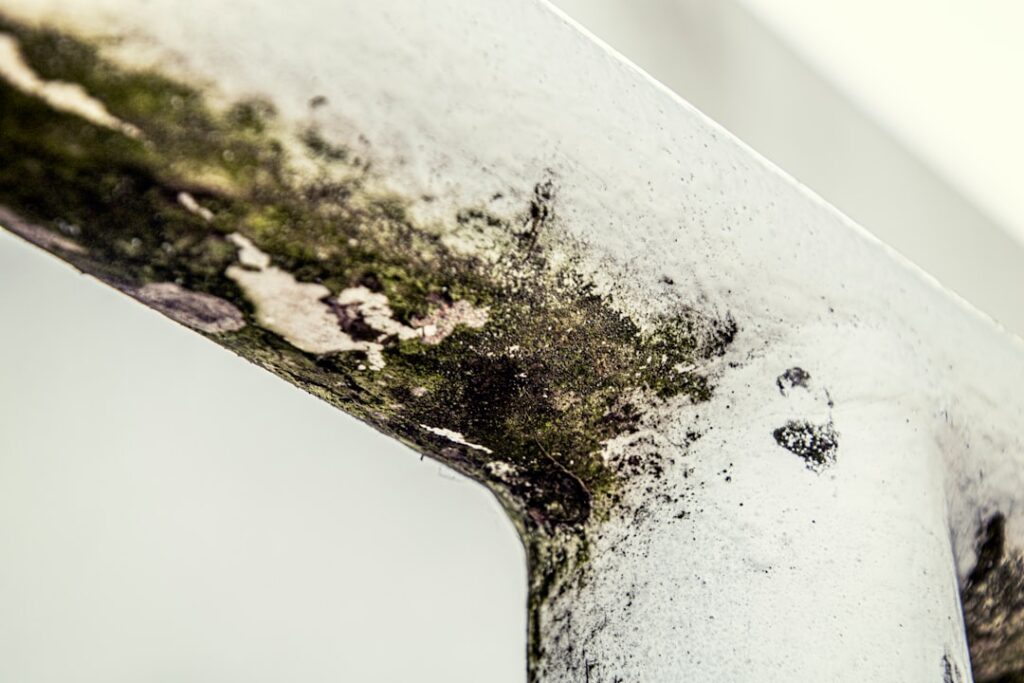
Citric acid has become a favorite of homeowners looking for a less harsh way to tackle mold — it is cheap, food-derived, low-odor, and widely sold as a powder. The question is whether it actually handles black mold or simply lightens the stain. As with every mold cleaner, the surface matters as much as the chemistry. This guide summarizes EPA and CDC guidance current as of 2026 and is educational only; it is not medical advice, and large or recurring problems warrant a certified professional. Here is what to know about using citric acid on black mold.
Part of our Black Mold & Your Health guide — start there for the full picture →
Is this mold, asbestos, or water damage? Get a free instant screen
Upload a clear photo of the suspect area. You'll get an instant AI screening opinion and what to do next. This is screening guidance, not a professional determination.
Screening guidance only. AI can be wrong. Confirm asbestos, mold type, or lead with lab testing or a licensed professional before acting.
Does citric acid kill black mold?
Citric acid is a mild organic acid that can reduce surface mold on hard, non-porous materials. Its acidity disrupts mold structures, and it is commonly used in green cleaning products for mildew and surface grime. On tile, grout, sealed surfaces, and glass, a citric-acid solution can clean visible surface mold reasonably well.
The important caveat is the EPA’s recurring point: killing mold is not the actual goal, because dead spores can still cause allergic reactions. Physical removal of the growth and correction of the moisture source are what matter. So even where citric acid reduces mold, the surface still needs scrubbing and drying, and porous moldy materials still need removal. Citric acid is a cleaning aid, not a cure for an embedded colony.
What citric acid is and how it works on mold
Citric acid is a weak organic acid found naturally in citrus fruits and produced commercially for use in food, cleaning products, and cosmetics. As a cleaner, it works through its mild acidity, which lowers the pH of the surface it contacts. Many molds and the films they form are sensitive to an acidic environment, so a citric-acid solution can disrupt surface growth and help lift the staining and residue that mold leaves behind.
It also has chelating properties — it binds minerals — which is why it doubles as a descaler for hard-water deposits and helps cut the grime that often accompanies bathroom mildew. On a glazed tile or sealed surface, that combination of mild acid action and grime-cutting makes it a competent surface cleaner for light mold. The effect is gentler and slower than a strong oxidizer like bleach, but for a small, fresh surface patch it is usually adequate when paired with scrubbing.
The mechanism also explains the limits. Citric acid acts where it can make contact, so it works on what sits on a surface but cannot reach hyphae rooted inside porous drywall or wood. And like every cleaner, it does nothing about the moisture that allowed the mold to grow. Understanding it as a mild, surface-acting cleaner — useful within a narrow lane and powerless outside it — sets the right expectations before the bottle ever comes out.
How to use citric acid on black mold
For a small surface patch on a suitable material, a citric-acid approach looks like this:
- Mix a solution. Dissolve citric-acid powder in warm water (a common ratio is a few tablespoons per cup of water) to make a cleaning solution.
- Gear up. Wear an N95 respirator, gloves, and eye protection, and ventilate the area.
- Apply and dwell. Spray or wipe the solution onto the mold and let it sit several minutes.
- Scrub and wipe. Physically scrub the area — the removal is the part that counts — then wipe clean.
- Dry completely. Mold needs moisture, so the surface must be fully dried afterward.
If the mold returns after cleaning, that signals the material is colonized below the surface or the moisture source is still active. Surface treatments have reached their limit at that point. Our guide on choosing a mold remover for walls compares options by surface type for those situations.
Citric acid versus bleach and vinegar
Citric acid sits among several common household options, each with trade-offs:
Versus bleach
Bleach brightens stains quickly on non-porous surfaces but struggles on porous materials, where its water can feed regrowth. Citric acid is gentler, lower-fume, and avoids the chloramine-gas risk of mixing bleach with other cleaners. Bleach may visually whiten faster, but neither reaches mold embedded in drywall. Our deeper look at black mold and bleach covers that limitation.
Versus vinegar
White vinegar is the closest comparison — another mild acid effective on light surface mold. Both are low-odor and food-safe in origin. Choice between them often comes down to what is on hand; neither penetrates porous materials or substitutes for fixing the leak.
A safety note that applies to all of them: never mix citric acid, vinegar, or any acid with bleach, since acids plus chlorine bleach can release toxic chlorine gas. Use one product at a time and ventilate.
Why citric acid appeals to homeowners
The popularity of citric acid for mold is not just marketing; it reflects real advantages for the right job. It is derived from citrus and is a common food additive, so it feels safer to handle around kitchens and children than harsh chlorine products. It produces no strong chlorine fumes, which matters in poorly ventilated bathrooms and basements where mold often appears. It is inexpensive as a bulk powder, mixes to whatever strength a job needs, and rinses away cleanly.
There is also an environmental appeal. Citric acid is biodegradable and does not introduce chlorine into wastewater, which homeowners on septic systems appreciate, since chlorine bleach in quantity can disrupt the bacteria a septic system relies on. For light surface mold on hard materials, these qualities make citric acid a reasonable, low-drama choice that does the cleaning job without the downsides of stronger chemistry.
None of these advantages change the fundamental limits, though. A gentler, greener cleaner is still a surface cleaner, and it still cannot reach mold embedded in porous materials or substitute for fixing a leak. The appeal is real for the narrow use it fits — small surface patches on non-porous surfaces — but it does not expand what a topical product can accomplish. Homeowners drawn to citric acid for its mildness should hold onto that mildness as a feature while keeping realistic expectations about the rest, much as our comparison of bleach’s strengths and limits sets expectations for the harsher alternative.
Citric acid versus other natural mold options
Citric acid is one of several “natural” mold approaches homeowners try, and a brief comparison clarifies where each fits:
- White vinegar. The closest comparison — another mild acid effective on light surface mold, with a stronger smell that dissipates as it dries. Roughly interchangeable with citric acid for surface jobs.
- Hydrogen peroxide. A mild oxidizer that can lighten staining and clean surfaces, often paired with scrubbing. Effective on hard surfaces, still limited on porous ones.
- Baking soda. A gentle abrasive and mild deodorizer useful for scrubbing and odor, but weak as a standalone mold treatment.
- Tea tree or other essential oils. Popular in DIY circles; evidence is limited and they are costly for any sizable area.
The common thread is that all of these are surface treatments suited to small patches on hard materials, and none penetrates porous materials or fixes moisture. The choice among them often comes down to odor preference, cost, and what is already in the cupboard. A critical safety point applies across the natural options too: never combine any acid — citric acid, vinegar — with chlorine bleach, since the mix releases toxic chlorine gas. Use one product at a time and ventilate, regardless of how mild the individual product seems.
Where citric acid is the wrong choice
Citric acid, like any surface cleaner, has clear limits. It will not fix mold that has rooted into drywall paper, carpet, ceiling tile, or insulation — those porous materials generally must be removed. It will not address an area larger than the EPA’s roughly 10-square-foot DIY threshold, where professional containment is warranted. And it cannot solve recurring mold driven by an unaddressed moisture source.
The recurrence trap is the most common failure. Homeowners clean with citric acid, the stain fades, and it returns because the leak, condensation, or humidity feeding it never changed. The EPA recommends keeping indoor relative humidity between 30 and 50 percent and fixing leaks promptly. Our explainer on how long black mold takes to grow shows how quickly a damp surface re-colonizes once cleaning stops.
Does citric acid prevent mold from returning?
Some homeowners hope a citric-acid treatment will not just clean mold but keep it from coming back. The reality is the same as for any cleaner: citric acid addresses the surface at the moment of application and offers little lasting prevention on its own. It does not leave a meaningful protective barrier, and even if it did, no surface treatment overcomes an active moisture source. A wall or tile that keeps getting wet grows mold again regardless of what was last applied to it.
Prevention, per the EPA, comes from moisture control rather than residual chemistry — keeping indoor humidity between 30 and 50 percent, running exhaust fans, fixing leaks, and improving ventilation. Citric acid’s role ends at cleaning a clean-able surface; the durable prevention happens through the dehumidifier, the working fan, and the corrected leak. A homeowner who relies on repeated citric-acid applications while ignoring the moisture is signing up for an endless cycle.
That said, citric acid fits comfortably into a sensible routine for surfaces prone to light mildew, such as a well-ventilated bathroom, where a periodic gentle cleaning keeps surface growth in check between the real prevention measures. Used that way — as low-toxicity maintenance on a fundamentally dry, well-managed surface — it is a reasonable habit. Expecting it to substitute for moisture control is where the approach fails, because the water, not the cleaning frequency, decides whether mold returns.
The moisture fix matters most
Whatever cleaner you choose — citric acid, vinegar, bleach, or detergent — the durable solution is controlling water. Mold cannot grow without sustained moisture, so finding and correcting the source is the step that makes any cleanup last. A surface treatment without a moisture fix simply resets a clock.
For anyone with asthma, a mold allergy, or a weakened immune system, even small cleanups are best handed to someone else, and larger or hidden problems are professional territory. The mold inspection and testing hub outlines when assessment and remediation make sense. On the Front Range, the usual moisture triggers are basement seepage, swamp-cooler humidity, and winter condensation — addressing those is what keeps citric acid, or any cleaner, from becoming a recurring chore. Used on the right surface, for a small patch, with the moisture fixed, citric acid is a perfectly reasonable, gentle tool; expecting it to solve an embedded or recurring problem is where homeowners go wrong.
How to use citric acid safely and effectively
To get the most from citric acid on an appropriate surface, technique and safety go together:
- Mix a working solution. Dissolve a few tablespoons of citric-acid powder per cup of warm water; warm water dissolves it more readily.
- Wear protection. Even mild acids warrant gloves and eye protection, plus an N95 respirator since cleaning disturbs spores.
- Ventilate. Open a window or run a fan, both for the acid mist and for the spores you are dislodging.
- Apply and dwell. Wet the surface and let the solution sit several minutes so it can work.
- Scrub. Physical removal is the essential step; let the solution loosen the growth, then scrub it away.
- Rinse and dry. Wipe clean and dry the surface completely, because residual moisture invites regrowth.
- Never mix. Keep citric acid away from bleach entirely.
Applied this way to a small surface patch on a hard material, with the moisture source corrected, citric acid does a respectable job and avoids the harshness of chlorine products. The boundaries remain firm: it will not rescue colonized drywall, it will not handle areas beyond the EPA’s roughly 10-square-foot DIY threshold, and it will not stop mold fed by an unaddressed leak. Used within those limits, it is a sensible, gentle tool. Pushed beyond them, it disappoints — not because citric acid is weak, but because no surface cleaner solves an embedded or moisture-driven problem. The reliable result comes from matching the mild tool to the small job and fixing the water that started it.
References
- Mold Cleanup in Your Home — U.S. EPA
- A Brief Guide to Mold, Moisture, and Your Home — U.S. EPA
- About Mold and Cleanup — CDC
- Mold and Dampness Indoors — American Lung Association
Frequently asked questions
Does citric acid actually kill black mold?
Citric acid is a mild acid that can reduce surface mold on hard, non-porous materials. But the EPA notes killing mold is not the goal, since dead spores still cause reactions. Physical scrubbing, drying, and fixing the moisture matter more, and porous moldy materials still need removal.
Is citric acid better than bleach for mold?
It is gentler, lower-fume, and avoids bleach's toxic-gas mixing risk. Bleach whitens stains faster on non-porous surfaces, but neither penetrates porous materials like drywall. For light surface mold on hard surfaces, citric acid is a reasonable choice.
Can I mix citric acid with bleach to clean mold?
No. Never mix any acid, including citric acid or vinegar, with chlorine bleach — the combination can release toxic chlorine gas. Use one product at a time and ventilate the area well.
Why does mold come back after I clean it with citric acid?
Because the moisture source is still active or the material is colonized below the surface. No surface cleaner fixes a leak, condensation, or high humidity. Correct the water problem and keep indoor humidity between 30 and 50 percent to stop recurrence.
If citric acid keeps losing to recurring mold in your Front Range home, the moisture behind it is the real issue — you can get in touch through our contact page for a connection to a vetted local inspector.