Black Mold From Water: What Homeowners Need to Know
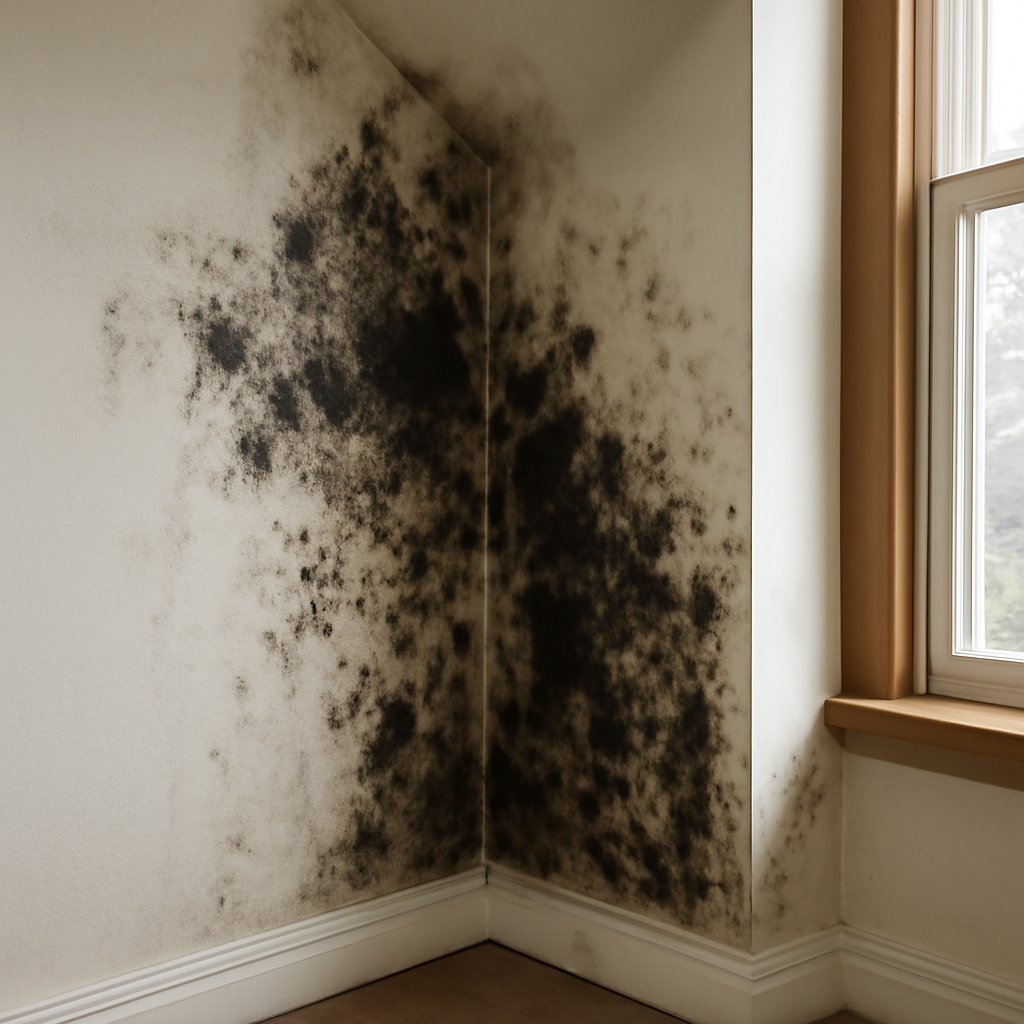
Homeowners search black mold from water after a leak, a flood, or a slow plumbing failure. Water is the necessary precondition for mold growth — without sustained moisture, fungal colonies do not establish on residential materials. The species commonly labeled black mold, Stachybotrys chartarum, has a particular relationship with water that helps homeowners predict where it appears and how quickly. This guide summarizes EPA and CDC guidance current as of 2026 and walks through the water-to-mold timeline, the materials at greatest risk, and the response decisions that matter most. Consult your physician for symptoms and a certified professional for testing decisions.
Part of our Black Mold & Your Health guide — start there for the full picture →
Is this mold, asbestos, or water damage? Get a free instant screen
Upload a clear photo of the suspect area. You'll get an instant AI screening opinion and what to do next. This is screening guidance, not a professional determination.
Screening guidance only. AI can be wrong. Confirm asbestos, mold type, or lead with lab testing or a licensed professional before acting.
How does water cause black mold?
Mold spores are present in nearly all indoor environments at low levels. They cannot grow without moisture, food, and time. Water provides the moisture and activates dormant spores already on residential materials. Stachybotrys specifically needs sustained, near-saturating moisture on a cellulose-rich substrate for at least a week before colonization begins. That is why a 24-hour plumbing leak that is dried quickly rarely produces Stachybotrys, while a slow leak running unnoticed for a month often does.
The Environmental Protection Agency identifies the most common residential water sources for mold growth as plumbing leaks, condensation on cold surfaces, roof leaks, ground water intrusion through foundation walls, HVAC condensate pan overflows, and chronically high indoor humidity above about 60 percent relative humidity. Each of those creates the days-of-continuous-moisture conditions Stachybotrys prefers.
How fast does black mold grow after water damage?
The EPA’s residential mold guidance points to a 24- to 48-hour window for drying out wet materials before mold colonization begins. That early window applies to faster-growing species like Cladosporium and Aspergillus. Stachybotrys is slower — it typically needs a week or more of continuous moisture before establishing visible growth. That gives homeowners a wider window to respond, but only if they actually find and address the water source.
Hidden leaks rarely get the fast response. A pipe weeping inside a wall cavity, a foundation crack seeping during snowmelt, or a roof leak feeding a ceiling joist can all sustain enough moisture for Stachybotrys colonization without producing obvious surface signs for weeks. By the time a homeowner notices, the species clock has already started.
What materials grow black mold after water exposure?
Stachybotrys needs cellulose food. Drywall paper, ceiling tile, wood subflooring, vinyl wallpaper backing, paper-faced insulation, and carpet padding all qualify. Faster-growing molds like Cladosporium will colonize a wider range of surfaces — grout, caulk, painted surfaces, HVAC components — but Stachybotrys is more selective.
That selectivity has practical implications. After a water event, the at-risk materials list is shorter than the at-risk surfaces list. A wet tile floor that dries quickly is unlikely to grow Stachybotrys. A wet drywall sheet that sits damp behind a wall for a month is at high risk. The Centers for Disease Control and Prevention recommends prioritizing the removal of porous cellulose materials that cannot be dried thoroughly within the 48-hour window.
What about clean water versus dirty water?
The water source matters less for mold than for bacterial contamination. Clean tap water from a burst supply line and dirty sewage backflow both feed mold equally if the moisture stays present. The bacterial concern is separate — sewage water requires Category 3 cleanup protocols regardless of mold growth, with full removal of contaminated porous materials and disinfection of structural surfaces.
Where does water-related black mold typically appear?
The locations are predictable. Behind drywall after a slow plumbing leak. Inside HVAC return cavities after a condensate pan overflow. On wood subflooring beneath a leaking dishwasher or refrigerator water line. In ceiling tiles below a roof leak. In basement carpet padding after foundation seepage. On the back of vinyl wallpaper in chronically humid rooms.
Front Range homeowners often find water-related Stachybotrys along the rim joist where a swamp cooler has dumped humid air into an unconditioned basement, or along the bottom edge of finished basement drywall after foundation cracks have wept water through several snowmelt cycles. Our overview of how to tell black mold from regular mold at home details the typical Front Range moisture patterns.
What should homeowners do immediately after a water event?
The first 48 hours are critical. The EPA’s residential moisture guidance points to several steps. Stop the water source. Remove standing water. Use fans and dehumidifiers to dry the affected area. Move wet materials away from dry materials to prevent moisture migration. Discard porous materials that cannot be dried thoroughly within the window — wet drywall, soaked carpet padding, saturated insulation, and pulped ceiling tile rarely recover cleanly.
Inspection follows drying. A pin or pinless moisture meter on framing and subflooring should read below about 16 percent before reinstalling finishes. Hidden cavities should be checked with a borescope or by removing small access panels. Our mold inspection hub explains when to bring in a professional assessor for water-event verification.
When does a water event become a mold event?
The transition usually happens when drying is incomplete or delayed beyond the 48-hour window. Trapped moisture inside wall cavities, behind cabinets, or under flooring is the most common driver. A homeowner who cleans up visible water but does not check cavities often discovers mold weeks or months later when a musty odor appears or when a dark patch bleeds through paint.
Can homeowners clean up water-related mold themselves?
The EPA’s residential mold guidance applies. Visible patches under about 10 square feet on hard or semi-porous surfaces can be cleaned by a homeowner using detergent and water, with N95 mask, gloves, and goggles. Larger patches, growth tied to a structural moisture source, repeated regrowth, or growth on structural framing call for professional remediation with containment, HEPA filtration, and post-clearance verification.
Water-related mold cleanup carries an extra requirement — the water source must be confirmed corrected before remediation, or the colony will return. A homeowner who scrubs a basement wall without sealing the foundation crack will see the same patch reappear within months. The cleanup is only as durable as the moisture fix.
Are health risks worse from water-related black mold?
The species and exposure determine the health risk more than the water source. The Centers for Disease Control and Prevention notes that mold of any species can cause respiratory irritation, allergic reactions, asthma exacerbation, and infections in immunocompromised individuals. There is no proven causal link between casual indoor exposure to Stachybotrys mycotoxins and acute health outcomes in otherwise healthy adults under typical residential conditions, but sensitive populations may react more strongly.
Water events that involve sewage or contaminated water carry additional bacterial risks beyond mold. Category 3 water cleanup protocols address those risks separately. For typical clean-water leaks, the mold response and the structural drying response are the main concerns.
What does the water-to-mold timeline look like in detail?
Hours 0 to 24 — most porous materials are still drying-recoverable if airflow and dehumidification start immediately. Hours 24 to 48 — faster mold species begin to colonize wet surfaces. Many remediation protocols recommend discarding porous materials still wet at the 48-hour mark. Days 3 to 7 — Cladosporium and Aspergillus growth becomes visible on chronically wet surfaces. Days 7 to 14 — Stachybotrys begins to establish on sustained-wet cellulose materials if conditions persist. Weeks 2 to 4 — Stachybotrys colonies become visible if moisture continues.
That timeline applies under typical residential conditions. Cooler temperatures slow growth. Warmer temperatures, especially in unconditioned summer basements, accelerate it. Substrate type also matters — paper-faced drywall colonizes faster than dense wood. The National Institute of Environmental Health Sciences notes that no single timeline applies universally because so many variables affect the rate.
How does insurance handle water-related mold cleanup?
Homeowner policy coverage varies. Many policies cover mold remediation only when it stems from a covered water-loss event — a sudden plumbing burst, a covered storm damage incident, an appliance failure. Gradual moisture damage, long-term seepage, and humidity-driven growth are typically excluded. The distinction matters for the documentation strategy. A burst pipe with prompt cleanup that still produced mold is a stronger claim than a slow seepage that was ignored for months.
Documentation supports the claim. Photographs of the water event, dated invoices for emergency drying services, a written report from an independent mold assessor, and clear remediation scopes from licensed contractors all strengthen the file. Homeowners should review policy language before assuming coverage applies — some policies cap mold remediation at $5,000 or $10,000 regardless of the actual cost.
When to call a professional
Engage a certified mold assessor or remediator when the water-affected area exceeds about 10 square feet of visible growth, when the water event involved sewage or contaminated water, when occupants have asthma or immune compromise, when growth keeps returning after cleaning, when a real estate transaction needs documentation, or when cavity growth is suspected. Use the InterNACHI mold standard of practice as a vetting baseline. Prefer assessors who do not also sell remediation services for the same job.
The Colorado Department of Public Health and Environment publishes general guidance on indoor air quality and on choosing qualified contractors. Insurance documentation is often easier when an independent assessor is involved early — water-event scopes that involve mold can run into significant cost, and clear documentation supports the claim process.
References
- Mold and health — U.S. Environmental Protection Agency
- Basic facts about mold and dampness — Centers for Disease Control and Prevention
- Mold inspection standards of practice — InterNACHI
- Indoor air quality and mold — Colorado Department of Public Health and Environment
Frequently asked questions
How long after water damage does black mold grow?
The EPA's residential guidance points to a 24- to 48-hour drying window before faster-growing mold species colonize. Stachybotrys chartarum is slower and typically needs a week or more of continuous moisture before establishing visible growth on cellulose materials.
What materials are most at risk for water-related black mold?
Drywall paper, ceiling tile, wood subflooring, vinyl wallpaper backing, paper-faced insulation, and carpet padding all provide the cellulose food Stachybotrys needs. The CDC recommends removing porous cellulose materials that cannot be dried thoroughly within the 48-hour window.
Does the water source matter for mold growth?
Clean tap water and dirty sewage both feed mold equally if moisture stays present. Sewage water carries additional bacterial risks that require Category 3 cleanup protocols, separate from the mold response.
Will mold return after cleanup if the leak is not fixed?
Yes. Cleanup is only durable if the moisture source is corrected first. A homeowner who scrubs a wall without sealing the underlying leak will typically see the same patch reappear within weeks or months.
Front Range homeowners dealing with a recent water event and suspected mold can connect with a vetted local inspector through our contact page for an independent assessor visit before scheduling remediation.