Black Mold From Water Damage: What Homeowners Need to Know
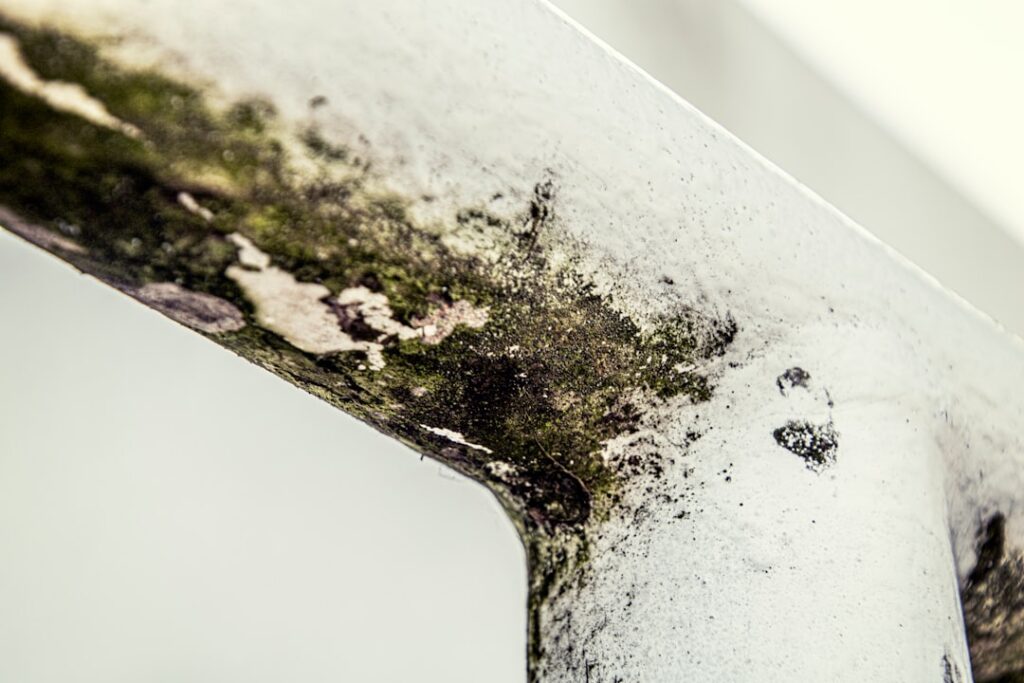
Black mold from water damage almost always traces back to one of about eight common perils: roof leak, plumbing failure, basement flood, ice dam, sewer backup, HVAC condensate overflow, appliance failure, or foundation seepage. The mold problem is downstream — the colony is just nature’s response to a substrate that stayed wet too long. Solving the water source is therefore the first remediation step, and understanding which peril you’re dealing with shapes everything from the dry-out approach to the insurance conversation. This guide summarizes EPA, CDC, and HUD guidance current as of 2026 to walk through the source-to-mold pathway for each common peril. For health symptoms tied to suspected exposure, consult your physician, and for any patch larger than roughly 10 square feet, defer to an IICRC-certified remediation professional.
Part of our Moisture Meters & Water Damage Detection guide — start there for the full picture →
Is this mold, asbestos, or water damage? Get a free instant screen
Upload a clear photo of the suspect area. You'll get an instant AI screening opinion and what to do next. This is screening guidance, not a professional determination.
Screening guidance only. AI can be wrong. Confirm asbestos, mold type, or lead with lab testing or a licensed professional before acting.
Black Mold From Water Damage: The Source Map
The fastest way to assess a mold situation is to back-trace from the visible patch to the moisture source. Each source has a typical signature pattern that experienced inspectors recognize. The CDC and EPA both emphasize this principle in their mold guidance: until the moisture source is fixed, remediation just resets the clock for the colony to return.
- Roof leaks — staining migrates downward from ceiling drywall, often around plumbing vent boots, skylight curbs, chimney flashing, or shingle ridge lines.
- Plumbing supply or drain failures — vertical staining stripes from a wet spot inside the wall, often below sinks, behind tubs, or near washing-machine hookups.
- Basement flooding — horizontal staining band along the bottom 12-24 inches of perimeter walls, often with concurrent rust on metal studs or floor framing.
- Ice dams — staining on exterior wall ceilings near the eaves, often appearing 4-8 weeks after a freeze event when the cavity finally dries enough to show contrast.
- Sewer backups — visible at the lowest drains (basement floor drain, ground-floor toilet) with concurrent odor; Category 3 water requires professional handling.
- HVAC condensate overflow — ceiling staining directly below an attic-installed air handler, or wet baseboards near a downstairs furnace condensate line.
- Appliance failure — dishwasher inlet, refrigerator ice-maker line, washing-machine supply hose; staining follows the water’s gravity path.
- Foundation seepage — chronic dampness at floor-to-wall joints, often invisible behind finished basement walls until the colony pushes through.
For the broader homeowner walkthrough on detecting, testing, and remediating, the mold inspection and testing hub covers the full decision path.
The Post-Water-Damage Mold Prevention Timeline
The IICRC S500 water-damage restoration standard centers on a 72-hour target: get the affected materials below 16% moisture content within three days, and Stachybotrys colonization usually doesn’t take hold. The hours after a water event are the highest-leverage window in the entire mold prevention story. Here’s the practical sequence.
Hours 0-6: Stop the Source
Shut off the water supply, tarp the roof, run a backup sump pump, or whatever the source requires. Document with photos before you start cleanup — insurance documentation begins now, not after dry-out.
Hours 6-24: Bulk Water Removal
Wet-vac standing water, pull saturated carpet padding to the curb (it’s almost never salvageable after meaningful wetness), and pull baseboards to vent wall cavities. Open every cabinet under affected sinks. Pull furniture off wet flooring.
Hours 24-72: Active Drying
Run commercial dehumidifiers (rental units at $50-100/day) and air movers around the clock. Monitor with a moisture meter — pin-type for drywall and framing, pinless for sub-floor surveys. Target 16% moisture content or lower for drywall and framing, 12% or lower for finish wood.
Hours 72+: Verification
If anything is still above target, pull more material. Sealed cavities that stayed wet past 72 hours almost always need drywall replacement up to the dry line plus 12 inches. The verification step is where homeowner DIY most often fails — surfaces that feel dry can still hold 25-30% moisture inside.
Roof and Attic Sources
Roof leaks create the slowest-to-detect mold pattern in residential housing because the attic cavity hides the problem from below. By the time ceiling drywall shows a stain, the underside of the roof sheathing may have been wet through dozens of rain events. Common access points: nail pops where shingle nails back out, deteriorated boot flashing around plumbing vents, ice-damaged shingles in north-facing eave zones, and chimney crickets that fail at flashing joints. Front Range homeowners see this pattern after spring snowmelt and after the late-summer monsoon thunderstorms that hit the Front Range from July through September.
Prevention: schedule a roof inspection every 3-5 years, replace boot flashings on plumbing vents proactively at year 10-12, and have attic insulation pulled back along the eaves to inspect sheathing condition during any major roof work.
HVAC and Appliance Water Sources
HVAC condensate is a perennial mold-from-water-damage source because it operates continuously through cooling season, drips inside an enclosed cabinet, and produces clean liquid water at room temperature — the exact conditions Stachybotrys prefers. Common failure points: clogged condensate drain lines, cracked condensate pans on aging air handlers, and disconnected drain hoses on basement furnaces. Attic-installed units are worst-case because gravity carries any leak directly into ceiling drywall below.
Appliance failures distribute more total water than any other category in homes that have already aged past their initial warranty period. Washing-machine supply hoses (especially rubber ones over 7-10 years old), dishwasher inlet valves, ice-maker supply lines, and water-heater tanks all account for a meaningful slice of residential water claims annually. Steel-braided supply hoses on the washing machine cost about $25 per pair and they’re the single highest-leverage water-damage prevention upgrade a homeowner can make in 15 minutes.
Plumbing and Slab Leaks
Supply-line failures (chronic pressure, copper pinhole leaks, polybutylene end-of-life) are the worst-case slow-leak scenario because they continue until detected. A pinhole leak inside a wall cavity can release a teaspoon per hour — enough to saturate the cavity within weeks while showing no surface signs. Slab leaks below the foundation create wet base-of-wall framing that supports Stachybotrys for months before any visible mold appears.
Warning signs include unexplained increases in water bills, the sound of running water when all fixtures are off, and warm spots on slab floors (which indicate hot-water-line leaks). Homes built between 1978 and 1995 with polybutylene plumbing are at elevated risk regardless of usage patterns.
Basement and Foundation Sources
Basement water damage falls into three categories: surface flooding (broken supply line, snowmelt runoff), hydrostatic seepage (water table pressure through foundation cracks), and capillary moisture (chronic wetness wicking through porous concrete). All three create base-of-wall mold patterns, but the prevention approach differs. Surface flooding needs grading and gutter improvements; hydrostatic seepage needs exterior waterproofing or interior drainage; capillary moisture often needs a dehumidifier running continuously through the warm season.
For the visual ID step that often follows a basement water event, what black mold on walls looks like covers the staining-to-colony transition.
Sewer Backup as a Distinct Category
Sewer backup belongs in its own category because the water is Category 3 (black water) under IICRC S500 classification — it carries bacterial, viral, and parasitic contamination in addition to the mold concern. Carpet, pad, drywall up to the dry line plus 12 inches, and any insulation that contacted the water must come out without exception. Personal items that touched the water and can’t be hot-water laundered or hard-surface disinfected don’t go back in the home. The remediation is more aggressive than any other water-damage category, and the homeowner who tries to DIY a sewer backup ends up with both a mold problem and an exposure problem.
Sewer backup is also under-insured in most policies. A standard homeowners policy excludes it; the homeowner needs a specific endorsement (commonly called “water backup and sump overflow” coverage) with limits typically capped at $5,000-25,000. If you live in a basement-heavy market like the Front Range, this endorsement is worth a phone call to your agent.
Insurance Coverage Patterns
Most homeowner policies cover sudden, accidental water damage but exclude mold remediation unless the mold is the direct result of a covered peril. Sudden events (burst pipes, supply-hose failures) usually trigger coverage including reasonable mold cleanup, up to a policy sublimit (commonly $5,000-10,000). Long-term seepage, gradual deterioration, and lack of maintenance are usually excluded. Sewer backup requires a specific endorsement on most policies — if you haven’t checked your policy in the past three years, that’s the single most useful 15-minute review you can do this month.
Filing promptly matters more than the homeowner usually realizes. Even if you plan to handle dry-out personally, opening the claim creates documentation that protects you against future disputes if hidden mold surfaces months later. The insurer’s adjuster will inspect the area; their notes become a reference baseline if you discover concealed damage during the next renovation.
Front Range Patterns
Three water-damage patterns dominate Front Range mold calls. Ice dams hit homes with under-insulated attics and inadequate eave ventilation, particularly in older Denver and Boulder neighborhoods. Slab leaks plague Douglas, Arapahoe, and Jefferson county developments built in the 1980s-90s polybutylene era. Foundation seepage shows up in older Adams and Broomfield county homes built before modern exterior waterproofing standards. None of these patterns is exclusive to Colorado, but they cluster here because of the soil chemistry, freeze-thaw cycles, and housing stock vintage.
How Source Affects the Remediation Approach
The peril that caused the water damage shapes the remediation scope. Roof leaks typically affect ceiling drywall and attic insulation but spare wall cavities below. Slab leaks affect base-of-wall framing on multiple walls of a single room. Ice dams hit ceiling-and-eave junctions on exterior walls. Basement floods affect everything below the high-water line. Sewer backups affect everything water touched plus any porous material in the same room.
Knowing the source-to-scope pattern lets homeowners ask sharper questions when getting remediation estimates. If a contractor scoped roof-leak ceiling drywall but doesn’t mention attic insulation replacement, ask why. If a basement-flood scope doesn’t include sub-floor moisture verification, push back. Most credible remediators welcome the questions; the ones who don’t are the ones to avoid.
When to Stop DIY and Call a Pro
Three triggers should push earlier escalation than the standard 10-square-foot EPA threshold: Category 2 or 3 water exposure (anything other than clean supply water), carpet pad that wasn’t extracted within 48 hours, and any drywall that stayed wet for over 72 hours. Each of these almost guarantees hidden growth even when the visible patch is small. For Front Range homeowners dealing with a leak, ice dam, or basement flood and needing a vetted IICRC-certified restorer, reach out through our contact page for a same-week assessment. The earlier the call lands during the 72-hour dry-out window, the better the outcome for both insurance documentation and structural drying success rates.
References
- EPA Mold Cleanup in Your Home — U.S. Environmental Protection Agency
- CDC Basic Facts About Mold and Dampness — Centers for Disease Control and Prevention
- HUD Healthy Homes Mold Guidance — U.S. Department of Housing and Urban Development
- NIEHS Mold Health Topic — National Institute of Environmental Health Sciences
Frequently asked questions
What's the difference between black mold from water damage and other mold?
There's no biological difference — Stachybotrys and other dark molds from water damage are the same species you'd find in any chronically wet indoor environment. The water-damage context just means the moisture source is identifiable, which makes prevention straightforward once the source is fixed.
How quickly does mold start after water damage?
Allergenic molds (Cladosporium, Penicillium) can become visible within 24-48 hours. Stachybotrys typically requires 48-72 hours of continuous wetness to germinate visibly. Established colonies form within 7-14 days when moisture persists.
Does insurance cover black mold from water damage?
Coverage depends on the source. Sudden accidental events (burst pipes, appliance failures) usually include reasonable mold cleanup up to a policy sublimit. Slow leaks and long-term seepage are typically excluded as maintenance issues. Sewer backup requires a specific endorsement on most policies.
How long does professional dry-out take after water damage?
The IICRC S500 standard targets 72 hours for structural drying to below 16% moisture content. Real-world dry-out projects often run 3-7 days depending on materials affected, with verification readings used to confirm completion rather than calendar time alone.
Front Range homeowners dealing with a recent water event who want a vetted IICRC-certified remediator to assess hidden mold can get in touch through our contact page.