Is Black Mold From Water Damage Dangerous: A Risk Guide 2026
Water damage and black mold are often discussed in the same breath, and for good reason. Most indoor mold cases trace back to a specific water event or a chronic moisture condition. The question of whether the resulting mold is dangerous depends on what kind of water was involved, what species established as a result, how widespread the contamination is, and who is exposed. Every part of that question deserves a careful answer rather than a slogan. This guide summarizes EPA and CDC guidance current as of 2026 β consult a certified mold inspector for testing decisions and your physician for health-symptom evaluation.
Is this mold, asbestos, or water damage? Get a free instant screen
Upload a clear photo of the suspect area. You'll get an instant AI screening opinion and what to do next. This is screening guidance, not a professional determination.
Screening guidance only. AI can be wrong. Confirm asbestos, mold type, or lead with lab testing or a licensed professional before acting.
The Three Water Categories That Drive Risk
The Institute of Inspection, Cleaning and Restoration Certification (IICRC) classifies water-damage sources into three categories that the EPA and remediation industry both reference. Category 1 is clean water (supply-line break, ice-maker line failure). Category 2 is gray water (washing-machine overflow, dishwasher discharge, aquarium leak). Category 3 is black water (sewage backups, flood water from outside the structure, prolonged contamination). Each category warrants escalating response and shifts the mold-risk profile substantially. Black water events almost always require professional remediation.
Why Water Category Changes Mold Risk
Category 1 events that are dried within 48 hours rarely produce significant mold growth. Category 2 events introduce microorganisms and organic load that accelerate mold establishment even if dried quickly. Category 3 events introduce pathogenic bacteria and biological material that contaminate everything they touch. The EPA recommends professional response for any Category 3 event regardless of size, because the combination of pathogens and pending mold growth creates compound risk that exceeds homeowner-DIY capacity.
Time as the Critical Variable
The EPA’s 48-hour guideline is widely cited: any material wet for more than 48 hours should be treated as a mold-growth risk. The biology supports this. Stachybotrys requires several days of sustained moisture before visible growth. Aspergillus and Penicillium can establish within five to seven days. Cladosporium colonizes condensation cycles continuously. Drying within 24 to 48 hours, with proper equipment, prevents the moisture conditions colonies need. Delay measured in days rather than hours dramatically changes the outcome.
What Stachybotrys From Water Damage Looks Like
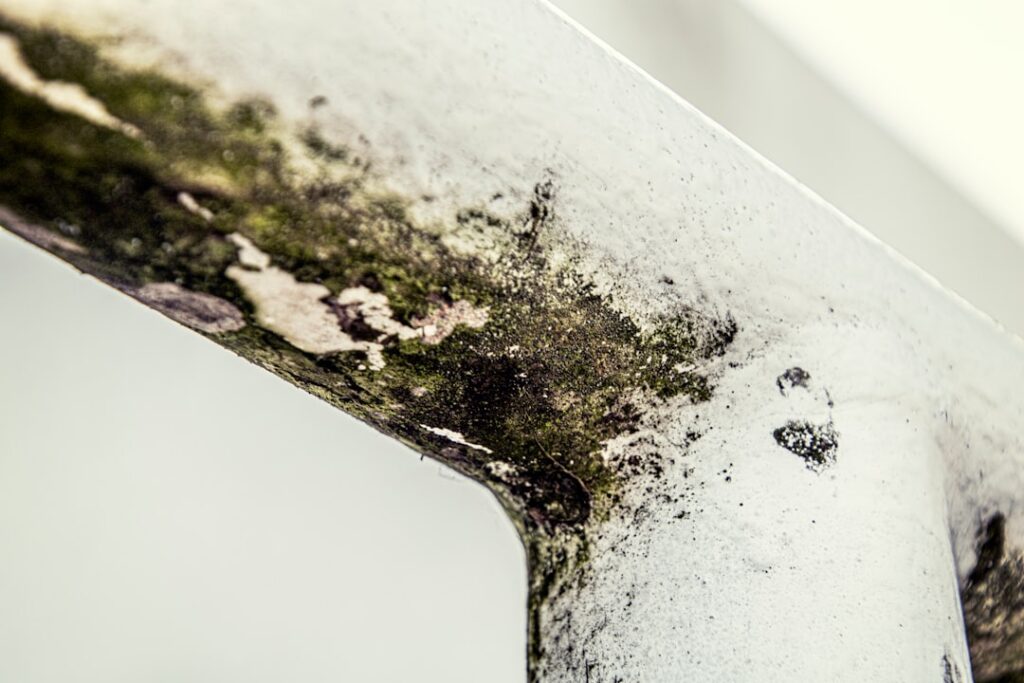
Stachybotrys colonies from water damage typically appear within seven to fourteen days on saturated cellulose materials. They look slimy, greenish-black, and grow on drywall paper, ceiling tile, and the backs of vinyl wallpaper. They are most common in basements after sewage backups, in finished spaces after slab-leak events, and in ceilings beneath second-floor bathroom failures. Colonies often expand for weeks if not addressed and can reach several square feet. For more on what to look for, see our guide on black mold from water-damage cases.
The Exposure Question
Risk depends not just on what is growing but on who is exposed to it and how. A confined Stachybotrys colony in a closed basement utility room with no HVAC interaction has a much smaller exposure footprint than the same colony in a finished basement that the family uses daily. The CDC notes that occupants with mold allergies, asthma, chronic obstructive pulmonary disease, or compromised immune systems are at elevated risk. Healthy adults can usually tolerate brief incidental exposure, while sensitized occupants may experience symptoms from much smaller exposures.
Documented Health Effects
The CDC documents nasal congestion, throat irritation, coughing, wheezing, eye irritation, and skin reactions as common effects of indoor mold exposure. The American Lung Association adds asthma exacerbation and bronchitis-like symptoms in sensitive individuals. NIH and NIEHS research notes that immunocompromised individuals can develop invasive infections from species like Aspergillus fumigatus. The CDC has cautioned against attributing severe systemic illness to indoor mold exposure without strong supporting evidence, while acknowledging that respiratory and allergic effects are well-established.
Category 3 Sewage Events: The Highest-Risk Subset
Sewage backups deserve particular caution. The mold that follows colonizes substrates that have already been contaminated with pathogenic bacteria, parasites, and organic material. The OSHA-referenced response protocol for Category 3 events includes contained removal of all affected porous materials, PPE including respirators, and disposal as biohazardous waste. Homeowners should not attempt Category 3 cleanup. The post-event mold remediation, if needed, is on top of the sanitation cleanup and warrants the same professional response.
Hidden Contamination After Water Damage
Water moves through buildings in ways that surprise homeowners. A second-floor toilet overflow can wet wall cavities downstairs, soak the subfloor under the toilet, and migrate horizontally beneath flooring for several feet. Mold growing in those hidden locations may not become visible for weeks or months. Professional water-damage response includes moisture mapping with meters and infrared imaging to find wet materials beyond the obvious. Skipping the mapping step is a documented cause of repeat-remediation cases.
Insurance Treatment of Water-Damage Mold
Homeowner insurance generally covers mold remediation when it follows a “sudden and accidental” Category 1 water event such as a burst supply line. Coverage shrinks or disappears for Category 2 events depending on policy language and for long-term seepage regardless of category. Many policies cap mold-related claims at $10,000 per occurrence. Quick reporting of the water event (within 24 to 48 hours) materially affects coverage outcomes; delay often gives the carrier grounds to deny based on “failure to mitigate.”
The Documentation Habit That Pays Off
Document every water event. Photographs of the source, the affected area, and the cleanup process. Receipts for emergency drying equipment rental or contractor services. Lab reports if mold testing was performed. Post-remediation verification testing results. This documentation matters during claim adjudication, real-estate transactions, and any subsequent mold investigations. Our hub on mold inspection services covers documentation expectations.
Drying Standards That Prevent Mold
The IICRC S500 standard for water damage restoration outlines drying targets and equipment expectations. Wet materials should be dried to within a few percent of normal moisture content using calibrated meters, with airflow, dehumidification, and time as the three primary tools. Industrial-grade air movers and refrigerant dehumidifiers do work that consumer-grade fans cannot. Renting professional drying equipment within 24 hours of a Category 1 event often prevents the mold problem entirely.
What to Discard After Significant Water Events
EPA guidance specifies that porous materials saturated by water cannot reliably be cleaned and should be discarded. That typically includes carpet padding, drywall below the wet line, insulation that absorbed water, ceiling tile, and upholstered furniture saturated by Category 2 or 3 water. Hard non-porous materials (tile, glass, metal, sealed hardwood) can usually be cleaned and dried. The categorical choice β clean versus discard β saves time and prevents the trap of trying to dry porous materials that will mold anyway.
The HVAC Cross-Contamination Concern
Water damage frequently affects HVAC systems. Wet insulation in ducts, water in cooling coils or condensate pans, and saturated air-handler components can all become mold growth sites. Running the HVAC during or after a water event can spread spores throughout the building. Many remediation contractors recommend turning off the HVAC during cleanup and having ducts inspected (and possibly cleaned) before normal operation resumes.
Post-Remediation Verification
After remediation, post-remediation verification testing samples the air to confirm spore counts have returned to acceptable levels relative to outdoor controls. The InterNACHI mold standard recommends third-party PRV for any significant remediation event, particularly Category 3 jobs. The cost (typically $300 to $600 for sampling and lab work) is small relative to the contractor’s bill and provides documentation that the work was effective.
Front Range Considerations
Colorado Front Range homes have specific water-damage patterns worth noting. Spring snowmelt creates groundwater pressure that pushes through foundation walls of finished basements. Sudden summer thunderstorms can overwhelm gutters and produce roof leaks. Winter ice dams cause attic and second-floor ceiling damage. Each pattern produces predictable mold-risk profiles in the days and weeks after. Quick response within 24 to 48 hours of any event is the largest single risk reducer.
When to Call a Professional Immediately
Call immediately for any of these: sewage backup, water-damage area larger than 10 square feet, water that has been present for more than 48 hours, water from an unknown source, mold visible after a water event, or occupants with symptoms following any water event. Front Range homeowners can connect through our resources page; mold inspection often pairs with water-damage restoration during the response.
The First 24 Hours After a Water Event
What happens in the first 24 hours after a water event substantially determines whether mold becomes a problem. Stop the source if possible (close the supply valve, route water away). Remove standing water by any means available (wet-vac, mop, towels). Open windows if outdoor conditions allow (humidity below 60 percent). Begin running fans and any available dehumidification. Photograph everything before cleanup. Call insurance and document the claim. Move undamaged contents away from the wet area. Pull up carpet padding (it cannot be effectively dried in place). This first-day response prevents most cases from becoming mold cases.
The Second 24 to 72 Hours
Drying continues into the second and third day with professional-grade equipment if the event was significant. Industrial air movers (about 4,000 CFM each) and refrigerant dehumidifiers (75 to 130 pints per day capacity) do what consumer-grade fans cannot. Equipment rental costs $50 to $150 per piece per day; restoration contractors typically include equipment in their billing. Moisture-meter readings should drop daily until materials reach normal moisture content. If readings stall or rise, additional equipment or substrate removal is needed. Skipping this stage is the most common path to mold growth.
What “Pump and Dump” Restoration Cannot Address
Some restoration contractors offer “pump and dump” service that removes visible water and walks away. This approach fails badly for hidden moisture. Water trapped behind cabinets, under flooring, inside wall cavities, and in HVAC ductwork continues to support mold growth for weeks even though the visible surface dried. Proper restoration includes moisture mapping with meters and infrared imaging, removal of porous materials below the wet line, controlled drying of cavities, and verification testing to confirm materials are dry. The cost difference between “pump and dump” and proper restoration is usually a few hundred dollars; the cost of mold remediation later is usually multiples of the difference.
Documenting for the Insurance Claim
Insurance documentation should include the source of the water (photographs, repair records), the affected areas (photographs with rooms identified), the contents involved (inventory with values), the drying response (equipment used, daily moisture meter readings), and any mold testing results. Receipts for emergency response and contractor invoices complete the file. Quick claim filing (within 24 to 48 hours) is generally important; some policies have stricter time limits. Documented mitigation steps protect against carrier disputes over whether the homeowner did enough to limit damage.
References
- Mold Cleanup in Your Home β U.S. Environmental Protection Agency
- About Mold β Centers for Disease Control and Prevention
- Mold Standards and Information β Occupational Safety and Health Administration
- Mold Inspection Standards of Practice β InterNACHI
If a water event has happened in your home and you want to confirm whether mold has established before remediation choices are locked in, reach a Front Range mold inspector through our contact page. Sampling within the first two weeks after a water event often distinguishes a Category 1 cleanup case from a real mold-remediation case.