Toxic Black Mold: What Testing Can and Can’t Confirm
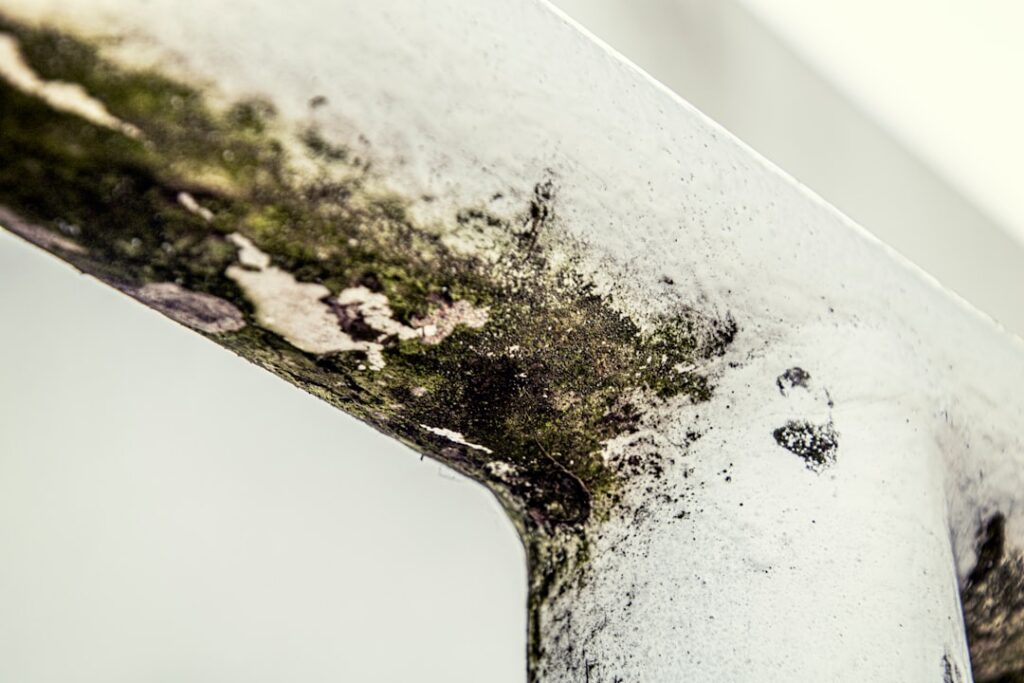
If you have a dark patch on a wall, a ceiling tile, or a basement corner, the question underneath “how do I know if it’s toxic?” is usually simpler: do I need to worry, and do I need a lab to tell me? The honest answer is that you cannot confirm toxicity by looking, testing rarely changes what you should do next, and the moisture problem behind the mold matters far more than the colony’s Latin name.
Part of our Black Mold & Your Health guide — start there for the full picture →
Here is what actually determines whether a black mold is “toxic,” what a sample can and cannot prove, and how to decide whether paying for lab work is worth it.
Is this mold, asbestos, or water damage? Get a free instant screen
Upload a clear photo of the suspect area. You'll get an instant AI screening opinion and what to do next. This is screening guidance, not a professional determination.
Screening guidance only. AI can be wrong. Confirm asbestos, mold type, or lead with lab testing or a licensed professional before acting.
You can’t tell toxicity by sight
No visual inspection confirms a species, and no species name confirms that toxins are being produced right now. Stachybotrys chartarum — the greenish-black mold that got tagged “toxic black mold” in 1990s news coverage — can produce trichothecene mycotoxins under the right growth conditions, but it does not always do so, and several ordinary molds look nearly identical to it. The CDC states plainly that you cannot tell whether a mold is hazardous by its color or appearance, and it does not recommend routine testing to sort “toxic” from “non-toxic” growth.
Confirming the species requires laboratory analysis of a physical sample. Confirming active toxin production is a separate, more specialized test that most residential samples never undergo. So “is it toxic” really unpacks into three nested questions: is there mold, is it a species that can make mycotoxins, and is it making them at levels that reach the people in the home. Most homes clear the first bar, fewer clear the second, and very few clear the third.
What “toxic” actually means here
The word does two jobs and they get blurred. Toxigenic means a species has the genetic capacity to produce mycotoxins. Toxic, in everyday use, means “will make me sick.” Those are not the same claim. Many toxigenic molds rarely produce meaningful mycotoxin concentrations indoors, and plenty of non-toxigenic molds — common Cladosporium, for instance — still trigger real allergy and asthma symptoms in sensitized people. The Institute of Medicine and NIEHS have found sufficient evidence linking indoor damp/mold exposure to upper-respiratory symptoms, coughing, wheezing, and asthma flares, but the evidence for the dramatic mycotoxin-poisoning claims popularized decades ago remains weak. That is why federal guidance treats all visible indoor mold as something to remove, rather than ranking colonies by danger.
Visual clues that raise the odds it’s Stachybotrys
Sight can’t confirm anything, but a few traits shift the probability that a patch is Stachybotrys rather than a look-alike:
- Greenish-black or olive-black tone, not a flat charcoal black
- A slimy or wet-looking surface with a faint sheen at a side angle (it dries to a sooty powder)
- Growth on chronically wet, cellulose-rich material — paper-faced drywall, soaked baseboards, saturated ceiling tiles
- A moisture history of roughly a week or more of continuous wetting, not a one-time splash
Patches missing those traits are more often Aspergillus, Penicillium, Cladosporium, Alternaria, or ordinary mildew. Our guide on identifying black mold walks through more of these differentials, and what black mold actually is covers the biology in plain terms.
Why symptoms aren’t a diagnosis
It’s tempting to reason backward — “I’m congested, so the mold must be toxic.” That logic fails because non-toxigenic molds produce the same everyday symptoms: stuffy nose, scratchy throat, watery eyes, mild headache, nagging cough. Symptom overlap means you cannot use how you feel to identify what’s on the wall. Persistent or serious effects — significant asthma flares, recurrent respiratory infections, unexplained fatigue — deserve a physician’s evaluation regardless of species, and the CDC recommends seeing a healthcare provider rather than self-diagnosing from the drywall. For the range of documented effects, see our overview of black mold exposure and health.
When a lab test is actually worth it
Sampling earns its cost in a narrow set of situations:
- A real estate transaction where buyer and seller dispute a stain
- An insurance claim or litigation that requires documentation
- A household where an occupant has a physician-confirmed mold-related condition and the doctor wants species data
- Post-remediation clearance testing where vulnerable occupants live
Outside those cases, the result usually doesn’t change the plan, because EPA cleanup guidance is the same across species and toxin status: remove the visible mold, fix the water source, and match the method to the surface and colony size. A positive Stachybotrys result doesn’t add a step. If you do want the science on what analysis can measure, our page on mold toxicity testing covers the scopes and their limits.
How sampling works if you pursue it
A certified inspector or industrial hygienist can collect a tape lift (an adhesive strip pressed on a visible colony), a swab (for tight spots), a bulk sample (a physical piece of the material), or an air/spore-trap sample (useful for hidden growth, but noisy because spore counts swing hour to hour). Samples go to an AIHA-accredited lab; Denver-metro turnaround is typically three to seven business days, and per-sample fees generally run in the tens of dollars on top of the inspector’s site fee. Standard analysis identifies genus and often species — it does not, by default, quantify mycotoxins, which is a separate lab scope entirely.
What to do right now, before any result
The cleanup logic shouldn’t wait on a lab. EPA’s practical thresholds are concrete:
- Under about 10 square feet on a hard, non-porous surface: a homeowner can usually handle it — scrub with detergent and water, dry completely, and wear an N95 respirator, gloves, and eye protection.
- Larger areas, porous materials, or HVAC involvement: bring in a professional who can set up containment and HEPA filtration.
- Fix the water within 24–48 hours — that’s the window in which wet materials start to grow mold — and, per EPA moisture guidance, keep indoor humidity below 60%, ideally 30–50%, to keep it from returning.
Two pitfalls are worth naming. First, don’t pay for lab work before you stop the water; a positive result is meaningless if the leak is still feeding the colony, which will simply regrow. Second, skip the hardware-store petri-dish kits — they grow whatever settles on them and almost always read “positive,” because mold spores are present in normal indoor air, which tells you nothing about the patch on your wall. When you’re ready to remove it, our guide on how to get rid of black mold lays out the sequence, and the mold inspection process page shows how professional containment is built.
Front Range reality
Colorado’s dry climate makes Stachybotrys less common here than national coverage implies. Most Front Range inspections turn up Aspergillus, Penicillium, or Cladosporium. Where Stachybotrys does appear, it’s usually a finished basement that flooded during snowmelt or a monsoon storm and was never fully dried. Even then, whether that colony is actively producing mycotoxins at levels that reach occupants is a separate question most projects never chase — because the fix is the same either way: moisture first, cleanup second, lab testing only if one of the reasons above applies.
Frequently asked questions
This page summarizes current EPA, CDC, and NIEHS guidance for general education; a certified inspector should assess your specific situation and a physician should evaluate any health symptoms. Front Range homeowners weighing whether a dark patch warrants lab testing can reach out for a local referral.