How to Tell If Mold Is Toxic Black Mold: A Stachybotrys Guide
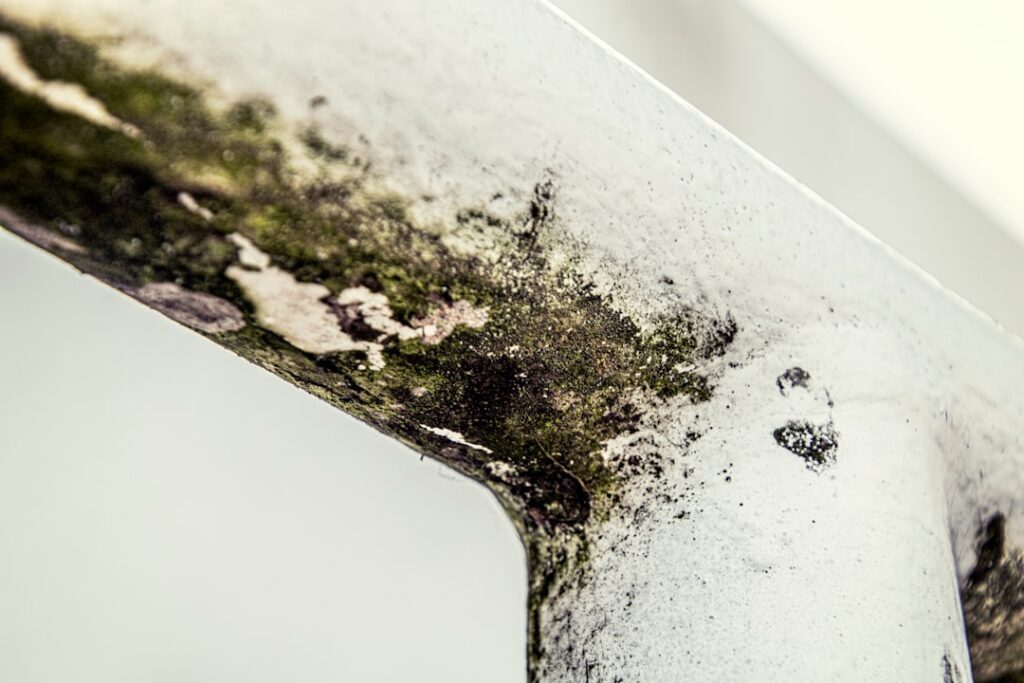
“Toxic black mold” almost always refers to Stachybotrys chartarum, the species behind the most prominent mycotoxin reporting and the cases that made indoor mold a household concern. The hard part is that several other dark-pigmented species look superficially similar, and homeowners reasonably want a way to distinguish Stachybotrys from look-alikes before paying for lab work. The honest answer is that visual identification has real limits, but specific clues — texture, substrate, smell, and the moisture history of the area — shift the probability meaningfully. This guide summarizes EPA and CDC guidance current as of 2026 — consult a certified mold inspector for testing decisions and your physician for health-symptom evaluation.
Part of our Black Mold & Your Health guide — start there for the full picture →
Is this mold, asbestos, or water damage? Get a free instant screen
Upload a clear photo of the suspect area. You'll get an instant AI screening opinion and what to do next. This is screening guidance, not a professional determination.
Screening guidance only. AI can be wrong. Confirm asbestos, mold type, or lead with lab testing or a licensed professional before acting.
The Defining Stachybotrys Markers
Stachybotrys chartarum has four signature characteristics: it grows greenish-black with a slimy or gelatinous surface, it requires cellulose substrates (drywall paper, ceiling tile, the backs of vinyl wallpaper, cardboard), it requires sustained moisture for several days minimum, and it produces a distinctive earthy “wet basement” odor. When all four are present, the working hypothesis is strong. When two or three are present, lab confirmation becomes more important to differentiate from look-alikes like Cladosporium and Aspergillus niger.
Texture: Slimy Is the Strongest Visual Clue
The slimy presentation is the most distinctive Stachybotrys marker. Active colonies look wet even when the surrounding area appears dry, because they hold onto moisture in their cell-wall matrix. Aspergillus niger looks peppery and dry; Cladosporium looks velvety; Chaetomium looks cottony. If you touch a colony (which is not recommended without PPE), Stachybotrys feels tacky or wet. A dry, dusty, easily-disturbed black colony is much more likely to be Aspergillus or Cladosporium than Stachybotrys.
Substrate: Cellulose Is the Tell
Stachybotrys is a cellulolytic mold, meaning it digests cellulose. That preference points to specific substrates: the paper covering drywall, the backside of vinyl wallpaper, ceiling tile, cardboard boxes stored in damp basements, and wood-based products. Stachybotrys does not grow well on tile, glass, metal, or sealed concrete. Black growth on bathroom tile grout is almost never Stachybotrys; black growth on the paper covering of damp drywall is a leading suspect.
Moisture History: Days, Not Hours
Stachybotrys requires sustained moisture for at least several days before visible growth appears. Quick-leak events (a sudden burst pipe cleaned up within 24 hours) rarely produce Stachybotrys. Chronic leaks (a slow ice-maker line, a shower-pan seam leak, an undetected slab leak) produce ideal conditions. A colony in an area you know was wet for at least a week aligns with Stachybotrys; a colony in an area where moisture was brief points elsewhere. For a deeper comparison, see our guide on what toxic black mold looks like.
Smell: The Earthy “Wet Basement” Signature
Stachybotrys produces a distinctive earthy, mushroomy, “wet newspaper” smell that intensifies in still air. Cladosporium smells milder and more generically musty. Aspergillus species often smell “old book” or sharper. Smell is most reliable as a relative comparison — when one room smells noticeably earthier than the others on a humid day, that room is the suspect. Smell fades as colonies dry, so noting whether the smell follows humidity is itself diagnostic.
Color Range: Greenish-Black, Not Pure Black
True Stachybotrys colonies often appear greenish-black rather than pitch black, particularly under good light. The greenish cast comes from the colony body itself and is more visible on cellulose substrates. Pure black with a peppery surface is more consistent with Aspergillus niger. Olive-black on a cool surface is more consistent with Cladosporium. Light-source color matters — a yellow incandescent bulb makes everything look more uniform black, while a daylight LED reveals subtle hue differences.
Location Patterns That Favor Stachybotrys
Specific locations come up repeatedly in Stachybotrys cases: behind kitchen sinks where a supply-stop has dripped for years, in basement utility rooms after a sewer backup, under hardwood flooring after a dishwasher leak, in ceiling cavities beneath second-floor bathrooms with shower-pan failures, and inside wall cavities behind washing machines. Front Range homes with finished basements that have had foundation seepage during spring snowmelt are common cases. Surface visible colonies often partner with hidden cavity colonies.
Companion Species That Often Appear With Stachybotrys
Stachybotrys rarely grows alone in chronically water-damaged buildings. Chaetomium globosum, Penicillium chrysogenum, and several Aspergillus species commonly co-occur. A lab report from a moderately serious case often returns three to five species. The presence of multiple cellulolytic and hydrophilic species (those that thrive in wet conditions) reinforces the moisture-history hypothesis and shifts remediation toward more extensive removal.
What Stachybotrys Look-Alikes Are
The most common look-alikes are Aspergillus niger (peppery black on drywall and HVAC components), Cladosporium (olive-black on cool surfaces), Chaetomium (cottony black-brown on damp drywall), and Alternaria (woolly dark on window frames and shower curtains). Each can be black to the casual eye. The differentiation is texture, substrate, and growth conditions. For more on differentiating species visually, our hub on mold inspection and identification covers the markers professionals use.
The Lab Confirmation Step
The only reliable identification is a tape-lift, swab, or bulk sample sent to an accredited environmental microbiology lab. Tape-lift fees run $35 to $50 per sample; turnaround is three to seven business days. A homeowner can take the sample themselves with clear cellophane tape, but a professional sample comes with chain-of-custody documentation that strengthens insurance or real-estate filings. Mail-order petri-dish kits return spore-presence data that rarely distinguishes Stachybotrys from look-alikes.
Health Considerations Specific to Stachybotrys
Stachybotrys produces trichothecene mycotoxins, well-documented in lab conditions. The CDC has noted that severe systemic illness from indoor Stachybotrys exposure in healthy adults is rare, but respiratory and allergic symptoms can occur, particularly in sensitized individuals. Immunocompromised occupants, infants, and pregnant individuals warrant more caution. Symptoms that improve during time away from the home and return on re-entry are a meaningful pattern worth documenting.
Remediation Posture for Confirmed Stachybotrys
EPA guidance for any colony larger than 10 square feet includes containment with plastic barriers and negative-pressure HEPA filtration, PPE (N95 respirator minimum, gloves, eye protection, full coveralls for larger jobs), removal and disposal of porous materials rather than cleaning, HEPA-vacuuming of surrounding hard surfaces, and post-remediation verification testing. Stachybotrys remediation is rarely a homeowner-DIY job once colonies exceed bath-towel size; professional containment prevents cross-contamination.
The Hidden Mold Question
A visible Stachybotrys colony often has a much larger hidden partner colony behind the same wall or under the same flooring. Infrared imaging combined with pin-style moisture metering helps inspectors find cavity colonies without destructive opening. The InterNACHI mold standard recommends moisture mapping before opening finishes. Remediating only what is visible while leaving cavity contamination intact is a documented cause of repeat-remediation cases.
Insurance Considerations for Toxic Black Mold
Most homeowner policies cover mold remediation only when triggered by a “sudden and accidental” water event such as a burst supply line. Long-term seepage — the conditions most associated with Stachybotrys — is usually excluded. Many policies cap mold-related claims at $10,000 per occurrence. Read your mold-and-fungus endorsement before a claim. Document everything: photos, lab reports, contractor receipts, and post-remediation verification testing.
What Confirmation Changes in Your Plan
Confirmed Stachybotrys typically warrants professional remediation rather than DIY cleanup, justifies post-remediation verification testing, and reinforces a stricter source-correction posture (find and fix the chronic moisture problem, not just dry the visible area). Confirmed Cladosporium on a windowsill typically warrants detergent cleanup, condensation control, and ongoing monitoring. The species identification changes the plan in concrete ways.
The Containment Setup Worth Asking About
Proper Stachybotrys remediation includes plastic barriers separating the work area from the rest of the home, negative-pressure HEPA filtration that ensures air flows into the contained area rather than out, sealed waste-bag protocols for contaminated materials, and PPE for all workers. Containment setup typically takes a half-day or more before any demolition begins. Contractors who skip containment, who use only a simple plastic sheet without negative-pressure equipment, or who promise to “be careful” rather than implement controls are providing inadequate response. The IICRC S520 standard for mold remediation specifies containment requirements that proper contractors follow.
Mistakes That Worsen Suspected Stachybotrys Cases
Several common homeowner responses worsen suspected Stachybotrys cases. Spraying bleach on visible colonies cosmetically lightens them while leaving root systems in porous substrates and creating a chemical sensitization risk. Painting over the colony with a stain-blocking primer traps the colony underneath, where it continues to grow and produce mycotoxins. Running fans toward the colony to “dry it out” aerosolizes spores throughout the home. Opening the wall without containment spreads contamination dramatically. Each mistake is intuitive but counterproductive. The EPA-recommended approach is containment, source-correction, removal of contaminated porous materials, and HEPA-filtration of the surrounding area before any reconstruction.
The Mycotoxin Conversation Honestly
Stachybotrys produces trichothecene mycotoxins in lab conditions, but the relationship between airborne mycotoxin levels in real residential settings and human health outcomes is less consistently characterized in the peer-reviewed literature than the popular discussion suggests. The CDC has noted that while severe systemic mycotoxin illness from indoor Stachybotrys exposure is rare in healthy adults, respiratory and allergic symptoms are well-documented. Treating Stachybotrys with respect rather than terror is the right posture. Remediate carefully, address the source, document the work, and consult a physician for any persistent symptoms.
Stachybotrys in Specific Building Configurations
Certain building configurations produce Stachybotrys cases predictably. Finished basements in homes without exterior foundation drainage. Bathrooms above kitchens with shower-pan failures that leak into the ceiling below. Slab-on-grade homes with undetected slab leaks under flooring. Older homes with original kitchen and bathroom plumbing that has accumulated decades of small drips behind cabinets. Front Range homes with daylight basements that abut a slope draining toward the foundation. Recognizing the building configuration matters because the source-correction is configuration-specific.
Why Post-Remediation Verification Matters Here
Confirmed Stachybotrys cases warrant third-party post-remediation verification testing more than most other mold scenarios. The reason is that the conditions producing Stachybotrys (chronic moisture, cellulose substrate, often hidden growth) make remediation harder to verify visually. PRV typically involves air sampling in remediated areas with outdoor controls, taken after the work is complete but before reconstruction. The cost ($300 to $600 for a comprehensive PRV) is small relative to the remediation total and provides documented evidence that the work was effective.
The Long Game on Stachybotrys Prevention
Once a building has had Stachybotrys, the long-game posture is more aggressive moisture management than the average home requires. Annual professional inspection of plumbing, gutters, and foundation drainage. Hygrometers in basement and crawl-space areas with documented monthly readings. Bathroom and kitchen fan operation logged or automated. Roof inspections every two to three years. The recurring cost is modest, and the goal is preventing the chronic moisture conditions that produced the original case. Buildings that have had Stachybotrys once are not predestined to have it again, but the building-system conditions that allowed it deserve continuing attention.
More Questions About Toxic Black Mold
Can toxic black mold grow on carpet?
Yes, Stachybotrys can grow on carpet backing and padding when they stay wet for an extended period, such as after a slow leak, a flooded basement, or repeated pet accidents.
Growth often starts underneath, so the top of the carpet may look normal while the pad is stained and smells musty. Because carpet and padding trap mold deeply, they are usually removed and discarded rather than cleaned when Stachybotrys is suspected. The subfloor underneath should be dried, inspected, and cleaned before new flooring is installed.
What does Stachybotrys look like in a petri dish?
In a petri dish, Stachybotrys usually grows slowly and forms dark, greenish-black to black colonies that can look wet or slimy early on. It often appears later than faster-growing molds that crowd the plate.
That slow growth is one reason home settle-plate kits are poor at detecting it: common airborne molds cover the plate before Stachybotrys has a chance to grow. Its spores are also heavy and sticky, so they do not stay airborne for long. Labs usually identify it from tape lifts or bulk samples taken directly from the suspect growth.
Does toxic black mold spread easily through the air?
Stachybotrys spores do not spread through the air as easily as many common molds, because they are relatively large, heavy, and clumped together in a sticky mass when the colony is wet.
Spores are released more readily when growth dries out or is disturbed by scraping, sanding, or demolition. That is why air samples can come back low even when a significant Stachybotrys patch is present, and why containment matters during removal. Undisturbed, wet colonies release fewer spores, but they should still be removed once the moisture source is fixed.
Which black molds are often mistaken for toxic black mold?
Cladosporium, Alternaria, Aspergillus niger, and Aureobasidium are common dark molds often mistaken for toxic black mold. They grow on bathroom grout, window frames, and damp surfaces and can look very similar to Stachybotrys.
Cladosporium is one of the most common indoor and outdoor molds. Alternaria often appears around showers and windows. These species usually grow faster and are typically found on surfaces that get wet often but briefly. A lab tape lift is the reliable way to tell them apart, though cleanup and moisture control steps are similar regardless of which species is present.
References
- About Mold — Centers for Disease Control and Prevention
- Mold Remediation in Schools and Commercial Buildings Guide — U.S. Environmental Protection Agency
- Mold and Indoor Health — National Institute of Environmental Health Sciences
- Mold Inspection Standards of Practice — InterNACHI
Frequently asked questions
Can I confirm toxic black mold by sight?
No. Texture, substrate, smell, and moisture history give clues, but only a tape-lift sample sent to an accredited lab can confirm Stachybotrys chartarum specifically. Lab fees are $35 to $50 per sample and turnaround is three to seven business days.
How does Stachybotrys look different from other black molds?
It tends to look slimy or gelatinous rather than dry and fuzzy, prefers cellulose substrates like drywall paper, and grows where moisture has been present for days. Aspergillus niger looks peppery; Cladosporium looks velvety; Chaetomium looks cottony.
Do I need to test before remediation?
Testing before remediation is valuable when the species identification will change the remediation plan, when insurance documentation is needed, or when occupants have unexplained symptoms. For small visible colonies under 10 square feet on hard surfaces, the EPA allows cleanup without lab confirmation.
Can toxic black mold grow around windows?
Yes, Stachybotrys can grow around windows when condensation or leaks keep drywall returns, wood sills, or paper-faced materials wet for long periods. Most dark growth on window frames is a common surface mold, but staining in the drywall below a window points to a deeper leak.
Does toxic black mold have a distinct smell?
Stachybotrys has no smell that reliably separates it from other molds. Most active mold growth produces an earthy, musty odor. A strong musty smell in a room with water-damaged drywall is a reason to investigate, but it cannot identify the species.
Can toxic black mold grow on wood framing?
Yes, Stachybotrys can grow on wood framing, subfloors, and sheathing that stay wet for long periods after leaks or flooding. Sound wood can usually be cleaned with HEPA vacuuming and wiping, while soft or rotted wood should be replaced once the moisture problem is fixed.
Is toxic black mold common in basements?
Stachybotrys can occur in basements with flooding, seepage, or finished walls and carpet that stay damp. Many dark spots on basement concrete are other molds feeding on dust. Water-damaged drywall, paneling, and cardboard boxes are the most likely places for it.
If a slimy black colony in your home matches the Stachybotrys profile and you want lab confirmation before remediation, connect with a Front Range mold inspector through our contact page. Species identification often changes the remediation plan in ways that justify the modest sampling cost.