Stachybotrys Mold: What Homeowners Need to Know
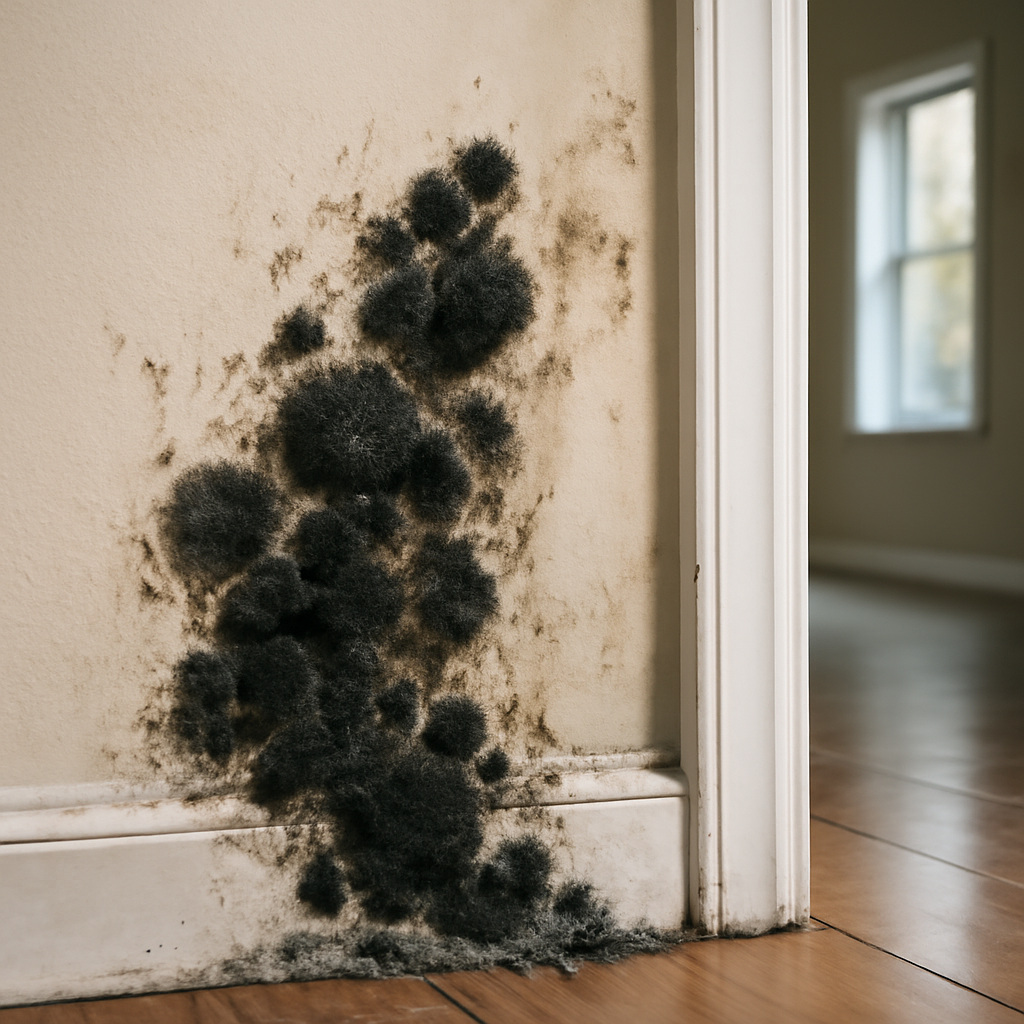
Stachybotrys chartarum is the scientific name behind the phrase “toxic black mold,” and few household terms generate more alarm. It is a greenish-black fungus that grows on chronically wet, cellulose-rich materials like drywall, paper, and wood. While its reputation outpaces what the science clearly supports, its presence always signals a serious moisture problem that needs correcting. This guide summarizes EPA and CDC guidance current as of 2026 — consult a physician for symptoms and a certified professional for testing and remediation decisions.
Part of our Black Mold & Your Health guide — start there for the full picture →
Is this mold, asbestos, or water damage? Get a free instant screen
Upload a clear photo of the suspect area. You'll get an instant AI screening opinion and what to do next. This is screening guidance, not a professional determination.
Screening guidance only. AI can be wrong. Confirm asbestos, mold type, or lead with lab testing or a licensed professional before acting.
What Is Stachybotrys Mold?
Stachybotrys chartarum is a slow-growing mold that requires sustained moisture and a high-cellulose food source to establish. Unlike common molds that colonize a damp surface within a day or two, Stachybotrys typically appears only where materials have stayed wet for days or weeks — behind a long-running leak, in flood-damaged drywall, or on a constantly damp basement wall.
It appears as a dark greenish-black growth that can look slimy when wet or powdery when dry. The CDC notes that while Stachybotrys is sometimes called toxic black mold, the term is misleading because the molds themselves are not poisonous; some can produce mycotoxins under certain conditions. Importantly, the EPA and CDC both state that the cleanup response does not depend on the species — any indoor mold should be removed and the moisture fixed. The species matters mainly as a flag that water intrusion has been severe and prolonged, a theme that connects to the guide on mold from water damage.
Why It Is Called Toxic Black Mold
The “toxic” label stems from the fact that Stachybotrys can produce mycotoxins, compounds that under some conditions may affect health. Public concern intensified after reports decades ago linked it to severe illness, though the CDC has stated that a causal connection between Stachybotrys and serious conditions like infant pulmonary hemorrhage was not proven.
The current scientific consensus, reflected by the CDC and the Institute of Medicine, is more measured. Damp indoor environments and mold of any kind are associated with respiratory symptoms — coughing, wheezing, congestion, and worsened asthma — particularly in sensitive individuals. Whether Stachybotrys is uniquely dangerous compared to other molds remains debated. What is not debated is that you should not live with it, and that its presence means a moisture problem demands attention. Distinguishing it from less alarming dark molds is covered in the guide on what color mold is.
Where Stachybotrys Grows in a Home
Because it needs prolonged moisture and cellulose, Stachybotrys shows up in predictable places. It rarely grows on hard, nonporous surfaces; it favors the paper facing of drywall, ceiling tiles, cardboard, wallpaper, and wood that has been saturated.
- Behind walls fed by a slow leak. A dripping supply line or a leaking window flashing can keep drywall wet long enough.
- Flood-damaged materials. Drywall and carpet padding soaked in a flood and not dried within 48 hours are prime candidates.
- Chronically damp basements. Below-grade walls with groundwater intrusion stay wet for extended periods.
- Around persistent roof or plumbing leaks. Ceilings and wall cavities that take repeated wetting.
In Colorado, the most common trigger is basement water intrusion during spring snowmelt that goes undried, which the guide on black mold in basement spaces examines in detail.
Health Questions and Who Is Most at Risk
The honest answer on health is nuanced. The CDC states that exposure to damp and moldy environments can cause symptoms in some people, including stuffy nose, wheezing, and red or itchy eyes, and that those with mold allergies or asthma may react more strongly. People with weakened immune systems or chronic lung disease face higher risk of more serious effects.
What the science does not strongly support is the idea that ordinary exposure to Stachybotrys causes severe systemic illness in otherwise healthy people. That said, no one should dismiss visible Stachybotrys. If household members experience unexplained respiratory symptoms, a physician should evaluate them — mold testing diagnoses the home, not the person. The medical and home questions are separate, and conflating them leads to unnecessary fear or false reassurance.
How to Remove Stachybotrys Safely
Because Stachybotrys grows on porous, water-damaged materials and usually indicates extensive moisture, removal often goes beyond a small DIY cleanup. The EPA’s 10-square-foot threshold applies: below it, a careful homeowner with protection may manage; above it, hire a professional.
The principles are the same as for any mold. Stop the moisture source first. Wear an N95 respirator, gloves, and eye protection. Contain the area and shut off the HVAC. Remove and bag contaminated porous materials rather than trying to clean them — drywall and insulation with Stachybotrys growth should be discarded, not salvaged. Clean salvageable hard surfaces, dry everything thoroughly, and verify the materials are dry before rebuilding. For larger areas, a contractor following the IICRC S520 standard provides containment and HEPA filtration. The broader process appears in the mold inspection and testing hub.
Preventing the Conditions Stachybotrys Needs
Because Stachybotrys requires sustained moisture over days to weeks, prevention is almost entirely about never letting materials stay wet that long. The same moisture discipline that prevents ordinary mold is doubly effective against Stachybotrys, since it specifically depends on the prolonged saturation that fast action eliminates.
The cornerstone is the 24-to-48-hour rule. Drying any water-damaged material within that window, as the EPA advises, prevents most mold and effectively rules out Stachybotrys, which needs far longer to establish. That means treating leaks and floods as urgent: extract standing water, remove soaked carpet and padding, open wall cavities if necessary, and run fans and dehumidifiers until a moisture meter confirms dryness. Materials that cannot be dried in time are better removed than gambled on.
Chronic moisture is the other target. Stachybotrys thrives where dampness persists — a slow undetected leak, a basement wall with ongoing seepage, a crawlspace with standing humidity. Eliminating these sustained sources denies it the conditions it needs. Keep relative humidity below 50 percent, fix foundation drainage and grading, insulate surfaces that condense, and inspect concealed spaces periodically. For Front Range homeowners, the highest-risk scenario is a basement that floods during spring snowmelt and is not dried promptly; staying ahead of that seasonal pattern is the single most effective way to prevent the prolonged saturation that grows toxic black mold. Address the moisture before it lingers, and Stachybotrys never gets the foothold it requires.
When to Call a Professional
Stachybotrys frequently warrants professional remediation because its presence implies prolonged water damage that may extend into wall cavities, subfloors, or insulation you cannot see. Call a professional when the affected area exceeds about 10 square feet, when growth is inside walls or HVAC equipment, when the water source was sewage or flooding, or when occupants have asthma, allergies, or compromised immunity.
A qualified contractor contains the work, removes contaminated materials, and corrects the moisture source so the problem does not recur. For Front Range homeowners, independent testing before and after remediation documents the result, which is valuable in real estate and insurance contexts. The species itself is less important than the thoroughness of the moisture fix.
How to Identify Stachybotrys Versus Other Dark Molds
Many molds appear dark, and homeowners cannot reliably identify Stachybotrys by sight alone — nor do they need to, since the cleanup response is the same. Still, a few characteristics distinguish it from look-alikes. Stachybotrys is typically a deep greenish-black, and when actively growing on a wet surface it has a slimy, glistening appearance rather than the powdery or fuzzy texture of many other molds.
Common dark molds like Cladosporium often look more olive or brown and feel velvety, while Aspergillus and Penicillium species range across many colors and textures. The reliable way to confirm a species is laboratory analysis of a surface or bulk sample, which both the EPA and CDC note is rarely necessary for cleanup decisions. The presence of any dark, slimy growth on chronically wet drywall or wood is reason enough to act regardless of the exact genus.
What truly distinguishes Stachybotrys is its growth requirement: sustained moisture over days to weeks on cellulose-rich material. So the most telling clue is not appearance but history. If a surface has been wet for a long time — behind a slow leak, in a flood that was not dried, on a chronically damp basement wall — and dark growth appears, Stachybotrys is a real possibility, and the prolonged water intrusion is the more important finding.
Why the Moisture History Matters More Than the Species
The fixation on identifying toxic black mold often distracts from the more useful question: how long has this material been wet, and where is the water coming from. Because Stachybotrys signals prolonged saturation, its appearance is essentially a warning that a moisture problem has been active far longer than a fresh spill — long enough to extend into wall cavities, subfloors, and insulation you cannot see.
That changes the scope of the response. A surface mold from a recent splash might be a small cleanup. Growth indicating weeks of saturation suggests the damage is likely larger than the visible patch, with hidden contamination in adjacent materials. This is why Stachybotrys so often warrants professional assessment — not because the species is uniquely dangerous, but because its presence implies the water problem is severe and the contamination may be extensive.
Along the Front Range, the classic scenario is a basement that flooded during spring snowmelt and was not dried within the critical 24-to-48-hour window. Materials sat wet for weeks, and dark growth appeared on the lower drywall. Here the right move is to investigate the full extent of the water intrusion, remove contaminated porous materials, and correct the drainage and grading that let groundwater in — addressing the cause rather than fixating on the name of the fungus. The species confirmation, if anyone bothers to get it, rarely changes what needs to be done.
Key Takeaways on Stachybotrys Mold
Stachybotrys chartarum, the species behind the “toxic black mold” label, is a slow-growing fungus that needs sustained moisture over days to weeks on cellulose-rich materials. The CDC notes the term is misleading — the mold is not poisonous, though it can produce mycotoxins under some conditions — and the cleanup response does not change with the species. Its real significance is as a flag that water intrusion has been severe and prolonged.
The health picture is nuanced: damp, moldy environments can cause respiratory symptoms in sensitive people, but the science does not strongly support claims of severe systemic illness from ordinary exposure in healthy individuals. Regardless, no one should live with visible Stachybotrys. Because it implies extensive moisture that may extend behind walls, removal often warrants a professional, especially above the EPA’s 10-square-foot threshold or with HVAC or sewage involvement. The most important action is correcting the prolonged water source — for Front Range homes, usually undried basement snowmelt — rather than fixating on the name of the fungus.
References
- Facts About Stachybotrys chartarum — Centers for Disease Control and Prevention
- A Brief Guide to Mold, Moisture and Your Home — U.S. Environmental Protection Agency
- Mold and Dampness — American Lung Association
Frequently asked questions
Is Stachybotrys the same as toxic black mold?
Stachybotrys chartarum is the species most often called toxic black mold. The CDC notes the term is misleading, since the mold itself is not poisonous, though it can produce mycotoxins under some conditions. Its presence signals prolonged water damage and should be removed, but the cleanup response is the same as for any mold.
How dangerous is Stachybotrys mold to health?
Damp, moldy environments can cause respiratory symptoms like coughing, congestion, and worsened asthma, especially in sensitive people, those with mold allergies, or weakened immune systems. The CDC has not confirmed that ordinary Stachybotrys exposure causes severe systemic illness in healthy people. Anyone with symptoms should see a physician.
What does Stachybotrys mold need to grow?
It requires sustained moisture over days or weeks and a high-cellulose food source such as drywall paper, wood, or cardboard. It grows more slowly than common molds and rarely appears on hard nonporous surfaces. Its presence almost always indicates a chronic or severe water problem.
Can I remove Stachybotrys mold myself?
Only for a small contained area under about 10 square feet, with an N95 respirator, gloves, and eye protection, and after fixing the moisture. Because Stachybotrys usually means extensive water damage that may extend behind walls, larger growth or any HVAC or sewage involvement calls for a professional.
Finding what looks like toxic black mold is unsettling, but the right next step is a calm assessment of the moisture behind it. A vetted Front Range inspector can help — reach out through our contact page.