Mold From Water Damage: What Homeowners Should Know
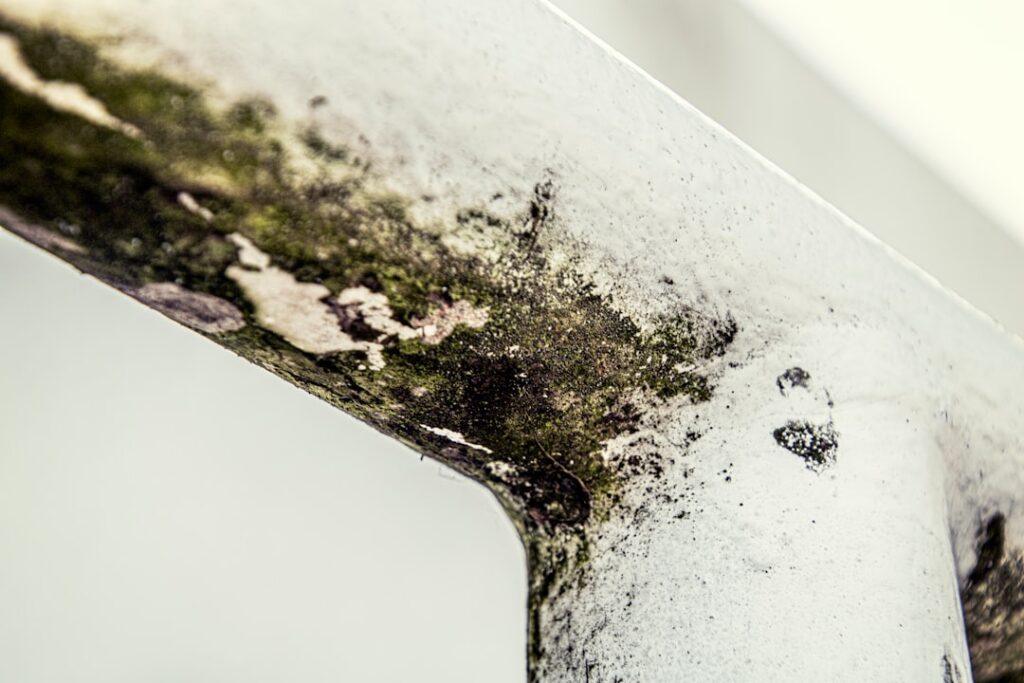
After a burst pipe, a roof leak, or a flooded basement, the clock starts immediately — mold from water damage can begin growing within 24 to 48 hours on wet building materials. How a household responds in those first two days often determines whether the result is a quick cleanup or a costly remediation project. This guide summarizes EPA and CDC guidance current as of 2026 — consult a physician for symptoms and a certified professional for testing decisions.
Is this mold, asbestos, or water damage? Get a free instant screen
Upload a clear photo of the suspect area. You'll get an instant AI screening opinion and what to do next. This is screening guidance, not a professional determination.
Screening guidance only. AI can be wrong. Confirm asbestos, mold type, or lead with lab testing or a licensed professional before acting.
How fast does mold grow after water damage?
The EPA’s widely cited guidance is that mold can begin to grow on damp materials within 24 to 48 hours. Mold spores are already present in virtually all indoor air; they need only moisture, a food source like paper or wood, and time. When drywall, carpet padding, or framing stays wet past that window, dormant spores activate and colonies establish quickly.
That timeline is why drying speed matters more than almost anything else. Water that is extracted and materials that are dried within the first day or two often escape significant mold growth. Materials left wet for several days — or hidden moisture inside a wall cavity that never fully dries — almost guarantee a problem. For a broader view of how moisture and mold connect across a home, our homeowner hub on mold inspection ties the pieces together.
Where mold hides after a water event
Visible mold on a wall is the obvious case. The bigger risk is hidden growth in places water travels but air does not easily reach. After a leak or flood, water wicks upward into drywall, soaks insulation, pools under flooring, and seeps into the subfloor and framing.
- Behind baseboards and inside wall cavities where drywall wicked moisture.
- Under carpet padding, vinyl, and laminate flooring.
- In insulation, which holds water and dries slowly.
- On the back side of cabinets and built-ins.
- In crawl spaces and basement framing along the Front Range, where slow foundation seepage is common.
A musty smell with no visible source is a classic sign of hidden growth. Inspectors confirm it with moisture meters and infrared cameras rather than guesswork, which is why a professional moisture survey is valuable after any significant water event.
Categories of water and why they matter
Not all water damage carries the same risk. The restoration industry, following IICRC standards, sorts water into three categories, and the category shapes both the mold risk and the cleanup approach.
Category 1 is clean water from a supply line or a melting ice maker. It poses the lowest contamination risk, but it still grows mold if materials stay wet past the 24-to-48-hour window. Category 2, sometimes called gray water, comes from sources like a washing machine discharge or a dishwasher overflow and contains some contamination. Category 3, black water, includes sewage backups and floodwater from outside; it carries bacteria and pathogens and is generally not a do-it-yourself cleanup.
The catch is that clean water does not stay clean. Category 1 water left sitting degrades to category 2 and then category 3 over hours and days as it picks up contaminants and feeds microbial growth. That progression is another reason speed matters so much — a clean leak handled immediately is a minor event, while the same leak ignored for a week becomes a contaminated, mold-laden problem.
The Front Range factors that raise mold risk
Colorado’s generally dry climate gives homeowners a false sense of security about mold, but several regional factors create real water-damage risk. Finished basements are extremely common across the Denver metro, and they sit partly below grade where foundation seepage, sump-pump failures, and window-well flooding can introduce water that takes a long time to dry. Basement framing and drywall that get wet are prime mold candidates.
Winter brings ice dams on roofs, where snowmelt refreezes at the eaves and backs water under shingles into ceilings and exterior walls. Spring brings heavy, fast snowmelt and the occasional intense thunderstorm that overwhelms grading and drainage. Swamp coolers — evaporative coolers still used in many older Front Range homes — add humidity directly indoors and can leak from their supply lines. Each of these introduces moisture in ways that may not be obvious until mold appears. Knowing your home’s specific vulnerabilities helps you respond faster when water shows up.
What to do in the first 48 hours
Acting fast is the single best defense against mold. The EPA and CDC recommend a clear sequence after water intrusion:
- Stop the water source — shut off a supply line, tarp a roof, or address the leak.
- Remove standing water with pumps or wet vacuums as soon as it is safe.
- Increase airflow and drying with fans, dehumidifiers, and open windows when outdoor humidity allows.
- Remove soaked porous materials — wet carpet padding, saturated drywall, and ruined insulation usually cannot be salvaged.
- Document everything with photos for insurance before discarding materials.
Drywall that wicked water more than a foot up, carpet padding, and wet ceiling tiles typically need removal rather than drying. Solid wood and hard surfaces can often be dried and cleaned. The goal is to get every wet material below the moisture content that mold needs within that 24-to-48-hour window.
Cleaning versus removing materials
Once an area is dry, the EPA’s rule of thumb separates surfaces by porosity. Hard, nonporous materials — sealed concrete, glass, metal, and finished wood — can be cleaned with detergent and water and reused. Porous materials that absorbed water and grew mold, such as drywall, carpet, ceiling tiles, and insulation, usually need to be removed and replaced because mold roots into them.
This is where many DIY efforts go wrong: people clean the visible surface of moldy drywall instead of cutting it out. Cleaning porous material leaves living mold inside and the problem returns. When mold has clearly taken hold in porous materials over a large area, removal under containment is the correct path. Our guide to professional mold remediation services explains what that containment and disposal process should look like.
One judgment call homeowners face is whether a material can be dried fast enough to save it. Solid wood, structural framing, and hard surfaces often can, given aggressive drying within the first day or two. Drywall is the borderline case: if it got wet but is dried within the window and shows no growth, it may be salvageable, but drywall that wicked water high or stayed wet for days is usually a removal. Carpet padding, fiberglass insulation, and ceiling tiles almost never survive a real soaking — they hold water, dry slowly, and grow mold deep inside. When in doubt on porous material, removal is the safer and ultimately cheaper choice, since salvaging something that later molds means doing the job twice.
Health considerations after water damage
The CDC links damp indoor environments and mold exposure to nasal congestion, throat irritation, coughing, and worsened asthma symptoms, especially in sensitive individuals. People with asthma, allergies, or weakened immune systems should avoid handling moldy materials directly. Anyone cleaning should wear an N95 respirator, gloves, and eye protection, and ventilate the space.
Floodwater that contains sewage or came from outside (category 3 water) raises the stakes significantly because of bacterial contamination. Those situations are generally not DIY jobs. If anyone develops persistent respiratory symptoms after a water event, the lung-health guidance is to consult a physician rather than self-diagnose a mold illness.
For anyone handling cleanup, basic protection matters. Wear an N95 respirator, gloves, and eye protection when removing wet, moldy materials, since disturbing growth releases spores. Keep children and anyone with asthma or a weakened immune system away from the work area entirely. The combination of mold spores and, in contaminated-water cases, bacteria makes water-damage cleanup one of the situations where protective equipment is genuinely warranted rather than optional.
Documenting the damage for insurance
Before you discard a single soaked carpet or cut out drywall, document everything. Insurance coverage for water and mold damage hinges on cause and evidence, and the cleanup that protects your home also destroys the proof. Photograph the source, the standing water, and every affected room and material from multiple angles. Note the date and time you discovered the damage and when you stopped the source.
Coverage generally favors sudden, accidental events. A pipe that bursts overnight is usually covered; a fitting that has been slowly weeping for months, allowing gradual mold growth, often is not, because insurers treat that as a maintenance failure. Flood damage from outside water typically requires separate flood insurance entirely. Many policies also cap mold remediation at a few thousand dollars regardless of cause. Read your policy’s water and mold provisions, file promptly, and keep receipts for emergency mitigation like fans and dehumidifier rentals, which are frequently reimbursable. An independent assessment of the damage strengthens your documentation and keeps it separate from any contractor’s incentive to inflate a claim.
When to call a professional
The CDC’s general threshold applies here: areas larger than about 10 square feet, or growth that involves the HVAC system, warrant professional remediation. Add to that any sewage contamination, flooding from an outside source, or hidden moisture you cannot locate or dry. A professional brings extraction equipment, commercial dehumidifiers, moisture verification, and containment to prevent spreading spores through the home.
Insurance also plays a role. Sudden, accidental water damage (like a burst pipe) is often covered, while gradual leaks frequently are not. Document the event thoroughly and consider an independent assessment before remediation so you have unbiased records. Catching mold from water damage early keeps it a repair instead of a renovation.
Preventing the next water-damage mold problem
Once you have dealt with one water event, a few habits sharply reduce the odds of the next one turning into mold. Many of these are cheap relative to a remediation bill.
- Install water-leak sensors near the water heater, under sinks, behind the washing machine, and in the basement; they alert you within minutes instead of days.
- Know where your main water shutoff is and confirm it turns easily before you ever need it.
- Service the water heater and replace aging supply hoses, a frequent burst point, every few years.
- Maintain grading and gutters so water flows away from the foundation rather than pooling against it.
- Keep indoor humidity between 30 and 50 percent, per CDC guidance, with a dehumidifier in damp basements.
The unifying principle is early detection and fast drying. Mold needs materials to stay wet for a day or two; anything that gets you to the water sooner — a sensor, an accessible shutoff, a routine inspection of likely leak points — shrinks that window. After any future event, return to the first-48-hours playbook: stop the water, extract it, dry aggressively, remove ruined porous materials, and document as you go. Homeowners who treat water intrusion as a clock to beat rather than a mess to clean up later rarely face serious mold.
References
- Mold Cleanup in Your Home — U.S. Environmental Protection Agency
- Flood Cleanup and Indoor Air Quality — U.S. Environmental Protection Agency
- About Mold and Your Health — Centers for Disease Control and Prevention
- Mold and Indoor Air Quality — American Lung Association
Dealt with a leak or flood and worried about what is drying inside the walls? A vetted Front Range inspector can verify moisture levels before mold sets in — contact us to get connected.