Stachybotrys Smell: What Homeowners Need to Know
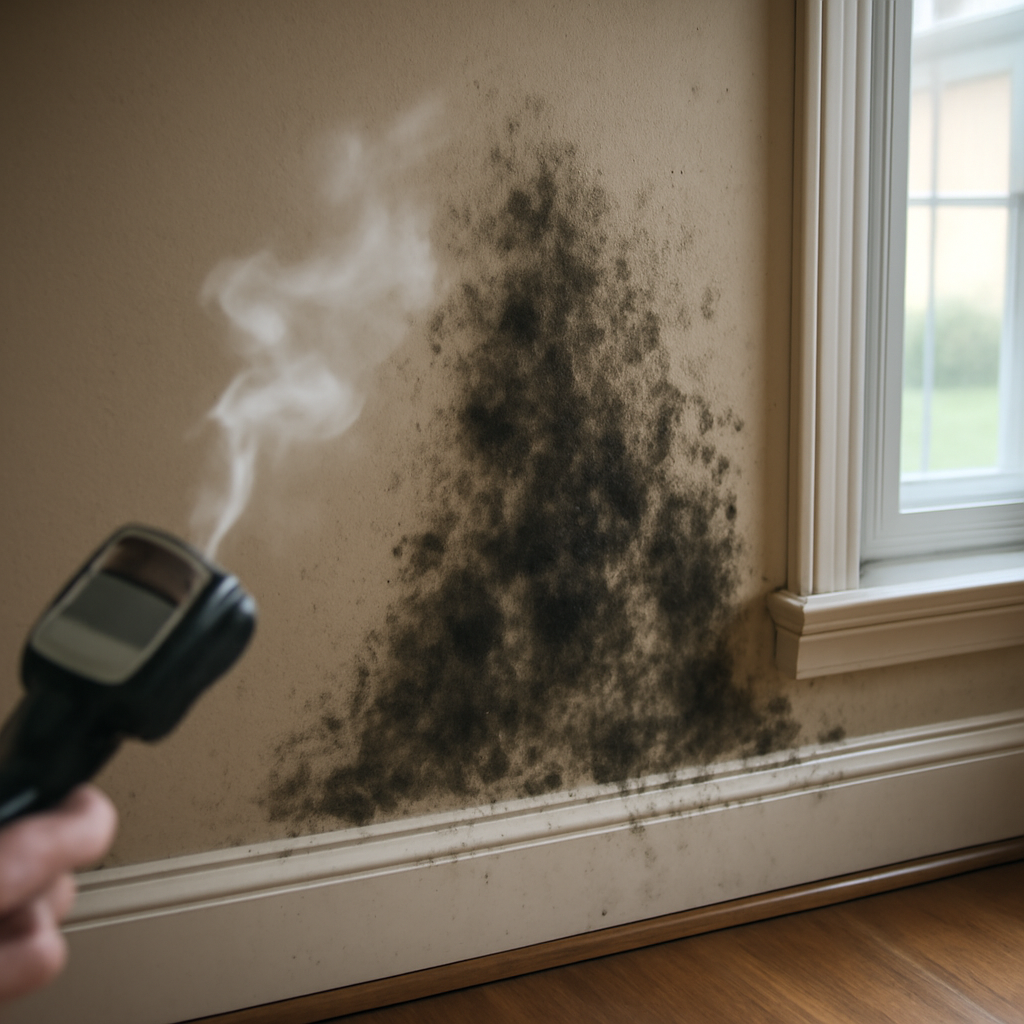
A persistent musty odor in a home is more than unpleasant; it is often the first sign of hidden moisture and fungal growth. When homeowners search for the stachybotrys smell, they usually mean the earthy, damp odor associated with the mold commonly called black mold. That odor is a chemical signal that something is growing where it should not be. This guide summarizes EPA and CDC guidance current as of 2026; for active growth or health symptoms, consult a certified professional and your physician rather than diagnosing by smell alone.
Part of our Black Mold & Your Health guide — start there for the full picture →
Dealing with mold or water damage? Talk to a remediation pro now.
📞 Call (833) 723-1134What the Stachybotrys Smell Is
The odor people associate with stachybotrys is a musty, earthy, sometimes sharp smell often described as resembling damp dirt, rotting wood, or old wet cardboard. It comes from microbial volatile organic compounds, or MVOCs, that molds release as they feed and grow. Stachybotrys chartarum, the species often labeled black mold, is one of many molds that produce these compounds. The smell itself does not identify the species, but it does reliably signal active fungal growth and the moisture feeding it. That moisture link is why odor is a recognized clue in mold inspection and testing for homeowners.
Why Mold Produces an Odor
As mold breaks down organic material, its metabolism gives off gases, the MVOCs. Different compounds smell different ways, which is why some moldy areas smell earthy, others sour, and others faintly chemical. Because these gases are airborne, you can often smell mold before you can see it, particularly when the growth is hidden inside a wall cavity, under flooring, or above a ceiling. A strong musty odor with no visible growth is a classic sign that the colony is concealed.
Where the Smell Comes From in a House
Following the odor toward its strongest point usually leads to the moisture source.
Basements and Crawl Spaces
Cool, below-grade air and groundwater intrusion make these the most common sources of a musty smell. Along the Front Range, spring snowmelt and irrigation raise foundation moisture against Denver and Jefferson County homes.
Behind Walls and Under Floors
A slow plumbing leak inside a wall or beneath a subfloor can grow a colony that is entirely hidden, with the odor the only outward sign.
HVAC Systems
Mold in ductwork or on a damp evaporator coil spreads its odor throughout the house every time the system runs, which can make the source hard to pinpoint.
Is the Smell Dangerous?
The odor itself is a warning sign rather than a measured hazard. The MVOCs that cause the smell are generally present at low concentrations, but the CDC notes that exposure to mold can cause allergic and respiratory symptoms in sensitive people, and that some molds produce toxins under certain conditions. Importantly, the presence of an odor does not by itself tell you the species or the health risk. It tells you there is growth and moisture to address. Anyone experiencing symptoms should consult a physician rather than infer risk from a smell.
Why the Nose Is an Early Detector
The human sense of smell is well suited to catching mold problems early, often well before any visual sign appears. Because the gases mold releases are volatile, they diffuse readily through a building and reach the nose at very low concentrations, and people are quite sensitive to the particular musty character of these compounds. This makes the nose a useful first instrument, especially for growth hidden inside walls, under floors, or in ductwork where there is nothing to see. A homeowner who notices a musty smell that was not there before, or that strengthens in a particular room or season, has caught a problem at a stage when the moisture source may still be small and the growth limited. Acting on that early signal, by searching for the source rather than masking the odor, is far easier than dealing with the extensive growth that develops if the smell is ignored for months.
What the Smell Does Not Tell You
As useful as the odor is, it has clear limits worth stating plainly. It cannot identify the species of mold, since many molds produce a similar musty smell, so a musty room does not mean Stachybotrys specifically. It cannot measure the size of the problem; a faint smell can come from a small but actively growing colony, while a strong smell does not always mean a large one. It cannot pinpoint the exact location on its own, only the general direction toward which it strengthens. And it cannot assess health risk, which depends on factors the nose cannot detect. Treating the odor as a reliable detector of “something is wrong here, investigate” rather than as a diagnosis of what or how much keeps the response proportionate and pointed toward finding the moisture source.
Stachybotrys Versus Other Musty Smells
Many molds produce a musty odor, so the smell cannot confirm stachybotrys specifically. Stachybotrys chartarum requires very wet conditions and is most often found on chronically saturated materials such as water-damaged drywall, paper, and wood. Other common indoor molds grow at lower moisture levels and produce similar odors. Because identification by nose is unreliable, the EPA emphasizes that for most homeowners the response is the same regardless of species: find and fix the moisture, then remove the growth. Our explainer on mold and humidity covers the moisture thresholds that drive all of these species.
Seasonal and Situational Clues in the Smell
When the musty smell appears, and when it intensifies, often points toward its source. An odor that strengthens in humid summer weather suggests a humidity-driven problem in a basement or crawl space rather than a discrete leak. A smell that spikes after rain or snowmelt points to water intrusion through the foundation or roof. An odor that appears or worsens whenever the heating or cooling system runs implicates the ductwork or a damp evaporator coil, since the system is then circulating air across or through the growth. A smell concentrated in one closet or behind one wall localizes the search. Paying attention to these patterns turns a vague “the house smells musty” into a targeted investigation, which is far more productive than randomly cleaning surfaces that are not the source.
How to Track Down the Source
Start where the odor is strongest and move toward it. Check for visible staining, peeling paint, bubbling drywall, or warped flooring, all signs of past or present water. A moisture meter can reveal damp spots behind seemingly dry surfaces. Inspect under sinks, behind appliances, around windows, and along the base of basement walls. If the smell intensifies when the HVAC runs, suspect the ducts or coil. When the source stays hidden despite searching, that is the point professional assessment earns its cost.
What to Do Once You Find It
The order of operations is fix the moisture first, then address the growth. Repair the leak, improve drainage, or add dehumidification to bring humidity into the 30-to-50 percent range. For small areas of growth on hard surfaces, the EPA describes homeowner cleanup; for larger areas, especially on porous materials such as drywall, removal of the affected material is usually necessary. Drying alone removes the smell temporarily but leaves a colony that can reactivate. Homeowners deciding between cleanup and professional removal can review our overview of mold assessments.
What MVOCs Actually Are
The musty odor has a specific chemical origin worth understanding. As molds metabolize the material they feed on, they release microbial volatile organic compounds, a family of gases that includes alcohols, aldehydes, and other small molecules. Different compounds carry different smells, which is why one moldy spot smells earthy, another sour, and another faintly like alcohol or dirt. Because these are gases, they diffuse through a building and reach the nose long before a colony becomes visible, traveling out of a wall cavity through outlets and gaps or circulating from a duct. The concentrations are typically low, but the human nose is remarkably sensitive to them, which is why a faint but persistent musty smell is a reliable early warning even when nothing can be seen. The odor’s value is as a detector of hidden moisture and growth, prompting a search rather than a conclusion about a specific species.
Conditions That Favor Stachybotrys Specifically
While the smell cannot confirm the species, it is worth knowing what conditions tend to produce Stachybotrys chartarum, since that is the mold people most fear. Unlike many common indoor molds that grow at moderate dampness, Stachybotrys requires materials that have been very wet for an extended period, days to weeks of saturation rather than mere high humidity. It favors cellulose-rich materials such as the paper facing on drywall, cardboard, and certain wood products. That profile points to its typical triggers: a sustained leak inside a wall, chronic flooding, a roof failure left unaddressed, or persistent condensation soaking a surface. The practical implication is that finding and stopping that sustained water source is both what prevents Stachybotrys and what the response to any musty odor should target, regardless of which mold turns out to be present.
Why Air Fresheners and Masking Fail
A common first instinct against a musty smell is to mask it with air fresheners, candles, or plug-in scents. This is counterproductive for two reasons. First, masking removes the very signal that something is wrong, letting the underlying moisture and growth continue undetected and spread. Second, the odor is generated continuously by an active colony, so any masking is temporary and must be reapplied endlessly while the problem worsens behind the scenes. The same caution applies to ozone generators marketed as odor eliminators, which the EPA notes can produce ozone at levels that are themselves a health concern and which do not remove the moisture source. The only durable way to eliminate the smell is to find the moisture, dry it, and remove the growth, after which the odor resolves on its own because nothing remains to produce it.
How the Smell Changes as a Problem Grows
A musty odor rarely stays constant, and its trajectory tells you something. A faint, intermittent smell that comes and goes with humidity often marks an early or moisture-driven problem that may resolve once conditions improve. A smell that strengthens steadily over weeks signals a colony that is expanding, usually because a moisture source is feeding it continuously. A sudden strong odor after a leak or flood reflects rapid growth on freshly wetted material. An odor that returns shortly after cleaning and airing the space is the clearest sign that the source was never addressed and the growth is regenerating. Reading the odor’s pattern over time, not just its presence, helps gauge urgency: a worsening or recurring smell calls for prompt investigation, while a faint one that fades with better ventilation and humidity control may simply need monitoring to confirm it does not return.
When to Call a Professional
A musty odor that returns after cleaning, an odor with no visible source, growth larger than roughly ten square feet, or growth tied to sewage or chronic flooding all warrant professional involvement. So does any situation where occupants have health symptoms. A qualified inspector can locate hidden moisture, sample the air or surfaces, and advise on the scope of remediation needed.
More Questions About Stachybotrys Smell
How do you get rid of a musty mold smell after cleanup?
A musty smell after mold cleanup usually fades within days once the growth is removed and materials are dry. Ventilating, running a dehumidifier to keep humidity under about 50 percent, and running a HEPA air purifier help clear remaining odors.
If the smell lingers for more than a week or returns, mold or wet material is probably still present, often behind drywall, under flooring or in the HVAC system. Odor-masking products, ozone generators and air fresheners do not solve the problem and should not replace finding the source.
Can a mold smell get into clothes and furniture?
Yes, a musty mold smell can get into clothes, bedding, curtains and upholstered furniture stored in a damp room. Washable fabrics usually come clean with a hot wash and detergent, sometimes with an oxygen bleach or a cup of vinegar, followed by thorough drying.
Upholstered furniture and mattresses absorb odors deeply. A professional cleaning may help if there is no visible mold, but items with growth inside the padding are usually best discarded. Move clean items to a dry space while the source is fixed so they do not reabsorb the smell.
Why does the mold smell get worse when the air conditioner runs?
A mold smell that gets worse when the air conditioner runs often points to growth on the evaporator coil, in the drain pan or in the ductwork, or to the system pulling air from a damp crawl space or basement. Air movement can also carry odors from hidden spots into living areas.
Check the condensate drain for clogs, look at the coil area if accessible and replace the filter. A licensed HVAC technician can inspect and clean the system. A smell that only appears on cooling startup is often the coil or drain pan.
Is a musty smell the same as sewer gas?
No, a musty mold smell and sewer gas are different. Mold odor is earthy, damp or stale, like wet cardboard or old books, while sewer gas has a rotten-egg or sewage smell from hydrogen sulfide and other gases.
Sewer gas usually comes from a dry floor drain trap, a failed toilet seal or a cracked vent pipe, and a plumber should check it. Pouring water into unused drains often solves the dry-trap problem. Both odors indicate a problem worth tracking down rather than masking.
References
- About Mold — Centers for Disease Control and Prevention
- Mold Cleanup in Your Home — U.S. Environmental Protection Agency
- Mold Health Topic — National Institute of Environmental Health Sciences
Frequently asked questions
What does stachybotrys smell like?
It is a musty, earthy odor often compared to damp dirt, rotting wood, or wet cardboard. The smell comes from microbial volatile organic compounds the mold releases as it grows. The odor signals active growth but does not identify the species.
Can I identify black mold by smell alone?
No. Many molds produce a similar musty odor, so smell cannot confirm stachybotrys specifically. The EPA notes the homeowner response is the same regardless of species: find and fix the moisture, then remove the growth.
Is the musty mold smell harmful?
The odor is mainly a warning sign. The CDC notes mold exposure can cause allergic and respiratory symptoms in sensitive people. The smell tells you there is growth and moisture to address; consult a physician if you have symptoms.
Why do I smell mold but cannot see it?
The odor travels as airborne gases, so you can smell hidden growth inside walls, under floors, or in ductwork before it becomes visible. A strong musty smell with no visible source often means the colony is concealed.
Why does my basement smell musty after it rains?
A basement that smells musty after rain usually has water entering through foundation cracks, window wells or the floor-wall joint, or humidity rising as outdoor moisture increases. Check gutters, downspouts and grading, and run a dehumidifier. A persistent smell suggests hidden mold on stored items or framing.
Does dead mold still smell?
Dead or dried mold can still smell musty, especially when it gets damp again or is disturbed, because odor-causing compounds and organic residue remain on the material. This is one reason guidance calls for removing mold rather than only killing it in place.
Can a mold inspector find mold by smell?
Mold inspectors use smell as a starting clue, then confirm with moisture meters, thermal cameras, visual inspection and sometimes air or surface sampling. Some inspectors use trained mold-detection dogs. A musty smell helps narrow down where to look but does not identify the mold type.
If a musty odor lingers in your Front Range home and you cannot find the source, a vetted local inspector can help locate hidden moisture. Reach one through our contact page.