Can You Smell Mold? What That Musty Odor Means
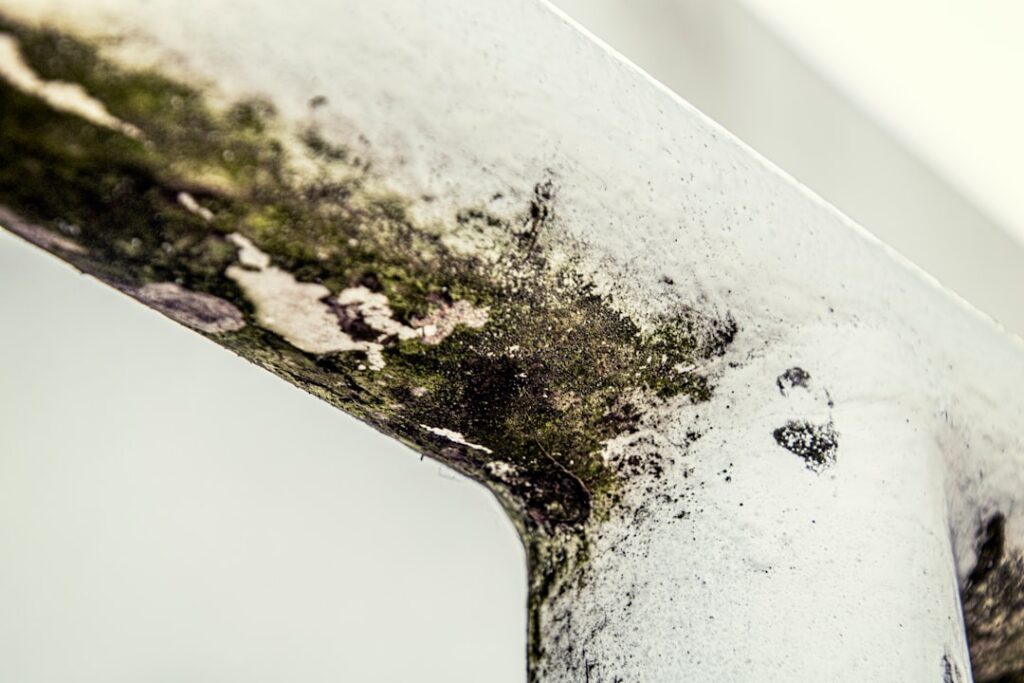
That damp, earthy odor in a basement or closet is often the first clue a home has a mold problem — long before any growth becomes visible. So can you smell mold reliably? In many cases yes, because growing mold releases distinctive airborne compounds. But a smell alone does not tell you where the mold is, how much there is, or whether it is harmful. This guide summarizes EPA and CDC guidance current as of 2026; consult a physician about symptoms and a certified professional for testing decisions.
Part of our Types of Mold guide — start there for the full picture →
Is this mold, asbestos, or water damage? Get a free instant screen
Upload a clear photo of the suspect area. You'll get an instant AI screening opinion and what to do next. This is screening guidance, not a professional determination.
Screening guidance only. AI can be wrong. Confirm asbestos, mold type, or lead with lab testing or a licensed professional before acting.
Can you smell mold before you see it?
Yes — and frequently the nose detects mold before the eyes do. Active mold growth emits microbial volatile organic compounds (MVOCs), the chemical byproducts of mold metabolism. These compounds produce the characteristic musty, earthy, or stale odor people associate with damp basements and old books. The CDC and EPA both recognize that a persistent musty smell can indicate hidden mold even when no growth is visible, because the odor travels through air while the colony stays behind a wall or under a floor.
The smell is a signal, not a diagnosis. It tells you moisture and mold are likely present somewhere. It cannot tell you the species, the size of the colony, or the exact location. That requires looking — and sometimes professional testing.
What does mold actually smell like?
Descriptions vary because the smell shifts with the species, the material being consumed, and the colony’s maturity. A young colony on damp wood smells different from an established mat on saturated drywall, and the same growth can read as “earthy” to one person and “stale” to another. Homeowners commonly report:
- Musty or stale — like a damp basement or a closed-up cabin.
- Earthy — like wet soil, decaying wood, or fresh dirt.
- Tangy or sharp — a slightly sour or fermented note in heavier growth.
The intensity often rises with humidity and temperature, which is why a basement may smell stronger on a humid day or after rain. Black mold in particular can carry a notably strong, unpleasant odor. Our guide to the specifics of what black mold smells like covers how the odor shifts as a colony matures.
Why you can smell mold you cannot see
MVOCs are small molecules that diffuse through porous building materials and ride air currents. A colony growing inside a wall cavity, under carpet padding, behind a vanity, or in an HVAC duct stays hidden while its odor escapes into living space. This is why a room can smell musty with no visible spot anywhere.
Common hiding places along the Front Range include:
- Behind finished basement walls where foundation moisture wicks in.
- Under bathroom flooring fed by a slow toilet or tub leak.
- Inside HVAC systems and ductwork, which then spread the odor house-wide.
- Beneath kitchen and bathroom cabinets near plumbing.
- In attics with condensation from poor ventilation.
If the smell concentrates near a vent, the HVAC system is a prime suspect. Our coverage of black mold in air conditioners explains why cooling equipment is such a common source of whole-home musty odor.
The science of MVOCs
Microbial volatile organic compounds are the gaseous byproducts mold produces as it digests the material it grows on. Researchers have identified dozens of these compounds, with names like geosmin and 1-octen-3-ol, the latter responsible for much of the classic “mushroomy” note. Because they are gases, MVOCs behave differently from spores: they diffuse through porous building materials, slip through gaps around outlets and trim, and ride air currents far from the source. This is precisely why a smell can fill a room while the colony stays sealed inside a wall. The compounds are detectable by the human nose at very low concentrations, which makes smell a sensitive early-warning sense even when the growth is small.
Why some people smell it and others do not
Sensitivity to MVOCs varies widely between individuals, and the nose also adapts. A homeowner who lives with a low-level musty smell every day often stops noticing it within minutes of entering — olfactory fatigue — while a visitor detects it immediately. This is one reason a guest’s offhand comment about a “basement smell” is worth taking seriously rather than dismissing. Stepping outside for several minutes and then re-entering resets the nose and can make a familiar odor newly apparent.
Does a mold smell mean it is dangerous?
The odor itself is not a measure of health risk. The CDC notes that all indoor mold should be addressed regardless of type, and that health effects depend more on an individual’s sensitivity than on the specific mold species. People with allergies, asthma, or weakened immune systems may react to lower levels.
What a strong, persistent smell does indicate is an active moisture problem worth solving promptly. The longer mold grows, the more material it damages and the larger the eventual cleanup. Treat the odor as an early-warning system rather than a panic trigger. Whether you can smell mold is a useful prompt to investigate, not a verdict on danger.
How to track a mold smell to its source
Finding hidden mold is detective work. A methodical approach narrows it down:
- Follow the intensity. Move through the home noting where the smell strengthens — that direction points toward the source.
- Check moisture-prone zones. Basements, bathrooms, under sinks, around windows, and near the water heater.
- Inspect for water history. Stains, warped flooring, peeling paint, and condensation mark past or present leaks.
- Test HVAC sources. If the smell appears or worsens when the system runs, the ducts or coil may be colonized.
- Use a moisture meter. Elevated readings in walls or floors flag hidden dampness that feeds mold.
When the smell persists but the source stays hidden, professional tools help. Inspectors use thermal imaging and air sampling to locate growth behind finished surfaces without tearing into every wall. The mold inspection and testing hub outlines how that investigation works.
Smells that are not mold
Not every musty or unpleasant odor is mold, and chasing the wrong cause wastes effort. A few common impostors:
- Sewer gas: a rotten-egg or sulfurous smell, often from a dry P-trap or a venting problem, not from mold.
- Stagnant water in floor drains, sump pits, or unused fixtures, which smells musty but clears once the water is refreshed.
- “Dirty sock syndrome” from HVAC coils, a sour smell from bacterial buildup on the evaporator that resembles mold but is a coil-cleaning issue.
- Old, dusty materials — boxes, books, carpet — that smell musty from age and trapped dust rather than active growth.
The distinguishing question is moisture: a true mold smell tracks to a damp location and intensifies with humidity. If the odor has no associated dampness and does not change with humidity, the cause may lie elsewhere. When in doubt, a professional can sample the air and settle the question objectively.
What to do once you find it
Small surface growth on hard materials can be cleaned by a careful homeowner with proper protection. Larger areas, growth inside walls or ducts, or contamination from flooding belong to professionals. In every case, the moisture source must be corrected, or the smell — and the mold — returns. Cleaning the odor away with air fresheners only masks an ongoing problem.
Masking deserves a specific warning. Plug-in air fresheners, scented candles, and ozone generators are sometimes marketed as mold odor solutions, but they only cover or chemically alter the smell while the colony keeps growing and the moisture keeps doing damage. Ozone in particular is a respiratory irritant the EPA cautions against using in occupied spaces. Removing the smell at its source — the mold and the water — is the only approach that also stops the underlying deterioration of building materials.
How quickly to act
A musty smell is a prompt to investigate within days, not months. Mold expands as long as moisture continues, and the longer it grows the more material it damages and the larger the eventual cleanup. The EPA’s general guidance is to address moisture within 24 to 48 hours of a water event precisely because growth establishes fast. While an existing musty smell means growth is already underway, prompt action still limits how far it spreads. Treat the odor as the building’s smoke detector for moisture: a signal to find and fix the source before the problem compounds.
Documenting the smell for a professional
If you call an inspector, a few notes speed the investigation. Record which rooms smell strongest, whether the odor changes when the HVAC runs, whether it worsens after rain or in humid weather, and any history of leaks or flooding. Photograph any staining or warping you find. This context helps the inspector target moisture mapping and sampling rather than starting blind, and it often shortens the visit and the cost.
Where the smell most often originates
Certain locations account for the majority of hidden mold odors, and knowing them narrows the hunt:
- Basements: the most common source, where foundation seepage and high humidity keep materials damp. A persistent basement smell is rarely “just how basements smell.”
- Crawlspaces: often unventilated and earth-floored, they breed mold that the HVAC system can draw upward into living space.
- Under and behind cabinets: slow plumbing drips under kitchen and bathroom sinks feed growth hidden by the cabinet box.
- HVAC coils and ducts: condensation on the cooling coil supports growth that spreads odor to every room when the system runs.
- Wall cavities below leaks: water from a window or roof tracks down inside the wall, growing mold far from the visible entry point.
Checking these five areas methodically resolves most “I can smell it but cannot find it” situations. When the search still comes up empty, the odor is usually inside a wall, floor, or duct that requires instruments to reach.
When to call a professional
A persistent musty smell with no visible source is one of the clearest reasons to bring in an inspector. Other triggers include odor tied to the HVAC system, recurring smells after cleaning, visible growth over about 10 square feet, or occupants experiencing respiratory symptoms. A professional can confirm whether mold is present, locate it, and recommend a scope before any demolition begins.
Reducing musty odors while you investigate
While tracking and fixing the source, a few measures genuinely reduce odor rather than merely masking it. Lowering indoor humidity with a dehumidifier slows mold metabolism and the MVOC production that creates the smell. Improving ventilation — running bathroom and kitchen fans, opening windows on low-humidity Colorado days — dilutes the compounds in the air. A portable HEPA air cleaner captures airborne spores, though it does not remove the gaseous odor compounds and cannot substitute for finding the source. The distinction matters: these steps make a home more livable during the investigation, but the smell returns until the moisture and growth are eliminated. They buy comfort, not a cure.
References
- About Mold and Your Health — Centers for Disease Control and Prevention
- A Brief Guide to Mold, Moisture and Your Home — U.S. Environmental Protection Agency
- Mold Cleanup in Your Home — U.S. Environmental Protection Agency
- Mold and Dampness — American Lung Association
Frequently asked questions
Can you always smell mold?
Not always. Active growth often produces a detectable musty odor from microbial volatile organic compounds, but dormant or very small colonies may not. A smell strongly suggests mold, while the absence of a smell does not rule it out.
What does hidden mold smell like?
Most people describe it as musty, earthy, or stale — similar to a damp basement, wet soil, or old books. The odor often intensifies with humidity and temperature and can travel through walls and ducts from a colony you cannot see.
Does a mold smell mean it is toxic?
The odor does not indicate toxicity or species. The CDC advises addressing all indoor mold regardless of type. Health effects depend more on individual sensitivity, so treat a persistent smell as a prompt to investigate, not a measure of danger.
How do I find mold I can only smell?
Follow the odor to where it is strongest, check moisture-prone areas like basements and under sinks, look for water stains, and test whether it worsens when the HVAC runs. Persistent hidden odors often need professional thermal imaging or air sampling to locate.
If a musty smell in your Front Range home has no obvious source, a vetted inspector can track it down before it spreads — connect with one through our contact page.