What Is Black Mold? The Species Behind the Name
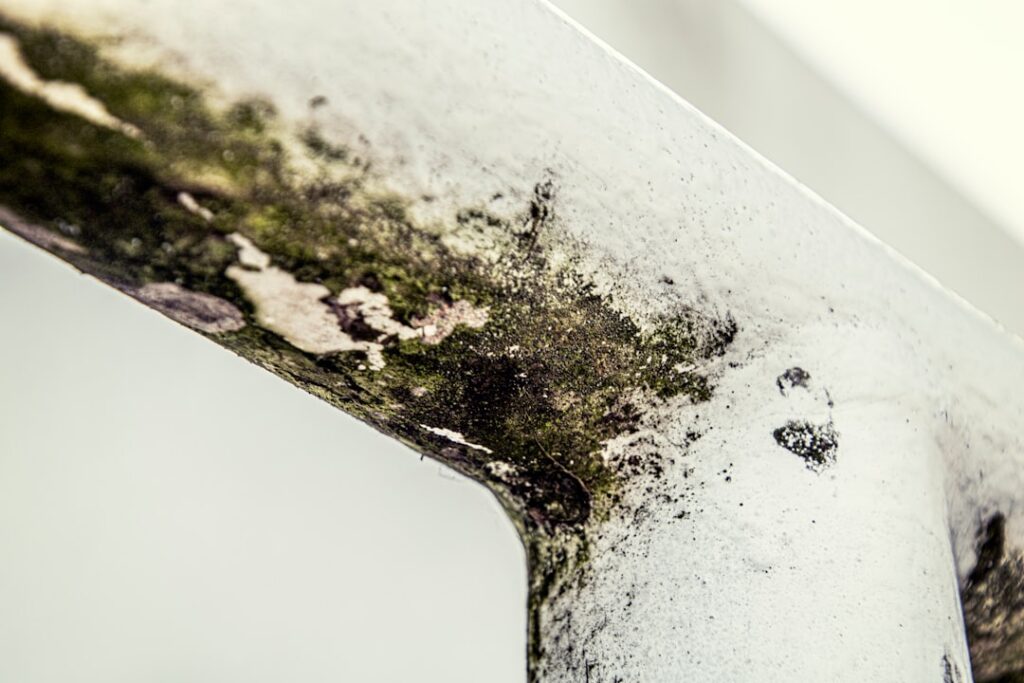
“Black mold” is a color, not a species. The phrase gets attached to one particular fungus in headlines and horror stories, but the dark patch on your bathroom grout or basement drywall could be any of several species that happen to grow dark. That matters, because the fear is usually aimed at the wrong target and the useful response is the same regardless of which one you have.
Is this mold, asbestos, or water damage? Get a free instant screen
Upload a clear photo of the suspect area. You'll get an instant AI screening opinion and what to do next. This is screening guidance, not a professional determination.
Screening guidance only. AI can be wrong. Confirm asbestos, mold type, or lead with lab testing or a licensed professional before acting.
Which fungus does “black mold” actually mean?
In popular usage the term points at Stachybotrys chartarum, sometimes called toxic black mold. It is real and worth taking seriously, but it is far from the only dark mold in homes, and it is one of the least common ones a homeowner will actually see.
Stachybotrys is a slow grower that needs sustained, heavy moisture on high-cellulose, low-nitrogen materials: wet gypsum board, paper, fiberboard, ceiling tile, and lint or dust on damp surfaces. Per the CDC, it typically requires materials that stay wet for days or weeks, which is why it tends to show up behind long-running plumbing leaks and inside water-damaged walls rather than on a surface that dries out overnight.
Most dark growth you can see is one of these instead:
- Cladosporium — one of the most common indoor and outdoor molds; appears black, olive-green, or brown on window sills, grout, and damp fabric. A frequent allergen.
- Aspergillus niger — black speckling on bathroom surfaces, around HVAC condensate, and on damp building materials.
- Alternaria — greenish-black to brown on damp window frames, in basements, and around plumbing leaks; a well-documented asthma trigger.
- Aureobasidium — dark, slimy growth on caulk, window frames, and painted surfaces.
You cannot tell these apart by eye. Color, texture, and location narrow the odds but do not confirm anything; only a lab can name the species. That is the core of the difference between mold and “black mold” — the second is a subset defined by appearance, not by any single organism.
Does “toxic” mean what people think it means?
The “toxic black mold” label comes from mycotoxins — compounds some Stachybotrys colonies can produce. Two things get lost in the popular version. First, mycotoxin production is not constant; it depends on the substrate, moisture, and how old the colony is, so a positive species ID does not mean toxins are present or airborne. Second, the widely feared link between Stachybotrys and severe illness in infants was investigated by the CDC and never established as a proven cause. The CDC’s current position is that there is no reliable evidence linking a specific mold species to unique health effects at the exposure levels found in most homes.
What is well supported: indoor dampness and mold are associated with upper-airway symptoms, coughing, wheezing, and asthma exacerbations in sensitive people. The magnitude and duration of exposure and an occupant’s own health matter far more than the name on a lab report. If you want the full picture on health, our guide on black mold exposure and symptoms covers it, and any symptoms are a question for a physician, not a mold test.
What conditions let it grow?
Every indoor mold needs the same four things: moisture, a food source, a workable temperature, and time. Moisture is the only one you control.
- Moisture is the switch. Most species need relative humidity sustained above roughly 60 percent on a susceptible material, or direct liquid water. The EPA recommends keeping indoor humidity below 60 percent, ideally between 30 and 50 percent.
- Food is nearly everything organic: paper, wood, drywall facing, fabric, and the dust and soap film on otherwise inert surfaces like tile and glass.
- Temperature in the 60–80°F range of a conditioned home suits most species. Basements and crawl spaces sit squarely in that band year-round.
- Time is short. Spores germinate within 24 to 48 hours of getting wet, with visible growth in three to seven days. That is why water-restoration crews treat “dry it within 48 hours” as the line between a cleanup and a rebuild.
The predictable moisture sources produce predictable hiding spots: bathrooms with no working exhaust fan, summer-humid basements, cold window frames where condensation pools, cabinet floors under slow-dripping sinks, and behind appliances with weeping supply lines. For the full map, see where black mold is usually found in a home.
On the Front Range, blame the exceptions, not the humidity
Colorado’s semi-arid climate keeps ambient indoor humidity low most of the year, so the region sees less chronic surface mold than the Gulf Coast or Pacific Northwest. The mold that does appear here is almost always tied to a discrete failure: an evaporative-cooler line, a finished-basement leak, an ice dam or roof-flashing failure driving snowmelt into a wall cavity, or a bathroom that vents into the attic instead of outside. That makes local mold a find-the-leak problem more than a manage-the-climate problem.
What to do about a dark patch
The building-side response is the same whatever the species turns out to be, which is why species testing rarely changes the plan.
- Find the moisture. Visible growth is downstream of a water problem. Follow the musty odor, check humidity, and look above and behind the patch — the stain on the ceiling is rarely where the water enters.
- Stop the moisture. Repair the leak, restore ventilation, or run a dehumidifier. Skip this and everything else is temporary.
- Clean or remove. The EPA’s guidance is that a homeowner can generally handle growth smaller than about 10 contiguous square feet on hard, non-porous surfaces — using an N-95 respirator, gloves, and eye protection, scrubbing with detergent and water, and drying fully. Porous materials that have grown into them, such as drywall paper, carpet padding, and ceiling tile, get cut out and replaced. Anything larger, or anything involving HVAC, goes to a remediation contractor.
- Verify. Watch the area for weeks. New growth means the water source is still active.
Note what is not on that list: killing the mold with bleach as the whole plan, or paying for testing to identify the species before you clean. The EPA does not recommend routine sampling, because sampling does not change the remediation and there are no federal exposure standards to compare a result against. See the practical steps in how to get rid of black mold, and our mold inspection hub for when a professional assessment earns its cost.
When identifying the species is actually worth it
Lab confirmation earns its place in a few situations: when growth is hidden and you need to document its extent, when a real-estate transaction or insurance claim requires a paper trail, or when a household includes immunocompromised or severe-asthma occupants and the urgency calculus genuinely changes. Outside those cases, the species name is trivia. If you are weighing it, our guide on how to tell whether black mold is toxic walks through when testing helps and when it is money spent on reassurance.
This page summarizes EPA and CDC residential-mold guidance and is not medical advice. Front Range homeowners trying to trace a moisture source or characterize a patch can reach out through our contact page for a connection to a vetted local inspector.
Sources
- A Brief Guide to Mold, Moisture and Your Home — U.S. EPA
- Mold and Health — U.S. EPA
- About Mold — Centers for Disease Control and Prevention
- Mold — National Institute of Environmental Health Sciences
- Mold and Dampness — American Lung Association