How to Know If Mold Is Black Mold: Plain-Language Guide
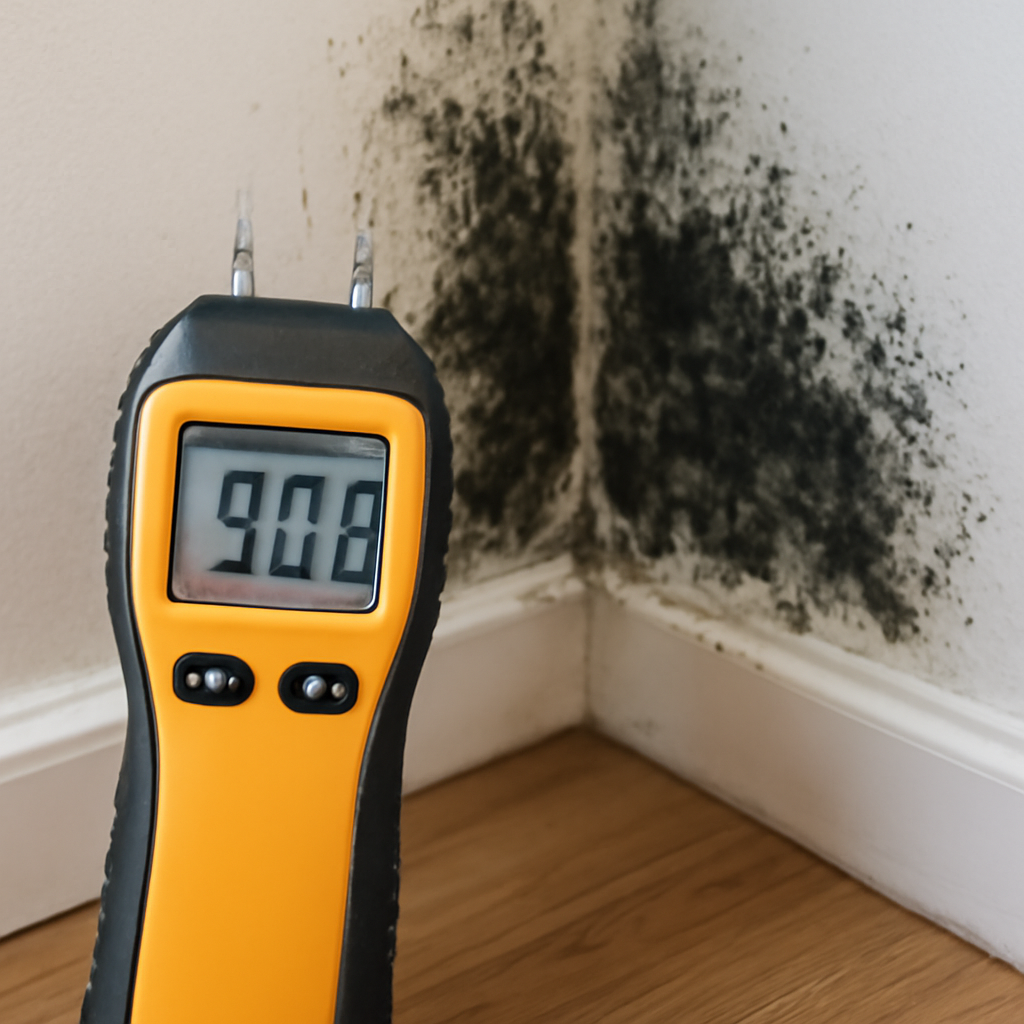
Homeowners search how to know if mold is black mold after they find a dark patch and want a way to tell whether it is the species commonly labeled toxic. The reliable method is not a single visual test — it is a combination of color, texture, growth pattern, moisture history, and lab sampling when documentation matters. This guide summarizes EPA and CDC guidance current as of 2026 and walks through the decision steps homeowners can use. Consult your physician for symptoms and a certified professional for testing decisions.
Is this mold, asbestos, or water damage? Get a free instant screen
Upload a clear photo of the suspect area. You'll get an instant AI screening opinion and what to do next. This is screening guidance, not a professional determination.
Screening guidance only. AI can be wrong. Confirm asbestos, mold type, or lead with lab testing or a licensed professional before acting.
How does a homeowner know if mold is actually black mold?
The Environmental Protection Agency is explicit on this point. Visual identification alone cannot confirm a mold species. Color, texture, and growth pattern provide probability cues, but only lab analysis of a surface or air sample confirms whether Stachybotrys chartarum — the species behind the black mold label — is present. The strongest probability indicator is moisture context. Stachybotrys needs sustained moisture on cellulose for at least a week before colonization. So dark growth in a chronic-leak situation is more suspicious than the same growth in a frequently used bathroom.
That said, most residential cases do not need species confirmation to respond appropriately. The EPA and CDC recommend visible cleanup for typical patches regardless of species. The species question matters most for real estate documentation, occupant health concerns, and post-remediation clearance verification.
What visual cues suggest mold is black mold?
Stachybotrys colonies tend to be greenish-black to deep black, with a slimy or wet sheen when active and a powdery look when dry. Patches are commonly irregular and may show a slightly raised, almost rubbery texture compared to flat surface mildew. The growth pattern almost always follows a sustained moisture source — a slow leak, condensation behind a vapor barrier, ground water through a foundation seam.
Other dark molds overlap heavily in appearance. Cladosporium is more common and can also appear black, especially on grout and caulk. Aspergillus colonies often look powdery and may darken with age. The Centers for Disease Control and Prevention notes that color and texture overlap heavily across genera. The strongest single cue is context — what surface, how long wet, what moisture history.
Texture differences
Surface mildew typically rubs off with a damp cloth. Active mold leaves a stain, smears when wiped, and often regrows within days if the underlying moisture is not corrected. Tannin extractives from softwoods rub off as dust and do not regrow. The damp-cloth test is one of the simplest early diagnostic steps homeowners can run.
What moisture history points toward black mold?
Stachybotrys needs sustained, near-saturating moisture on cellulose for at least a week before colonization. That timeline points to chronic-leak situations rather than intermittent humidity. The EPA lists the most common residential moisture sources as plumbing leaks, condensation on cold surfaces, roof leaks, ground water intrusion through foundation walls, HVAC condensate pan overflows, and chronically high indoor humidity above about 60 percent.
If a homeowner knows of a leak that ran for more than a week, a condensation pattern that persisted through a season, or a foundation seam that has wept water through multiple snowmelt cycles, the cellulose materials in that area are vulnerable to Stachybotrys colonization. Our overview of how to tell black mold from regular mold at home details the moisture history cues that raise probability.
Does smell help identify black mold?
Active mold colonies of many species produce microbial volatile organic compounds, creating a musty, earthy odor. The smell can be strongest in poorly ventilated spaces and may fluctuate with humidity. A persistent musty smell in a basement, closet, or behind cabinets is a reasonable trigger to investigate further. Smell does not identify a species — Cladosporium, Aspergillus, Penicillium, and Stachybotrys all produce similar mVOC profiles.
Smell strength does not match colony size linearly. A small but actively growing cavity colony can produce more detectable mVOCs than a larger surface patch that has dried. Smell is a useful trigger for investigation but does not size the problem on its own. And dried colonies, including dried Stachybotrys, produce less odor while still holding viable spores.
What sampling actually identifies black mold?
Three sampling methods get most of the work done. Tape lifts on visible growth — sticky tape pressed against the colony, sealed, and sent to a lab for microscopic identification. Swabs in suspect cavities or on textured surfaces. Air samples that pull a known volume of air through a spore trap, paired with outdoor reference samples taken the same day for context.
Stachybotrys spores are heavy and rarely airborne in detectable amounts even when colonies are present. A clean air sample does not always rule out hidden growth. Surface sampling near suspect areas remains the most direct evidence. A useful lab report identifies dominant genera, lists spore counts in spores per cubic meter, and compares indoor to outdoor concentrations.
What home test kits cannot do
Most consumer settle-plate kits collect whatever happens to fall during the exposure period. They do not produce reliable concentration data, and the genera that grow on a generic agar plate are not necessarily what is present at the problem area. Lab-analyzed swab or tape-lift kits are more useful but still depend on where the sample is taken. A trained assessor produces more interpretable results because they know where and how to sample.
What size patch should change the response?
The EPA’s residential mold guidance uses about 10 square feet as a practical threshold. Patches under that size on hard or semi-porous surfaces can be cleaned by a homeowner using detergent and water, with N95 mask, gloves, and goggles. Larger patches, growth tied to structural moisture, repeated regrowth, or growth on structural framing call for a professional remediator with containment and HEPA filtration.
For suspected Stachybotrys, some assessors prefer containment for any visible growth regardless of size because of spore dispersal during demolition. The decision is procedural — whether plastic-sheeted containment, negative-pressure air filtration, and HEPA vacuuming are set up before scrubbing begins.
What should homeowners do after deciding mold might be black mold?
Stop. Take photographs. Note the location, size, surface type, and any visible water-source clues. Identify and correct the moisture source first — without that fix, cleanup is temporary. Decide whether the patch is in DIY territory or warrants professional assessment. EPA guidance permits homeowner cleanup for patches under about 10 square feet on hard or semi-porous surfaces, using detergent, water, N95 mask, gloves, and goggles.
Bleach is the wrong tool on porous surfaces. Detergent and mechanical scrubbing remove biomass more effectively. After cleaning, the surface should dry below about 16 percent moisture content on a meter before painting or sealing. Our mold inspection hub covers when to escalate to a professional assessor for sampling or larger remediation scope.
How do health symptoms factor into the decision?
Symptoms alone do not confirm a mold species. The Centers for Disease Control and Prevention notes that respiratory irritation, allergic reactions, and asthma exacerbation can come from many indoor air quality issues — dust, pet dander, chemical off-gassing, seasonal allergens — and that mold is one possible contributor. A specific symptom pattern that improves when occupants leave the home and returns when they come back is a useful trigger for indoor air investigation.
For sensitive populations — children with asthma, immunocompromised individuals, people with chronic respiratory conditions — any indoor mold deserves prompt attention. The species label matters less than the prompt response. Physicians may request indoor air assessment data as part of clinical evaluation, but symptom data alone does not identify a species. Mold assessment and medical evaluation work in parallel rather than one substituting for the other.
What does a written assessor report typically include?
A useful mold assessor report includes site information, visible findings with photographs, moisture mapping results, sample collection methodology, lab analysis results showing dominant genera and spore counts, indoor versus outdoor comparison data, and a recommended remediation scope. The document supports decision-making by homeowners, contractors, real estate professionals, and insurance adjusters.
Reports vary in quality. Look for clear documentation of sampling methodology, explicit comparison between indoor and outdoor data, and a remediation scope that does not bundle assessor services with cleanup work. The InterNACHI mold standard of practice provides a baseline for what professional reports should contain. Reports that lack outdoor reference samples or that present indoor counts without context are less useful than reports that meet the standard.
When to call a professional
Engage a certified mold assessor when the visible patch exceeds 10 square feet, when occupants have asthma or immune compromise, when growth keeps returning after cleaning, when a real estate transaction needs documentation, or when there is suspected cavity growth that cannot be inspected without partial demolition. Use the InterNACHI mold standard of practice as a vetting baseline. Prefer assessors who do not also sell remediation for the same job.
The Colorado Department of Public Health and Environment publishes general guidance on indoor air quality and on choosing qualified contractors. Front Range homes with finished basements and aging plumbing tend to face species-identification questions more often, especially when a real estate inspection raises concerns mid-transaction.
References
- Mold cleanup in your home — U.S. Environmental Protection Agency
- Stachybotrys chartarum facts — Centers for Disease Control and Prevention
- Mold inspection standards of practice — InterNACHI
- Mold and indoor air quality — National Institute of Environmental Health Sciences
Homeowners across the Denver metro and Front Range trying to know whether mold in their home is the dangerous species can reach a vetted local inspector through our contact page for sampling and scoping advice.