Moldcleaner Products and a Safe DIY Cleaning Method
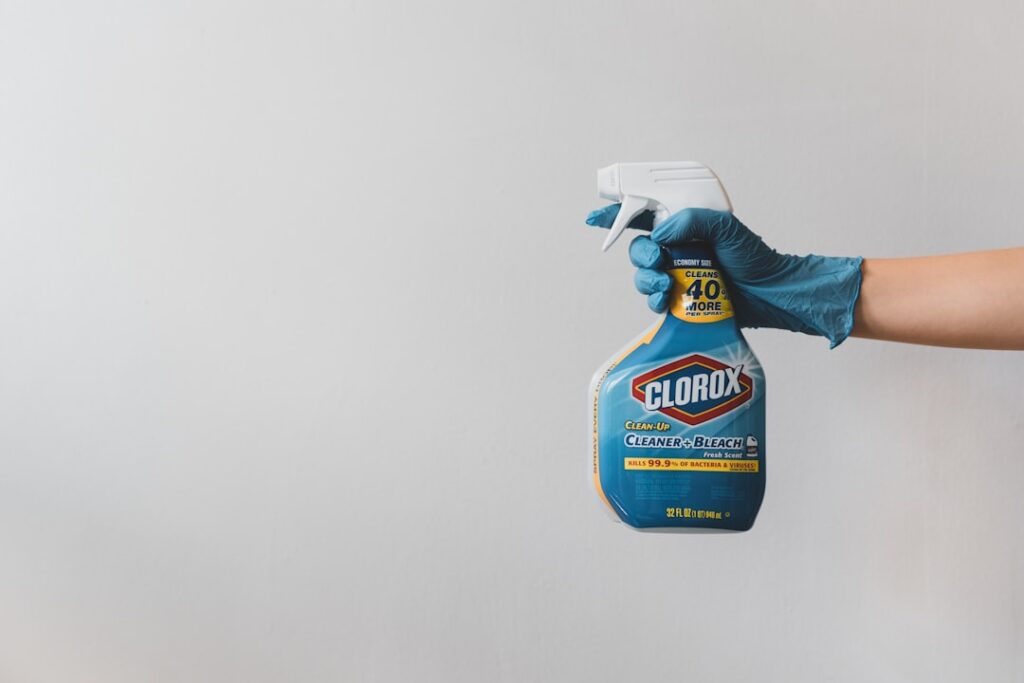
Searching for a mold.cleaner usually means one thing: you have spotted growth somewhere in the house and you want it gone today. There are dozens of products and homemade mixtures that fit the description, and many work well on the right surface. The trouble is that no cleaner can do more than reach the surface it touches, and most household mold problems have roots a cleaner cannot follow. This guide summarizes EPA and CDC guidance current as of 2026; consult your physician for any health symptoms and a certified professional for testing or remediation of larger contamination.
Is this mold, asbestos, or water damage? Get a free instant screen
Upload a clear photo of the suspect area. You'll get an instant AI screening opinion and what to do next. This is screening guidance, not a professional determination.
Screening guidance only. AI can be wrong. Confirm asbestos, mold type, or lead with lab testing or a licensed professional before acting.
What counts as a moldcleaner?
A moldcleaner is any product or solution used to remove or kill visible mold on household surfaces. The category is broad. It includes ready-to-spray commercial bottles, concentrated cleaners you dilute, and simple kitchen ingredients like dish detergent, white vinegar, or hydrogen peroxide. Despite the marketing variety, they cluster into a few working types.
- Detergent cleaners. Plain soap and water physically lift mold and the soil it feeds on. The EPA considers detergent and water adequate for most hard-surface cleanup.
- Oxidizers. Hydrogen peroxide and chlorine bleach break down mold pigments and kill cells on contact.
- Acids. White vinegar is mildly acidic and can address light growth on some surfaces.
- Biocides. Quaternary ammonium and similar products are formulated to kill microorganisms and are common in commercial sprays.
For a wider look at removal options and when each fits, our guide on what gets rid of mold compares methods in plain language.
The marketing on these products tends to promise more than the chemistry delivers. A bottle labeled to “destroy mold and prevent regrowth” is making two claims, and only the first is partly true. A cleaner can lift surface growth. None can prevent regrowth on its own, because regrowth is governed by moisture, not by any residue the product leaves behind. Reading the category honestly means separating what the active ingredient does, which is act on the surface it touches, from what the marketing implies, which is a permanent solution.
How to choose among moldcleaner options
With several product types available, the right pick depends mostly on the surface and the severity, not on the brand promise.
- For routine bathroom and kitchen upkeep, a detergent cleaner is the safest and most practical choice. Regular cleaning removes the soap film, dust, and organic residue that growth feeds on, which is preventive as much as corrective.
- For staining on tile and grout, a hydrogen peroxide solution lifts pigment effectively without chlorine fumes, and grout’s slight porosity responds better to peroxide than to bleach.
- For light, sensitive cleaning, white vinegar handles minor surface growth on many hard materials and suits households avoiding harsher chemistry.
- For heavier surface contamination on non-porous materials, a biocidal or bleach product can work, with the understanding that scrubbing and disposal still do most of the work.
The decision tree is short: identify the surface, confirm it is hard and non-porous, judge the size, and pick the gentlest product that will do the job. Reaching for the strongest chemical by default is a common mistake that adds fumes and risk without adding effectiveness.
A safe DIY cleaning method, step by step
For small, surface-level growth on a hard material, a methodical cleaning is straightforward. The goal is to remove the mold without scattering spores through the rest of the home.
1. Confirm the area is small and hard-surfaced
The EPA’s rough threshold for homeowner cleanup is under about 10 square feet on non-porous materials. If the growth is larger, on drywall or insulation, or tied to flooding, stop and get an assessment instead.
2. Gear up
Wear nitrile or rubber gloves, goggles without vents, and an N95 respirator. Disturbing mold sends spores airborne, and protection matters even for small jobs.
3. Ventilate and isolate
Open a window, run an exhaust fan, and close the door to the rest of the house so spores do not migrate to clean rooms.
4. Clean with detergent and water
Mix dish soap with warm water, apply, and scrub with a stiff brush or cloth. The mechanical action does most of the work. For stubborn staining on tile or grout, a hydrogen peroxide solution can help lift color.
5. Rinse and dry completely
Wipe away residue and dry the surface thoroughly with fans or a dehumidifier. Lingering moisture is an open invitation for regrowth, no matter how good the cleaner was.
6. Dispose of materials carefully
Bag used cloths, brushes, and gloves before carrying them through the house. Disposable supplies reduce the chance of spreading spores later.
The porous-material limit every moldcleaner shares
This is the boundary no product crosses. Porous materials, including drywall, ceiling tile, unsealed wood, carpet, insulation, and upholstery, absorb both water and mold below the surface. A cleaner applied to the face removes the visible color while the colony continues to grow inside the material. Within weeks, it surfaces again.
The remediation industry handles porous contamination by removal, not cleaning. Moldy drywall is cut out. Saturated insulation is bagged and discarded. Soft furnishings that cannot be laundered are often thrown away. The CDC’s guidance is consistent: absorbent materials that become moldy may need to be replaced. A cleaner is the right tool for tile and glass, and the wrong tool for a paper-faced wall. Our overview of the mold inspection and testing process explains how professionals decide what can be cleaned and what must go.
Killing mold is not the same as removing it
A point that surprises many homeowners: dead mold is still a problem. Spores and fragments from killed mold can continue to trigger allergic and irritant reactions in sensitive people. That is why the EPA frames the objective as removal, not sterilization. A product that “kills 99.9% of mold” has still left material on the surface that needs to be physically wiped or scrubbed away and disposed of.
This reframes the cleaner’s role. Its value is in helping you lift and remove growth, not in chemically zapping it out of existence. The scrubbing, rinsing, and drying do as much work as the active ingredient.
It is worth understanding why dead mold still matters, because it explains the EPA’s emphasis on removal. The proteins and particles that provoke allergic and irritant reactions remain present in dead spores and fragments. Killing the organism does not break down these components. A surface that has been sprayed but not physically wiped clean can still carry allergenic material, which is why a thorough cleaning, followed by disposal of the cloths and debris, protects indoor air more than a chemical application alone. People with asthma or allergies in the household are the most affected by this distinction, and for them the physical removal step is especially important.
Common mistakes with household mold cleaners
A handful of errors come up repeatedly and undercut otherwise reasonable cleaning efforts.
- Spraying over active growth and walking away. Without scrubbing and disposal, the growth and its allergenic material remain.
- Treating porous materials. Cleaning the face of drywall or carpet leaves the colony alive inside.
- Mixing products. Combining bleach with ammonia or acids releases toxic gases and is genuinely dangerous.
- Skipping the drying step. A clean but damp surface invites growth back within days.
- Ignoring the moisture source. The most consequential mistake, because it guarantees recurrence regardless of how good the cleaning was.
Avoiding these is mostly a matter of sequence and patience: control moisture, clean physically, dry thoroughly, and dispose carefully. The cleaner is one part of that process, not the whole of it.
A useful habit is to treat any moldcleaner as an aid to thorough cleaning rather than a shortcut around it. The product loosens and helps lift growth, but your scrubbing, rinsing, and drying determine the result. Framed that way, the choice of cleaner becomes less fraught: pick a product matched to your surface and the people in your home, then put in the physical work the job actually requires. The bottle does not do the cleaning for you, and expecting it to is the root of most disappointment.
Why moisture control comes before any cleaner
Mold needs water. Spores are everywhere and harmless until they meet a damp surface. The reason cleaning so often fails is that the cleaner addresses the colony while the moisture source keeps producing new ones. A bathroom that stays humid, a window that condenses, a slow plumbing leak, or basement seepage will regrow mold faster than you can scrub it.
Before reaching for any product, find and fix the water. Improve ventilation, run a dehumidifier to keep indoor humidity below roughly 50 percent, repair leaks promptly, and direct water away from the foundation. On the Colorado Front Range, finished basements in counties like Adams, Boulder, and Jefferson are common trouble spots where seasonal moisture drives recurring growth. Correct the source and the cleaner finally has a chance to keep the surface clear.
When to stop cleaning and call a professional
Some signs mean a cleaner is not the answer. Mold that returns after every cleaning, a musty smell with no visible source, growth spreading behind walls or under floors, contamination after a flood or sewage backup, and any area larger than about 10 square feet all warrant professional evaluation. Occupants with asthma, allergies, or weakened immune systems are another reason to favor assessment over DIY. A professional finds the moisture source and scopes the actual extent of contamination, which is the difference between a clean surface today and a clean home that stays that way.
When a cleaner is the wrong tool
Knowing when to put the bottle down is as important as knowing how to use it. Several situations call for assessment rather than cleaning. Growth larger than about 10 square feet exceeds the EPA’s rough DIY threshold. Contamination on porous materials like drywall, insulation, or carpet needs removal, not treatment. A musty smell with no visible source suggests hidden growth a cleaner cannot reach. Mold that returns after every cleaning is a sign the moisture source was never corrected. And any contamination following a flood or sewage backup involves hazards beyond ordinary cleaning.
Household health is another deciding factor. People with asthma, allergies, or weakened immune systems are more sensitive to mold exposure, and for them even a modest cleanup carries more risk. In these cases, favoring a professional assessment over repeated DIY protects both the home and the people in it. The cleaner is a tool for small, controlled, hard-surface jobs with a known and fixable moisture cause. When the situation falls outside those bounds, recognizing the limit and seeking help is the sound choice, not a failure.
Front Range conditions and recurring growth
Colorado’s generally dry climate can give homeowners a false sense that mold is not a local concern, but localized moisture tells a different story. Finished basements across Denver, Douglas, Arapahoe, and Jefferson counties are common settings for recurring growth, where seasonal snowmelt, foundation drainage issues, and inadequate ventilation create the damp conditions mold needs. Crawlspaces and homes using swamp-cooler humidity add their own patterns. In these settings, a cleaner clears the visible growth but does nothing about the underlying moisture, so the same spot reappears season after season. Addressing the water, through drainage improvements, a dehumidifier, or better ventilation, is what finally ends the cycle, with the cleaner reserved for the small touch-ups a controlled, dry surface occasionally needs.
References
- Mold Cleanup in Your Home — U.S. Environmental Protection Agency
- Mold Cleanup Guidance — Centers for Disease Control and Prevention
- A Brief Guide to Mold, Moisture and Your Home — U.S. Environmental Protection Agency
Front Range homeowners who keep cleaning the same spot can reach a vetted local inspector through our contact page to find the moisture source feeding it.