Black Mold Cleaner: What Homeowners Need to Know
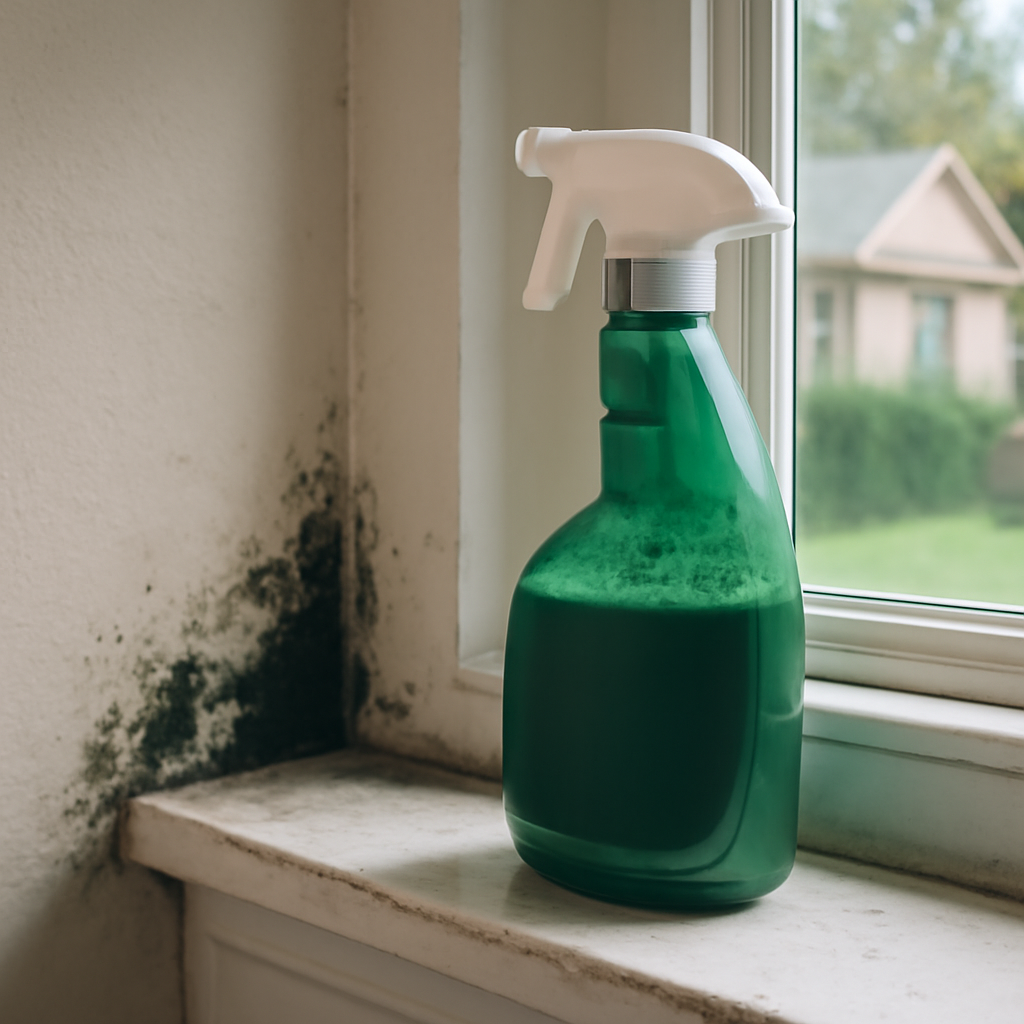
A dark, slimy patch on a wall or ceiling sends homeowners searching for a black mold cleaner that will make it disappear. Plenty of sprays promise exactly that, but the right product, and whether a product is even the answer, depends on the surface and the size of the growth. This guide summarizes EPA and CDC guidance current as of 2026 and is educational only; consult a physician about health symptoms and a certified professional for large or recurring growth.
Part of our Black Mold & Your Health guide — start there for the full picture →
The single most useful idea before you buy anything: a cleaner removes the visible growth, but only fixing the moisture source keeps black mold from returning. Skip the moisture step and you will be re-cleaning the same spot within weeks.
Is this mold, asbestos, or water damage? Get a free instant screen
Upload a clear photo of the suspect area. You'll get an instant AI screening opinion and what to do next. This is screening guidance, not a professional determination.
Screening guidance only. AI can be wrong. Confirm asbestos, mold type, or lead with lab testing or a licensed professional before acting.
What is the best black mold cleaner?
For hard, non-porous surfaces such as sealed painted drywall, glazed tile, glass, and finished metal, the EPA’s baseline recommendation is straightforward: detergent and water. Physically scrubbing the growth away and drying the surface completely removes the mold without harsh chemicals. The agency emphasizes that you do not need to “kill” mold for cleanup to be effective, because even dead mold can cause irritation, so physical removal is the real goal.
Commercial black mold cleaners add convenience, a surfactant, and sometimes a mild biocide. They can be reasonable on non-porous surfaces, but they are not more capable than detergent at reaching mold inside porous materials. Lower-toxicity options like white vinegar and 3 percent hydrogen peroxide also handle surface growth on tile, grout, and sealed walls, with peroxide useful for lightening stains. Chlorine bleach can lighten stains on hard surfaces but the EPA notes it is generally unnecessary and not recommended as routine practice. Our hub on mold inspection and testing covers how to judge whether a surface is even cleanable.
Where do black mold cleaners fall short?
The crucial limitation is porosity. Unsealed drywall, the paper facing on drywall, bare plaster, and untreated wood absorb water, and black mold roots into them. No surface cleaner reliably reaches growth inside porous material, so spraying the face leaves the embedded colony alive. Within days or weeks, the stain returns. The EPA’s guidance is direct: porous materials that cannot be cleaned should be removed and replaced.
This is why a cleaner that “works” on bathroom tile may fail on a moldy drywall section a few feet away. The tile is non-porous and cleanable; the drywall paper is porous and usually not. Recurring black mold after cleaning is the clearest signal that the growth lives inside the material or that the moisture source is still active. For symptoms tied to indoor dampness, our overview of mold-related symptoms explains what to monitor.
How do you use a black mold cleaner safely?
Protect yourself before you start. The CDC and EPA recommend an N95 respirator, gloves, and eye protection, plus ventilation by opening windows and using a fan that exhausts outdoors rather than recirculating air through the home. Contain the area for anything beyond a small spot so spores do not spread to clean rooms.
The basic method on a sealed surface: lightly dampen the growth to reduce airborne spores, scrub with your chosen cleaner, wipe away residue, and dry the surface completely using airflow and, if needed, a dehumidifier. Avoid dry-brushing active black mold, which launches large numbers of spores into the air. Never mix bleach with ammonia or other cleaners, which can produce toxic gases. Bag and discard sponges and rags rather than reusing them on clean surfaces.
When a cleaner is the wrong tool
If growth covers more than roughly 10 square feet, keeps returning, sits on porous material, or has spread into the wall cavity, no spray will solve it. The EPA’s 10-square-foot guideline marks where professional remediation becomes the safer choice. A remediator contains the area, removes unsalvageable drywall and insulation, dries the structure, and verifies results, work a cleaner cannot replicate.
Comparing common black mold cleaners
The popular options each have a role on non-porous surfaces. Detergent and water is the EPA’s baseline, removing growth physically without harsh chemicals or fumes. White vinegar is mildly acidic, low in toxicity, and handles surface growth on tile and grout, though its results are less consistent than scrubbing. Hydrogen peroxide at 3 percent lifts both growth and staining and is gentler than bleach, but it can lighten paint and fabric, so test a small area first. Commercial mold sprays add convenience and sometimes a residual coating. Chlorine bleach lightens stains but the EPA considers it generally unnecessary, and it does not penetrate porous materials. None of these reach mold inside drywall, which is the recurring limitation across the entire category.
Does black mold require special treatment?
Black mold, typically Stachybotrys chartarum, draws extra fear, but the cleanup approach is the same as for other molds. The CDC notes that no mold color can be reliably judged toxic by appearance, and current evidence does not single out household black mold as requiring unique chemical treatment. What black mold does signal is prolonged moisture, since Stachybotrys needs sustained wetness on cellulose materials to establish. That makes finding the water source especially important.
So the practical response to black mold is not a stronger chemical but a more thorough moisture investigation. A patch of black mold on drywall usually means that material has been wet for a while, which often points toward removal rather than cleaning, plus correcting whatever leak or humidity caused it.
How do you keep black mold from coming back?
Prevention is a moisture task. Hold indoor relative humidity between 30 and 50 percent, the EPA’s recommended range, using ventilation and dehumidification. Vent bathroom and kitchen fans outdoors, not into attics. Repair plumbing and roof leaks promptly, and dry any water intrusion within 24 to 48 hours before mold can establish.
On the building envelope, grade soil away from the foundation, keep gutters clear, and seal foundation cracks, all common needs in Front Range homes with expansive soils and seasonal snowmelt. In basements and other below-grade rooms, a dehumidifier holding humidity under 50 percent often prevents black mold more effectively than any cleaner. The best black mold cleaner buys you a clean wall for a week; correcting moisture keeps it clean for years.
Where black mold commonly appears
Knowing the usual locations helps you catch growth early and judge whether a cleaner is even appropriate. Bathrooms are the most frequent site, where constant humidity feeds growth on grout, caulk, and behind tile. Basements and crawl spaces grow black mold where foundation seepage or condensation keeps drywall and framing damp. Around windows, winter condensation pools on cold glass and wets sills and frames. Under sinks, behind washing machines, and near water heaters, slow leaks create the sustained wetness Stachybotrys requires.
The pattern is consistent: black mold appears where water lingers. On a non-porous surface like a window frame or tile, a cleaner plus a moisture fix resolves it. On porous drywall that has stayed wet long enough to grow black mold, the material has usually absorbed the growth and needs removal. Reading the location and surface together tells you which path applies before you reach for a spray bottle.
Safety when cleaning black mold
Treat black mold cleanup with the same precautions as any mold. Wear an N95 respirator, gloves, and eye protection, and ventilate the area. Keep children, older adults, and anyone with asthma or a weakened immune system away during cleaning, since the CDC notes these groups are more sensitive. Seal moldy debris and used rags in a plastic bag before carrying them through the home, and wash work clothes separately afterward. For anything beyond a small patch, close doors and cover vents to contain spores. These steps protect the household whether the growth turns out to be Stachybotrys or a less notorious mold, which is the point: the safe response does not depend on identifying the species.
References
- Mold Cleanup in Your Home — U.S. Environmental Protection Agency
- A Brief Guide to Mold, Moisture and Your Home — U.S. Environmental Protection Agency
- About Mold and Health — Centers for Disease Control and Prevention
- Mold and Indoor Air Quality — National Institute of Environmental Health Sciences
Frequently asked questions
What is the best black mold cleaner for walls?
For sealed, non-porous surfaces the EPA recommends detergent and water, scrubbing then drying completely. Commercial cleaners, vinegar, and hydrogen peroxide also work on hard surfaces. None reliably reach mold inside porous drywall, which should be replaced instead.
Do I need a special cleaner for black mold?
No. The CDC notes mold color does not indicate it needs unique treatment, and current evidence does not single out household black mold for special chemicals. The same cleanup applies, with extra attention to finding the moisture source.
Why does black mold keep coming back after I clean it?
Either the growth lives inside porous material the cleaner cannot reach, or the moisture source is still active. Black mold needs sustained wetness, so recurring growth means the underlying water problem has not been corrected.
Is bleach a good black mold cleaner?
Bleach can lighten surface stains on hard surfaces, but the EPA says it is generally unnecessary and not recommended as routine practice. It does not penetrate porous materials, so embedded growth survives. Never mix bleach with ammonia.
If black mold keeps returning in your Front Range home, contact us to connect with a vetted local inspector who can trace the moisture source behind it.
Mold removal & cleanup picks
For a small, contained patch (under ~10 sq ft) these EPA-friendly removers handle surface mold. Larger or recurring growth warrants a professional assessment first.
| Product | Why | Buy |
|---|---|---|
 RMR-86 Instant Mold Stain Remover RMR-86 Instant Mold Stain Remover | Fast-acting on stains; ventilate and wear PPE. | Amazon — $29.99 |
 Concrobium Mold Control Concrobium Mold Control | No-bleach formula that also helps prevent regrowth. | Amazon — $11.26 |
 Mold Armor Mold & Mildew Remover Mold Armor Mold & Mildew Remover | Widely stocked bathroom/surface remover. | Amazon — $22.98 |