Mildew Mold Cleaner: What Homeowners Need to Know
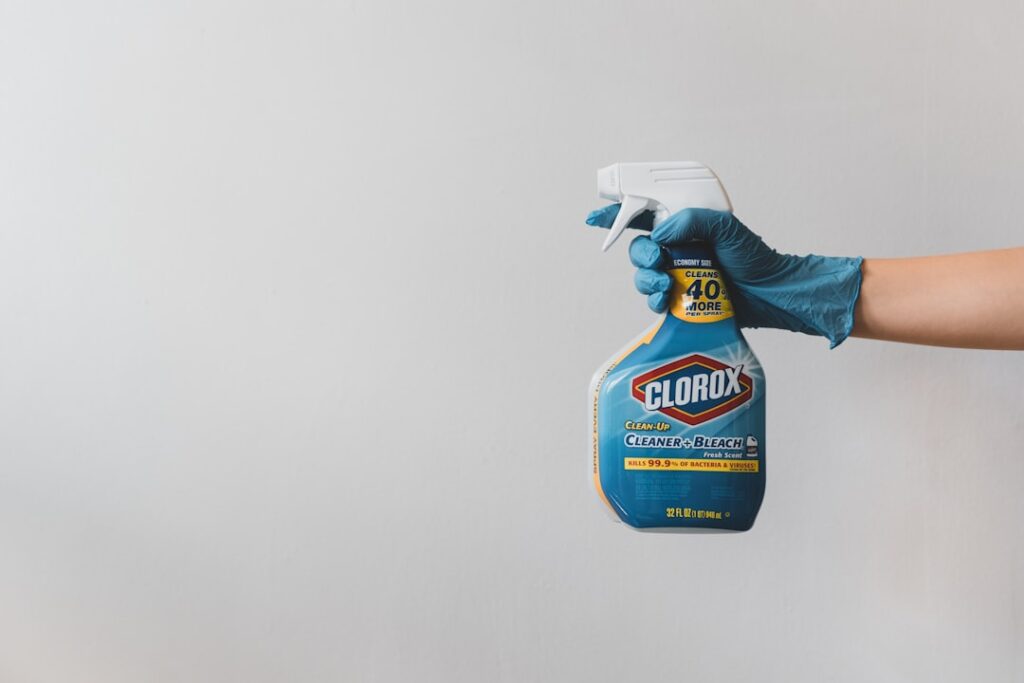
A mildew mold cleaner promises to handle both problems at once, and on the right surface it delivers. The phrase covers a family of products that combine a cleaning agent with a biocide, designed to lift staining and kill living growth in a single pass. The variable that decides whether one works for you is not the brand but the surface you are cleaning. A cleaner that strips mildew off glazed tile in seconds may do almost nothing to mold growing inside damp drywall. This guide compares the cleaner types, gives surface-by-surface guidance, and covers safe use. It summarizes EPA and CDC guidance current as of 2026; consult your physician about symptoms and a certified professional for serious contamination.
Is this mold, asbestos, or water damage? Get a free instant screen
Upload a clear photo of the suspect area. You'll get an instant AI screening opinion and what to do next. This is screening guidance, not a professional determination.
Screening guidance only. AI can be wrong. Confirm asbestos, mold type, or lead with lab testing or a licensed professional before acting.
What a Mildew Mold Cleaner Does
These cleaners pair a surfactant, which loosens grime and biofilm, with a biocide, which kills the fungal growth. On hard, nonporous surfaces the combination lifts staining and removes the colony in one application. The CDC notes that for hard surfaces, a commercial cleaner or soap and water is usually sufficient, and that drying the area afterward is what prevents the return. What these cleaners cannot do is reach mold that has grown into a porous material, and they do not address the moisture that grew it.
Cleaner Types Compared
Bleach-Based Cleaners
Sodium hypochlorite cleaners are strongest on staining and best suited to hard, nonporous bathroom and kitchen surfaces. They struggle on porous material because the water soaks in while the chlorine stays on top. Bleach cleaners require ventilation and must never be mixed with ammonia or acidic products.
Hydrogen Peroxide Cleaners
Peroxide-based cleaners oxidize mildew and surface mold with much less odor and break into water and oxygen. They suit fume-sensitive households and work with adequate dwell time.
Quat and Botanical Cleaners
Quaternary ammonium cleaners disinfect and leave a residual film. Botanical cleaners use plant-derived actives such as thyme oil or citric acid. Both offer lower-odor cleaning and handle surface growth, though heavy staining may need more scrubbing.
Surface-by-Surface Guidance
Tile, Glass, and Sealed Surfaces
These nonporous surfaces are the ideal target. The growth lives on a film of soap scum and grime, so pre-clean, apply the cleaner, let it dwell, scrub, rinse, and dry. Grout is the exception, since it is porous and can hold staining even after the live growth is gone; a grout-safe cleaner and a stiff brush handle most of it.
Painted Walls
Intact paint keeps growth on the surface. A detergent wipe followed by a disinfecting cleaner usually clears it. Avoid soaking the wall, which traps moisture and invites regrowth.
Porous Material
Bare drywall, ceiling tile, carpet, and untreated wood absorb growth. The EPA advises removing and replacing porous materials that stay contaminated rather than cleaning them, because embedded growth restarts when moisture returns. For more on which materials can be saved, see our guide to what gets rid of mold and what does not.
Using a Mildew Mold Cleaner Safely
Cleaning disturbs spores and chemical fumes, so protection matters. Ventilate to the outdoors and wear an N95 respirator, gloves, and sealed eye protection, as the CDC and EPA recommend. Pre-clean greasy surfaces so the biocide binds to mold rather than grime. Apply the cleaner, let it dwell for the label contact time, scrub textured areas, then remove the residue and dry thoroughly. Never mix products. People with asthma, allergies, or weakened immunity should not do the work, and any area larger than about 10 square feet warrants professional remediation. For a deeper product comparison, the mildew cleaner products and methods guide covers the selection in detail.
Preventing the Return
A cleaner is cleanup, not a cure. Mildew and mold both return whenever moisture does. The EPA recommends keeping indoor humidity between 30 and 50 percent, running exhaust fans during and after showers and cooking, and repairing leaks within 24 to 48 hours. Wipe down wet shower surfaces and clean front-loader gaskets. In Front Range homes, winter condensation on cold walls and humidity from evaporative coolers are frequent triggers despite the dry outdoor air. When surface cleaning keeps failing, the mold inspection and testing hub explains how a professional locates the hidden moisture behind the recurrence.
How Mildew and Mold Differ in Practice
The label says “mildew mold cleaner,” but the two growths it targets are not identical, and the difference shapes how much work the cleaner has to do. Mildew is a flat, surface-dwelling fungus that shows up as a powdery or downy film, usually gray, white, or yellow. Because it sits on top of a surface, it surrenders quickly to a cleaner and a wipe. Mold, in its deeper forms, is fuzzy or slimy, often green, black, or brown, and it can grow roots into a porous material where a surface cleaner cannot follow.
This matters because homeowners often assume a recurring stain is “just mildew” when it is actually mold establishing in the substrate. A useful test is persistence. Mildew that wipes away and stays away was a true surface problem. A stain that returns in the same spot within weeks, or a wall that feels soft beneath it, signals deeper growth that a cleaner will never fully resolve. At that point the question shifts from which cleaner to whether the material needs to come out.
Reading the Cleaner Label Correctly
A cleaner’s front label is marketing; the back label is information. Three fields decide whether a product fits your job. The active ingredient tells you the chemistry and its hazards. An EPA registration number, present on any product that legally claims to kill mold, signals the agency reviewed the claims and directions. The contact time tells you how many minutes the product must stay wet on the surface to work, which is the figure most homeowners ignore and the reason many cleanings underperform.
Surface guidance on the label also matters. A cleaner formulated for tile and grout may discolor or simply fail on a painted or natural surface. Reading these fields takes a minute and saves a wasted afternoon. The dilution instructions on concentrates are equally binding, since an over-diluted cleaner lacks the strength to kill and an over-concentrated one can damage the surface or release stronger fumes than intended.
Common Cleaning Mistakes That Waste Effort
Several habits quietly sabotage a cleaning. Wiping the cleaner off immediately denies the biocide its contact time, so the growth survives. Skipping the pre-clean lets the active ingredient bind to soap scum and grease instead of the mold. Soaking a porous surface drives moisture inward and feeds the next bloom. Leaving the surface damp afterward hands surviving spores exactly what they need. And mixing two products in the hope of a stronger result can produce toxic gas. Avoiding these five mistakes turns a frustrating, repeated chore into a clean result that holds, provided the moisture is also addressed.
Cleaner Form Factors and When Each Helps
Beyond the active ingredient, the physical form of a cleaner changes how well it performs on a given surface. Ready-to-use trigger sprays are the convenient default for light, accessible surface growth on tile, glass, and sealed walls. They cover an area fast but tend to run off vertical surfaces before the contact time elapses, which limits their bite on stubborn staining. Concentrates, diluted before use, suit larger jobs and cost less per square foot, with the tradeoff of careful mixing.
Gels and clinging foams solve the runoff problem. They hold the active ingredient against vertical grout lines and shower corners for the full dwell time, which is why they outperform thin sprays on set-in grout staining. Wipes offer spot convenience for small touch-ups but are not built for whole-surface cleaning. Matching the form to the surface, a gel for vertical grout, a concentrate for a large floor, a spray for a quick countertop, is a quiet efficiency that most homeowners overlook.
Whatever the form, the underlying rules do not change. Pre-clean the grime, respect the contact time, remove the residue, and dry the surface. The form factor only changes how easily the product stays where you put it long enough to work.
Front Range Conditions That Drive Recurrence
Colorado homeowners frequently assume the dry climate spares them from mold and mildew, then find both in predictable indoor spots. Bathrooms with weak or unused exhaust fans trap shower humidity against tile and grout. Below-grade basements hold dampness that the dry outdoor air never reaches. Cold exterior walls collect winter condensation behind furniture and along window frames. Evaporative coolers and portable humidifiers, both common in the arid Front Range climate, can push indoor relative humidity well past the 60 percent threshold the EPA flags as risky.
The practical lesson is that a cleaner clears the symptom while these conditions keep recreating it. A Denver-area bathroom that mildews every few weeks does not need a stronger cleaner; it needs the exhaust fan run during and after every shower, the door left open to circulate air, and the humidity monitored with a simple hygrometer. Treating the recurring stain as a ventilation problem rather than a cleaning problem is what finally breaks the cycle.
When a Cleaner Is Not the Right Answer
Some situations call for more than a cleaner. Mold spread across more than about 10 square feet, growth inside wall cavities or HVAC ducts, contamination tied to sewage or flood water, or any case involving an occupant with asthma or a weakened immune system all point toward professional remediation rather than a spray bottle. A remediation contractor sets up containment, uses HEPA filtration and negative air pressure, and removes contaminated porous material so spores do not migrate through the home. Recognizing this threshold protects both your health and your budget, since cleaning a problem that needs demolition only delays the real fix.
A Realistic Routine for Keeping Surfaces Clear
A sustainable approach treats cleaning and prevention as one routine rather than two separate events. After a thorough cleanup that removes the existing growth, the goal is to deny the conditions that brought it. Run exhaust fans during and after moisture-generating activities, and let them run several minutes longer than feels necessary. Squeegee or wipe down shower walls after use so water does not linger on the tile and grout. Keep a hygrometer in the dampest room and aim for relative humidity between 30 and 50 percent, deploying a dehumidifier if it climbs higher.
Periodic light cleaning beats waiting for a heavy bloom. A quick wipe of grout lines and gaskets every week or two keeps biofilm from establishing, so the cleaner never has to fight a thick colony. Front-loading washer gaskets deserve particular attention, since the folds trap water and breed both mildew and odor. These habits cost minutes, not dollars, and they shift the cleaner’s role from emergency response to occasional maintenance. The combination of one good cleanup, controlled humidity, and light upkeep is what most homeowners actually want when they reach for a mildew mold cleaner in the first place.
References
- Mold Cleanup in Your Home — U.S. Environmental Protection Agency
- You Can Control Mold — Centers for Disease Control and Prevention
- A Brief Guide to Mold, Moisture and Your Home — U.S. Environmental Protection Agency
Front Range homeowners whose cleaner keeps losing the battle can reach out through our contact page to connect with a vetted local inspector who can find the moisture source.
Mold removal & cleanup picks
For a small, contained patch (under ~10 sq ft) these EPA-friendly removers handle surface mold. Larger or recurring growth warrants a professional assessment first.
| Product | Why | Buy |
|---|---|---|
 RMR-86 Instant Mold Stain Remover RMR-86 Instant Mold Stain Remover | Fast-acting on stains; ventilate and wear PPE. | Amazon — $18.38 |
 Concrobium Mold Control Concrobium Mold Control | No-bleach formula that also helps prevent regrowth. | Amazon — $13.48 |
 Mold Armor Mold & Mildew Remover Mold Armor Mold & Mildew Remover | Widely stocked bathroom/surface remover. | Amazon — $22.98 |