Commercial Mold Damage Restoration Near Me: Property Guide
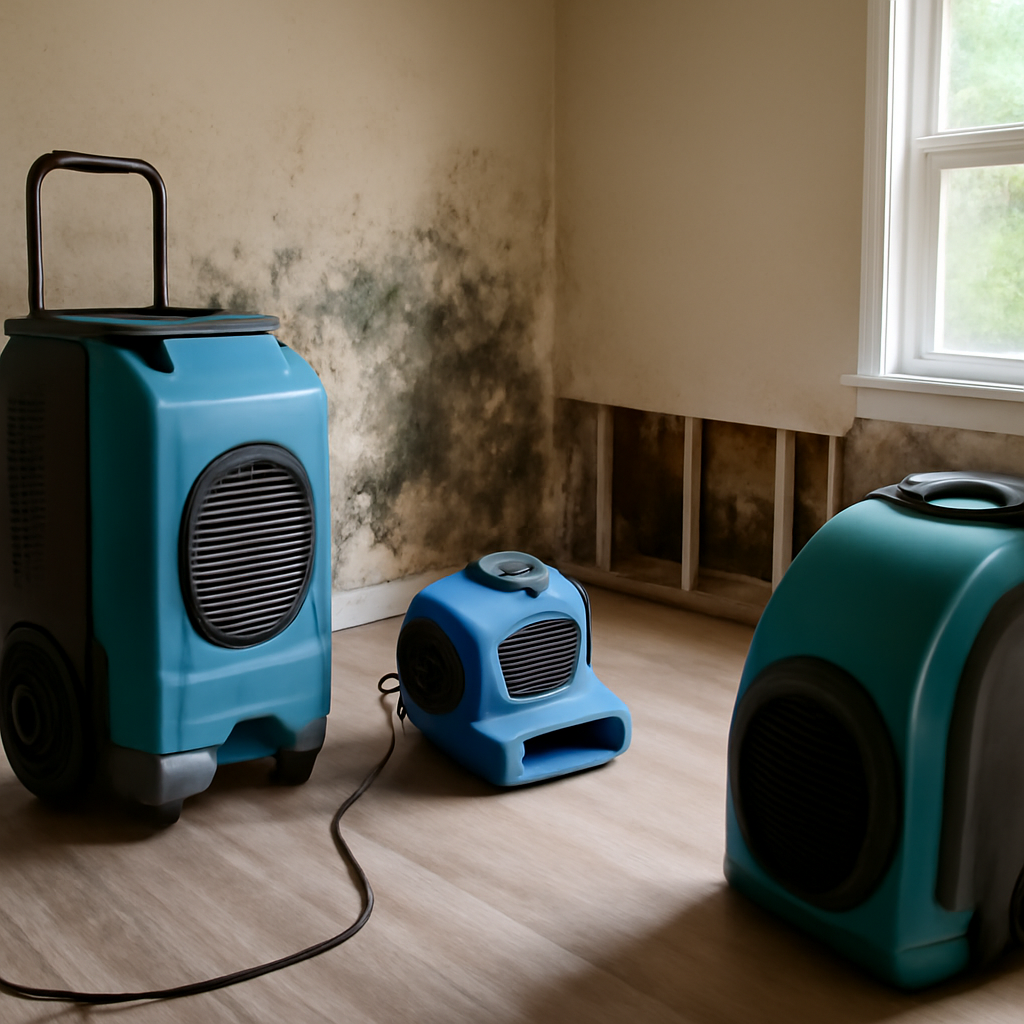
Commercial mold damage restoration is a different category of work than residential. The square footage is larger. The occupants include employees protected by OSHA standards. The insurance claim usually involves a commercial property policy with its own mold sublimits, business-interruption coverage, and adjustment process. The reconstruction has to coordinate with building tenants, lease obligations, ADA compliance, and code-driven life-safety requirements. Property managers, building owners, and facility executives running a “commercial mold damage restoration near me” search are usually navigating all of that at once. This article maps the workflow and decision points. It summarizes EPA, OSHA, CDC, and IICRC guidance for property stakeholders and is not legal or medical advice.
Is this mold, asbestos, or water damage? Get a free instant screen
Upload a clear photo of the suspect area. You'll get an instant AI screening opinion and what to do next. This is screening guidance, not a professional determination.
Screening guidance only. AI can be wrong. Confirm asbestos, mold type, or lead with lab testing or a licensed professional before acting.
How commercial mold restoration differs from residential
Five differences matter most.
Scale
Commercial scopes commonly cover tens of thousands of square feet across multiple suites, multiple HVAC zones, multiple tenants. Even a “small” commercial mold project (an office suite affected by a sustained roof leak) is often larger than a major residential remediation. Crew sizes, equipment volume (high-capacity dehumidifiers, multiple large negative-air machines), and project-management overhead all scale up.
Worker protection under OSHA
OSHA does not have a mold-specific standard, but multiple existing standards apply to mold work: respiratory protection (29 CFR 1910.134), personal protective equipment (1910.132), hazard communication (1910.1200), and bloodborne pathogens or general duty clause provisions in sewage-related scenarios. Workers performing commercial mold cleanup must be enrolled in a respiratory-protection program with medical clearance and fit-testing, must receive documented training, and must use PPE appropriate to the contamination level. Residential one-off cleanup does not have the same compliance burden because OSHA standards generally apply to employers and employees, not homeowners cleaning their own property.
Occupant and tenant protection
Commercial work happens in occupied buildings far more often than residential. Property managers must coordinate access, notify tenants under lease terms, manage employee exposure concerns, and document the indoor environmental quality before, during, and after the work. Communication failure with tenants is the single most common source of post-project disputes.
Insurance and claim coordination
Commercial property insurance frequently includes business-interruption coverage (BI), which pays lost income when the property cannot be used for its intended purpose. Mold sublimits remain common — often $25,000 to $100,000 depending on policy — but BI may have separate limits. Public adjusters and forensic accountants are more common on commercial claims than residential. The claim process is slower, more documented, and more often litigated.
Reconstruction code triggers
Renovation work above certain valuation thresholds can trigger code-driven upgrades (ADA path of travel, energy code, fire-suppression upgrades, life-safety lighting). Local jurisdictions vary. A reconstruction scope that looks simple on paper can balloon when permit review surfaces required upgrades.
The commercial workflow
A typical commercial mold damage restoration project moves through six phases.
Phase 1: Emergency stabilization
Within hours of the loss being identified, a restoration vendor mobilizes to extract water (if any), stop ongoing wetting, and place initial drying equipment. For a large building, this might mean a dozen technicians, multiple truck-mounted extractors, and high-capacity desiccant dehumidifiers staged in central spaces.
Phase 2: Indoor environmental assessment
A qualified indoor environmental professional (IEP) inspects the affected areas, takes baseline air and surface samples, and writes a remediation protocol. On commercial work, the IEP is almost always a separate firm from the remediator. This separation is the central conflict-of-interest control in commercial mold and is widely demanded by insurance carriers and large property owners.
Phase 3: Containment and worker protection setup
Plastic sheeting, negative-air HEPA filtration, decontamination chambers at containment entries, and PPE staging. Workers are fit-tested, receive site-specific safety briefings, and document daily exposure monitoring as required.
Phase 4: Source removal and decontamination
Colonized porous materials are removed at least 12 inches past visible edges per IICRC S520. Semi-porous materials are HEPA-vacuumed and damp-wiped. Non-porous surfaces are cleaned. HVAC components that have been contaminated are addressed by NADCA-certified subcontractors. The drying phase brings assemblies back to normal moisture content.
Phase 5: Post-remediation verification
The IEP returns and performs clearance sampling, typically air samples compared to an outdoor control plus surface verification where appropriate. A written clearance letter is issued. On large commercial projects, this clearance is the document the insurer requires before authorizing reconstruction payments.
Phase 6: Reconstruction
The rebuild coordinates with building permits, tenant access schedules, and any code-driven upgrades triggered by the work. On larger projects, a separate general contractor often handles reconstruction; the restoration firm focuses on remediation and turns the cleared space over for rebuild.
Front Range commercial cost ranges
Commercial mold damage restoration pricing varies enormously with scale. Rough ranges, before reconstruction:
Small commercial scope (one office suite, 1,500 to 3,000 sq ft, single HVAC zone, limited demolition): $15,000 to $50,000. Medium commercial scope (multi-suite floor, 10,000 to 25,000 sq ft, multiple HVAC zones, significant demolition): $75,000 to $300,000. Large commercial scope (multi-floor, post-flood or multi-month leak, extensive demolition, multiple tenants displaced): $500,000 to several million dollars. Reconstruction typically doubles or triples those numbers depending on finishes, tenant improvements, and code-driven upgrades.
Business interruption coverage, if part of the policy, can dwarf both remediation and reconstruction. A hotel out of service for two months at $2 million in monthly revenue is a $4 million BI claim regardless of how clean the cleanup was.
Selecting a commercial restoration firm
Commercial work demands a higher bar than residential. Five vetting questions:
First: does the firm have demonstrated commercial experience at your scale? Ask for three references at similar size and complexity. Second: are individual technicians IICRC AMRT-certified, with how many on staff? Third: what is the firm’s respiratory-protection program documentation, and can they provide medical clearance and fit-test records for the technicians assigned to your project? Fourth: which IEP firms have they worked with as the independent verifier on prior projects? Fifth: what is the firm’s bonding capacity, and can they provide performance bonds at the project scale required?
Beware firms that scaled rapidly from residential to commercial without commercial-level documentation. The cleanup methods overlap; the compliance, insurance, and management overhead does not.
Insurance coordination on commercial losses
Commercial property insurance handling differs from homeowner’s policies in several ways. Carriers typically assign a desk adjuster plus a field adjuster on losses above a threshold ($50,000 to $250,000 depending on carrier). Forensic accountants get involved for business-interruption claims. Engineering consultants may be retained by the carrier to investigate the cause of loss and the appropriate scope of remediation.
Property owners benefit from engaging their own consultants in parallel. A public adjuster represents the policyholder’s interest in the claim and is paid a percentage of the recovery. An independent IEP represents the property owner’s interest in the technical scope. A construction consultant or owner’s representative manages the rebuild. Each layer adds cost but also recovery; on larger losses the math typically favors the additional representation.
Tenant communication
Commercial buildings have lease obligations that survive a loss. Most commercial leases require landlord communication regarding indoor environmental quality concerns and abatement timing. Failure to communicate transparently is the most common origin of tenant litigation post-loss. Best practice: written communication to all affected tenants within 24 to 48 hours of loss identification, weekly updates during the project, and a final closure document including the IEP clearance letter. Document everything.
Internal context and related reading
For broader homeowner-side mold orientation that property managers may also find useful for residential portfolios, our hub on mold inspection and testing covers methodology in plain language. Property stakeholders dealing with combined water-and-mold work should also read water and mold remediation near me, which covers the IICRC S500-plus-S520 workflow that applies at all scales.
Front Range Colorado commercial drivers
Commercial mold work along the Front Range has identifiable drivers. Older office and retail building stock with marginal flat-roof drainage produces a steady stream of slow-leak losses. Spring snowmelt produces seepage losses in below-grade commercial space (parking garages, basement retail, mechanical rooms). Summer hailstorms produce sudden multi-property loss surges that strain regional restoration capacity for weeks. Multi-family residential properties (apartments, condos) blend residential and commercial considerations and produce some of the most complex coordination challenges.
Denver, Boulder, and Colorado Springs all host several large national restoration franchises (BELFOR, ServiceMaster Restore, ServPro, Restoration1) plus a meaningful number of independent local firms. The national franchises bring scale and bonding capacity. Independent firms sometimes bring better local responsiveness and lower overhead, but vary in commercial documentation maturity. Vet each option on the specific project requirements.
The legal layer
Commercial mold claims more often end up in litigation than residential. Common dispute axes include scope of work (what materials should have been removed), adequacy of containment (did spores spread into unaffected areas), business interruption calculations, and tenant injury claims by employees alleging mold-related illness. Documentation is the central defense against all of these. Photograph everything, save every air-sample report, keep every change order, and retain all communications. Working with a property attorney experienced in environmental and construction claims is reasonable preparation for any commercial loss over a defined threshold.
Multi-family and condominium-specific considerations
Multi-family residential properties (apartment complexes, condominium associations, townhouse HOAs) blend commercial and residential considerations. The building structure is governed by commercial standards; the individual occupied units are governed by residential standards. Insurance coordination becomes especially complex: master association policies cover the building shell, individual unit-owner policies cover interior improvements, and the boundary between them is defined by association governing documents. Property managers handling a mold loss in a multi-family setting often coordinate three or more policies, plus tenant displacement logistics.
HOA governing documents typically specify which parties are responsible for which moisture-related conditions. A roof leak originating from common-area roofing may be the association’s responsibility; a plumbing leak inside a unit may be the unit owner’s responsibility; and shared-wall moisture issues may require negotiation between the two. Engaging both an association attorney and an indoor environmental professional early prevents disputes that emerge weeks or months later.
Industrial and specialty facility considerations
Certain commercial properties have specialty considerations that exceed standard remediation methodology. Healthcare facilities follow ASHRAE Standard 170 for ventilation and have specific guidance on fungal contamination from organizations including the CDC. Food-handling facilities trigger FDA and state-health-department reporting and may face operational shutdown until cleanup is verified. Data centers and clean rooms have particulate-control requirements that interact with mold cleanup methodology. Schools follow EPA’s guidance specifically tailored to schools and commercial buildings.
Each specialty creates its own documentation and certification expectations. Contractors selected for these properties should be specifically credentialed and experienced in the relevant facility type. A residential mold remediator scaling up to a hospital project without specialty training is a serious quality risk regardless of general competence.
Post-project lessons learned
The most-cited post-project lessons from commercial mold projects center on three themes. First, identify and correct the underlying moisture cause, not just the visible growth. A flat roof that drains poorly will produce another mold event in a year if the drainage is not corrected during reconstruction. Second, document tenant communications in writing, even brief ones, because verbal communications evaporate from memory and become disputed years later. Third, retain all project records for at least the relevant statute-of-limitations period in your state — in Colorado, construction-defect claims have specific statute provisions worth checking with counsel. Properly retained records protect against litigation that emerges long after the project closes.
References
- EPA Mold Remediation in Schools and Commercial Buildings — U.S. Environmental Protection Agency
- OSHA Mold Worker Safety Resources — Occupational Safety and Health Administration
- CDC Basic Facts About Mold — Centers for Disease Control and Prevention
- CDPHE Mold and Indoor Air — Colorado Department of Public Health and Environment
Front Range property managers and commercial building owners facing a mold loss can connect through our contact page for help identifying a vetted independent indoor environmental professional to write a defensible protocol before remediation contracts are signed.