Water and Mold Remediation Near Me: Combined Scope Guide
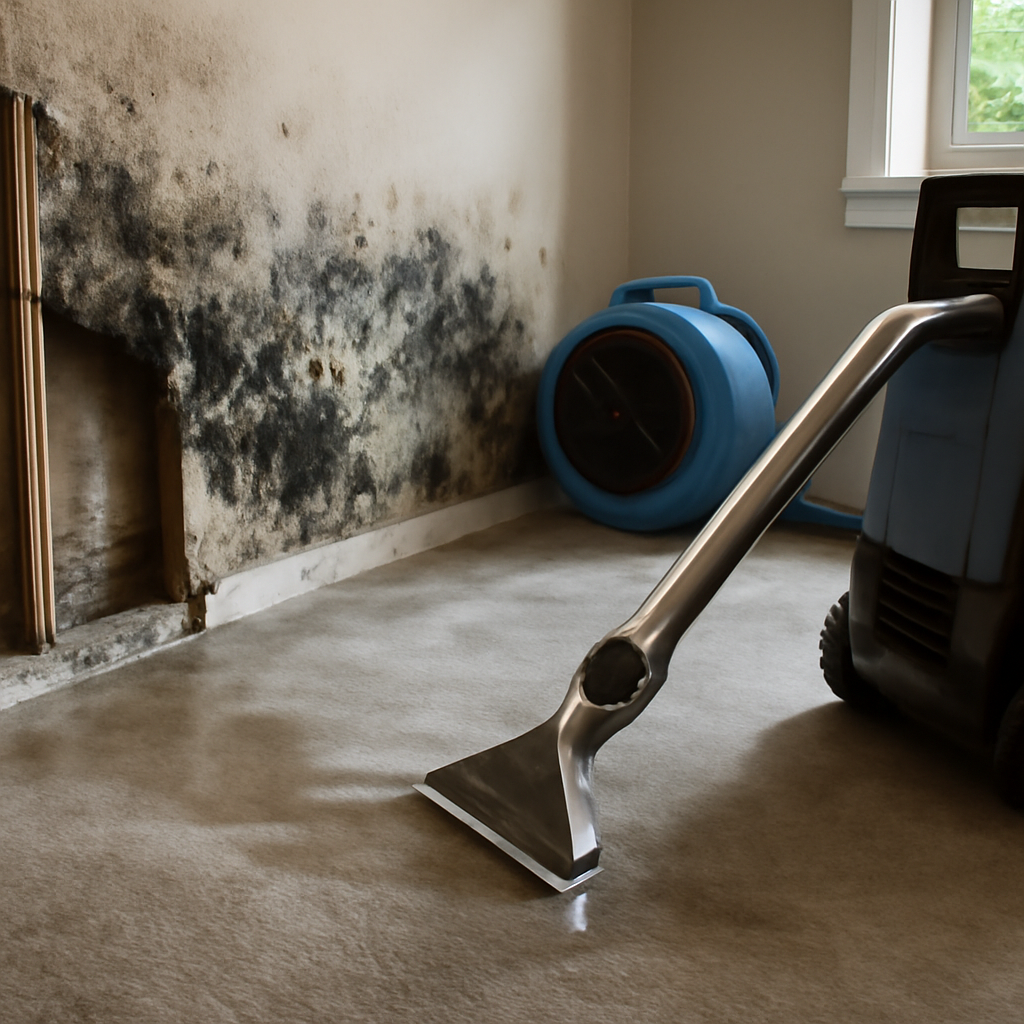
When a homeowner searches “water and mold remediation near me,” they have usually already had a flood, a plumbing failure, an ice-dam roof leak, or a sewage event, and they are now staring at the second-stage problem: what grew while the assembly dried, or while it didn’t. Water and mold are sequential, not separate. The decisions a contractor makes in the first 48 hours of a water loss largely determine whether mold becomes a downstream cost. This guide walks through the combined scope, the certification framework, and the Front Range pricing reality. This article summarizes EPA, CDC, and NIEHS guidance on residential mold for homeowners and is not medical advice. If you believe you have symptoms related to mold exposure, please consult a physician.
Is this mold, asbestos, or water damage? Get a free instant screen
Upload a clear photo of the suspect area. You'll get an instant AI screening opinion and what to do next. This is screening guidance, not a professional determination.
Screening guidance only. AI can be wrong. Confirm asbestos, mold type, or lead with lab testing or a licensed professional before acting.
Why water and mold are one job, not two
The Institute of Inspection, Cleaning and Restoration Certification (IICRC) publishes two consensus standards that govern the combined work. S500 is the standard for professional water-damage restoration. S520 is the standard for professional mold remediation. Competent firms train technicians and supervise projects to both standards because almost every multi-day water event creates a mold question.
Mold growth on cellulose materials (drywall paper, ceiling tile, cardboard-backed carpet pad, paper-faced insulation) can begin within 24 to 48 hours of sustained wetting under typical indoor temperatures and relative humidity. If a water loss is detected and dried within that window, mold rarely becomes a meaningful issue. If the wetting is hidden inside a wall cavity for a week, mold colonization is almost certain. The contractor’s job is to assess where on that curve the building sits and to write a scope that covers both the immediate water problem and the latent mold problem.
The typical combined scope
A standard combined water-and-mold scope contains five phases. The phases sometimes overlap on aggressive timelines but rarely skip.
Phase 1: Water extraction and category determination
S500 classifies water by source into three categories. Category 1 is sanitary (supply-line breaks, rain-water without exterior contaminants). Category 2 is significantly contaminated (washing-machine overflow, dishwasher discharge, aquarium water). Category 3 is grossly contaminated (sewage, rising groundwater, contaminated surface water). Category determines which materials can be dried in place and which must be removed. Standing water is extracted first, usually with truck-mounted or portable extractors.
Phase 2: Drying and dehumidification
Air movers (high-velocity axial or centrifugal fans) and dehumidifiers (refrigerant or desiccant) bring assemblies back to normal moisture content. Daily moisture readings and hygrometer logs document the drying curve. S500 specifies that drying should target equilibrium moisture content for each material at standard conditions, not arbitrary thresholds. Drying typically takes three to seven days for a well-scoped residential job.
Phase 3: Mold assessment
If the wetting was contained and dried within roughly 48 hours from a Category 1 source, mold assessment may amount to a careful walk-through and moisture-meter sweep. If the wetting was longer-lasting, contaminated, or hidden, an indoor environmental professional may be brought in for air or surface sampling to characterize the colonization that has occurred.
Phase 4: Mold remediation
If mold is identified, S520 governs the cleanup. Containment with plastic sheeting and negative-air HEPA filtration, source removal of colonized porous materials at least 12 inches past the visible edge, HEPA-vacuuming and damp-wiping of non-porous surfaces, and continued drying inside containment. Post-remediation verification with third-party air sampling is the standard closeout step in defensible projects.
Phase 5: Reconstruction
Drywall, insulation, flooring, cabinetry, and any other removed building materials are rebuilt. Some remediation firms perform this themselves; others coordinate with separate licensed general contractors. Confirm in writing which model the firm uses before signing.
What it costs in Front Range Colorado
Combined water-and-mold remediation pricing depends on the water category, the affected square footage, the depth of demolition needed, and the reconstruction scope. Rough ranges from public industry data and Front Range contractor disclosures:
A Category 1 water loss confined to a small area (one room, dried in place, no demolition) might cost $2,000 to $4,500. A Category 2 multi-room loss with selective demolition might run $5,000 to $12,000. A Category 3 sewage loss or major flood requiring extensive demolition and rebuild runs $15,000 to $50,000 or higher. Combined-scope projects that include both water restoration and a documented mold problem typically land in the $6,000 to $18,000 range for a finished basement scenario.
Reconstruction is a separate cost line. Drywall, paint, flooring, trim, and cabinet replacement can easily double the bare remediation price. Get reconstruction estimates in writing as a separate scope from the remediation itself; bundling makes change orders and disputes harder.
How to vet a combined-scope contractor
Colorado does not currently license mold remediation contractors at the state level. This makes IICRC certification, insurance verification, and reputation the central vetting tools.
Certifications to ask about
Ask whether the firm and individual technicians hold IICRC S500-aligned certifications (WRT, Water Restoration Technician; ASD, Applied Structural Drying) and IICRC S520-aligned certifications (AMRT, Applied Microbial Remediation Technician). Firm-level certification matters but technician-level certification matters more. Ask how many AMRT-certified technicians will actually be on your project.
Insurance and licensing
Request certificates of general liability insurance and worker’s compensation. For reconstruction work, confirm the firm or its subcontractor holds appropriate Colorado contractor licensing for the relevant trades. Verify the policies are current and the named insured matches the contracted entity. A surprising fraction of small remediation firms operate without adequate coverage.
Independent verification
The strongest practice is to hire an independent indoor environmental professional (IEP) to write the protocol and verify the cleanup. The remediator implements the IEP’s protocol. The IEP performs post-remediation verification with air sampling compared to an outdoor control. Combined under one vendor, the conflict of interest is structural even if the vendor is competent.
Insurance coordination
Sudden and accidental water events are typically covered by standard homeowner’s policies. Long-term seepage, gradual deterioration, surface flooding (unless covered by separate flood insurance), and maintenance-related issues are usually excluded. Sewer backup coverage is a separate endorsement that many homeowners forget to add to their policy.
Mold coverage caps vary by policy, often $5,000 to $10,000 sublimits even on policies that otherwise cover the originating water event. Read your policy declarations carefully before signing a contract over those caps. Many remediation firms accept assignment-of-benefits (AOB) arrangements that authorize them to bill the insurer directly. AOB has speed advantages but also strips the homeowner of control over claim negotiation; understand the trade-off before signing.
Real-world Front Range examples
A typical Denver-metro emergency call: a finished-basement bathroom supply line bursts overnight. Water spreads across 600 square feet of carpet and wicks into adjacent rooms. The homeowner shuts the main supply by morning. Restoration arrives within four hours, extracts standing water, sets twelve air movers and two large dehumidifiers, and begins selective demolition of saturated baseboards and the lower 12 inches of drywall. Drying runs five days. Surface moisture readings drop into normal range. A walk-through finds no visible mold; the wetting was caught early. Reconstruction starts week two. Total bill before insurance: approximately $9,000.
Contrast: a Boulder-County home with a slow plumbing leak behind a kitchen wall, undetected for several weeks. By the time the homeowner notices wet baseboard, mold colonization is visible across both sides of the wall cavity and into adjacent cabinetry. The contractor sets a full S520 containment, removes all affected drywall, the cabinet run, and a portion of the subfloor, HEPA-vacuums and damp-wipes the wall cavity, and dries the assembly. Post-remediation air samples compared to outdoor controls clear at week three. Reconstruction including cabinets runs another six weeks. Total bill: approximately $28,000, of which insurance covers a fraction due to the gradual-leak exclusion.
Internal context and related reading
For broader homeowner orientation, our hub on mold inspection and testing walks through scope decisions in plain language. Readers also dealing with a true emergency response timeline should pair this article with emergency mold removal near me, which covers the 24 to 48 hour mobilization workflow.
Avoiding the worst outcomes
Three patterns drive the most expensive water-and-mold disputes. First, water-restoration firms that “dry in place” Category 3 contamination they should have demolished, only for mold to bloom inside the cavity weeks later. Second, scopes that include remediation and post-remediation clearance from the same vendor without independent verification. Third, signing assignment-of-benefits arrangements without understanding the loss of negotiating control. Documenting, photographing, and demanding written change orders protects you across all three.
Front Range timing considerations
Spring snowmelt and summer hailstorms drive seasonal surges in remediation demand along the Front Range. Major regional storm events can saturate every certified contractor in the metro for weeks; emergency response windows stretch from 24 to 72 hours during these surges. Insurance adjusters also fall behind during surge events. Plan accordingly: keep documentation thorough, hire early, and be skeptical of out-of-town firms that arrive after major storms without local insurance and license verification.
Equipment and methods used during drying
Structural drying equipment falls into three categories. Air movers (high-velocity axial or centrifugal fans) evaporate surface moisture into the air. Dehumidifiers (refrigerant for warmer conditions, desiccant for cooler conditions) remove the evaporated moisture from the air and discharge it as condensate or vapor outdoors. Heat (in cold-weather scenarios) increases air’s moisture-holding capacity and speeds evaporation. A well-equipped crew brings all three to a typical job.
Monitoring during drying involves daily readings at multiple positions. Moisture-content meters on structural materials, hygrometer readings of work-area air, and infrared imaging of suspect cavities document progress. Daily drying logs are part of any defensible project. When readings reach normal range and hold for 24 hours, the drying phase is complete. Premature shutdown of drying equipment is a common error that leads to downstream mold growth weeks after the apparent dry-out.
Post-remediation verification in detail
Post-remediation verification (PRV) is the closeout step that confirms the cleanup was effective. A separate indoor environmental professional (not the remediator) inspects the work area, looks for visible residual contamination or staining, takes moisture-meter readings to confirm assemblies are dry, and pulls air samples for laboratory analysis. The air samples are compared to an outdoor reference sample collected on the same day.
A defensible PRV result shows indoor air samples within or below the outdoor baseline for moisture-indicator genera. Surface samples, when collected, show no visible growth and no significant fungal residue. A written clearance report documents the methods, findings, and conclusion. Reputable remediation contracts include PRV as a condition of project closeout and final payment. Skipping PRV saves $400 to $800 in the short term but eliminates the most important documentation a homeowner can have if questions arise later.
Reconstruction sequencing
Reconstruction begins only after PRV clearance. The sequence typically involves replacing removed insulation, hanging new drywall, taping and mudding seams, priming and painting, replacing baseboard and trim, refinishing or replacing flooring, and reinstalling fixtures. Each stage has lead times tied to material curing and ordering. A typical residential reconstruction phase runs three to eight weeks depending on scope and finish selections.
Bundle reconstruction with a single general contractor when possible to consolidate accountability. Some restoration firms self-perform reconstruction; others coordinate with separate contractors. Verify in writing which model your contract uses, and confirm trade subcontractors carry their own insurance and Colorado licensing as appropriate to their work.
References
- EPA Mold Cleanup in Your Home — U.S. Environmental Protection Agency
- EPA Mold Remediation Guide — U.S. Environmental Protection Agency
- CDC Basic Facts About Mold — Centers for Disease Control and Prevention
- CDPHE Mold and Indoor Air — Colorado Department of Public Health and Environment
If you are managing a water loss along the Front Range and want a vetted eye on the combined scope before signing a large contract, connect through our contact page for a referral to a qualified local inspector.