Emergency Mold Removal Near Me: Front Range Guide
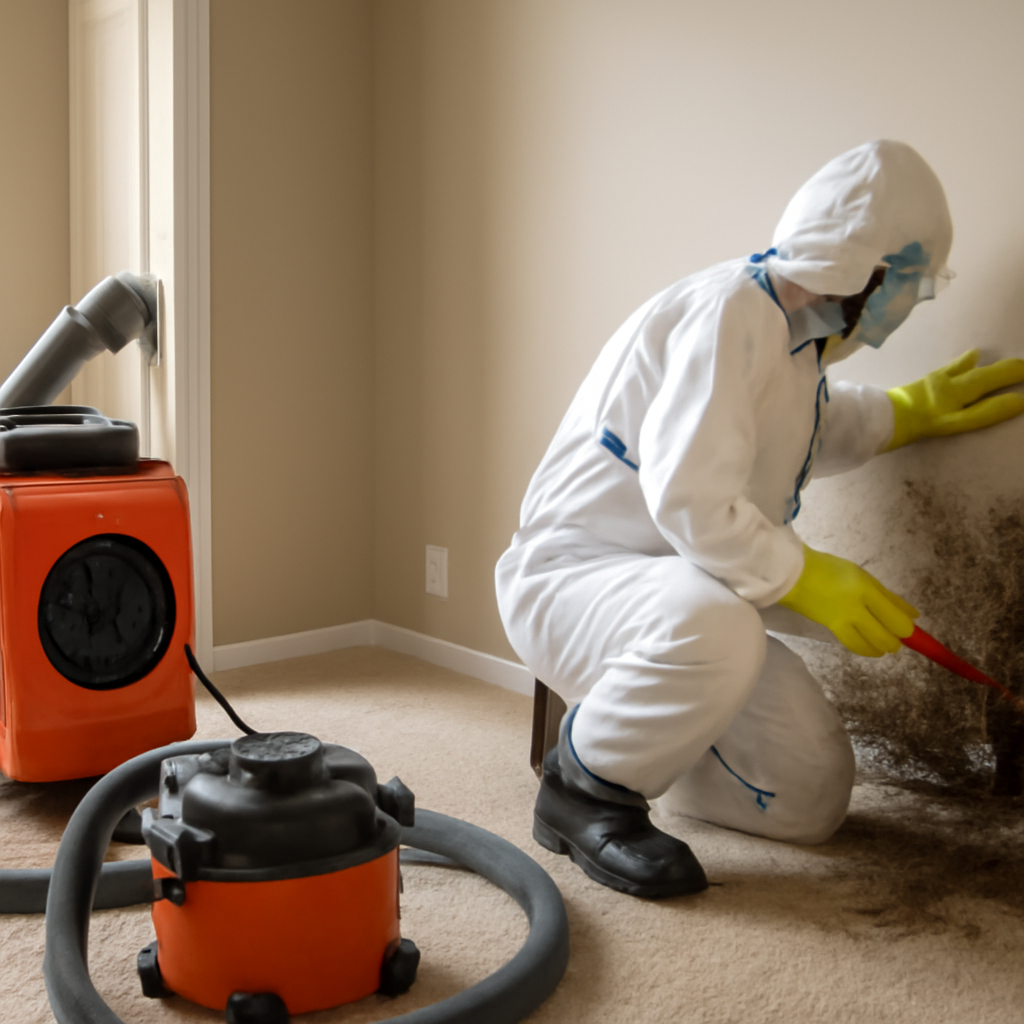
“Emergency mold removal near me” is not a search homeowners run casually. It usually follows a basement flood, a discovered colony behind a refrigerator, a sudden onset of respiratory complaints in a child’s bedroom, or a real-estate timeline that does not allow a normal remediation schedule. The expectations on both sides should be clear. Emergency mold removal is faster, more expensive, and more focused on stabilization than a routine remediation. It does not skip the standard scientific steps of containment, source removal, and verification. It compresses them. This article summarizes EPA, CDC, and NIEHS guidance on residential mold for homeowners and is not medical advice. If you believe you have symptoms related to mold exposure, please consult a physician.
Part of our Mold Removal & Remediation guide — start there for the full picture →
Is this mold, asbestos, or water damage? Get a free instant screen
Upload a clear photo of the suspect area. You'll get an instant AI screening opinion and what to do next. This is screening guidance, not a professional determination.
Screening guidance only. AI can be wrong. Confirm asbestos, mold type, or lead with lab testing or a licensed professional before acting.
When mold becomes a true emergency
Not every mold finding is an emergency. Most are not. Standard EPA guidance distinguishes small contaminations (under roughly 10 square feet) that homeowners can sometimes handle themselves from larger problems that warrant professional remediation. Within that professional tier, certain scenarios merit emergency-response timing, generally a 24 to 48 hour mobilization rather than a one to two week schedule.
Visible contamination greater than 10 square feet
EPA’s threshold for “professional remediation” is roughly 10 square feet of visible growth. Anything larger needs trained workers, containment, negative-air filtration, and PPE. When the contamination is much larger (an entire basement wall, an attic affected by a months-long roof leak, a whole-floor finished area after a flood), the time-sensitive risk to occupants and to building materials pushes the job into emergency territory.
Active flooding or recent water damage
A flooded basement, a major plumbing burst, a sewage backup, or a storm-driven roof breach starts the IICRC S500 water-restoration clock. The first 24 to 48 hours determine whether the cleanup will be a $4,000 dry-out or a $40,000 demolition. Mold growth on cellulose materials can begin within 24 to 48 hours of sustained wetting under typical indoor conditions. Emergency response in this window is fundamentally cheaper than waiting.
HVAC contamination
Mold colonization inside HVAC supply or return ducts distributes spores to every room the system serves. The system also entrains the colony’s volatile metabolites into the air every time the blower runs. HVAC-coupled mold contamination warrants stopping the system, isolating the affected zones, and bringing a NADCA-trained HVAC mold contractor onsite quickly. Continued operation makes the contamination worse and harder to clean.
Occupants with respiratory complaints or higher-risk health status
When a household includes immunocompromised people, infants and children, older adults, pregnant women, or anyone with asthma or COPD, and a credible mold contamination is confirmed, the timing pressure rises sharply. EPA explicitly lists these groups as higher-risk for mold-related health effects. The physician decides on medical care; the remediator decides on environmental control timing. Emergency mobilization is reasonable in this scenario.
What “24 to 48 hour response” actually means
Emergency-mold contractors typically advertise a 24 or 48 hour response window. In practice the workflow looks like this: a phone intake within an hour confirms scope and access. A technician or estimator arrives within the response window to inspect, photograph, and write a stabilization plan. Stabilization equipment (dehumidifiers, air scrubbers with HEPA filtration, plastic containment) often deploys on the same site visit. The full remediation crew arrives the next business day or sooner depending on contractor capacity. Demolition of saturated porous materials usually begins on day one or two. Drying and verification follow.
Speed does not replace standards. A reputable emergency contractor still follows IICRC S520 for mold and S500 for water. The key difference from a routine remediation is parallel rather than sequential execution: stabilization equipment runs while the scope is being written rather than waiting for the contract to be finalized.
Cost ranges in Front Range Colorado
Front Range residential mold remediation typically runs $1,500 to $6,000 for a single-room scope under normal scheduling. Emergency response adds a premium for the rapid mobilization, after-hours labor, and equipment-first deployment. Industry-typical premiums add $500 to $2,000 on top of the underlying remediation cost, depending on response timing, after-hours work, and travel from the contractor’s depot.
Larger emergency scopes (whole basement, post-flood, post-sewage) often run $8,000 to $25,000 or higher when reconstruction is included. Insurance covers some of these costs when an unexpected water event is the cause; chronic seepage or maintenance-related leaks are typically excluded. Confirm coverage in writing with your insurer before signing a large contract. Some emergency contractors accept assignment of benefits; that arrangement has both speed advantages and trade-offs worth understanding.
What emergency remediation includes
A defensible emergency remediation scope contains the same core steps as a routine remediation, performed faster and often in parallel rather than sequence.
Containment
Plastic sheeting (typically 6-mil) seals off the work area from clean parts of the home. Doorways get plastic-flap entries; HVAC supplies and returns inside the work area get sealed. Negative-air machines with HEPA-rated final filtration draw air out of the work zone and discharge through HEPA filters either outdoors or into a closed-loop scrubber. This keeps spores from migrating during demolition.
Source removal
Colonized porous materials (drywall, ceiling tile, carpet, carpet pad, soft furnishings, particleboard cabinetry) are cut out at least 12 inches past the visible edge under IICRC guidance and disposed of as construction debris. Semi-porous materials (framing, subfloor) are HEPA-vacuumed and damp-wiped; heavily colonized framing may be sanded or planed. Non-porous materials (concrete, metal, ceramic tile, glass) are cleaned and dried.
Drying and decontamination
Air movers, dehumidifiers, and heat (in cold weather) bring the assembly’s moisture content back to normal for that material. Daily moisture-meter and hygrometer logs document the drying curve. HEPA-filtered air scrubbers run continuously through the project to capture airborne spores.
Post-remediation verification
A third-party indoor environmental professional inspects, samples (usually air, sometimes surface), and issues a written clearance. EPA does not require this step, but most reputable contractors recommend it, and it protects all parties in a real-estate or insurance dispute.
How to evaluate emergency contractors fast
Time pressure is exactly when homeowners make bad hiring decisions. Five quick checks limit damage:
Ask whether the firm holds IICRC S520 (mold) and S500 (water) certifications. Ask whether technicians are individually certified, not only the company. Confirm they carry general liability and worker’s compensation insurance, and request the certificates. Verify state-level licensure where required (Colorado does not currently license mold contractors, which makes the IICRC and insurance verification more important). Ask whether a separate third-party indoor environmental professional will perform post-remediation verification, or whether the same firm self-clears (a conflict of interest worth flagging).
For broader homeowner orientation on what a competent inspection looks like before hiring a remediator, our hub on mold inspection and testing covers the testing-vs-remediation decision in plain language. Readers also negotiating a real-estate timeline may want to read water and mold remediation near me, which covers combined water-damage and mold scopes.
What to do in the first 24 hours
Before the contractor arrives, four steps reduce damage. Stop the water source if you safely can (close the main shutoff for a plumbing burst, place a tarp over a roof breach). Move undamaged contents out of the affected area. Do not run portable fans aimed at moldy material without containment, which spreads spores. Document everything with photos and video for insurance purposes. If anyone in the home is in a higher-risk health group, relocate them to clean parts of the house or off-site until cleanup is complete.
Front Range Colorado context
The Denver, Boulder, and Colorado Springs metros all have a meaningful population of mold remediation contractors, though only a fraction maintain IICRC S520 certification in addition to the more common S500. Many firms cover both flood-restoration and mold work. Major drivers of emergency mold work along the Front Range include spring snowmelt seepage, ice-dam roof leaks in winter, hail-driven roof breaches in summer, swamp-cooler condensation events, and the routine plumbing failures that affect any housing market. Pricing tracks national norms within a small premium for travel in foothill and mountain communities.
Avoiding the most common emergency-job mistakes
Three patterns trip up homeowners under pressure. First, signing a contract that combines testing, remediation, and clearance under the same vendor without independent verification. The conflict of interest is structural, regardless of the vendor’s competence. Second, accepting a scope that does not identify and stop the moisture source, only cleans up visible mold. The mold will return. Third, accepting verbal scope changes mid-project rather than written change orders. Document everything.
What happens during a typical emergency project timeline
Day zero: discovery and call. The homeowner identifies the problem and contacts a contractor. The contractor takes a phone intake (typically 15 to 30 minutes) and schedules an inspection. Stabilization equipment may be pre-staged in the contractor’s vehicle. Day one: inspection and stabilization. A technician or estimator arrives, walks the property, photographs the affected areas, takes moisture-meter readings, and writes a stabilization plan. Containment plastic, negative-air machines, and dehumidifiers deploy immediately. The full crew is scheduled for the next business day.
Days two through four: source removal. The remediation crew arrives, sets full containment, removes colonized porous materials, HEPA-vacuums and damp-wipes surfaces, and begins the structural drying phase. Days five through seven: drying and verification. Daily moisture readings and hygrometer logs document the drying curve. When readings return to normal, a post-remediation inspector samples air against an outdoor control. Days eight onward: reconstruction. Drywall, paint, flooring, and finishes are rebuilt under a separate contract or as part of a turnkey scope, depending on the contractor’s model.
Working with insurance on an emergency claim
Emergency mold work often coincides with an active insurance claim, especially when a water event is the precipitating cause. Notify your carrier as soon as the loss is identified, even if you do not yet know whether a claim will be filed. Insurance documentation requirements include photographs of the loss before remediation begins, a written contractor scope of work, daily drying logs, and post-remediation verification when applicable. Carriers may assign an in-house or contracted adjuster to inspect; coordinate access with both the adjuster and the remediator.
Assignment of benefits (AOB) arrangements authorize the contractor to bill the insurer directly. AOB has speed advantages on emergency claims because it eliminates the homeowner-as-intermediary cash-flow problem. The trade-off is loss of negotiating control if the carrier later disputes any line item. Read AOB paperwork carefully before signing under pressure; some homeowners have ended up with surprise balance bills when carriers paid less than the contractor invoiced.
What follows the emergency phase
Once the immediate stabilization and remediation are complete, three follow-up tasks protect against repeat events. First, confirm the moisture source has been corrected — not just temporarily plugged. A roof leak patched with tarp is not corrected; a roof leak repaired with new shingles and underlayment is. Second, schedule a follow-up inspection at 90 days post-completion. Hidden moisture migration sometimes shows up weeks after apparent dry-out. Third, retain all project documentation in a single file: contractor invoices, daily logs, photographs, air sample reports, and insurance correspondence. These records support future real-estate disclosure and any disputes that arise later.
References
- EPA Mold Cleanup in Your Home — U.S. Environmental Protection Agency
- EPA Mold Remediation Guide — U.S. Environmental Protection Agency
- CDC Basic Facts About Mold — Centers for Disease Control and Prevention
- CDPHE Mold and Indoor Air — Colorado Department of Public Health and Environment
Frequently asked questions
What qualifies as an emergency mold situation?
Visible mold over roughly 10 square feet, active or recent flooding, sewage backups, HVAC-coupled contamination, and credible exposure of higher-risk occupants (immunocompromised people, infants, older adults, asthmatics) all generally justify emergency-response timing rather than routine scheduling.
How fast can a remediation crew actually arrive?
Established Front Range emergency contractors typically inspect and place stabilization equipment within 24 to 48 hours of a call. Full crew mobilization for demolition often happens the next business day after the inspection visit. Times vary with after-hours, weekends, and storm-event surges.
Does insurance cover emergency mold removal?
It depends. Sudden and accidental water events leading to mold (a burst pipe, an appliance failure) are often covered. Long-term seepage, deferred maintenance, and chronic humidity issues are typically excluded. Confirm coverage in writing with your insurer before signing a contract over a few thousand dollars.
How much premium does emergency response add?
Industry-typical premiums add $500 to $2,000 on top of the underlying remediation cost for true 24 to 48 hour response, with the range depending on after-hours labor, travel distance, and equipment deployment urgency. Whole-house emergency scopes can run $10,000 to $25,000 or more.
Front Range homeowners dealing with an urgent mold or water situation can reach out through our contact page for help connecting with a vetted local inspector or remediator before signing a large emergency contract.
Mold removal & cleanup picks
For a small, contained patch (under ~10 sq ft) these EPA-friendly removers handle surface mold. Larger or recurring growth warrants a professional assessment first.
| Product | Why | Buy |
|---|---|---|
 RMR-86 Instant Mold Stain Remover RMR-86 Instant Mold Stain Remover | Fast-acting on stains; ventilate and wear PPE. | Amazon — $29.99 |
 Concrobium Mold Control Concrobium Mold Control | No-bleach formula that also helps prevent regrowth. | Amazon — $11.26 |
 Mold Armor Mold & Mildew Remover Mold Armor Mold & Mildew Remover | Widely stocked bathroom/surface remover. | Amazon — $22.98 |