Mold Removal Spray: What Homeowners Need to Know

A mold removal spray is the first tool most homeowners reach for when a dark patch appears on a wall, a windowsill, or a shower corner. Sprays are fast, cheap, and satisfying, and on the right surface they genuinely work. They also carry a quieter truth that the label rarely advertises: killing mold is not the same as solving the problem that grew it. This guide breaks down the spray types on the shelf, what their active ingredients actually do, and where they reach their limit. It summarizes EPA and CDC guidance current as of 2026; consult your physician about symptoms and a certified professional for any large or persistent contamination.
Part of our Mold Removal & Remediation guide — start there for the full picture →
Is this mold, asbestos, or water damage? Get a free instant screen
Upload a clear photo of the suspect area. You'll get an instant AI screening opinion and what to do next. This is screening guidance, not a professional determination.
Screening guidance only. AI can be wrong. Confirm asbestos, mold type, or lead with lab testing or a licensed professional before acting.
What a Mold Removal Spray Actually Does
A mold removal spray delivers a biocide or a surfactant to a surface to kill living mold and loosen the staining it leaves behind. On hard, nonporous surfaces such as tile, glass, sealed metal, and finished countertops, a good spray combined with wiping removes the visible colony and most of the discoloration. That is the job sprays are built for, and they do it well.
What a spray cannot do is reach mold that has grown into a porous material or address the moisture feeding it. The EPA states plainly that biocides are not a substitute for moisture control, and that dead spores can still trigger allergic and irritant reactions. A spray that kills mold but leaves a damp wall has bought you a few weeks, not a solution.
When a Spray Is the Right First Move
A mold removal spray is the correct opening move in a specific set of conditions, and recognizing them saves both effort and money. The growth should be on a hard, nonporous, or sealed surface such as tile, glass, finished countertop, or painted wall. It should be contained, generally under about 10 square feet per EPA guidance. The moisture source should be obvious and fixable, like a poorly ventilated shower. And no occupant should have a mold-sensitive health condition that makes DIY work inadvisable.
When those conditions hold, reaching for a spray is reasonable and effective. When they do not, a spray is the wrong first move and delays the real solution. Growth on saturated drywall calls for removal, not spraying. Widespread or hidden contamination calls for a professional. A wall that keeps molding calls for a moisture investigation. Knowing whether your situation fits the spray’s profile, before you buy one, is the judgment that separates a quick success from a frustrating cycle of treating the wrong problem with the wrong tool.
Active Ingredients and How They Differ
The label’s active ingredient tells you most of what you need to know about a product’s strengths and its hazards.
Chlorine Bleach (Sodium Hypochlorite)
Bleach-based sprays are the most common and the most aggressive on staining. They excel on nonporous bathroom surfaces. Their weakness is porous material, where the water carries the active chlorine poorly into the substrate. Bleach also produces strong fumes and must never be combined with ammonia or acidic cleaners, a mix that releases toxic gas. The CDC advises good ventilation whenever bleach solutions are used indoors.
Hydrogen Peroxide
Peroxide sprays oxidize mold and lift staining with far less odor than bleach. At household concentrations they are reasonably gentle and break down into water and oxygen, which makes cleanup simpler. They need adequate contact time on the surface to work, so respect the dwell time the label specifies.
Quaternary Ammonium Compounds (Quats)
Quat-based sprays are common in disinfectant products and leave a residual film with some ongoing antimicrobial effect. They are lower-odor than bleach and are widely used in commercial cleaning. As with all biocides, they work on the surface and depend on contact time and a clean, non-greasy surface.
Botanical and Plant-Derived Sprays
Botanical sprays use ingredients such as thyme oil or citric acid as the active agent. They appeal to households wanting to avoid harsh chemistry and can be effective on surface mold, though they often require more scrubbing and longer dwell times to match bleach on heavy staining.
What Sprays Do Not Do
The biggest misconception is that a spray “fixes” mold. It treats a symptom. Three limits matter most. First, sprays do not reach embedded growth in drywall, ceiling tile, carpet, or untreated wood; the EPA recommends removing porous materials that stay contaminated rather than trying to clean them. Second, sprays do not lower humidity or stop a leak, so they do nothing to prevent the next bloom. Third, sprays do not make spores safe to breathe; physical removal of the residue still matters because dead mold can still affect health. Our guide to what gets rid of mold and what does not covers these boundaries in detail.
Personal Protective Equipment
Spraying disturbs mold and can aerosolize both spores and the chemical mist. Wear an N95 respirator, gloves, and sealed eye protection before you begin, as the CDC and EPA recommend for mold cleanup. Ventilate to the outdoors, and avoid running a fan that pushes contaminated air into clean rooms. People with asthma, respiratory conditions, or compromised immunity should leave the work to someone else. If the mold covers more than roughly 10 square feet, the job has outgrown a spray bottle and warrants professional remediation.
Ready-to-Use, Concentrate, or Gel
Beyond the active ingredient, a mold removal spray comes in forms that suit different jobs. Ready-to-use trigger bottles are the convenient default for light, accessible surface mold on tile, glass, and sealed walls. They cover an area quickly but tend to run off vertical surfaces before the contact time elapses, which limits their effect on stubborn growth. Concentrates, diluted before use, cost less per treated square foot and suit larger jobs, with the tradeoff of careful mixing to the label ratio.
Gels and foaming sprays solve the runoff problem by clinging to vertical grout lines, shower corners, and overhead surfaces, holding the active ingredient in place for the full dwell time. They are the better choice wherever a thin liquid would slide off before working. Wipes handle small spot touch-ups. Matching the form to the surface and its orientation, a gel for vertical grout, a concentrate for a large floor, a ready-to-use spray for a quick countertop, is an easy efficiency that improves results without changing the chemistry at all.
Sibling Products and How They Relate
“Mold removal spray” sits within a family of overlapping products, and understanding the relationships prevents confusion at the store. A combined mold and mildew spray adds emphasis on flat surface mildew alongside mold, useful in bathrooms where both coexist. A mildew remover is tuned for the flat, surface-dwelling form and excels on tile and grout. A mold killing product foregrounds the biocidal kill, while a mold and mildew cleaner foregrounds the lifting of staining. In practice these categories blend, because most products both kill and clean.
The practical takeaway is that the right product is defined by your surface and severity, not by which marketing label it wears. A nonporous bathroom surface with light staining is served equally well by a spray sold as a “remover,” a “cleaner,” or a “killer,” provided the active ingredient and contact time suit the job. For porous, saturated material, none of them is appropriate, and the EPA’s guidance to remove contaminated porous materials applies across the whole family. Our guide to the mildew cleaner products and methods shows how these neighboring categories overlap in real use.
Reading the Label Before You Buy
A spray’s effectiveness is written on its back label, not its front. The active ingredient sets the chemistry and hazard. An EPA registration number, present on any product that legally claims to kill mold, signals the agency reviewed the claims and the directions you are required to follow. The contact time tells you how long the spray must stay wet to work, the figure most often ignored. The surface rating tells you where the product belongs and where it may damage or simply fail.
Reading these fields takes under a minute and prevents the most common purchase mistakes: buying a tile-only product for a painted wall, expecting an “instant” headline to override a five-minute dwell time, or assuming two products are compatible enough to mix. The directions also specify dilution for concentrates, where too weak fails to kill and too strong risks surface damage and stronger fumes. A label read carefully turns a guess into an informed choice, and it often reveals that the modestly priced product with the right rating beats the premium one formulated for a different surface.
Choosing and Using a Spray Correctly
Match the product to the surface. Reserve bleach sprays for hard, nonporous bathroom and kitchen surfaces. Use peroxide or botanical sprays where odor and harshness are concerns. Always pre-clean greasy or soiled surfaces, because biocides bind to grime and lose potency on a dirty surface. Apply the spray, let it dwell for the labeled contact time rather than wiping immediately, then remove the residue and dry the area thoroughly. Never layer one product over another, and read every label for incompatibility warnings.
For shower and bathroom applications, which generate the most repeat questions, a dedicated mildew cleaner product and method guide covers the surfactant-plus-disinfectant approach that works best on tile and grout.
Storing and Handling Spray Products Safely
A mold removal spray is a chemical product that deserves careful storage and handling beyond the moment of use. Many biocides lose potency over time, particularly chlorine bleach, which degrades with exposure to heat and light, so an old bottle under the sink may be far weaker than its label implies. Buying quantities you will use within a reasonable window beats stockpiling bottles that quietly lose strength. Keep products in their original labeled containers so the directions and any EPA registration number stay with them.
Handling safety extends to where you keep these products and how you dispose of them. Store them out of reach of children and pets, away from incompatible chemicals, and never decant a spray into an unlabeled bottle that could be mistaken for something else. Dispose of used cloths and empty containers per the label and local guidance rather than mixing leftover product down a drain. Treating a mold spray as the regulated chemical it is, in storage and disposal as much as in application, rounds out the safe use that protects both your household and the result you are after.
The Moisture Step You Cannot Skip
Every effective mold strategy ends at the same place: control the water. The EPA recommends keeping indoor relative humidity below 60 percent, ideally 30 to 50 percent, and repairing any leak within 24 to 48 hours. A bathroom that molds repeatedly usually needs better exhaust ventilation. A basement wall points to seepage or foundation moisture. On the Front Range, condensation on cold exterior walls during winter is a frequent driver in Denver-area homes despite the dry outdoor air. Spray the visible mold, yes, but treat the moisture as the actual repair.
When a Spray Is the Wrong Tool
Reach for professional help instead of a spray when growth is widespread, hidden inside wall cavities or HVAC ducts, tied to sewage or flood water, or when someone in the home has a mold-sensitive health condition. A remediation contractor sets up containment, uses HEPA filtration and negative air pressure, and removes contaminated porous material so spores do not migrate through the house. The mold inspection and testing hub explains how an assessment confirms scope before any cleanup begins.
References
- Mold Cleanup in Your Home — U.S. Environmental Protection Agency
- You Can Control Mold — Centers for Disease Control and Prevention
- A Brief Guide to Mold, Moisture and Your Home — U.S. Environmental Protection Agency
Frequently asked questions
Does mold removal spray really kill mold?
Yes, biocide-based sprays kill living mold on the surface they contact. They do not reach growth embedded in porous materials, and the EPA notes that dead mold can still cause health effects, so the residue should be physically removed.
What is the best active ingredient in a mold spray?
It depends on the surface. Bleach is strongest on hard nonporous surfaces, hydrogen peroxide and botanical sprays offer lower odor, and quats leave a residual film. None substitutes for fixing the moisture source.
Can I use a mold spray on drywall?
Surface mold on painted drywall can sometimes be wiped after spraying, but once growth penetrates the paper facing the spray cannot reach it. The EPA recommends removing contaminated porous material rather than cleaning it.
Is it safe to use mold spray without a mask?
No. Spraying aerosolizes spores and chemical mist. The CDC and EPA recommend an N95 respirator, gloves, and eye protection, plus ventilation to the outdoors. People with asthma or weakened immunity should avoid the task.
If a spray keeps failing on the same spot and you are in the Denver metro or Front Range, get in touch through our contact page to reach a qualified inspector who can find the moisture source.
Mold removal & cleanup picks
For a small, contained patch (under ~10 sq ft) these EPA-friendly removers handle surface mold. Larger or recurring growth warrants a professional assessment first.
| Product | Why | Buy |
|---|---|---|
 RMR-86 Instant Mold Stain Remover | Fast-acting on stains; ventilate and wear PPE. | Amazon — $29.99 |
 Concrobium Mold Control | No-bleach formula that also helps prevent regrowth. | Amazon — $11.26 |
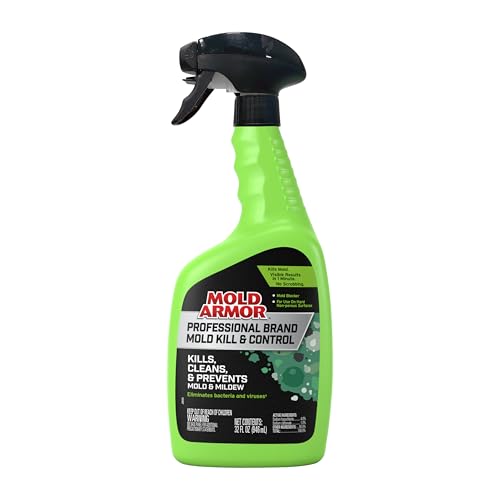 Mold Armor Mold & Mildew Remover | Widely stocked bathroom/surface remover. | Amazon — $22.98 |