Mold Removal Spray for Drywall: What Works and When to Cut
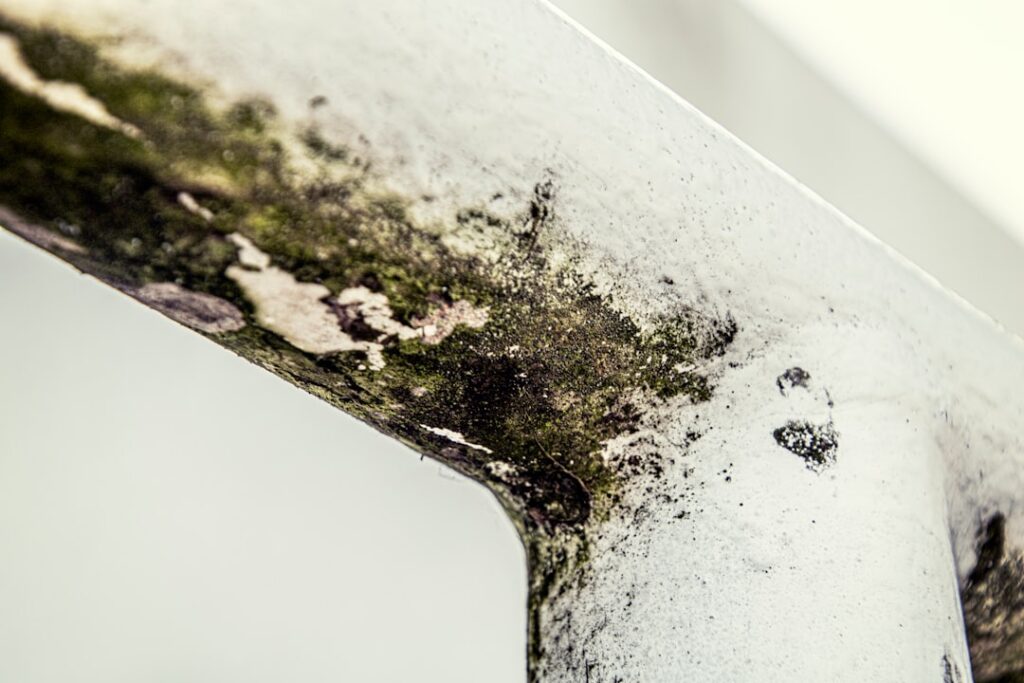
A mold removal spray for drywall looks like the easy answer to a gray or black patch on a wall: spray, wait, wipe, done. Sometimes that is exactly right. On painted, sealed drywall with light surface growth, a properly labeled product and a scrub can handle the job. On bare paper-faced board, or on drywall that stayed wet long enough for mold to work into the paper and gypsum core, no spray reaches the problem, and the board usually has to be cut out. This guide explains how to tell the two situations apart, what the main types of mold spray actually do, how to read a label before buying, and why fixing the moisture source matters more than the product you pick. It summarizes EPA and CDC guidance current as of 2026; people with asthma, allergies, or weakened immune systems should talk with a physician before doing any mold cleanup themselves.
Part of our Mold Removal & Remediation guide — start there for the full picture →
Is this mold, asbestos, or water damage? Get a free instant screen
Upload a clear photo of the suspect area. You'll get an instant AI screening opinion and what to do next. This is screening guidance, not a professional determination.
Screening guidance only. AI can be wrong. Confirm asbestos, mold type, or lead with lab testing or a licensed professional before acting.
Can a Spray Fix Moldy Drywall? The Short Answer
A spray can treat mold that sits on the surface of a sealed material. It cannot restore material that mold has grown into. That one distinction decides most drywall cases.
Drywall is a gypsum core sandwiched between two layers of paper. Paper is food for mold, and gypsum holds water well. When a leak or condensation keeps a wall damp, mold can colonize the paper facing, the back side of the board inside the wall cavity, and in long-running leaks the core itself. The EPA’s mold cleanup guidance says absorbent or porous materials, such as ceiling tiles and carpet, may have to be thrown away if they become moldy, because mold can grow on or fill in the empty spaces and crevices of porous materials and may be difficult or impossible to remove completely. Unpainted drywall paper behaves like those porous materials.
Paint changes the picture somewhat. A few coats of latex or a semi-gloss bathroom finish form a film that slows water absorption and gives mold a surface to sit on rather than a fiber mat to grow through. Light speckling on a painted bathroom ceiling, a window wall with condensation spots, or a closet wall with a thin film of growth are the cases where spraying and wiping can work, provided the paint is intact and the board underneath is firm and dry.
The EPA also notes that mold can cause staining and cosmetic damage, and that it may not be possible to clean an item so that its original appearance is restored. So even a successful surface cleaning may leave a shadow that needs primer and paint. For a walk-through of the visual clues that separate surface growth from deeper damage, see our guide to early signs of mold on drywall, and for darker colonies specifically, our page on black mold on drywall.
Painted Versus Bare Paper-Faced Drywall
Before buying any product, look closely at the wall and press on it. These are the practical differences.
Painted, sealed drywall
On painted board, growth usually sits on the paint film, on dust stuck to the paint, or on soap residue in bathrooms. Signs that a surface treatment is reasonable include:
- The paint is intact, without bubbling, peeling, or cracking.
- The board feels hard when pressed; there is no soft spot, crumbling, or give.
- The affected patch is small and the moisture cause is obvious and fixable, such as shower steam or a cold exterior corner.
- A moisture meter reads in the dry range for that wall compared with an unaffected wall nearby.
Our drywall moisture meter readings chart explains how to compare readings and why relative readings against a known-dry wall matter more than any single number.
Bare paper or deeply affected board
Unpainted drywall in garages, basements, attics, and the back side of finished walls is a different material from a cleaning standpoint. Signs that the mold is in the paper or core include:
- Growth on unpainted paper, especially fuzzy or spreading colonies.
- Paper facing that is delaminating, wrinkled, or stained in tide-line rings.
- Soft, swollen, or crumbly board, or seams that have separated.
- Staining that returns within weeks after cleaning, which often means growth on the back of the board.
- A musty smell from a wall that looks clean, which can point to hidden growth in the cavity.
The EPA’s mold course says drywall may be dried in place if there is no obvious swelling and the seams are intact; otherwise, removal is necessary. Combine that with the porous-materials guidance and the rule of thumb is simple: if mold is in the paper or the board has been damaged by water, plan on cutting it out. Our drywall repair guide covers patching after a section is removed.
Types of Mold Spray and What Each One Does
Shelf labels blur several different product categories together. Here is what is typically on offer and what each type is designed to do. Product formulations vary, so the label on the specific bottle always governs.
EPA-registered antimicrobial sprays
Products that make claims to kill or control mold or mildew are generally regulated as pesticides and carry an EPA registration number on the label. Many are based on quaternary ammonium compounds, hydrogen peroxide, or sodium hypochlorite. The registration means the product’s claims and directions were reviewed for the uses listed on the label; it does not mean the product is approved for every surface or every mold problem. Read which surfaces are listed. Some registered products are labeled for hard, nonporous surfaces only, which excludes bare drywall paper entirely.
Cleaner-only and “mold stain” removers
Some sprays are sold as cleaners or stain removers without a kill claim. These lift discoloration and residue. On painted drywall, a mild cleaner plus physical scrubbing may be all that is needed, because the goal is removing growth, not sterilizing the wall.
Encapsulants and mold-resistant coatings
Encapsulants are coatings, often white or tinted, applied to surfaces after cleaning. Some carry antimicrobial claims for the dried film. Remediation contractors sometimes use them on framing or sheathing after cleaning and drying. They are not a substitute for removing moldy material. The EPA’s Brief Guide says not to paint or caulk moldy surfaces, and to clean up the mold and dry the surfaces before painting, noting that paint applied over moldy surfaces is likely to peel.
Hydrogen peroxide and vinegar
Household 3% hydrogen peroxide and white vinegar are common do-it-yourself choices. They can help clean light surface growth on painted surfaces. Both are wet solutions, so on drywall the main risk is adding moisture to a material that already has a moisture problem. Apply sparingly, wipe, and dry the wall promptly. Results vary by mold type and surface, and neither reaches growth inside the board.
Chlorine bleach
Bleach is the product most people reach for first and the one federal guidance is most cautious about. The EPA’s mold course states that using a biocide such as chlorine bleach is not recommended as a routine practice during mold cleanup, though professional judgment may indicate it in some cases, such as when immune-compromised people are present. Bleach is mostly water, can whiten the visible stain while leaving growth in porous paper, and must never be mixed with ammonia or other cleaners. Our comparison of household mold killers covers bleach, peroxide, vinegar, and borax in more detail.
Comparison Table: Mold Spray Types for Drywall
The table summarizes typical behavior. It describes product categories, not specific brands, and is a starting point for reading labels rather than a ranking.
| Spray type | What it does | Pros | Cons | Drywall suitability |
|---|---|---|---|---|
| EPA-registered antimicrobial | Kills or controls mold on surfaces listed on the label | Label states dwell time, surfaces, and safety steps; reviewed claims | Many are labeled for nonporous surfaces only; still requires removing residue | Painted, sealed drywall if listed on the label; not a fix for bare or damaged board |
| Cleaner or stain remover | Lifts growth and discoloration | Low hazard options; pairs well with scrubbing | No kill claim; staining may persist | Good for light growth on painted walls |
| Encapsulant coating | Seals a cleaned, dry surface | Useful on cleaned framing or sheathing during remediation | Not for covering active growth; EPA advises against painting over mold | After cleaning and drying only; not a substitute for removing moldy board |
| Hydrogen peroxide (3%) | Oxidizing cleaner for light growth | Inexpensive; breaks down to water and oxygen | Can lighten paint; adds moisture; variable results | Small spots on painted drywall, applied sparingly |
| White vinegar | Mild acid cleaner | Cheap and low odor once dry | Adds moisture; does not reach growth in paper or core | Small spots on painted drywall only |
| Chlorine bleach solution | Biocide and whitener | Widely available; fast visual whitening | EPA does not recommend routine use; fumes; never mix with ammonia; can hide rather than remove growth on porous paper | Generally a poor match for drywall; if used, only on sealed surfaces with ventilation |
For product-specific roundups, see our guides to black mold killer spray and black mold spray.
How to Read a Mold Spray Label Before Buying
The question “what is the best mold spray for drywall” has a less exciting answer than most product pages suggest: the best one is the product whose label actually covers your surface and your situation, used exactly as directed. Four label items matter most.
EPA registration number
Look for “EPA Reg. No.” on the label if the product claims to kill mold or mildew. A product without a registration number may still be a fine cleaner, but it should not be making kill claims. The number lets you confirm the product is what it says it is.
Listed surfaces
Check whether drywall, painted walls, or “hard nonporous surfaces” are named. If the label lists only nonporous surfaces, it was not tested for bare paper. Applying it there is off-label and unlikely to reach growth in the fibers anyway.
Dwell time
Dwell time, sometimes called contact time, is how long the surface must stay visibly wet for the product to work as claimed. It can range from about a minute to ten minutes or more depending on the product. Spraying and wiping immediately usually means the product did not do what the label promises. On a vertical drywall surface, that may mean reapplying lightly to keep the area wet without soaking the board.
Ventilation and protective equipment
Labels specify ventilation, gloves, and eye protection. The EPA’s Brief Guide recommends gloves of natural rubber, neoprene, nitrile, polyurethane, or PVC when using a disinfectant, biocide, or strong cleaning solution; goggles without ventilation holes; and an N-95 respirator to limit exposure to airborne mold. The EPA mold course adds that if disinfectants or biocides are used, the area should be ventilated with air exhausted to the outdoors, and that chlorine bleach must never be mixed with cleaners or detergents containing ammonia.
One more point from the EPA’s mold course belongs on every label check: dead mold is still allergenic and may cause reactions in some people, so it is not enough to simply kill the mold. It must also be removed. A spray that kills growth but leaves it on the wall has done half the job.
Step-by-Step: Using a Spray on Painted Drywall
This sequence applies to small areas of surface growth on painted, intact, dry drywall. It is not a method for bare paper, soft board, or large areas.
- Find and fix the water source first. Cleaning a wall that will get wet again is wasted effort. See the moisture section below.
- Gear up. Gloves, unvented goggles, and an N-95 respirator, in line with the EPA Brief Guide’s protective equipment advice.
- Protect the area. Lay a plastic sheet below the wall, move furniture away, and open a window or run an exhaust fan to the outside.
- Test a hidden spot. Some products lighten or soften paint.
- Apply lightly. Mist rather than soak. Keep the surface wet for the label’s dwell time.
- Scrub and wipe. Use a soft brush or cloth to physically remove growth, then wipe with a clean damp cloth. Change cloths often and bag them.
- Dry the wall. Run a fan or dehumidifier. The EPA Brief Guide advises drying water-damaged areas within 24 to 48 hours to prevent mold growth.
- Inspect after a few days. If staining returns, the growth is likely deeper or the moisture source is not fixed.
- Prime and paint only after the surface is clean and dry. A stain-blocking primer helps with leftover shadows.
For the full cleaning method, including detergent-and-water options and what to do with stubborn stains, see our guides on how to clean mold off drywall and how to kill black mold on drywall. Walls finished with plaster, tile, or paneling have their own considerations, covered in how to kill mold on walls.
The 10 Square Foot Rule and When to Call a Pro
Size is the first sorting question. The EPA’s mold cleanup page says that if the moldy area is less than about 10 square feet, roughly a 3 foot by 3 foot patch, in most cases a homeowner can handle the job. If there has been a lot of water damage or mold covers more than 10 square feet, the EPA points to its guidance for larger remediation projects. The EPA’s mold course groups jobs into small (under 10 square feet), medium (10 to 100 square feet), and large (over 100 square feet).
Other situations push a drywall job toward a professional even when the visible patch is small:
- Hidden growth. A musty smell, staining that keeps coming back, or a wall that tested wet behind clean paint. The EPA Brief Guide warns that removing wallpaper or disturbing hidden growth can release a large number of spores.
- Contaminated water. The EPA’s cleanup page says damage caused by sewage or other contaminated water calls for a professional with experience in that work.
- HVAC involvement. The EPA advises not running an HVAC system known or suspected to be contaminated with mold.
- Health concerns. The EPA recommends consulting a health professional before starting cleanup if there are health concerns.
- Older homes. Drywall joint compound and textured finishes in older homes can contain asbestos. Do not cut or sand older wall finishes without knowing what they contain.
An inspection can be worth it before cutting anything open, because the visible spot is often the edge of a larger area inside the cavity. The mold inspection and testing guide explains what an inspector checks, and the mold removal hub collects our cleanup and remediation guides in one place.
Fix the Moisture Source First
Every federal source on household mold returns to the same point. The EPA’s Brief Guide puts it in one line: the key to mold control is moisture control. The CDC says that if mold is growing in a home, the mold needs to be cleaned up and the moisture problem fixed. A spray treats the symptom; water is the cause.
Common drywall moisture sources include:
- Plumbing leaks inside walls, at supply lines, drains, and around tubs and showers.
- Roof and window leaks that run down inside exterior walls.
- Condensation on cold exterior walls and corners, especially behind furniture and in closets where air does not move.
- Bathroom humidity from showers without a working exhaust fan vented outside.
- Basement and foundation moisture wicking into finished lower-level walls.
On the Colorado Front Range, dry outdoor air means many homes run low indoor humidity much of the year, so mold on drywall here more often points to a specific leak, a poorly vented bathroom, or a winter condensation spot than to general dampness. That makes source-finding more productive: there is usually one identifiable cause. The CDC recommends keeping indoor humidity no higher than 50% and fixing leaks in roofs, walls, and plumbing; the EPA Brief Guide gives a range of 30 to 50% as ideal in its prevention tips.
Once the source is fixed and the wall is dry, the CDC also notes that mold inhibitors can be added to paints before painting. That is a reasonable step for bathrooms and other rooms with recurring humidity, after cleaning, not as a cover-up.
Testing, Health Context, and What Not to Expect From a Spray
The CDC does not recommend routine mold testing. It says there is no need to know the type of mold to clean it up, that no matter what type is present it needs to be removed, and that there are no set standards for acceptable quantities of different kinds of mold in a home. For visible growth on drywall, sampling rarely changes the plan.
Testing earns its place in narrower situations: a smell without visible growth, a real estate transaction, post-remediation checks, or a dispute over whether cleanup was complete. Our mold test kit section covers screening options and their limits.
On health, the CDC notes that exposure to damp and moldy environments may cause a variety of health effects, or none at all. For some people, mold can cause a stuffy nose, sore throat, coughing or wheezing, burning eyes, or skin rash, and people with asthma or mold allergies may have severe reactions. Immune-compromised people and people with chronic lung disease may get lung infections from mold. Those groups should not be doing the spraying.
Finally, keep expectations realistic. A mold spray will not:
- Remove growth from inside drywall paper or the gypsum core.
- Reach the back side of the board inside a wall cavity.
- Prevent regrowth if the wall gets wet again.
- Make painting over a moldy surface a durable fix.
- Replace the need to physically wipe off dead growth, which remains allergenic.
Used on the right surface, after the water problem is solved, a well-chosen product is a useful tool. Used as a substitute for cutting out wet, moldy board, it mostly delays the real repair.
References
- Mold Cleanup in Your Home — U.S. Environmental Protection Agency
- A Brief Guide to Mold, Moisture and Your Home — U.S. Environmental Protection Agency
- Mold Course Chapter 1, Lesson 7: Biocides — U.S. Environmental Protection Agency
- Mold Course Chapter 4: General Remediation Issues — U.S. Environmental Protection Agency
- Mold — Centers for Disease Control and Prevention
Frequently asked questions
Does mold spray work on drywall?
It can on painted, sealed drywall with light surface growth, as long as the label lists that surface and the wall is dry and firm. If mold has grown into the paper facing or the gypsum core, a spray cannot reach it, and the affected board is usually cut out and replaced.
What is the best mold spray for drywall?
The best choice is a product whose label covers painted walls or the surface in question, shows an EPA registration number if it claims to kill mold, and gives a dwell time you can follow. No product fixes bare or water-damaged board, and the EPA notes dead mold must still be removed.
Should bleach be used on moldy drywall?
Generally no. The EPA does not recommend chlorine bleach as a routine practice in mold cleanup, and bleach on porous paper can whiten the stain while leaving growth behind. If any biocide is used, ventilate to the outdoors and never mix bleach with ammonia or other cleaners.
Can you paint over mold on drywall?
No. The EPA advises against painting or caulking moldy surfaces and says paint applied over mold is likely to peel. Clean the growth, fix the moisture source, let the wall dry fully, then prime and paint.
How much moldy drywall can a homeowner handle?
The EPA says areas under about 10 square feet can usually be handled by a homeowner. Larger areas, extensive water damage, sewage or contaminated water, hidden growth, or occupant health concerns are reasons to bring in a professional.
If a wall keeps growing mold after cleaning, the water is coming from somewhere you have not found yet. Front Range homeowners can ask us to connect them with a local inspector who can trace the moisture before any drywall comes out.
Mold removal & cleanup picks
For a small, contained patch (under ~10 sq ft) these EPA-friendly removers handle surface mold. Larger or recurring growth warrants a professional assessment first.
| Product | Why | Buy |
|---|---|---|
 RMR-86 Instant Mold Stain Remover RMR-86 Instant Mold Stain Remover | Fast-acting on stains; ventilate and wear PPE. | Amazon — $29.99 |
 Concrobium Mold Control Concrobium Mold Control | No-bleach formula that also helps prevent regrowth. | Amazon — $11.26 |
 Mold Armor Mold & Mildew Remover Mold Armor Mold & Mildew Remover | Widely stocked bathroom/surface remover. | Amazon — $22.98 |