Black Mold Spray: What Homeowners Need to Know
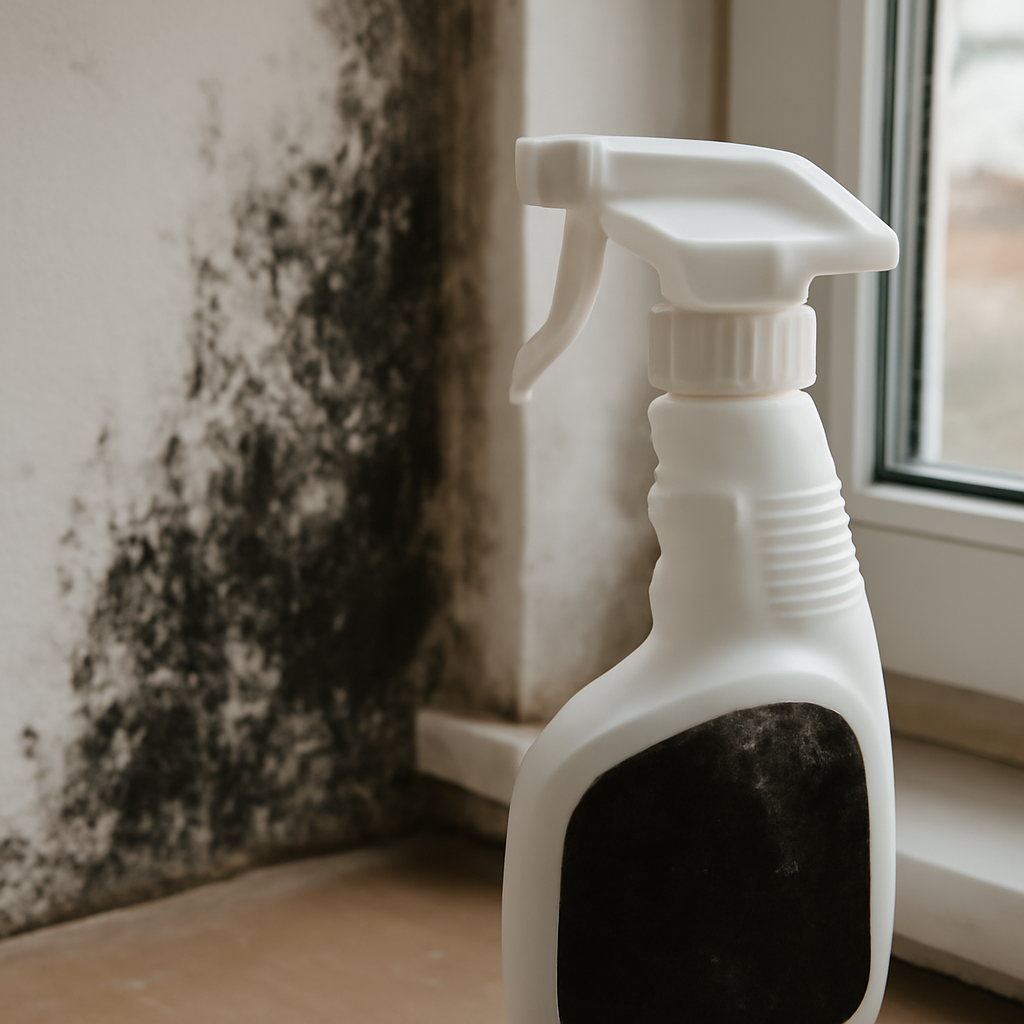
Walk down the cleaning aisle and you will find a dozen bottles promising to wipe out black mold with a few sprays. Some genuinely kill fungal growth; others mostly bleach the stain so the wall looks clean while the colony survives underneath. A black mold spray can be a legitimate part of cleanup on the right surface, but it is never a substitute for finding and fixing the moisture that fed the mold in the first place. This guide summarizes EPA and CDC guidance current as of 2026 — consult a physician for symptoms and a certified professional for testing and large remediation decisions.
Is this mold, asbestos, or water damage? Get a free instant screen
Upload a clear photo of the suspect area. You'll get an instant AI screening opinion and what to do next. This is screening guidance, not a professional determination.
Screening guidance only. AI can be wrong. Confirm asbestos, mold type, or lead with lab testing or a licensed professional before acting.
Does Black Mold Spray Actually Work?
It depends on the surface and the active ingredient. On nonporous materials — tile, glass, sealed grout, fiberglass tubs — a spray that contains sodium hypochlorite (bleach) or a quaternary ammonium compound can kill surface mold and remove staining effectively. The CDC notes that for hard surfaces, soap and water or a commercial product both work, and the key is thorough cleaning followed by drying.
On porous materials, the story changes. Drywall, bare wood, ceiling tile, and grout that has lost its seal absorb the spray’s water content while the mold’s root structure stays anchored in the material. The visible black fades, which feels like success, but the colony often returns within weeks. The EPA is clear that porous materials with deep growth usually need removal, not spraying.
Types of Black Mold Spray and What Each One Does
Not all sprays use the same chemistry, and the differences matter for both effectiveness and safety.
Bleach-Based Sprays
Products like Tilex and many “mold and mildew” sprays rely on sodium hypochlorite. They excel at lifting black staining from tile and grout and they kill surface mold on nonporous material. Their weakness is porosity: the chlorine stays on the surface while the water soaks in. The EPA does not recommend routine bleach use on porous surfaces. Bleach sprays also release fumes that irritate the lungs and eyes, so ventilation is essential.
Hydrogen Peroxide Sprays
A 3 percent hydrogen peroxide solution kills many mold species and is less corrosive than bleach. It penetrates slightly better and produces no chlorine fumes. Peroxide is a reasonable choice for grout, painted surfaces, and bathroom fixtures, though it can lighten some fabrics and finishes.
Vinegar and Botanical Sprays
White vinegar disrupts many mold species and is a common low-toxicity option. Tea tree oil and other botanical sprays have a following too. These work best on light surface growth and intact, nonporous materials. They are gentler but slower, and they do not reach deep colonies. The honest assessment in the guide on whether vinegar kills black mold lays out exactly where it succeeds and fails.
Where Spray Helps and Where It Hurts
The right call hinges on what the mold is growing on and how far it has spread. A spray is a sound choice for the shower wall, the windowsill, the bathroom ceiling that gets occasional condensation, or any sealed surface where growth is recent and shallow. For more on bathroom-specific cleanup, the black mold bathroom guide covers the surfaces you will encounter there.
A spray is the wrong tool when growth covers more than about 10 square feet, when it has penetrated drywall or framing, when it keeps returning, or when the moisture source is still active. Spraying in these cases produces a cosmetic fix that masks an ongoing problem, sometimes delaying real remediation until the damage is far worse and the cost far higher. The broader mold inspection and testing hub explains how professionals distinguish surface staining from structural contamination.
How to Use Black Mold Spray Safely
Even a well-chosen product can cause harm if used carelessly. The CDC and EPA both stress personal protection during any mold cleanup, since disturbing growth releases spores into the air.
- Ventilate. Open a window and run an exhaust fan. Never mix bleach with ammonia or other cleaners — the combination creates toxic gas.
- Wear protection. An N95 respirator, nitrile gloves, and unvented goggles keep spores and chemical mist out of your airways and eyes.
- Pre-clean heavy growth. Wipe away thick visible mold with a damp cloth before spraying, so the product contacts the surface rather than the surface film.
- Let it dwell, then dry. Follow the label’s contact time, wipe, and dry the area completely. Residual moisture invites regrowth.
- Bag your materials. Discard used cloths and disposable gear in a sealed bag rather than reusing them around the home.
People with asthma, allergies, or compromised immune systems should avoid doing this work themselves. The fumes and airborne spores can trigger serious reactions.
What Spray Cannot Fix: The Moisture Problem
Every credible mold authority returns to the same point. Mold is a symptom; moisture is the disease. A black mold spray treats the symptom. If a bathroom fan vents into the attic, if a basement wall wicks groundwater, or if a roof leak drips behind the drywall, the mold will come back no matter how many bottles you empty.
Along Colorado’s Front Range, the swing between dry winters and wet spring snowmelt creates conditions where humidity spikes seasonally. Keeping indoor relative humidity below 50 percent, fixing leaks within 48 hours, and venting moisture-producing rooms outdoors does more to stop black mold than any spray on the shelf. Treat the product as the finishing step after the water problem is solved, not the solution itself.
DIY Sprays Versus Commercial Products
Homeowners often wonder whether a homemade solution works as well as a store-bought spray, and the answer depends on the goal. For light surface mold on nonporous material, simple options perform respectably. Plain dish detergent in water removes mold from hard surfaces, which is exactly what the CDC recommends. White vinegar in a spray bottle disrupts many mold species and leaves no chlorine fumes. A 3 percent hydrogen peroxide solution straight from the bottle kills surface growth and lifts staining.
Commercial products earn their price in convenience and, in some cases, EPA registration as antimicrobials, which means their efficacy claims have been reviewed. They also tend to cling to vertical surfaces better and include surfactants that cut through soap scum. For a stubborn shower or a stained grout line, that formulation can save scrubbing effort. Neither category, though, overcomes the porosity problem — on drywall or bare wood, the homemade and commercial sprays fail for the same reason.
A practical approach is to keep a peroxide or vinegar spray on hand for routine surface maintenance and reach for a registered commercial product when staining is heavy or the surface is a frequently wet shower. Avoid the temptation to mix homemade and commercial chemistries, and never combine bleach with ammonia or vinegar. Whatever you choose, the spray is the easy part; the moisture control behind it is what determines whether the mold stays gone. Along the Front Range, where seasonal humidity swings drive much indoor mold, that moisture discipline matters more than the brand in the bottle.
When to Call a Professional Instead
If mold returns after you have cleaned and dried it, if it covers a large area, or if you find it inside walls or HVAC equipment, stop spraying and bring in a remediation contractor. Professionals set up containment, use HEPA air filtration, and remove contaminated porous materials rather than coating them. They also trace the moisture source so the fix is permanent.
In Colorado, look for contractors who follow the IICRC S520 standard and carry liability insurance. Independent testing before and after the job confirms the work actually reduced spore levels rather than just the visible stain.
How to Choose the Right Spray for the Surface
Matching the product to the material is the difference between a spray that works and one that wastes your afternoon. The first question is always whether the surface is porous or nonporous, because that single property governs whether any spray can succeed.
For nonporous surfaces — glazed tile, glass shower doors, fiberglass tubs, sealed countertops, and metal — almost any mold spray performs well, and the choice comes down to fume tolerance and staining concerns. Bleach-based products remove dark staining best. Peroxide and botanical sprays are gentler on the lungs and on colored grout. For semi-porous surfaces like sealed grout and painted drywall, peroxide tends to outperform bleach because it does not flood the material with extra water. For raw porous materials — bare wood, unsealed grout, drywall paper, ceiling tile — no spray reliably reaches the embedded growth, and the honest answer is removal rather than chemical treatment.
Read the label for dwell time, the number of minutes the product must stay wet on the surface to work. Many homeowners spray and immediately wipe, which gives the active ingredient no time to act. Spraying, waiting the full recommended interval, then wiping and drying is what actually kills surface growth. Also check whether the product is registered with the EPA as an antimicrobial; registered products have demonstrated efficacy claims, while generic cleaners may only remove the visible stain.
Common Mistakes That Make Spraying Backfire
Even a capable product fails when used incorrectly, and some mistakes actively worsen the situation. Knowing the pitfalls helps you avoid turning a small problem into a larger one.
- Spraying over a hidden leak. If the moisture source is still active behind the surface, the spray treats the symptom while the cause keeps regenerating growth. The mold returns within weeks, often worse.
- Mixing products. Combining bleach with ammonia or with vinegar produces toxic gases. Use one product at a time and ventilate.
- Skipping protection. Spraying mold disturbs spores and aerosolizes both the fungus and the chemical. Working without a respirator is a genuine health risk.
- Over-wetting porous material. Soaking drywall or wood with a water-based spray adds moisture, which can feed deeper growth even as the surface looks cleaner.
- Treating a large area as small. Spraying past the EPA’s roughly 10-square-foot threshold without containment spreads spores through the home.
The biggest mistake is treating a spray as a complete solution. It is a finishing tool that follows moisture control and, where needed, material removal. Front Range homeowners who spray a recurring basement or bathroom spot without addressing seasonal humidity end up repeating the chore every few weeks, spending more over time than a proper moisture fix would have cost.
Key Takeaways on Black Mold Spray
A black mold spray earns its place in a homeowner’s toolkit, but only when matched to the right surface and used as a finishing step rather than a cure. On nonporous materials — tile, glass, sealed grout, fiberglass — a well-chosen spray kills surface growth and lifts staining effectively. On porous drywall, bare wood, and unsealed grout, no spray reliably reaches embedded growth, and those materials usually need removal.
Safety and technique matter as much as product choice. Ventilate, wear an N95 respirator and gloves, follow the label’s dwell time, never mix chemistries, and dry the surface afterward. The most important rule overrides all the others: a spray treats the visible mold, not the moisture feeding it. If a leak, condensation, or high humidity keeps the surface damp, the mold returns no matter how many bottles you empty. Fix the water source, keep humidity below 50 percent, and reserve the spray for the cosmetic finish once the real problem is solved.
References
- Mold Cleanup in Your Home — U.S. Environmental Protection Agency
- Mold Cleanup and Remediation Guidance — Centers for Disease Control and Prevention
- A Brief Guide to Mold, Moisture and Your Home — U.S. Environmental Protection Agency
Unsure whether a spray will hold or whether the mold runs deeper than the surface? A vetted Front Range inspector can take a look before you spend more on products. Get in touch through our contact page.
Mold removal & cleanup picks
For a small, contained patch (under ~10 sq ft) these EPA-friendly removers handle surface mold. Larger or recurring growth warrants a professional assessment first.
| Product | Why | Buy |
|---|---|---|
 RMR-86 Instant Mold Stain Remover RMR-86 Instant Mold Stain Remover | Fast-acting on stains; ventilate and wear PPE. | Amazon — $25.99 |
 Concrobium Mold Control Concrobium Mold Control | No-bleach formula that also helps prevent regrowth. | Amazon — $13.48 |
 Mold Armor Mold & Mildew Remover Mold Armor Mold & Mildew Remover | Widely stocked bathroom/surface remover. | Amazon — $22.98 |