Spray Mold Killer: What Works on Drywall and What Doesn’t
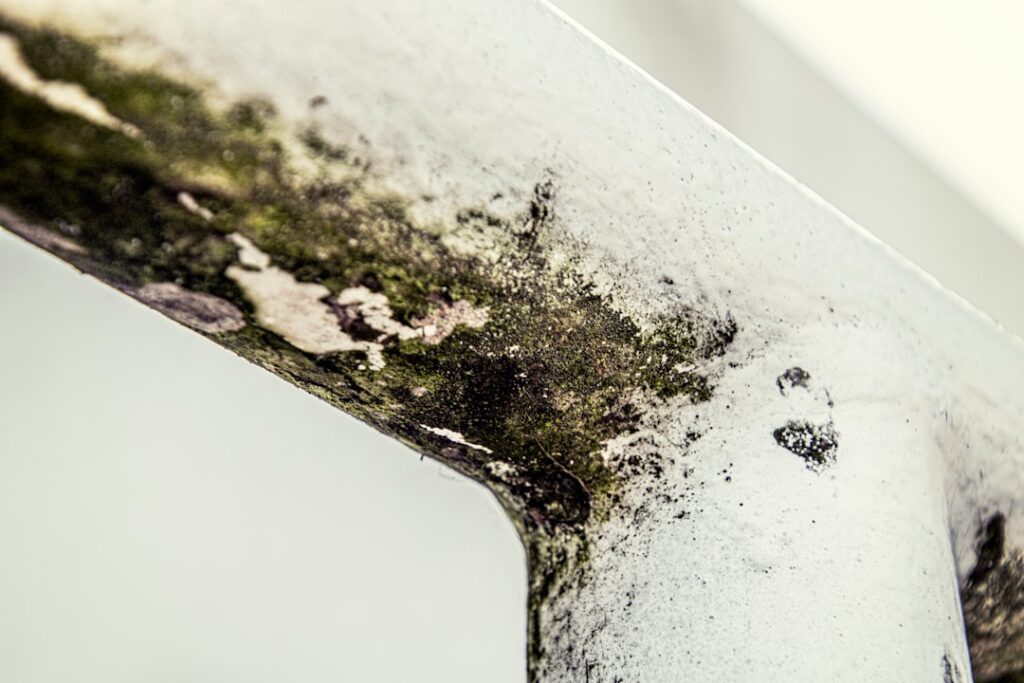
A spray bottle is usually the first thing people reach for when dark spots appear on a bathroom ceiling, a basement wall or the drywall behind a leaky sink. Sprays are fast, cheap and easy to find, and for small patches on the right surfaces they can do a reasonable job. They also have clear limits, and those limits explain why mold so often comes back a few weeks after it was “killed.” This guide explains what a spray can and cannot do, compares the common product types in generic terms, covers bleach safety and protective gear, and walks through the decisions that matter most for drywall, the surface people ask about most often. It reflects guidance from EPA and CDC and is written for homeowners and renters on the Colorado Front Range. It is general information, not a substitute for a qualified remediation professional when the problem is large, hidden, caused by contaminated water, or affecting someone’s health.
Part of our Mold Removal & Remediation guide — start there for the full picture →
Is this mold, asbestos, or water damage? Get a free instant screen
Upload a clear photo of the suspect area. You'll get an instant AI screening opinion and what to do next. This is screening guidance, not a professional determination.
Screening guidance only. AI can be wrong. Confirm asbestos, mold type, or lead with lab testing or a licensed professional before acting.
What a Spray Mold Killer Actually Does
Most mold sprays combine two jobs: a cleaning action that loosens and lifts growth from a surface, and an antimicrobial ingredient intended to kill or inactivate mold on contact. On a smooth, non-porous surface such as glazed tile, glass, sealed countertops or a fiberglass tub surround, that combination can remove visible growth effectively when paired with scrubbing and thorough drying.
What a spray does not do is change the conditions that let mold grow. EPA’s A Brief Guide to Mold, Moisture and Your Home states that the key to mold control is moisture control, and that if you clean up mold but do not fix the water problem, the mold problem will most likely come back. The same guide notes that it is impossible to get rid of all mold and mold spores indoors, and that spores will not grow if moisture is not present. In practical terms, the spray handles what is on the surface today; the leak, condensation or humidity determines what is there next month.
It also helps to separate “killing” from “removing.” Dead mold can still contain allergens and irritants, so EPA’s emphasis is on physically cleaning mold off surfaces and drying them, not just treating it in place. A stain that remains after spraying may be dead growth, live growth deeper in the material, or simply discoloration, and a spray cannot tell you which.
Fix the Moisture First
Before choosing a product, find out why the area got wet. Common Front Range sources include:
- Plumbing leaks under sinks, behind toilets, at dishwasher and refrigerator lines, and in walls shared with bathrooms.
- Roof and window leaks, often after spring snowmelt or summer hail damage to flashing and seals.
- Bathroom condensation from showers without an exhaust fan that vents to the outdoors, or a fan that is not run long enough.
- Basement dampness from grading, gutters and downspouts that send snowmelt and storm water toward the foundation.
- Cold surfaces in winter, such as exterior wall corners behind furniture and closet walls, where indoor humidity condenses.
EPA advises fixing plumbing leaks and other water problems as soon as possible and drying water-damaged areas and items within 24 to 48 hours to prevent mold growth. CDC’s mold basics page recommends keeping indoor humidity as low as you can, no higher than 50 percent, using exhaust fans that vent outside in kitchens and bathrooms, and making sure clothes dryers vent outdoors. Colorado’s dry air helps in much of the year, but humidifiers, aquariums, and large houseplant collections can push localized humidity higher than expected, so an inexpensive hygrometer is worth having.
Porous vs. Non-Porous Surfaces
The most important factor in whether a spray will work is not the product; it is the material. EPA’s Mold Cleanup in Your Home page advises scrubbing mold off hard surfaces with detergent and water and drying completely, while noting that absorbent or porous materials, such as ceiling tiles and carpet, may have to be thrown away if they become moldy because mold can grow in their empty spaces and crevices and may be difficult or impossible to remove completely.
The table below shows how that guidance typically plays out on common household surfaces. It is a general guide; the extent of growth, how long the material stayed wet, and whether the water was clean all affect the decision.
| Surface | Porosity | Can a spray-and-scrub approach work? | Usual next step if growth is significant |
|---|---|---|---|
| Glazed tile, glass, metal, sealed stone | Non-porous | Usually yes, with scrubbing and drying | Clean, dry, address humidity |
| Grout and caulk | Semi-porous | Often partly; stains may remain | Regrout or recaulk if growth returns |
| Painted drywall, light surface spotting | Paper face is porous | Sometimes, for small surface spots only | Clean lightly, dry, monitor |
| Drywall that was wet, soft or stained through | Porous | Generally no | Cut out and replace affected section |
| Wood framing and subfloor | Semi-porous | Surface growth can often be cleaned | Clean, dry fully, replace if decayed |
| Carpet, pad, ceiling tiles, insulation | Porous | Generally no | Remove and discard |
Spray Mold Killer on Drywall
Drywall is where most spray questions start, and where sprays disappoint most often. A sheet of drywall is a gypsum core faced with paper, and that paper is food for mold once it stays damp. Growth that starts on the face can extend into the paper fibers and the back side of the board, especially when the water came from inside the wall. A spray can bleach or lighten what is visible on the face while leaving growth inside untouched.
A reasonable approach for drywall usually looks like this:
- Find and stop the water source. Without this step, no product will hold.
- Judge the damage. Press the area. Drywall that is soft, crumbly, swollen, or stained through from behind has generally lost the argument and is usually better cut out and replaced. EPA’s guidance on porous materials supports removal in that situation.
- For small, light surface spots on painted drywall that stayed firm and dry, lightly mist a cleaner rather than soaking the board, wipe gently, and dry promptly. Over-wetting drywall can make the problem worse.
- Look behind the wall when in doubt. If staining keeps reappearing in the same spot, the cavity behind it may be wet. A small inspection opening or a moisture reading can confirm.
- Do not paint over mold. EPA advises against painting or caulking moldy surfaces, noting that paint applied over mold is likely to peel. Clean and dry first; mold-resistant primer is for prevention after cleanup, not a substitute for it.
For more detail, the guide on the best way to kill mold on drywall walks through cleaning versus replacement, and the article on black mold on drywall covers what dark staining on wallboard can and cannot tell you. If the affected area is a painted plaster or finished wall rather than raw board, the guide to choosing a cleaner for mold on walls compares gentler options.
Common Spray Types Compared
Store shelves group mold products in several ways, but most fall into a handful of active-ingredient families. Described generically, without brand names:
- Bleach-based sprays (sodium hypochlorite). Effective at whitening stains and disinfecting hard, non-porous surfaces. Strong odor and fumes, can damage fabrics and some finishes, and the visible “whitening” on porous materials can be mistaken for full removal. See the bleach section below for safety rules.
- Hydrogen peroxide sprays. An oxidizing option with less lingering odor than chlorine bleach. Can lighten some materials, so test in an inconspicuous spot first. Typically used on hard surfaces and some sealed materials.
- Quaternary ammonium (“quat”) sprays. Common in household disinfectant cleaners. They do not bleach stains in the same way, so visible discoloration may remain even after cleaning. Follow label dwell times; many need the surface to stay wet for several minutes to work as labeled.
- Vinegar. Household vinegar is a popular do-it-yourself option and may help clean some surface growth, but evidence for it as a reliable mold killer is limited, and it is not registered as a disinfectant. Treat it as a mild cleaner rather than a guaranteed treatment, and never combine it with bleach.
- Detergent and water. Not a “killer” at all, but EPA’s own cleanup guidance centers on scrubbing hard surfaces with detergent and water and drying completely.
Products that make antimicrobial claims on their labels are generally required to be registered with EPA and typically display an EPA registration number. A registration number indicates the product has been reviewed for its labeled uses; it does not mean the product will solve a moisture problem or reach growth inside porous materials, and label directions for surfaces, dilution and contact time still apply. The guides to cleaning products that kill mold and black mold killer spray compare these categories further, and the overview of the best way to kill mold puts sprays in context with other methods.
Bleach: Useful, Limited, and Never Mixed
Chlorine bleach is the most familiar mold spray ingredient and also the one most often misused. EPA’s Brief Guide describes biocides as substances that can destroy living organisms and states that using a chemical or biocide that kills organisms such as mold, chlorine bleach for example, is not recommended as a routine practice during mold cleanup. EPA notes there may be instances where professional judgment indicates its use, but the routine approach is cleaning and drying.
CDC’s mold page says mold can be removed from hard surfaces with household products, soap and water, or a bleach solution of no more than 1 cup of household laundry bleach in 1 gallon of water. CDC is direct about the main hazard: never mix bleach with ammonia or other cleaners, because doing so will produce a poisonous gas. EPA gives the same warning about mixing chlorine bleach with cleaners or detergents that contain ammonia. CDC also advises following manufacturers’ instructions, opening windows and doors for fresh air, and wearing rubber boots, rubber gloves and goggles.
Practical takeaways:
- Use bleach only on hard, non-porous surfaces, and only if the label allows that use.
- Do not combine bleach with ammonia-containing cleaners, vinegar or other acids, or other products. Rinse a surface with water between different cleaners.
- Do not expect bleach to fix mold in drywall, wood or carpet; whitening is not the same as removal.
The guide can you use bleach on mold covers when it fits and when it does not in more depth.
Ventilation and Protective Gear
Spraying and scrubbing mold can release spores and fragments into the air, and many cleaners produce fumes of their own. EPA’s Brief Guide recommends avoiding breathing in mold or mold spores and suggests wearing an N-95 respirator, noting that it must fit properly to be effective. It advises gloves, with long gloves extending to the middle of the forearm, and recommends choosing gloves made from natural rubber, neoprene, nitrile, polyurethane or PVC when using a biocide such as chlorine bleach or a strong cleaning solution. EPA also recommends goggles without ventilation holes to keep mold and spores out of the eyes, and says to avoid touching mold or moldy items with bare hands.
When using any biocide, EPA says to always ventilate the area and exhaust air to the outdoors. In practice that can mean opening windows, placing a box fan in a window blowing out, and keeping children and pets away until the area is clean and dry. EPA also cautions against running an HVAC system if it may be contaminated with mold, since that could spread mold through the building.
Using a Spray Step by Step
For a small patch on a hard or sealed surface where the moisture source has been fixed, a careful routine gives the spray its best chance and limits exposure:
- Read the label first. Check which surfaces the product is meant for, whether it needs dilution, how long the surface must stay wet, and whether rinsing is required. Labels differ widely, even within the same ingredient family.
- Set up ventilation and gear. Open a window, put on gloves, goggles and a fitted N-95 respirator, and keep children and pets out of the room.
- Test a hidden spot. Oxidizing products can lighten paint, grout and fabric. A small test area avoids surprises on a visible wall.
- Apply lightly. Mist rather than soak, especially near drywall, wood or seams where liquid can wick into the material.
- Wait, then scrub. Allow the contact time on the label, then scrub with a brush or cloth to physically remove growth. Wiping away residue matters more than the spray alone.
- Dry thoroughly. Use fans or a dehumidifier so the surface dries quickly. Bag and discard used cloths and sponges.
- Check back. EPA’s Brief Guide says visible mold and moldy odors should not be present after cleanup, and that a site revisited shortly afterward should show no signs of water damage or mold growth. If growth returns within days or weeks, the moisture source has not been solved.
If any step feels uncertain, or the patch turns out larger than it first looked once furniture or trim is moved, stop and reassess before continuing.
EPA’s 10 Square Foot Guideline
EPA gives a simple size threshold for deciding who should do the work. Its cleanup page says that if the moldy area is less than about 10 square feet, roughly a 3-foot by 3-foot patch, in most cases you can handle the job yourself following its tips. If there has been a lot of water damage or mold covers more than 10 square feet, EPA points to its guidance on mold remediation in larger buildings, which it says applies to other building types too. EPA also recommends calling in a professional experienced in cleaning buildings damaged by contaminated water if sewage or other contaminated water was involved, and advises consulting a health professional before starting cleanup if you have health concerns.
Size is not the only factor. Hidden mold inside wall cavities, under flooring or in ductwork, a musty odor without a visible source, or growth that returns after repeated cleaning all suggest a bigger moisture problem than a spray can address. The guide to DIY mold remediation explains how to scope a small job safely and recognize when it has grown beyond do-it-yourself territory.
Health Considerations
CDC notes that exposure to damp and moldy environments may cause a variety of health effects, or none at all. For some people mold can cause a stuffy nose, sore throat, coughing or wheezing, burning eyes or a skin rash, and people with asthma or mold allergies may have severe reactions. CDC adds that immune-compromised people and people with chronic lung disease may get lung infections from mold. CDC states that you do not need to know the type of mold to remove it, and it does not recommend routine mold testing for health decisions. Anyone with health concerns or a vulnerable household member should consider staying out of the work area and leaving larger jobs to others.
When a Spray Is Not Enough
A spray is a reasonable first step for a small patch on a hard surface in a room with a known, fixed moisture source. It is the wrong tool when the growth is extensive, the material is porous and stayed wet, the water source is unknown, or the problem keeps returning. In those cases, professional remediation typically involves containment, removal of damaged materials, HEPA filtration and cleaning, drying, and repair of the moisture problem, followed by rebuilding.
Costs vary widely with the size of the affected area, access, the materials that must be removed, and whether repairs to plumbing or the building envelope are included. The guides on average cost of mold remediation and black mold removal cost explain the main cost drivers so quotes are easier to compare. For broader context, the mold inspection pillar and the mold removal hub gather related guides on finding, testing and fixing mold problems.
Keeping Mold From Coming Back
After cleanup, prevention is mostly about water and air. Run bathroom exhaust fans during showers and for a while afterward, fix drips promptly, keep gutters and downspouts directing water away from the foundation, and check under sinks a few times a year. Keep indoor humidity in check, especially in basements in summer and around humidifiers in winter. Move furniture slightly away from cold exterior walls so air can circulate. CDC suggests cleaning bathrooms with mold-killing products and adding mold inhibitors to paint before painting. A spray bottle then becomes what it should be: a maintenance tool for occasional small spots, not a substitute for fixing the source.
References
- A Brief Guide to Mold, Moisture and Your Home — U.S. Environmental Protection Agency
- Mold Cleanup in Your Home — U.S. Environmental Protection Agency
- Mold — Centers for Disease Control and Prevention
Frequently asked questions
Does a spray mold killer work on drywall?
Only for small, light surface spots on drywall that stayed firm and dry. EPA notes porous materials may need to be thrown away if they become moldy, so drywall that is soft, stained through or was wet for long is usually cut out and replaced.
Is bleach the best spray for mold?
Not usually. EPA says using biocides such as chlorine bleach is not recommended as a routine practice, and CDC limits bleach solutions to no more than 1 cup per gallon of water on hard surfaces. Never mix bleach with ammonia or other cleaners.
Will mold come back after spraying?
It often will if the moisture source is not fixed. EPA says that if you clean up mold but do not fix the water problem, the mold problem will most likely come back.
How large a mold problem can a homeowner clean up?
EPA says that if the moldy area is less than about 10 square feet, roughly a 3 ft by 3 ft patch, most people can handle it themselves. Larger areas, heavy water damage or sewage contamination call for a professional.
What protective gear should be worn when spraying mold?
EPA recommends an N-95 respirator that fits properly, long gloves such as nitrile or rubber, and goggles without ventilation holes. Ventilate the area and exhaust air to the outdoors when using cleaners.
Seeing mold return on the same wall no matter what you spray? Send us a note and we can help you track down the moisture source.
Mold removal & cleanup picks
For a small, contained patch (under ~10 sq ft) these EPA-friendly removers handle surface mold. Larger or recurring growth warrants a professional assessment first.
| Product | Why | Buy |
|---|---|---|
 RMR-86 Instant Mold Stain Remover RMR-86 Instant Mold Stain Remover | Fast-acting on stains; ventilate and wear PPE. | Amazon — $29.99 |
 Concrobium Mold Control Concrobium Mold Control | No-bleach formula that also helps prevent regrowth. | Amazon — $11.26 |
 Mold Armor Mold & Mildew Remover Mold Armor Mold & Mildew Remover | Widely stocked bathroom/surface remover. | Amazon — $22.98 |