Mold and Mildew Spray: What Homeowners Need to Know
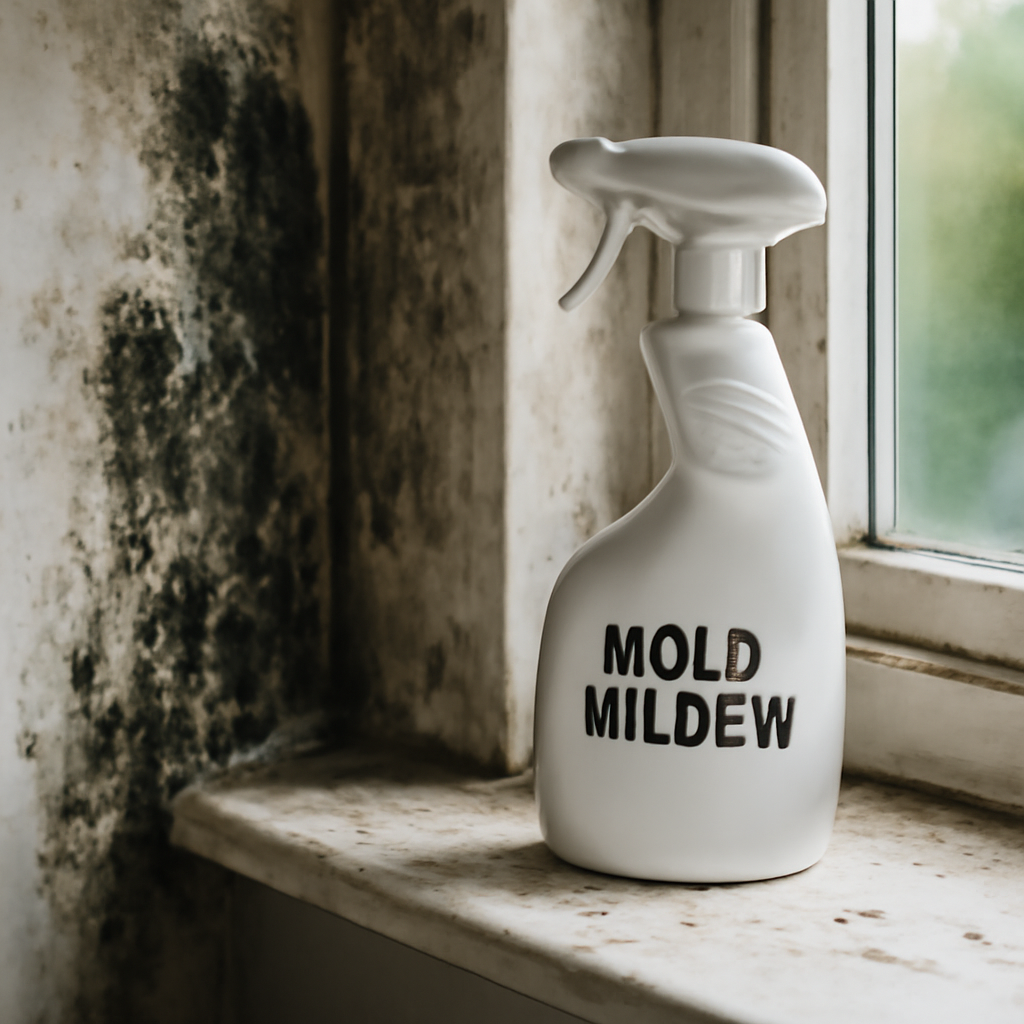
Mildew and mold get lumped together on product labels, and a mold and mildew spray is built to handle both. The two are not identical, though, and knowing the difference changes how you treat a stain. Mildew is a flat, surface-level growth that wipes away with relative ease. Mold can be the same surface nuisance or a deeper colony that has worked into the material. A spray that clears the mildew on your shower tile may barely dent mold growing inside damp drywall. This guide explains both fungi, what these combined sprays contain, and how to apply them so the result lasts. It summarizes EPA and CDC guidance current as of 2026; consult your physician about symptoms and a professional for serious contamination.
Part of our Mold Removal & Remediation guide — start there for the full picture →
Is this mold, asbestos, or water damage? Get a free instant screen
Upload a clear photo of the suspect area. You'll get an instant AI screening opinion and what to do next. This is screening guidance, not a professional determination.
Screening guidance only. AI can be wrong. Confirm asbestos, mold type, or lead with lab testing or a licensed professional before acting.
Mildew Versus Mold: The Practical Difference
Mildew is a specific kind of mold that grows flat on a surface. It usually appears as a powdery or downy patch, gray, white, or yellowish, on damp areas like bathroom tile, window frames, and fabric. Because it stays on the surface, mildew responds well to a spray and a scrub.
Mold is the broader category. It can be the same surface film, or it can be a raised, fuzzy, or slimy growth in green, black, or brown that has penetrated a porous material. The CDC notes that the practical concern is not identifying the exact species but removing the growth and fixing the moisture, since all indoor mold growth warrants cleanup. A combined mold and mildew spray works on the surface forms of both; it does not solve embedded mold.
Health Context for Surface Fungi
The reason cleanup matters beyond appearance is health, and the guidance here is worth stating plainly. The CDC notes that exposure to damp and moldy environments can cause a range of effects, from nasal congestion, throat irritation, coughing, and eye irritation in many people, to more pronounced reactions in those with allergies or asthma. People with weakened immune systems or chronic lung conditions may face greater risk. The agencies do not generally recommend routine sampling to identify the species, because the response is the same regardless: remove the growth and fix the moisture.
For the homeowner, this translates into a practical posture. Clean visible mildew and surface mold promptly rather than living with it, protect yourself during the work, and pay attention to symptoms that improve when you leave the affected room and return when you come back. Those patterns are worth mentioning to a physician, who can advise on the medical side, while a qualified professional advises on testing and removal decisions. The spray addresses the surface; awareness of these health effects is what motivates doing it correctly and not deferring a recurring problem.
What a Combined Mold and Mildew Spray Contains
These sprays pair a cleaning agent with a biocide so they lift staining and kill living growth in one pass.
Bleach-Based Formulas
Sodium hypochlorite is the most common active ingredient in mildew sprays because it bleaches out staining quickly on nonporous bathroom surfaces. It is strong on tile and glass and weak on porous material. Bleach sprays demand ventilation and must never be mixed with ammonia or acid cleaners.
Hydrogen Peroxide and Oxygen-Based Formulas
Peroxide sprays oxidize both mildew and surface mold with less odor and break down into water and oxygen. They need adequate dwell time and suit households sensitive to bleach fumes.
Quat and Botanical Formulas
Quaternary ammonium sprays disinfect and leave a residual film. Botanical sprays use plant-derived actives such as thyme oil or citric acid. Both are lower-odor options that handle surface mildew well, though heavy staining may need more scrubbing.
How to Apply It Correctly
Application technique determines whether the spray works or just smears the problem around. Start by ventilating the room to the outdoors and putting on an N95 respirator, gloves, and eye protection, as the CDC and EPA recommend for any mold cleanup. Pre-clean greasy or soap-scummed surfaces, because biocides bind to grime and lose effectiveness on dirty surfaces. Apply the spray to cover the area evenly, then let it dwell for the contact time on the label rather than wiping it off immediately. Scrub mildew on grout and textured surfaces with a stiff brush. Wipe away the residue, rinse, and dry the surface completely. Dryness is what prevents the return.
For bathroom-specific technique on tile and grout, the dedicated mildew cleaner product and method guide goes deeper into the surfactant-plus-disinfectant approach that handles soap scum and biofilm.
How Often to Reapply and Maintain
A combined spray is not a one-time event in a moisture-prone room; it is part of a maintenance rhythm until the underlying dampness is controlled. In a bathroom that stays humid, a light treatment of grout and gaskets every week or two prevents biofilm from building into a thick colony, which keeps each cleaning quick. Waiting until a heavy bloom appears forces a harder scrub and a longer dwell time. The maintenance approach is less work overall than the crisis approach.
The frequency should decrease as moisture control improves. If you find yourself respraying the same spot on the same schedule indefinitely, that steady cadence is itself the diagnosis: the moisture source is unaddressed. The goal is to use the spray for the initial cleanup and occasional upkeep while the real fix, ventilation, humidity control, or a repair, reduces how often the growth returns at all. A spray that you need monthly is fine as maintenance; a spray you need weekly forever is a sign the moisture problem deserves attention.
Where These Sprays Reach Their Limit
A combined spray is built for surfaces. It cannot reach mold that has grown into drywall paper, ceiling tile, carpet, or untreated wood. The EPA advises removing porous materials that stay contaminated rather than trying to clean them, because embedded growth restarts when moisture returns. The spray also does nothing about the humidity or leak feeding the growth. If you find yourself respraying the same spot every few weeks, the spray is working fine and the moisture source is the real problem. Our overview of what gets rid of mold and what does not explains where surface treatment ends and material removal begins.
Personal Protection and Ventilation
Spraying disturbs both fungal spores and chemical mist. Wear an N95 respirator, gloves, and sealed goggles, and open a window for fresh air. Do not run a fan that blows across the treated area toward clean rooms, as that spreads spores. People with asthma, allergies, or weakened immune systems should not perform the work themselves. If growth exceeds roughly 10 square feet, the EPA’s threshold for considering professional help, set the spray bottle down and call a remediation contractor.
Common Trouble Spots in a Home
Mildew and surface mold gravitate to predictable places, and knowing them helps you spray strategically rather than chase stains. Shower walls, tile grout, and the silicone caulk around tubs stay damp the longest. Shower curtains and liners, especially at the lower hem, collect a familiar pink or gray film. Window sills and frames gather condensation in cold weather. The rubber gasket of a front-loading washer traps water in its folds and breeds both mildew and odor.
Beyond the bathroom and laundry, watch the underside of sinks where slow leaks dampen the cabinet, the area behind toilets, and exterior-wall closets where poor air circulation meets cold surfaces. A combined spray clears the visible growth in each spot, but the recurrence pattern tells you where moisture lingers. A gasket that mildews weekly needs wiping dry after each wash; a window that grows mildew every winter needs condensation control. Reading these trouble spots as moisture signals, not just cleaning chores, points you toward the fix that makes the spraying occasional rather than constant.
Surface-by-Surface: Where the Spray Belongs
A combined mold and mildew spray earns its keep on the right surfaces and wastes effort on the wrong ones. Glazed tile, glass, sealed metal, and finished countertops are ideal, because growth sits on a film of soap scum and grime where the spray can lift it cleanly. Fiberglass tubs and shower surrounds respond similarly. Painted and sealed walls hold growth on the surface too, though they should be wiped rather than soaked to avoid driving moisture into the paint film.
Grout is the persistent trouble spot. Because grout is porous, it can hold staining even after the live mildew is dead, and a thin spray runs off the vertical lines before its contact time elapses. A clinging gel or a spray paired with a stiff brush handles most grout, while deeply set staining may need the grout resealed. Natural stone is a special case, since acidic or bleach-based sprays can etch it, so a stone-safe product is required. Matching the spray to the surface, and recognizing when grout or stone needs a different approach, is what separates a clean result from a smeared one.
Why Combined Sprays Differ From Single-Purpose Ones
The “mold and mildew” framing on a label reflects a deliberate formulation choice. A pure disinfectant kills but may not lift staining; a pure cleaner lifts grime but may not kill. Combined sprays blend a surfactant with a biocide so they tackle the biofilm and the living growth in one pass, which suits the mixed reality of a bathroom where soap scum, mildew, and surface mold coexist. That convenience is genuine on nonporous surfaces.
The limitation is that combining functions does not extend reach. A combined spray is still a surface treatment, no better than a single-purpose product at penetrating drywall or carpet. The EPA’s guidance to remove contaminated porous materials applies equally. So the value of a combined spray is efficiency on the surfaces it suits, not a broader capability. Homeowners who understand this buy the combined spray for the bathroom and reach for removal, not a stronger spray, when growth has gone into the material. Our guide to the best way to remove mold from walls by surface covers that material-by-material judgment.
Stopping the Return: Moisture Control
Mildew and mold both need moisture, and both vanish for good only when the moisture does. The EPA recommends keeping indoor humidity below 60 percent, ideally 30 to 50 percent, running bathroom exhaust fans during and after showers, and repairing leaks within 24 to 48 hours. In Front Range homes, winter condensation on cold walls and humidity from swamp coolers are common triggers despite the dry climate. Treat the spray as cleanup and the ventilation or repair as the cure. The mold inspection and testing hub explains how a professional assessment locates hidden moisture when surface cleaning keeps failing.
References
- Mold Cleanup in Your Home — U.S. Environmental Protection Agency
- You Can Control Mold — Centers for Disease Control and Prevention
- A Brief Guide to Mold, Moisture and Your Home — U.S. Environmental Protection Agency
Frequently asked questions
What is the difference between mold and mildew?
Mildew is a flat, surface growth that wipes off easily, usually gray, white, or yellow on damp surfaces. Mold is the broader category and can be a deeper, fuzzy or slimy growth in green, black, or brown that penetrates porous material.
Does a mold and mildew spray work on both?
Yes, on surface forms of both. Combined sprays pair a cleaner with a biocide to lift staining and kill living growth. They do not reach mold embedded in porous materials like drywall.
How long should I let mold and mildew spray sit?
Follow the label dwell time, often several minutes. Letting the spray sit rather than wiping immediately gives the biocide time to work. Scrub textured surfaces and grout, then rinse and dry completely.
Why does mildew keep coming back in my bathroom?
Recurring mildew points to excess moisture. Run the exhaust fan during and after showers, keep humidity below 60 percent, and fix any leaks. The spray clears the growth, but ventilation prevents the return.
If mildew keeps returning and you are on the Front Range, connect with a vetted local inspector via our contact page to find the moisture source behind it.