Black Mold Removal Spray: What Homeowners Should Know
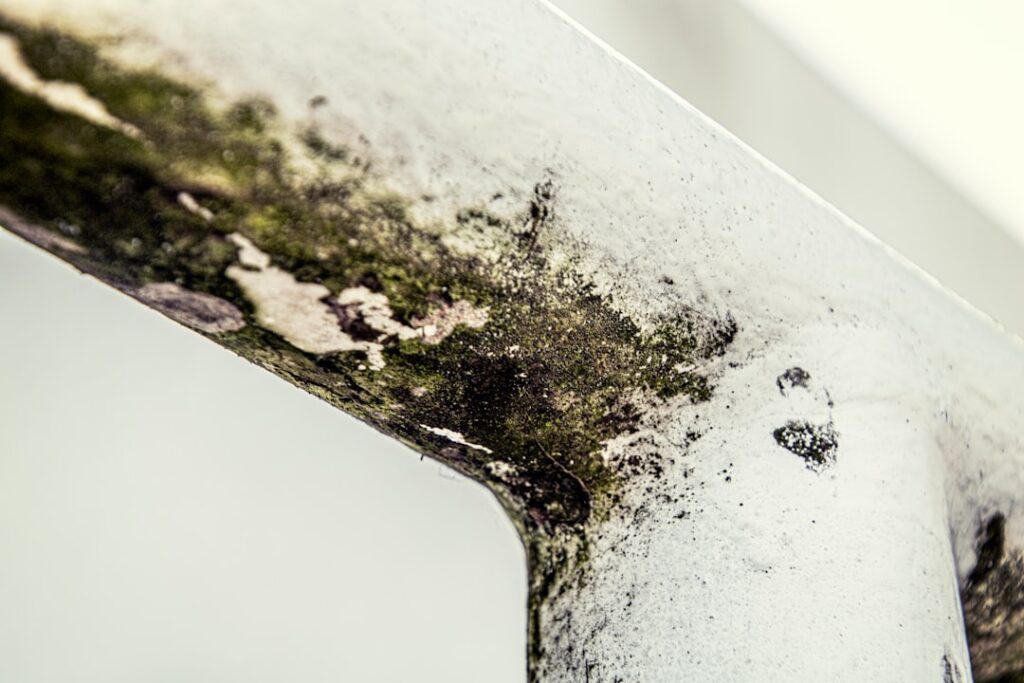
Walk down any cleaning aisle and you will find sprays promising to wipe out black mold in minutes. A black mold removal spray can genuinely help on the right surface, but it has real limits, and relying on a spray alone often leaves the actual problem in place. This guide summarizes EPA and CDC guidance current as of 2026 and offers general information, not medical advice; people with asthma or allergies should consult a physician before disturbing mold.
Part of our Black Mold & Your Health guide — start there for the full picture →
Is this mold, asbestos, or water damage? Get a free instant screen
Upload a clear photo of the suspect area. You'll get an instant AI screening opinion and what to do next. This is screening guidance, not a professional determination.
Screening guidance only. AI can be wrong. Confirm asbestos, mold type, or lead with lab testing or a licensed professional before acting.
What a Black Mold Removal Spray Actually Does
A black mold removal spray is a liquid cleaner applied to a moldy surface to loosen, lift, and in some cases lighten the growth so it can be wiped away. On hard, non-porous surfaces — tile, glass, sealed countertops, fiberglass — sprays work well as part of cleaning. The EPA’s position is broader than any product claim: mold on hard surfaces can be removed with detergent and water, and identifying the exact species is not necessary. A spray is essentially a convenient delivery system for that cleaning step. For the bigger picture of inspection, testing, and when each matters before you reach for any product, our mold inspection and testing hub is a helpful starting point.
What a spray cannot do is reach mold growing inside porous materials. Drywall paper, bare wood, grout, and caulk absorb both water and mold roots, and a surface spray does not penetrate to the embedded growth. It may lighten the visible stain while live mold persists underneath. Understanding that limit is the difference between a spray that helps and one that masks a problem. Our guide to cleaning black mold covers the full removal process a spray fits into.
Types of Black Mold Removal Spray
Consumer sprays fall into a few broad categories, each with trade-offs.
Bleach-Based (Sodium Hypochlorite)
These lighten stains effectively on non-porous surfaces and are common in bathroom mold sprays. The EPA does not recommend bleach as a routine mold remover, and it does not penetrate porous materials. Fumes are irritating, and bleach must never be mixed with ammonia or other cleaners.
Hydrogen Peroxide
A milder oxidizer that cleans and lightens with fewer harsh fumes than chlorine bleach. It works on many surfaces and is a reasonable choice for people who want to avoid bleach.
Detergent and Surfactant Cleaners
These align most closely with EPA guidance: they physically remove mold from hard surfaces through cleaning action. They will not bleach a stain white, but stain is cosmetic once the live mold is gone.
“Natural” Options
White vinegar and similar household acids can reduce some surface mold, though they are slower and less consistent than commercial cleaners. They suit homeowners who prefer low-fume options for small spots.
How to Use a Mold Spray Safely
Regardless of type, safe use follows the same pattern. Ventilate the area and put on PPE — the CDC recommends an N95 respirator, gloves, and goggles for mold cleanup. Read the product label and never combine products; mixing bleach with ammonia or acids releases toxic gases. Apply the spray, let it dwell for the time the label specifies, then scrub and wipe rather than just spraying and walking away, since the physical removal matters as much as the chemistry. Collect debris in a sealed bag, rinse if the label calls for it, and dry the surface completely. A surface left damp grows mold again no matter how good the spray was.
A common mistake is treating the spray as the whole job. Spraying and leaving a surface to “let the product work” without scrubbing leaves both the dead and living material in place and does nothing about the moisture. The dwell time on the label exists to loosen growth so it can be removed, not to magically dissolve a colony. Equally important is ventilation: in a small bathroom, the fumes from a bleach-based spray build up quickly, so run the exhaust fan and open a window. People with asthma or respiratory sensitivity should be especially cautious with aerosolized cleaners in tight spaces, and may prefer a detergent solution applied with a cloth over a pressurized spray that fills the air with droplets.
Bleach Versus Other Active Ingredients
Homeowners often assume the strongest-smelling product works best, but that is not how mold removal works. Chlorine bleach is an oxidizer that lightens pigment, so a bleached stain looks gone even when living mold remains in a porous material below. Detergents and surfactants instead lift and carry away the growth physically, which aligns with EPA guidance for hard surfaces. Hydrogen peroxide oxidizes with far less harsh fumes and is a reasonable middle ground. For homeowners avoiding chemicals, white vinegar’s mild acidity reduces some surface mold, though more slowly and less consistently.
The practical takeaway is that the active ingredient matters less than two things: whether the surface is porous, and whether you physically remove the growth and then dry the area. A modest detergent spray used correctly outperforms a powerful bleach spray used as a spray-and-walk-away shortcut. Choosing a product is far less important than choosing the right surface and following through on scrubbing and drying.
When a Spray Is Not Enough
A spray is the wrong tool in several common situations. If the mold is on porous material — soft drywall, bare wood, grout, or caulk — the embedded growth survives surface treatment, and the material may need to be cut out and replaced. If the affected area is larger than roughly 10 square feet, the EPA suggests professional remediation rather than spot cleaning. If mold keeps returning after spraying, an unaddressed moisture source is feeding it, and no spray fixes a leak or chronic humidity.
A musty smell with no visible growth points to hidden mold inside walls or ducts, which a surface spray cannot reach. In any of these cases, the spray treats a symptom while the cause continues. Our overview of black mold detectors explains tools that help locate hidden moisture before you decide how to treat it.
The size threshold is worth taking seriously. The EPA’s guidance that areas under about 10 square feet are generally DIY-manageable assumes a hard, accessible surface and a known moisture source. A spray bought to fight a patch that keeps growing back is really a signal that the patch belongs in the professional category, because recurrence almost always means embedded growth or an unaddressed leak. Repeatedly spraying such an area wastes money and delays the real fix, all while the underlying material continues to degrade.
Does a Spray Address Health Concerns?
Many sprays are marketed around the fear of “toxic black mold.” The CDC’s position is measured: while molds can produce compounds called mycotoxins, there is no conclusive evidence that ordinary household exposure to Stachybotrys chartarum causes unique serious illness in healthy people. The health-relevant goal is simply to remove indoor mold and control the moisture that feeds it, regardless of species. A spray that removes growth from a hard surface contributes to that goal; a spray that only lightens a stain while live mold remains does not. Sensitive individuals should still limit exposure and wear PPE during any cleanup.
Reading the Label and Common Claims
Marketing language on mold sprays often outruns what the product can do, so reading the label critically pays off. Phrases like “kills 99.9% of mold” describe performance on a hard, non-porous test surface under ideal conditions, not the inside of a moldy wall. “Prevents regrowth” claims assume the surface stays dry; no spray stops mold from returning if a leak keeps feeding it. “No scrubbing” claims overlook that physical removal is what actually clears growth from a textured surface. Treat these as best-case statements rather than guarantees.
The label also carries the information that matters most for safety: the active ingredient, dwell time, ventilation requirements, and warnings against mixing. Follow the dwell time so the product can loosen growth, then scrub and wipe. Heed the ventilation warning, especially for bleach-based products in a small bathroom. And take the “do not mix” warning seriously, since combining bleach with ammonia or acids releases toxic gases. A label read carefully turns a spray from a false promise into a useful, well-understood tool.
Choosing a Spray for Your Situation
Matching the product to the job avoids wasted money. For a small spot of surface mold on tile, glass, or sealed counters, almost any detergent or general-purpose mold spray works when combined with scrubbing and drying. For homeowners sensitive to fumes or with respiratory concerns, a hydrogen peroxide or detergent-based product avoids the harsh chemistry of bleach. For stained-but-clean grout where the goal is cosmetic whitening, a bleach-based product can lighten the marks, with proper ventilation. For porous materials, bare wood, or recurring patches, no spray is the right answer — those call for material removal or addressing a moisture source, as our guide on cleaning black mold explains.
Whatever the choice, the spray is the smallest variable in the equation. Surface type, physical removal, drying, and moisture control determine whether the result lasts. A modest product used correctly on the right surface beats an expensive one used as a shortcut on the wrong material.
Health and Safety With Mold Sprays
Aerosolized cleaners deserve respect because they combine two exposures: the mold spores you disturb and the chemical you are spraying. The CDC associates damp, moldy environments with throat irritation, coughing, and aggravated asthma in sensitive people, and bleach or other strong cleaners add their own respiratory irritation, especially in a small, poorly ventilated bathroom. Open a window, run the exhaust fan, and wear an N95 respirator and gloves. People with asthma or chemical sensitivities should favor low-fume options like detergent or hydrogen peroxide and may prefer applying with a cloth rather than misting the air.
The most important safety rule is never to mix products. Combining bleach with ammonia, with acidic cleaners like some descalers, or with other mold products can release toxic gases such as chloramine. Use one product at a time, rinse if the label directs, and ventilate the room before introducing anything else. Treating a mold spray with the same caution you would give any household chemical keeps a routine cleanup from becoming a respiratory incident.
Spray, Then Fix the Real Problem
The most effective use of a black mold removal spray is as one step in a complete process: stop the moisture, clean or remove the affected material, dry thoroughly, and prevent recurrence. Prevention is where lasting results come from. The EPA recommends keeping indoor relative humidity between 30 and 50 percent, running exhaust fans in bathrooms and kitchens, fixing leaks within 24 to 48 hours, and improving airflow in damp spaces.
A spray purchased to handle a recurring patch is a signal worth heeding — recurrence means the moisture source is still active. Treat the cleaner as a finishing tool, not a cure. When the underlying water problem is solved and surfaces stay dry, the mold has nothing to grow on, and the spray under the sink finally stays there.
The prevention work that makes a spray rarely necessary is straightforward. The EPA recommends keeping indoor relative humidity between 30 and 50 percent, which a dehumidifier achieves in damp basements and a hygrometer helps you monitor. Run bathroom and kitchen exhaust fans during and after use, and confirm they vent outdoors rather than into an attic. Fix plumbing and roof leaks within 24 to 48 hours, since most molds colonize wet materials in that window. Improve airflow in closets and along cool exterior walls where condensation forms, and insulate cold pipes that sweat. A home kept in this range simply does not give mold the moisture it needs, which is why the most reliable mold control is not a product at all but a dry, well-ventilated house. The spray, used correctly on the occasional small hard-surface spot, is the finishing touch on that foundation rather than a substitute for it.
References
- Mold Cleanup in Your Home — U.S. Environmental Protection Agency
- About Mold and Your Health — Centers for Disease Control and Prevention
- A Brief Guide to Mold, Moisture and Your Home — U.S. Environmental Protection Agency
Frequently asked questions
Does black mold removal spray really work?
On hard, non-porous surfaces like tile and glass, a mold spray helps remove growth as part of cleaning. It cannot penetrate porous materials like drywall or grout to kill embedded mold, and it does not fix the moisture source that caused the problem.
Is bleach spray the best for black mold?
Bleach lightens stains on non-porous surfaces, but the EPA does not recommend it as a routine mold remover and notes detergent and water work well. Bleach does not penetrate porous materials, and its fumes are harsh, so it is not automatically the best choice.
Can I just spray mold and leave it?
No. Spraying without scrubbing and drying leaves growth and moisture behind. Let the product dwell per the label, scrub and wipe, collect debris in a sealed bag, and dry the surface completely so mold cannot regrow.
When should I stop using spray and call a professional?
Stop spraying and call a pro if the area exceeds about 10 square feet, the mold is on porous material, it keeps returning, or there is a musty smell with no visible source. These signal embedded or hidden growth a surface spray cannot resolve.
If a spray keeps failing on recurring mold, there is likely a hidden moisture source — Front Range homeowners can connect with a vetted inspector through our contact page.
Mold removal & cleanup picks
For a small, contained patch (under ~10 sq ft) these EPA-friendly removers handle surface mold. Larger or recurring growth warrants a professional assessment first.
| Product | Why | Buy |
|---|---|---|
 RMR-86 Instant Mold Stain Remover RMR-86 Instant Mold Stain Remover | Fast-acting on stains; ventilate and wear PPE. | Amazon — $29.99 |
 Concrobium Mold Control Concrobium Mold Control | No-bleach formula that also helps prevent regrowth. | Amazon — $11.26 |
 Mold Armor Mold & Mildew Remover Mold Armor Mold & Mildew Remover | Widely stocked bathroom/surface remover. | Amazon — $22.98 |