House Mold Cleaner: A Room-by-Room Guide
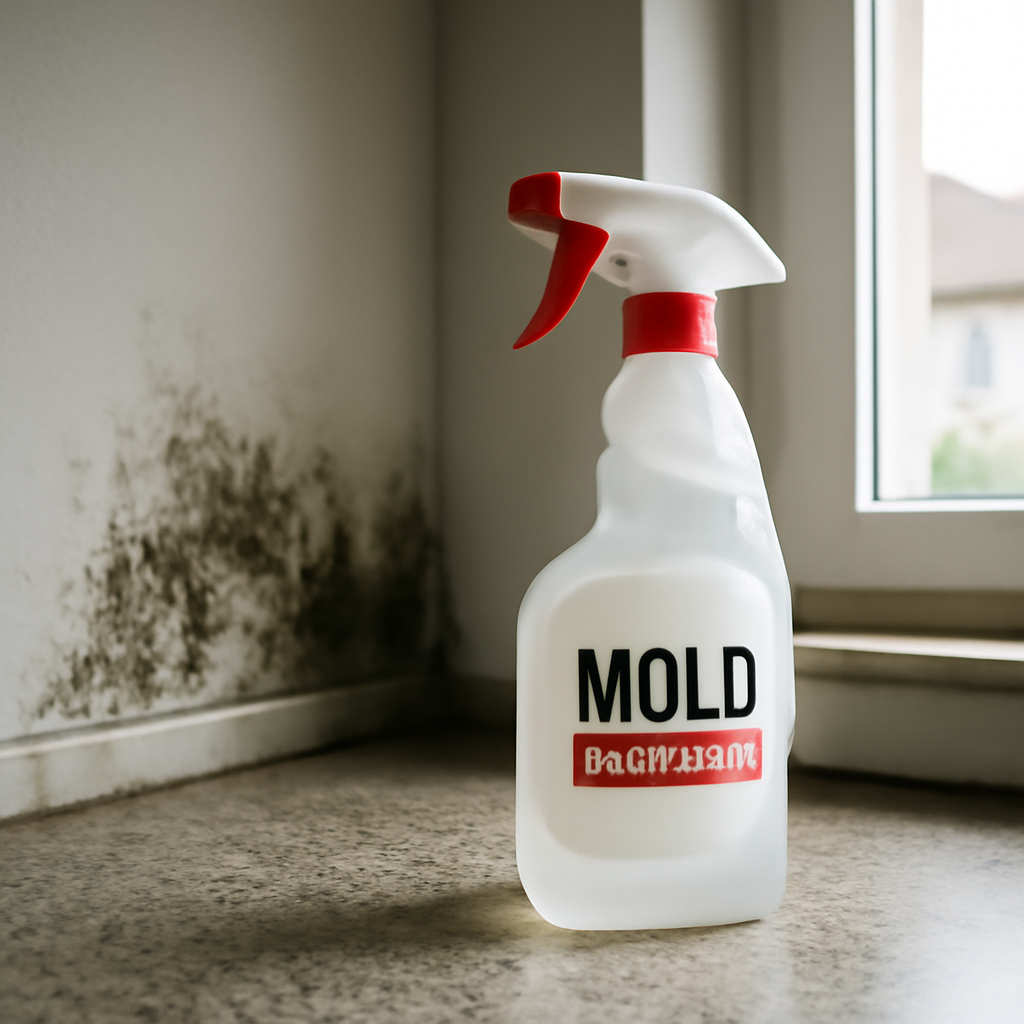
No single house mold cleaner fits every room, because the surfaces, moisture sources, and ventilation differ from the bathroom to the basement to the attic. The smarter approach is to understand what kind of mold each room tends to grow and why, then choose a cleaning method that suits that surface and a moisture fix that suits that room. This guide summarizes EPA and CDC guidance current as of 2026 and provides general information only; it is not medical advice or a substitute for a certified mold professional, particularly on large or recurring growth.
Is this mold, asbestos, or water damage? Get a free instant screen
Upload a clear photo of the suspect area. You'll get an instant AI screening opinion and what to do next. This is screening guidance, not a professional determination.
Screening guidance only. AI can be wrong. Confirm asbestos, mold type, or lead with lab testing or a licensed professional before acting.
What a House Mold Cleaner Can and Cannot Do
A cleaner removes visible growth from surfaces you can reach. That is genuinely useful, but it is the smaller half of mold control. The EPA centers all of its mold guidance on moisture, because mold cannot grow without it. The implication for whole-house cleaning is that you are really managing several moisture problems in different rooms, and the cleaner is the finishing step in each one.
The other constant is the porous-versus-non-porous divide. Across every room, hard surfaces can be cleaned and kept, while porous materials that have absorbed mold usually need replacement per EPA guidance. Keep both principles in mind as you move room to room.
Bathroom: The Most Common Mold Room
The bathroom generates more mold complaints than any other room because it combines water, warmth, and often poor ventilation. Mold here typically appears as dark speckling on grout, caulk, ceilings, and window frames.
For tile, grout, glass, and glazed surfaces, detergent and water or a hydrogen-peroxide cleaner handle most growth, with diluted bleach reserved for stubborn staining. Silicone caulk that has mold growing into it is porous and often has to be cut out and re-applied rather than cleaned. The real fix in most bathrooms is ventilation: an exhaust fan that vents outdoors, runs during and after showers, and is correctly sized for the room. Without it, the cleaner is a weekly chore rather than a one-time fix.
Kitchen: Hidden Moisture Behind Fixtures
Kitchen mold often hides rather than displays itself. Common spots include under the sink around supply lines and drains, behind the refrigerator where condensation and spills collect, around dishwasher seals, and along window sills above the sink.
Hard surfaces, such as countertops, sink basins, and appliance exteriors, clean easily with detergent and water. The challenge is the cabinetry and drywall behind leaks, which are porous and may need replacement if water sat long enough. The kitchen’s moisture fixes are usually plumbing repairs and prompt cleanup of spills and condensation, plus running the range hood when cooking to reduce humidity. Catching a slow under-sink leak early is what keeps a quick wipe from becoming a cabinet replacement.
Basement: Humidity and Below-Grade Moisture
Basements, especially unfinished Front Range basements, are prone to mold because below-grade walls stay cool, humidity runs high, and water can wick through masonry. Growth often appears as white or gray fuzz on walls, framing, stored boxes, and the undersides of subfloors.
Sealed concrete and finished surfaces can be HEPA-vacuumed and scrubbed with detergent and water. Stored cardboard, fabric, and any moldy drywall or insulation are porous and usually have to be discarded. The basement’s defining fix is humidity control: the CDC recommends keeping indoor relative humidity between 30 and 50 percent, and a dehumidifier is frequently the most important “cleaner” a basement can have. Grading, gutters, and foundation drainage round out the moisture plan. Note that white powder on basement masonry may be efflorescence rather than mold, a distinction we cover in our guide on identifying and removing wall mold.
Attic: Roof Leaks and Ventilation Failures
Attic mold usually shows on the underside of the roof sheathing and rafters, driven by roof leaks, blocked soffit vents, or bathroom and dryer exhaust fans dumping moist air into the attic instead of outdoors. It is easy to miss because few homeowners look.
Attic mold is frequently a larger or harder-to-reach job than a homeowner should clean, and the EPA suggests professional remediation above about ten square feet or where access requires care. The decisive fix is correcting ventilation and rerouting any exhaust fans to vent outside, then addressing the roof leak. Cleaning sheathing without fixing the ventilation simply resets the problem.
Bedrooms and Living Spaces: Condensation and Closets
Living areas usually grow mold on cold exterior walls behind furniture, inside closets with poor air movement, around windows that sweat in winter, and in carpets after spills or leaks. The growth is often subtle, a faint discoloration or a musty smell before anything is obvious.
Hard surfaces clean with detergent and water. Carpet, upholstery, and drywall that absorbed moisture are porous and may need removal. The fixes here are about air movement and humidity: pulling furniture slightly off cold walls, improving closet ventilation, and managing indoor humidity. A musty smell with no visible source is a cue to look behind and under things, using the approach in our guide on how to find mold in your house.
A Whole-House Cleaning and Prevention Routine
Treating the house as a system rather than a series of one-off scrubs prevents most recurrences. Keep indoor humidity between 30 and 50 percent year-round, ideally with a dehumidifier in damp spaces and good ventilation in wet rooms. Fix leaks promptly, since most mold traces to a water event that was not addressed quickly. Vent all bathroom, kitchen, and dryer exhausts to the outdoors. Use detergent and water as your default cleaner on hard surfaces, stepping up to hydrogen peroxide or diluted bleach only for staining or disinfection, and always with an N95 respirator, gloves, eye protection, and ventilation.
When growth is widespread, recurring, tied to flooding, or affecting anyone’s health, a professional assessment beats another round of cleaning. For the full picture of how cleaning, inspection, and testing connect across a home, start at the plain-language mold hub.
Laundry and Closets: The Overlooked Mold Zones
Two spots inside the house grow mold quietly and rarely make a homeowner’s checklist. The laundry area combines heat, moisture, and lint, and a dryer that vents into a crawl space or attic instead of outdoors dumps gallons of moisture indoors over a season. Front-loading washing machines develop mold in the door gasket and detergent drawer, where water pools and stays warm. The fix is venting the dryer outside, wiping the washer gasket dry, and leaving the door ajar between loads.
Closets are the other blind spot. Packed tightly against cold exterior walls, with little air movement, they trap humidity around clothing and shoes, which are often porous and absorbent. Mold can appear on the back wall, on stored leather, and on fabric before anyone notices, signaled by a musty smell when the door opens. Improving airflow by not overpacking, pulling contents slightly off cold walls, and keeping the room’s humidity in check addresses the cause.
Neither zone responds to a stronger cleaner; both respond to moisture and airflow management. Hard surfaces in these areas clean with detergent and water, while porous items that have grown mold usually have to be discarded per EPA guidance. The recurring lesson holds even in the overlooked rooms: find the moisture, fix the airflow, then clean.
Seasonal Mold Patterns and a Maintenance Calendar
Mold pressure in a house shifts with the seasons, and a simple calendar keeps cleaning ahead of growth rather than chasing it. In humid summer months, basement and crawl-space humidity climbs, so dehumidifiers should run and humidity should be checked to stay in the 30 to 50 percent range the CDC recommends. In winter, condensation on cold windows and exterior walls becomes the main driver, calling for attention to ventilation and any sweating surfaces.
Spring is the time to check for the consequences of snowmelt and spring rain: basement seepage, roof leaks revealed by water stains, and gutters that overflowed against the foundation. Fall is a good window to confirm exhaust fans and dryer vents are working and venting outdoors before the closed-up winter season concentrates indoor moisture.
A quarterly walk-through of the high-risk spots, bathrooms, under sinks, the basement, the attic access, and behind major appliances, catches small growth while a wipe still handles it. This rhythm turns whole-house mold control into routine maintenance instead of emergency cleanup.
Safe Cleaning Practices in Every Room
The room-by-room differences are about surfaces and moisture, but the safety practices are uniform throughout the house, and applying them consistently keeps whole-home cleaning low-risk. The same two hazards appear in every room: spores released by disturbing mold, and the irritant properties of the cleaners themselves.
Ventilation is the first defense everywhere. Opening windows and running an exhaust fan that vents outdoors carries spores and fumes out of the work area. In a bathroom or kitchen, the existing exhaust fan helps; in a basement or closet with no fan, a window and a portable fan pushing air outward serve the same purpose. Ventilation should begin before cleaning and continue until surfaces dry.
Protective equipment is the second layer and does not change by room. An N95 respirator, gloves, and eye protection are the baseline for cleaning mold anywhere in the home. People with asthma, mold allergies, or weakened immune systems should not do the cleaning and should stay out of the area while it is treated, and any symptoms that might relate to mold belong with a physician rather than a cleaning routine.
The chemical rules are absolute regardless of location: never mix cleaners, and keep bleach away from ammonia and acids, since those combinations release toxic gases. Because the products move from room to room with the homeowner, it is easy to inadvertently use two incompatible cleaners on the same surface; using one product at a time, and rinsing between products, prevents that. Scale also governs every room equally, the EPA suggests professional remediation above about ten square feet or after flooding, whether that growth is in the attic or the bathroom. Carrying these uniform habits through the house turns whole-home mold cleaning into a consistent, manageable routine.
Choosing Products for a Whole-House Approach
Stocking a sensible set of cleaning products for the whole house beats buying a different specialty bottle for each room. The foundation is the EPA’s default of detergent and water, which handles most hard-surface mold in any room and costs almost nothing. From there, a single color-safe option like hydrogen peroxide covers stained grout and colored surfaces, and a diluted bleach solution remains available for stubborn discoloration on durable, non-porous surfaces where fumes can be ventilated.
That short kit, detergent, peroxide, and bleach used separately, covers nearly every cleanable surface in a home. There is little benefit in owning several overlapping mold sprays, and the marketing distinctions between them matter less than the surface and the moisture. Resisting the urge to buy a new product each time mold appears keeps both clutter and chemical risk down.
The more valuable purchases for whole-house mold control are not cleaners at all. A dehumidifier addresses the humidity that drives growth across basements and crawl spaces. A hygrometer reveals which rooms are drifting into the danger zone above 50 percent humidity. Properly sized exhaust fans and outdoor-venting dryer ducts remove moisture at the source. An N95 respirator, gloves, and eye protection protect whoever does the cleaning, and a HEPA vacuum captures spores that ordinary vacuums recirculate.
Spending this way reflects how the EPA frames mold control: the cleaner is a small finishing step, and moisture management is the substance. A homeowner equipped with a simple cleaning kit and good moisture tools is far better prepared for whole-house mold than one with a cabinet full of competing sprays. The products do the visible work; the moisture tools do the work that lasts.
References
- Mold Cleanup in Your Home — U.S. Environmental Protection Agency
- About Mold and Your Health — Centers for Disease Control and Prevention
- A Brief Guide to Mold, Moisture and Your Home — U.S. Environmental Protection Agency
For whole-house mold that keeps cropping up in different rooms, Front Range homeowners can connect with a vetted local inspector through our contact page to map the moisture behind it.
Mold removal & cleanup picks
For a small, contained patch (under ~10 sq ft) these EPA-friendly removers handle surface mold. Larger or recurring growth warrants a professional assessment first.
| Product | Why | Buy |
|---|---|---|
 RMR-86 Instant Mold Stain Remover RMR-86 Instant Mold Stain Remover | Fast-acting on stains; ventilate and wear PPE. | Amazon — $18.38 |
 Concrobium Mold Control Concrobium Mold Control | No-bleach formula that also helps prevent regrowth. | Amazon — $13.48 |
 Mold Armor Mold & Mildew Remover Mold Armor Mold & Mildew Remover | Widely stocked bathroom/surface remover. | Amazon — $22.98 |