Is Black Mold Toxic: What Homeowners Need to Know
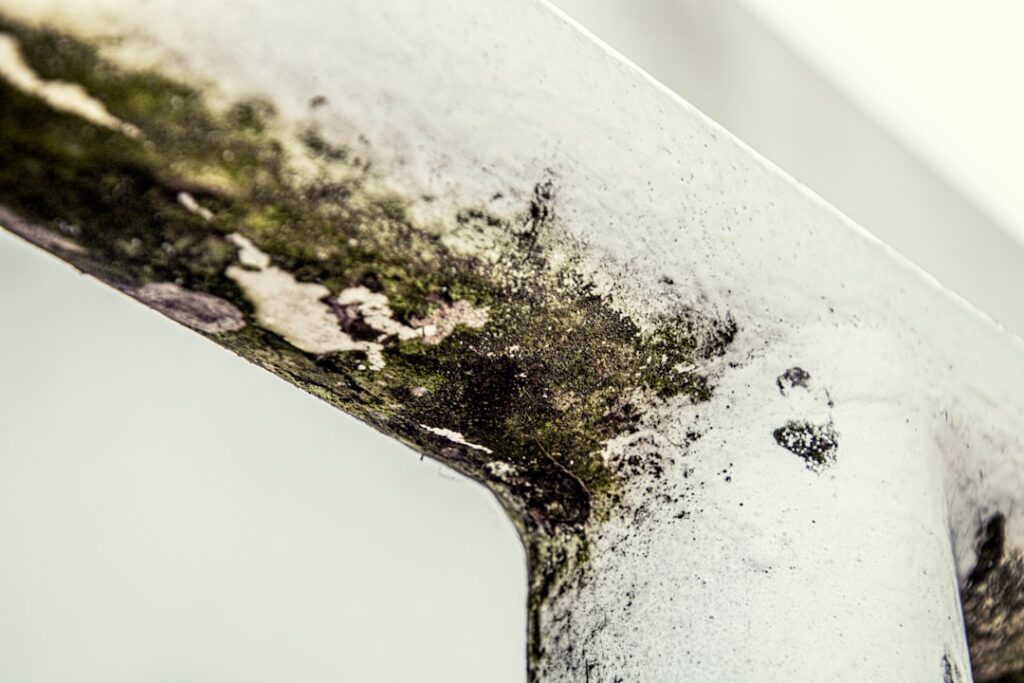
Few household phrases trigger as much alarm as “black mold.” Headlines link it to serious illness, and a dark patch in the basement can feel like a health emergency. The reality, according to public health agencies, is more measured than the panic suggests, but it is not a reason to ignore the problem either. This guide explains whether is black mold toxic in the way people fear, what the science actually supports, and how to respond. It summarizes EPA and CDC guidance current as of 2026; consult your physician for symptoms and a certified professional for testing decisions.
Is this mold, asbestos, or water damage? Get a free instant screen
Upload a clear photo of the suspect area. You'll get an instant AI screening opinion and what to do next. This is screening guidance, not a professional determination.
Screening guidance only. AI can be wrong. Confirm asbestos, mold type, or lead with lab testing or a licensed professional before acting.
Is Black Mold Toxic to Humans?
The short answer from the CDC is that the term “toxic mold” is misleading. Molds themselves are not toxic or poisonous in the way a chemical is. Certain molds, including the species most people mean by “black mold,” can produce compounds called mycotoxins under some conditions, but the molds are not inherently poisonous to touch or be near.
“Black mold” usually refers to Stachybotrys chartarum, a greenish-black mold that grows on water-damaged materials high in cellulose, such as drywall paper, ceiling tiles, and wood. The CDC states that while some studies have linked it to health effects, a definitive causal link between Stachybotrys and severe illnesses like pulmonary hemorrhage in infants has not been proven. The agency does not consider black mold uniquely dangerous compared with other indoor molds.
The practical takeaway is balanced. Any substantial indoor mold growth should be cleaned up and the moisture source fixed, regardless of color or species, because all molds can cause allergic and respiratory symptoms in sensitive people. Black mold deserves the same prompt response as other molds, not more panic and not less attention.
What Are Mycotoxins, and Do They Cause Illness?
Mycotoxins are chemical compounds some molds produce, and they are at the center of the “toxic mold” debate. The EPA acknowledges that molds can produce mycotoxins but notes that the science on health effects from inhaling them in typical indoor settings is still developing. Most documented mycotoxin poisoning historically comes from eating contaminated food, not from breathing indoor air.
That uncertainty is exactly why agencies recommend caution without alarm. The NIEHS notes that more research is needed to understand the health effects of mold exposure fully. In the meantime, the sensible position is to treat visible growth as something to remove rather than to live with, while recognizing that the worst-case stories often outrun the evidence. The guide on what kind of mold is dangerous breaks down how the various species compare.
What Symptoms Are Linked to Black Mold?
The health effects associated with black mold are largely the same as those linked to other indoor molds. The CDC lists nasal congestion, throat irritation, coughing, wheezing, eye irritation, and skin irritation among the common reactions. People with mold allergies may have stronger responses, and those with asthma can experience attacks triggered by exposure.
Severity varies enormously between individuals. A healthy adult might notice nothing while a sensitive household member develops persistent symptoms in the same home. Because symptoms overlap with colds, allergies, and other conditions, mold is hard to diagnose by symptom alone, which is why doctors and not internet checklists should evaluate health concerns. Anyone experiencing breathing difficulty should seek medical care promptly.
Who Is Most at Risk?
Vulnerability is not evenly distributed. The CDC and NIEHS identify several higher-risk groups: people with asthma or chronic respiratory disease, those with mold allergies, infants and children, older adults, and anyone with a weakened immune system. For immunocompromised individuals, certain molds can cause serious lung infections, which raises the stakes considerably.
For these groups, the response to discovering black mold should be quicker and more cautious. Removing the affected person from exposure, addressing the growth promptly, and consulting a physician about any symptoms are reasonable steps. Healthy occupants without allergies may tolerate brief exposure with no effect, but that does not mean the growth should be left in place.
How to Identify Black Mold
Color alone cannot confirm a species. Many molds appear dark or black, and distinguishing Stachybotrys from harmless lookalikes requires laboratory analysis. Stachybotrys typically appears as a slimy, greenish-black growth on chronically wet, cellulose-rich materials, but visual identification is unreliable. The guide on what black mold is called explains the naming and the lookalikes.
The EPA’s position is notable here: the agency generally does not recommend routine sampling for mold, because there are no federal standards for acceptable spore counts and because cleanup is required regardless of the species identified. If you can see or smell mold, the recommended action is the same whether it is Stachybotrys or not. Testing has a role for documentation, disputes, or health investigations, but it rarely changes the basic response.
What to Do If You Find Black Mold
The response follows the same playbook as any mold. Fix the moisture source first, because the growth will return otherwise. Small areas of mold on hard surfaces, generally under about 10 square feet, can be cleaned by a homeowner using detergent, water, and proper protective gear including an N-95 respirator and gloves.
Larger areas, mold tied to flooding or sewage, or growth on porous materials like saturated drywall call for professional remediation. Heavily contaminated porous materials usually need to be removed and replaced rather than cleaned. Throughout the process, avoid disturbing the growth without protection, since that releases spores into the air. The mold inspection and testing hub describes how to scope a problem before committing to a remediation plan.
What Conditions Let Black Mold Grow?
Black mold is less an inevitability than a symptom of specific conditions, and understanding them demystifies it. Stachybotrys requires sustained moisture, not a brief dampness, and it favors materials rich in cellulose: drywall paper, cardboard, ceiling tiles, and wood. That combination, chronic water plus cellulose food, is what allows it to establish where many other molds would not.
This is why black mold so often shows up after a slow, undetected leak, in a chronically damp basement, or behind a wall where condensation has been accumulating for weeks. Its presence is essentially a flag that water has been sitting somewhere long enough to matter. The constructive response is to read it as information: find the long-term moisture source, because that is both the cause of the black mold and the thing that will let any mold return if left unaddressed. Removing the growth without solving the chronic wetness simply invites it back.
How Black Mold Compares to Other Common Molds
Indoor environments host a range of molds, and Stachybotrys is only one of them. Cladosporium and Penicillium are among the most common indoor molds, and Aspergillus is significant because some of its species can infect immunocompromised people. Each can trigger allergic and respiratory symptoms in sensitive individuals, which is why the agencies treat the whole category similarly rather than singling out one as uniquely toxic.
Stachybotrys stands out mainly for the conditions it requires: chronic, heavy moisture on cellulose-rich materials. Its presence is therefore a marker of a serious, sustained water problem rather than a sign of unique toxicity. In practice, finding any of these molds in quantity calls for the same response, remove the growth and fix the moisture. The guide on colors of mold explains why appearance is an unreliable way to identify a species and why color alone should not drive your concern level.
Where the “Toxic Black Mold” Panic Came From
The fear surrounding black mold has a traceable history. In the 1990s, a cluster of infant pulmonary hemorrhage cases was tentatively linked to Stachybotrys exposure, and the story spread widely through media coverage. Subsequent scientific review found the evidence insufficient to establish that link, and the CDC has stated that a causal connection was not proven. The headlines, however, outlived the correction, and “toxic black mold” became a fixture of public worry.
The lasting effect is a mismatch between perception and evidence. Many homeowners believe black mold is categorically more dangerous than other molds, while public health agencies treat it as one of many molds that warrant cleanup. Understanding this background helps you respond proportionately: take the growth seriously enough to remove it and fix the moisture, but recognize that the apocalyptic framing common online is not supported by the agencies that study the issue. It also explains why some contractors lean on the term to justify large bills.
How Black Mold Affects Indoor Air Quality
Whatever the species, visible mold growth indicates a moisture problem and contributes spores and fragments to the indoor air. The American Lung Association notes that mold can worsen indoor air quality and trigger respiratory symptoms in sensitive people. Spores become airborne when growth is disturbed, and they can circulate through a home, especially if the HVAC system pulls them into ductwork.
This is why containment matters during removal and why simply living alongside visible mold is not advisable. Even if a given household member feels fine, ongoing growth degrades air quality and can affect more sensitive occupants. Improving ventilation, controlling humidity below 50 percent, and addressing growth promptly all support cleaner indoor air. The point is consistent with the broader guidance: the response to black mold is the same prompt cleanup and moisture control that any indoor mold deserves, neither minimized nor exaggerated.
Cleaning Versus Living With It
Some homeowners, reassured that black mold is not uniquely toxic, conclude they can leave it alone. That is the wrong lesson. The agencies’ position is not that mold is harmless, but that black mold is not special among molds, and all molds should be removed. Leaving growth in place allows it to expand, continue producing spores, and signal an unaddressed moisture problem that may be damaging the structure.
The practical middle path is straightforward. Treat any visible growth as something to clean up, size the response to the area, and prioritize finding the water source. Small patches on hard surfaces are a homeowner job; larger growth, porous materials, and hidden moisture call for professional help. The guide on black mold in the basement shows how this plays out in the most common location for it, where below-grade moisture keeps the growth coming back until the dampness is controlled.
When to Call a Professional
Professional help makes sense when the affected area is large, when mold recurs despite cleaning, when a musty smell has no visible source, or when occupants have health concerns that point to indoor air quality. A qualified inspector can locate hidden moisture, measure the extent of growth, and recommend a remediation scope independent of the crew that performs the work.
For Front Range homeowners, basements and crawl spaces are common trouble spots because of below-grade moisture. Discovering black mold there is not cause for panic, but it is a clear prompt to find the water source and address the growth. The combination of an honest assessment and prompt moisture control resolves the vast majority of cases.
A useful rule of thumb is to size the response to the problem, not to the fear the word “black” provokes. A small patch on a hard surface is a homeowner job regardless of color. A large, recurring, or hidden problem warrants professional eyes, again regardless of color. Letting the actual size, surface, and moisture source guide the decision keeps you from both underreacting to a real moisture issue and overpaying out of alarm. That measured approach is exactly what the public health agencies recommend.
References
- Stachybotrys chartarum (Black Mold) — Centers for Disease Control and Prevention
- A Brief Guide to Mold, Moisture and Your Home — U.S. Environmental Protection Agency
- Mold and Your Health — National Institute of Environmental Health Sciences
- Mold and Indoor Air Quality — American Lung Association
If black mold has you concerned about hidden moisture in your Front Range home, we can connect you with a vetted local inspector for an honest assessment. Reach out through our contact page to find one near you.