Getting Rid of Mold After Water Damage: A Step Plan
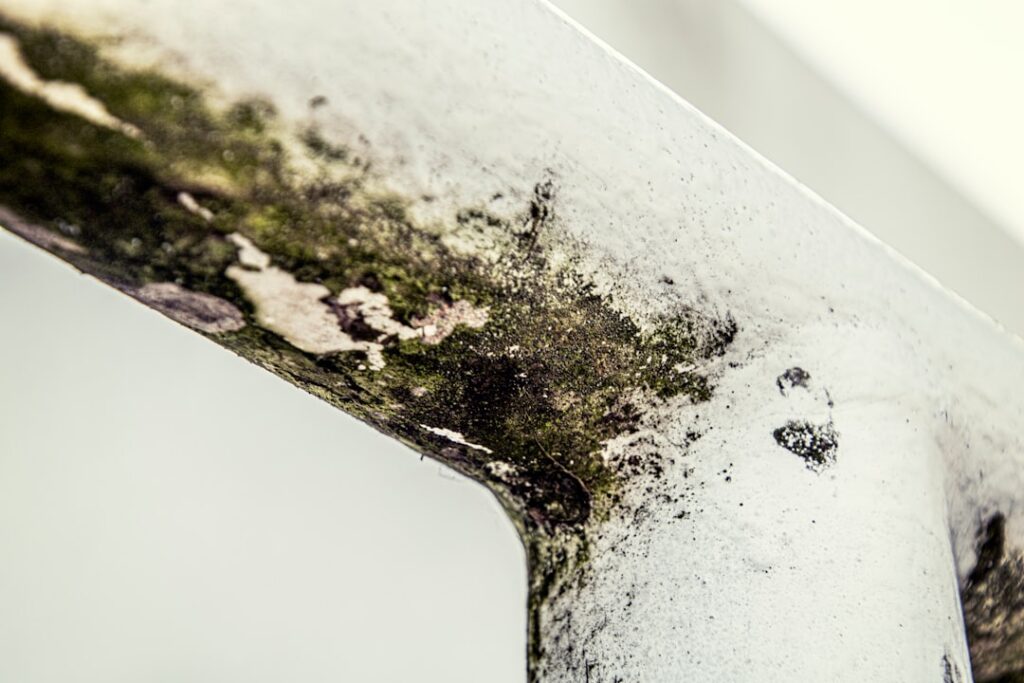
Whether a soaked room turns into a quick drying job or a full mold remediation comes down to one variable: how fast the water comes out. The EPA is explicit that wet or damp materials should be dried within 24 to 48 hours to prevent mold growth (EPA, Mold Cleanup in Your Home). Miss that window and the same square footage that could have been dried in place now needs to be cut out, contained, and cleared. This page walks the actual sequence, in order, with the thresholds that decide each fork.
Is this mold, asbestos, or water damage? Get a free instant screen
Upload a clear photo of the suspect area. You'll get an instant AI screening opinion and what to do next. This is screening guidance, not a professional determination.
Screening guidance only. AI can be wrong. Confirm asbestos, mold type, or lead with lab testing or a licensed professional before acting.
The clock that decides everything
Mold does not need a special condition to start. It needs a food source (drywall paper, wood, carpet backing, dust) plus moisture, and it can colonize within 24 to 48 hours on those cellulose surfaces. Three things move a given event faster or slower through that window:
- Temperature. Growth accelerates above roughly 70 degrees Fahrenheit, so a heated finished basement is more at risk than an unheated crawl space.
- Substrate. Paper-faced drywall, carpet pad, and OSB sheathing feed mold quickly; fiberglass insulation, glass, and concrete are far slower.
- Water source. Clean supply-line water buys you more time than gray or black water, which carries its own microbial load from the first minute.
Caught inside 24 hours, most losses stay pure drying: no demolition, no containment. Past 72 hours, mold remediation is almost always part of the job. Everything below is about getting to the first outcome and handling the second when you can’t.
Step 1: Stop the water before anything else
Drying or scrubbing before the source is stopped guarantees the problem comes back. Shut a burst supply line at the fixture valve or the main. Tarp a roof leak until permanent repair. Divert foundation seepage away from the wall. A contractor who quotes mold cleanup without first confirming the source is fixed is selling a temporary result. Common culprits worth checking: water-heater tank failures, washing-machine and icemaker supply lines, dishwasher and refrigerator connections, toilet supply lines, in-wall plumbing, HVAC condensate overflow, and exterior grading that funnels rain toward the foundation.
Step 2: Extract standing water, then dry aggressively
Get liquid water out fast. A wet/dry vacuum handles small volumes; larger floods need a pump or truck-mounted extraction. Then run air movers and dehumidifiers together: air movers push air across wet surfaces to speed evaporation, and dehumidifiers pull that moisture back out of the air so it doesn’t just migrate to another wall. A roughly 200-square-foot affected area typically runs three or four air movers and one or two dehumidifiers for three to five days. Track progress with a moisture meter rather than by touch. Restoration targets are generally below about 16 percent moisture content for wood framing and back to a documented dry standard for drywall. If a contractor shows up with two box fans for a 500-square-foot loss, they are undersized, and undersized drying is exactly how you manufacture a mold problem. For finding wet cavities the meter can’t reach, see how to detect mold in walls.
Step 3: Decide what dries in place and what comes out
After the drying run, some materials recover and some don’t:
- Drywall wet for under 24 hours and promptly dried usually stays. Drywall that sat wet 72 hours, or shows staining or softness, gets cut out.
- Carpet pad is almost always replaced; the foam holds water and feeds growth.
- Carpet can sometimes be saved if extracted and dried within 24 hours, but is often replaced.
- Insulation is routine replacement, wet fiberglass loses its R-value until fully dry (nearly impossible inside a closed cavity), and cellulose insulation rarely survives wetting.
- Hardwood that has cupped or warped needs refinishing or replacement.
Water travels sideways through porous material, so the affected zone is wider than the visible stain. Restoration practice is to extend inspection and drying at least 18 inches past the edge of visible wetting.
Step 4: Remediate mold when you’re past the window
If material was wet longer than 72 hours, the water was gray or black, or growth is already visible, you’re now doing remediation, not just drying. The scope depends on size. The EPA’s homeowner guidance draws the line at roughly 10 square feet: below that, a homeowner using an N-95 respirator, gloves, and goggles can often handle it; above it, or with a large or recurring problem, bring in a professional who can build containment and run HEPA filtration (EPA). Note what the EPA does not recommend: routine post-job “mold count” testing, and biocides/bleach as a standard step, thorough drying and physical removal are what actually resolve the problem. For salvageable finished surfaces, our guide on cleaning mold on porous surfaces covers what wipes off and what has to go. If you want an independent read on whether the growth you found is a health concern, see is black mold from water damage dangerous.
Water categories, and why they change the safety rules
Restoration standards sort water by contamination, and the category dictates protective equipment and disposal:
| Category | Typical source | Handling |
|---|---|---|
| 1 (clean) | Supply line, icemaker, water heater | Gloves, wet vacuum; drying often saves materials |
| 2 (gray) | Dishwasher/washer discharge, aquarium | Respirator and skin coverage; more porous material discarded |
| 3 (black) | Sewage, storm/flood water, long-stagnant water | Full PPE; wet porous materials disposed as contaminated waste |
Clean water degrades to gray or black if it sits or contacts contaminated surfaces, so the same leak worsens with every hour. Do not attempt category-3 cleanup yourself: the bacterial and pathogen risk outweighs the mold risk. The CDC’s guidance on cleaning up mold after flooding covers the protective steps in detail (CDC, Mold Cleanup After a Flood).
When the damage is old and mold is already there
Most homeowners don’t catch the leak live, they find staining and growth on the back of a basement wall, or chase down a musty smell to a slow leak that’s been weeping for months. The sequence is the same but compressed at the front: find and stop the active source, photograph everything, and bring in a mold inspector if growth is visible or suspected behind finished surfaces. If insurance might apply, file before starting work. Old damage with established growth rarely earns full coverage, but it may be partly covered if the source traces back to a sudden, covered event. Our mold inspection hub covers the diagnostic stage when mold is suspected but not yet confirmed, and the related walkthrough on mold after water damage goes deeper on what growth on a dried-out surface actually means.
Colorado Front Range specifics
Two local patterns dominate. Summer thunderstorms drop intense, short-duration rain that overwhelms gutters and downspouts and pushes water into window wells and basements; winter cold snaps burst supply lines in poorly insulated exterior walls and crawl spaces. The dry intermountain climate helps drying, ambient humidity is usually low, but it hides leaks, because surfaces dry visibly while the cavity behind them stays wet. In older Denver, Boulder, and Colorado Springs neighborhoods built before downspout extensions and modern grading were standard, chronic foundation seepage produces low-grade recurring mold that insurance won’t touch. Fix the exterior drainage first, or any interior remediation just reappears. Colorado’s health department publishes practical mold guidance for residents (CDPHE, Mold and Your Health).
Insurance, in one pass
Standard homeowner policies cover sudden, accidental water losses, burst pipes, appliance failures, storm intrusion through damaged building components. They generally exclude gradual leaks, foundation seepage, surface flooding, and mold that grew because a known problem went ignored. Mold coverage is often capped at $5,000 to $10,000 unless you carry a specific endorsement. Before signing any contractor for potentially covered work, document the discovery timestamp, photograph the affected area before cleanup, keep the failed part, and ask the adjuster for a written cause-of-loss determination. Disputes almost always turn on whether the leak was sudden or gradual, and whether you mitigated fast enough, so the timeline you document is the claim.
This guide reflects EPA, CDC, and CDPHE mold guidance current as of 2026; consult a licensed restoration contractor for site-specific scope and your physician for any symptoms tied to the water event. On a Front Range property and want an independent inspector to assess the damage before you sign with a restoration company? Reach out through our contact page.
Mold removal & cleanup picks
For a small, contained patch (under ~10 sq ft) these EPA-friendly removers handle surface mold. Larger or recurring growth warrants a professional assessment first.
| Product | Why | Buy |
|---|---|---|
 RMR-86 Instant Mold Stain Remover RMR-86 Instant Mold Stain Remover | Fast-acting on stains; ventilate and wear PPE. | Amazon — $18.38 |
 Concrobium Mold Control Concrobium Mold Control | No-bleach formula that also helps prevent regrowth. | Amazon — $13.47 |
 Mold Armor Mold & Mildew Remover Mold Armor Mold & Mildew Remover | Widely stocked bathroom/surface remover. | Amazon — $22.98 |