Mold on Porous Surfaces: Why You Replace, Not Clean
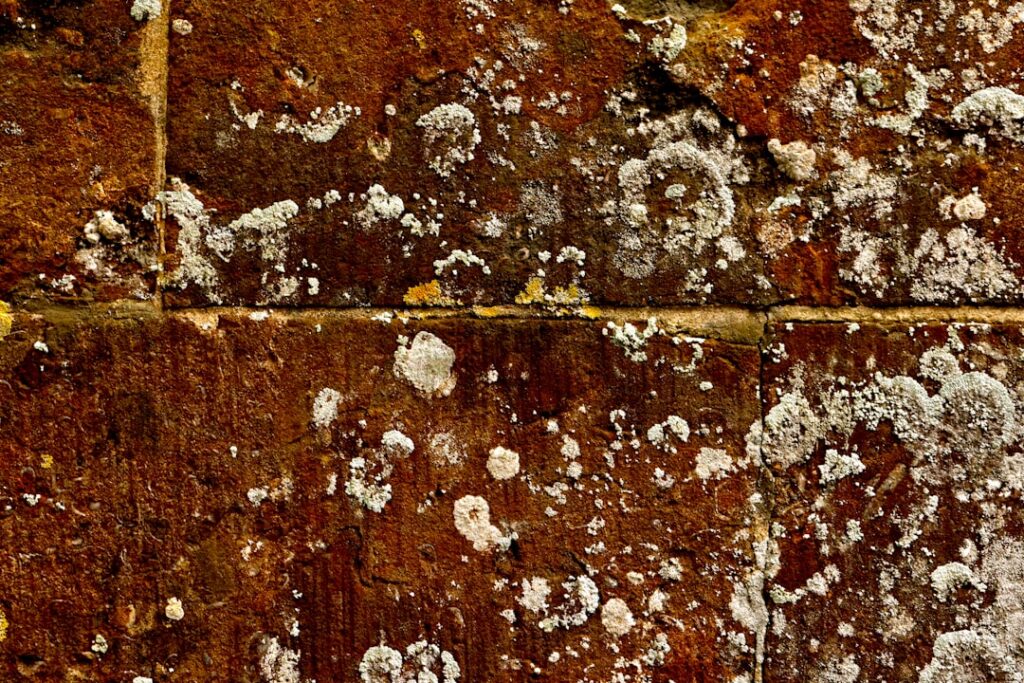
If you searched for a way to clean mold out of moldy drywall, carpet, or ceiling tile, the honest answer is that you usually don’t clean it at all. The EPA’s homeowner guidance is blunt on this point: “Absorbent or porous materials, such as ceiling tiles and carpet, may have to be thrown away if they become moldy.” The reason is physical. Mold sends thread-like hyphae down into the fibers, below the surface a sponge or spray can reach. You can remove the dark staining and the material will look clean, while a living colony keeps growing underneath and comes back in weeks. Cutting out and replacing porous material is faster, cheaper, and far more durable than trying to scrub it.
Is this mold, asbestos, or water damage? Get a free instant screen
Upload a clear photo of the suspect area. You'll get an instant AI screening opinion and what to do next. This is screening guidance, not a professional determination.
Screening guidance only. AI can be wrong. Confirm asbestos, mold type, or lead with lab testing or a licensed professional before acting.
Which materials are porous enough to discard?
The discard-it category covers drywall (gypsum board), unsealed and painted wood trim, particle board, OSB, ceiling tile, upholstery, mattresses, carpet face fiber, carpet padding, fiberglass and cellulose insulation, wallpaper, books, and paper. Two properties put a material here: it absorbs water into its internal structure rather than just on the surface, and it contains organic matter mold can eat.
A few materials sit in between. Painted wood is partly sealed but lets mold in wherever the paint film has failed. Concrete is technically porous, yet the only food is surface dust and biofilm, so it usually cleans up. Genuinely non-porous surfaces — glazed tile, glass, hard plastic, metal, sealed stone — are the ones where scrubbing works. That is where the EPA notes hard surfaces can be cleaned with detergent and water, or a bleach solution of no more than one cup of household bleach per gallon of water. On porous material, the same bleach fails: it is mostly water by volume, the chlorine reacts only at the surface it touches, and the leftover moisture soaks in and feeds regrowth.
The cut-and-replace sequence for drywall
Moldy drywall is the decision most homeowners actually face. The standard sequence:
- Cut the affected drywall at least 12 inches past the visible growth on every side. Mold routinely extends beyond the stain you can see.
- Make cuts along stud or joist centerlines so the replacement piece has framing to fasten to.
- HEPA-vacuum the cut edges to catch loose spores, then lift the section out and seal it inside a heavy-duty contractor bag before it leaves the room.
- HEPA-vacuum the exposed framing, then sand or wire-brush any surface mold off the studs.
- Fix the moisture source and dry the cavity until wood moisture reads 12 to 15 percent before you close the wall back up.
Skip the dry-down and the new drywall starts life against a wet, still-contaminated cavity, and the colony returns. A pin moisture meter in the $30 to $50 range is the verification tool here; if you don’t own one, our rundown of the right wall moisture meter covers what to look for.
Carpet, pad, and insulation
Carpet behaves on a timeline. The EPA advises cleaning and drying wet building materials and furnishings within 24 to 48 hours to prevent mold. Carpet face fiber caught inside that window from clean-water flooding can sometimes be saved with professional hot-water extraction. Past that — sustained wetting, gray or black water, or any visible mold — the carpet comes out. Carpet pad is more conservative still; it holds moisture in a way that makes drying unreliable, so replacement is the default after any meaningful water event.
Insulation is rarely salvageable. Wet fiberglass batt with visible mold gets discarded because spores lodge permanently between the fibers. Cellulose is almost always a total loss, since its recycled-paper substrate is itself the food source. Closed-cell spray foam resists water better and can sometimes be trimmed back to clean substrate. Acoustic ceiling tiles are cheap enough that cleaning them never pays — replace them.
The one real exception: solid wood framing
Structural framing lumber earns salvage attention. If a stud, joist, or rafter shows surface mold but stays solid when you press a screwdriver into the grain (the tip should not sink in), you can usually keep it: HEPA-vacuum, sand or wire-brush the visible growth, then treat with a borate solution — roughly one cup of borate powder per gallon of warm water — and let it dry in place. Borate is the rare chemical that belongs in porous work because it penetrates wood fiber and leaves durable antifungal protection. Keep it inside wall cavities that will be closed up, not on finish surfaces children or pets touch, since borate is mildly toxic in quantity.
Framing that has gone soft and punky from prolonged saturation is a different problem — that’s structural repair, not mold cleaning, and belongs to a contractor or engineer. The broader question of when framing salvage stops making sense is covered on our mold inspection hub.
Does replacing really cost more than cleaning?
The usual objection is money — that cleaning must beat replacement. Once you count labor and regrowth, the math flips. For a typical four-square-foot moldy drywall patch, the material to replace it — board, tape, compound, paint — runs under $20, and a moderately handy homeowner finishes in a few hours, once. A cleaning attempt costs the same labor, buys the cleaning supplies, and carries a high odds of regrowth that makes you redo the whole thing in weeks. Replacement wins on total cost because you only do it once.
Containment and protective gear
Cutting moldy porous material throws far more spores than wiping a hard surface, so containment matters more during demolition. For a homeowner-scale job under 10 square feet, hang a single layer of 4-mil plastic over the doorway taped to the floor, and close or filter-tape the room’s HVAC supply and return. Wear an N95 respirator (not a surgical or cloth mask), nitrile gloves, splash goggles, and disposable coveralls. The EPA sets 10 square feet as the line where homeowner cleanup gives way to professional remediation with negative-pressure HEPA containment.
People at higher risk — children, pregnant household members, people with asthma or weakened immune systems — should be out of the house during demolition, not just out of the room, because spores travel through doorways and HVAC returns before they settle. The CDC links damp, moldy indoor environments to upper-respiratory symptoms, coughing, and wheezing, and to worse outcomes for people with asthma or mold allergy.
Finding the hidden growth before you cut
The worst porous-material mold is usually not the patch on the room side of the wall — it’s on the cavity side, the back of a ceiling tile, or the underside of a subfloor, and by the time staining shows through it has often been wet for weeks. Three signs point to it: a persistent musty odor in a room with no visible growth, respiratory symptoms that ease when occupants leave that specific room, and water staining that reappears after the original leak seemed fixed.
Before you open a wall on a hunch, two tools narrow it down. A deep-probe moisture meter finds elevated moisture in framing that hasn’t shown surface symptoms yet, and a flexible borescope camera pushed through a small drilled hole lets you see inside the cavity without large-scale demolition. The same visual-plus-moisture combination is how inspectors scope a cavity problem — our guide on how to detect mold in walls walks through the diagnostic in more depth.
This page reflects current EPA and CDC mold guidance; it is general information, not a substitute for professional testing. If you’re unsure whether porous materials in your Front Range home should be cleaned or replaced, reach out through our contact page for a referral to a vetted local inspector.
References
- Mold Cleanup in Your Home — U.S. Environmental Protection Agency
- A Brief Guide to Mold, Moisture, and Your Home — U.S. Environmental Protection Agency
- About Mold — Centers for Disease Control and Prevention
- Healthy Homes Program — U.S. Department of Housing and Urban Development