Black Mold Damage: What Homeowners Need to Know
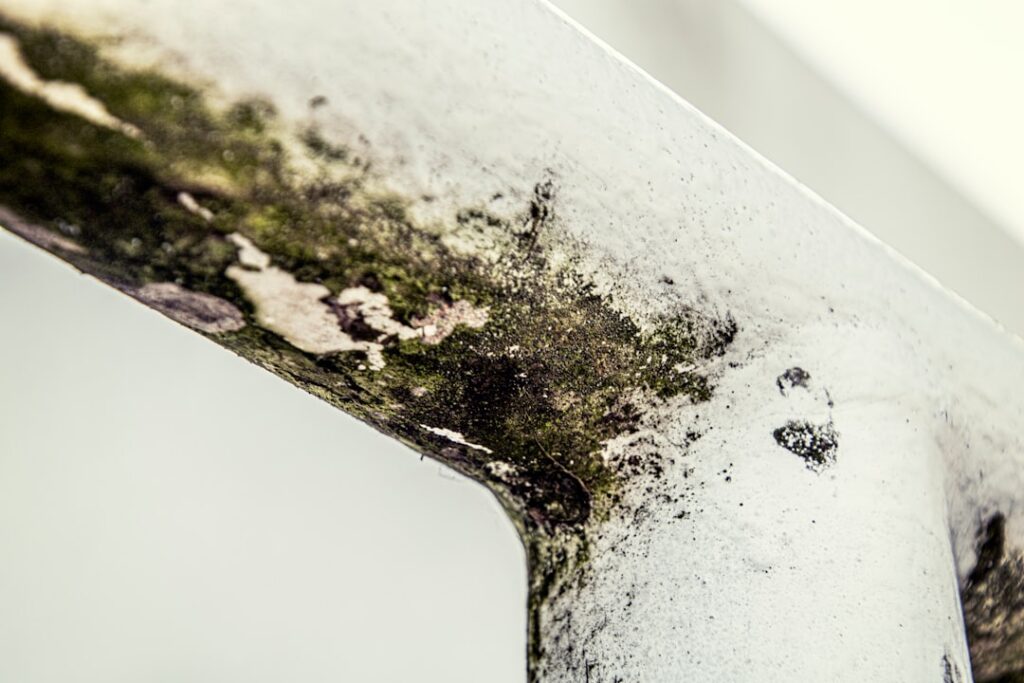
Black mold damage is a property problem first and a health question second. When dark fungal colonies take hold on framing, drywall, or finished surfaces, the visible staining is only one part of the picture — moisture has already compromised the substrate underneath, and the colony will keep advancing as long as conditions stay wet. This guide summarizes EPA, CDC, and NIEHS guidance on residential mold growth and is written as general information for homeowners. It is not medical advice. If anyone in the household has symptoms they believe relate to mold exposure, those questions belong to a physician — diagnosis and treatment of mold-related illness require professional medical evaluation. Here we focus on the structure, finishes, and contents of the home.
Is this mold, asbestos, or water damage? Get a free instant screen
Upload a clear photo of the suspect area. You'll get an instant AI screening opinion and what to do next. This is screening guidance, not a professional determination.
Screening guidance only. AI can be wrong. Confirm asbestos, mold type, or lead with lab testing or a licensed professional before acting.
What Black Mold Actually Damages in a House
Black mold damage shows up in three concentric layers: surface finishes, the substrate behind them, and the contents stored in affected rooms. Surface damage is the easiest to see — staining on paint, paper-faced drywall, grout lines, caulk beads, baseboards, and exterior trim. The dark discoloration is mostly a cosmetic indicator. The harder problem sits behind the surface, in the cellulose paper of drywall, the wood fibers of sheathing and joists, and the cavity insulation that wicked water from a leak. By the time staining is visible on a wall, the back side of the drywall and the framing it contacts have usually been wet for weeks. EPA mold guidance describes this layered pattern in its Mold Remediation in Schools and Commercial Buildings document, which homeowners can read as a general decision framework.
Contents damage is the third layer, and it is often the costliest line on an insurance estimate. Upholstered furniture, mattresses, books, paper records, electronics, drywall-backed cabinetry, and HVAC duct liner can all absorb spores and moisture from an actively growing colony. Some items clean back to a serviceable condition. Others — particularly porous goods that were saturated and then dried with colonies already established — are written off in remediation plans. The decision is not about whether the item looks clean; it is about whether the porosity will release spores after the fact.
How Moisture and Microbial Growth Degrade Wood and Drywall
Wood and paper-faced gypsum are cellulose-rich substrates, and cellulose is food for the molds homeowners commonly find on damp building materials. The mechanism is straightforward. Fungal hyphae penetrate the fiber, secrete enzymes that break the cellulose into sugars, and absorb the sugars as nutrients. The material loses mass, structural integrity, and dimensional stability. In drywall, paper facing becomes soft and may delaminate from the gypsum core. In wood framing, repeated wetting and microbial activity can produce visible decay patches, raised grain, and softening that a probe will sink into. The Centers for Disease Control and Prevention notes that mold can cause damage to building materials over time even when the structure is no longer actively wet — once cellulose is consumed, it does not grow back.
Drywall damage is typically the most photographed because it shows. Staining begins on the back side facing the wet stud bay and migrates through the paper layer to the painted surface. By the time the room-side surface is visibly black, the back side is usually saturated and the gypsum core may be crumbling. Cabinet boxes, particle-board shelving, and MDF trim follow the same pattern faster because their adhesive binders fail when wet. Solid lumber is more durable but not immune — extended exposure causes the same softening and color change.
Damage Patterns by Room and Source
Different water sources produce different black mold damage signatures, and recognizing the pattern helps homeowners scope the repair. Bathroom damage usually starts at the wet edge of a shower or tub surround and creeps along baseboards, around toilet flanges, and behind vanities. The substrate is often the back of paper-faced drywall plus the subfloor under the toilet flange. Kitchen damage tracks the dishwasher, the under-sink cabinet, and the refrigerator water line. Laundry-room damage tracks the supply hoses, the drain standpipe, and the dryer vent. Basement damage tracks the foundation perimeter and any plumbing penetration in the slab.
Attic damage is its own category. Roof leaks produce sheathing stains that spread across multiple framing bays. Bath-fan vents that terminate in the attic instead of through the roof produce a halo of staining around the duct outlet. Ridge-vent or soffit ventilation failures produce broader, more diffuse staining on the underside of the roof deck. The mold inspection process for Front Range homeowners we describe on the pillar page walks through these source-attribution patterns in detail, because correctly identifying the moisture path is the only way to make the repair stick.
Structural vs. Cosmetic Damage
Homeowners often ask whether black mold has weakened the framing of the house. The answer depends on duration and depth. Cosmetic staining on the surface of a stud — discoloration without softening — usually means the wood is intact and the colony grew on whatever was on the surface (dust, paper facing, paint film). Structural damage means the wood has lost section. A probe sinks into the grain. Fasteners no longer hold. The piece flexes when load is applied. Structural damage of this kind from microbial growth alone is uncommon in residential framing exposed for a typical leak duration of weeks to months. Sustained wetting over many years can produce it, particularly in concealed cavities like rim joists at slab-on-grade walls or crawlspaces with chronic groundwater intrusion.
Cosmetic damage is far more common, and it still costs money. Paint cannot be applied over actively wet, contaminated drywall paper. Stained drywall sections must be cut out, the cavity dried, and new gypsum installed. Trim with visible colonies must be removed, and the framing behind it cleaned per EPA remediation principles. None of that is repairable with bleach alone. Articles like our walkthrough of how and how fast black mold spreads explain why surface treatment without addressing the moisture source typically fails within months.
HVAC and Duct System Damage
HVAC components deserve a separate paragraph because their replacement is expensive and because contamination of the duct system spreads spores throughout the home every time the blower runs. Air handlers in damp basements can grow visible colonies on the cabinet exterior, on the cooling-coil drain pan, and on insulation lining the supply plenum. Flexible duct with damaged inner liner can harbor colonies along the corrugations. Filter housings with chronic condensation grow surface mold on the filter media and frame. EPA does not recommend duct cleaning as a routine measure for healthy systems, but when visible mold growth is found inside the system, the agency recommends consulting a qualified professional and addressing both the cleaning and the underlying moisture cause.
Insurance, Documentation, and the Repair Decision
Black mold damage is treated differently by different policies. Sudden, accidental water releases — a burst supply line, an overflowing tub, a roof penetration from hail — are often covered, and the resulting mold cleanup may be included up to a sub-limit. Long-term seepage, gradual deterioration, and maintenance failures are generally excluded. Homeowners benefit from documenting the source the moment damage is discovered: dated photographs of the leak, the saturated materials, and any visible colonies; receipts for emergency dry-out; and a written scope from a remediation contractor. The plain-language identification guide for black mold signs we publish on the cluster gives homeowners a sequence for capturing the right photos before any cleanup begins.
How to Decide What Stays and What Goes
For affected materials, the EPA remediation document lays out a porosity-based decision. Non-porous materials with surface contamination — metal flashing, glass, glazed tile, hard plastic — can usually be cleaned and kept. Semi-porous materials — finished wood trim, sealed concrete, vinyl flooring — may be cleanable depending on penetration depth. Porous materials with embedded growth — paper-faced drywall, carpet, fabric, ceiling tile, insulation, particle board — are generally removed and replaced. The principle is conservative because porous material can release spores after cleaning even when the visible surface looks acceptable.
When to Call a Professional
EPA guidance suggests that homeowners can handle areas of mold growth smaller than about 10 square feet themselves, provided the underlying moisture source has been corrected and proper personal protective equipment is used. Larger areas, HVAC contamination, contamination from sewage or other contaminated water, and any situation involving immunocompromised occupants are reasons to bring in a qualified remediation contractor. For Front Range homeowners scoping a project, the house black mold overview on this site outlines the difference between inspection, testing, and remediation, and which professional handles which step.
References
- Mold Remediation in Schools and Commercial Buildings — U.S. Environmental Protection Agency
- About Mold — Centers for Disease Control and Prevention
- Mold Health Information — National Institute of Environmental Health Sciences
- A Brief Guide to Mold, Moisture, and Your Home — U.S. Environmental Protection Agency
- Mold and Dampness — American Lung Association
Front Range homeowners assessing mold damage before a sale, after a leak, or during renovation can connect with a vetted local inspector through our contact page for a moisture-mapped scope.