Black Mold Signs: A Plain-Language Identification Guide
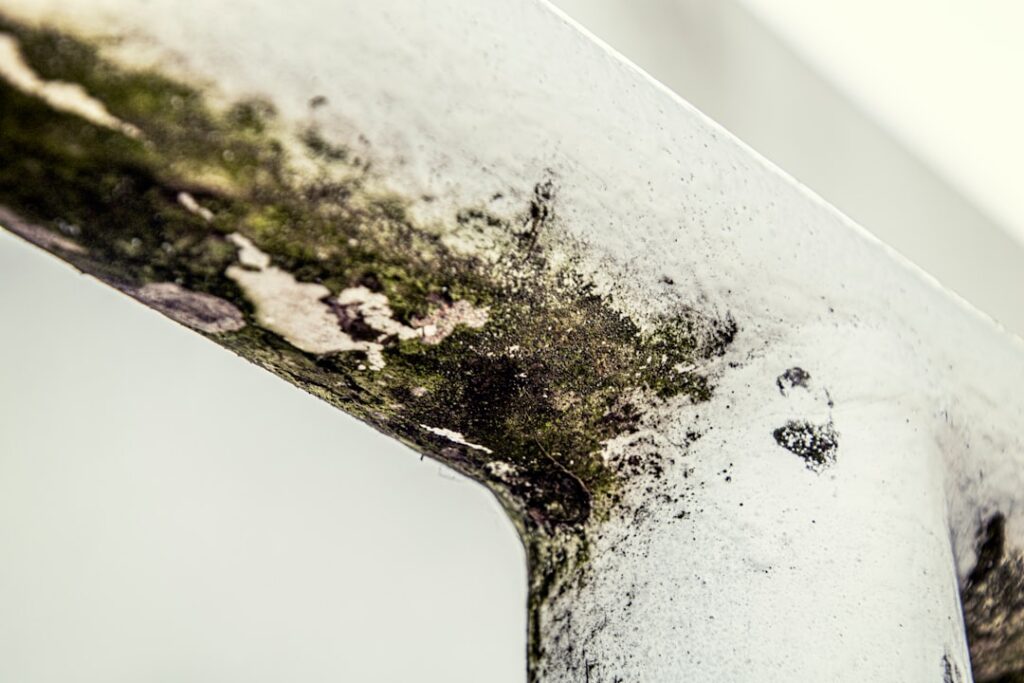
Recognizing the early signals of indoor mold lets homeowners act before a small problem becomes a major remediation. This guide walks through visual, olfactory, environmental, and health-related signs of indoor mold growth, drawing on EPA, CDC, and NIEHS guidance. It is not medical advice — anyone with symptoms that might tie to mold should consult a physician. The home-side signs below help direct attention to the right rooms and materials, not diagnose anyone’s illness.
Is this mold, asbestos, or water damage? Get a free instant screen
Upload a clear photo of the suspect area. You'll get an instant AI screening opinion and what to do next. This is screening guidance, not a professional determination.
Screening guidance only. AI can be wrong. Confirm asbestos, mold type, or lead with lab testing or a licensed professional before acting.
Black Mold Signs: The Categories Worth Watching
Indoor mold rarely appears without warning. Four categories of signs typically precede or accompany visible colonies: visible patterns on building surfaces, persistent or musty odors, environmental indicators of underlying moisture, and health symptoms that correlate with home occupancy. A homeowner who learns to read these signs catches most mold issues at a stage where DIY response is still appropriate.
“Black mold” in casual usage usually means Stachybotrys chartarum or one of several dark-pigmented species. The signs below apply broadly across indoor mold, with notes where specific patterns point to particular species. Our parent mold inspection hub covers the response side once signs lead to a finding.
Visible Sign 1: Surface Discoloration in Wet-Prone Areas
The clearest visual sign is staining, fuzz, or speckling on surfaces in rooms with moisture exposure. Bathroom ceiling corners. The wall behind a toilet tank where condensation pools. Window sills and frames where condensation has formed on cool glass. The grout lines in showers. The wall behind a washing machine where supply lines run. Under-sink cabinets where slow drips have started.
Color varies. Black or dark-green is the headline color, but indoor mold also appears in white, gray, yellow, orange, pink, and brown depending on species and substrate. Cladosporium often appears olive green to black. Aspergillus ranges across many colors. Penicillium tends toward blue-green. Stachybotrys is consistently greenish-black with a slightly slimy texture when actively growing.
Visible Sign 2: Water Staining Without Visible Mold Yet
Brown or yellow water stains on ceilings, walls, or trim indicate prior or active water intrusion. These stains often appear before mold becomes visible. The classic ceiling stain expanding outward from a single point suggests a roof or plumbing leak above. Streak patterns running down walls suggest water tracking from a higher source. Tide marks at the bottom of walls suggest groundwater intrusion.
Water staining alone does not confirm mold, but it confirms moisture intrusion in the substrate behind the visible surface. Mold establishment within those wet materials is a likely follow-on if the source has not been addressed. A moisture meter on the stained area distinguishes currently wet substrate (likely growing or going to grow) from a dried-up historical event.
Visible Sign 3: Material Deterioration
Drywall that bulges, sags, or has soft spots when pressed indicates water-damaged gypsum, which almost always carries mold colonization on the paper facing if the wetting has been sustained. Peeling or bubbling paint suggests moisture pushing through from behind the wall. Warped or cupped wood flooring indicates substrate wetting that often supports mold underneath. Crumbling baseboards point to floor-level water intrusion with associated growth.
Visible deterioration is usually a late-stage sign. By the time the structure is showing physical changes, the underlying moisture problem has been active for weeks or months, and remediation scope expands accordingly.
Olfactory Sign: The Musty Odor
Mold produces volatile organic compounds (mVOCs) during growth that give characteristic musty, earthy odors. The smell often precedes visible growth, especially for concealed colonies behind walls or in HVAC systems. CDC and EPA both note musty odor as a primary indicator worth investigating even when no visible growth is apparent.
The smell tends to be strongest near the source and on humid days when mold metabolism accelerates. Homeowners often note that the odor is more obvious upon entering the home after time away, since occupants quickly adapt to ambient smells. A musty odor with no visible source warrants a moisture-meter walkthrough of likely problem areas: HVAC closet, basement, behind washing machine, under sinks, around bath fans, near roof leaks. The how to know if you have black mold guide covers the odor-driven search process.
Environmental Sign 1: High Humidity Readings
Sustained indoor relative humidity above 50% creates conditions for both mold growth and dust-mite proliferation. A $30 hygrometer measures it. Homes with multiple readings above 60% during summer or sustained above 50% year-round are at elevated risk. Basements, bathrooms, and crawl spaces should be checked individually because they often run higher than the main living space.
EPA’s recommendation is to maintain indoor RH between 30% and 50% as a year-round target. Achieving that often requires active dehumidification in basements during summer and proper bathroom ventilation through external-venting exhaust fans. Energy.gov moisture control guidance covers the humidity-management side in detail.
Environmental Sign 2: Condensation Patterns
Recurrent condensation on windows, exterior walls, cold water pipes, or HVAC components indicates that local conditions reach dew point regularly. Wherever condensation lands repeatedly, mold growth becomes likely on adjacent porous materials. Single-pane windows in cold-climate winters, uninsulated cold water pipes in humid basements, and cool exterior walls behind furniture pushed against them are the classic patterns.
Visible condensation is informative; concealed condensation inside wall cavities or attics is more dangerous because it goes unnoticed. Attic mold is a common finding after homes are tightened up without addressing bathroom or kitchen exhaust paths that vent into the attic. The early stages of black mold timeline guide covers concealed condensation patterns.
Environmental Sign 3: Recent Water-Loss Event
Any of the following in the past 12 months raises mold establishment risk: roof leak, plumbing leak, supply line burst, dishwasher overflow, washing machine hose failure, water heater leak, ice dam, flooded basement, slab leak. Water-damage restoration guidance treats the first 48 hours as the critical drying window; events dried within that window rarely produce visible mold, while events with delayed response frequently do.
Homeowners who experienced a water event should monitor the affected area visually and with a moisture meter for several weeks after drying. Growth onset typically appears 5–14 days after sustained wetting begins, with Stachybotrys establishment taking longer than Aspergillus or Penicillium.
Health Correlation Signs
Health-symptom patterns can be a sign of indoor mold exposure, though never a confirmation without clinical workup. The patterns most associated with indoor mold in CDC and NIEHS summaries include persistent allergic symptoms (sneezing, congestion, watery eyes, throat scratching, cough), worsening asthma, headaches that improve away from home, and skin rashes. The clinical hallmark is timing — symptoms that improve away from the home and recur on return suggest an indoor trigger.
Multiple household members reporting similar symptoms is more compelling than a single complaint, since other causes (cold, seasonal allergies, work stressors) are less likely to track across multiple people simultaneously. A physician should evaluate any persistent symptom; the home-side investigation runs in parallel.
Concealed Growth Indicators
Some mold cases never become visibly obvious. Indicators that growth may be hidden include persistent musty odor with no visible source, allergic-pattern symptoms in occupants without finding visible growth, recurrent staining or efflorescence on basement walls, repeated water-related events at the same location, and HVAC systems with persistent moisture in drip pans or coils.
Locating concealed growth typically requires a combination of moisture mapping, borescope inspection through small drilled holes, thermal imaging to find temperature anomalies suggesting wet cavities, and sometimes air sampling with outdoor reference for comparison. Professional inspectors run these workflows; DIY equivalents exist but require time and judgment to use effectively.
What’s Not a Reliable Sign
Several commonly cited “signs” are unreliable. Color of visible growth does not reliably identify species or severity. Visible mold size is a weak proxy for actual exposure if HVAC paths or concealed growth contribute additional spore loads. Random air-sample numbers without context can mislead in either direction — false alarms or false reassurance. DIY petri-dish kits almost always show growth because outdoor spores are everywhere, regardless of indoor conditions.
The Right Investigation Sequence
When signs accumulate, the productive sequence is: confirm visible growth or musty odor source through walkthrough, measure moisture in suspected areas with a meter, identify the underlying moisture source (leak, condensation, humidity, soil moisture), assess scale relative to EPA’s ten-square-foot DIY threshold, and decide between homeowner cleanup, professional remediation, and/or physician consultation for symptomatic occupants.
The what to do if you have black mold guide covers the response by scale and material once signs lead to a finding.
Front Range Patterns Worth Watching
Colorado’s dry climate makes baseline indoor humidity readings lower than humid coastal markets, which suppresses many of the standard mold patterns. The specific Front Range signs worth watching: efflorescence on basement walls after spring snowmelt, water staining at eaves after winter ice-dam events, musty odors in finished basements during summer monsoonal weather, and roof staining or attic moisture after hailstorm season. Denver, Douglas, Adams, Boulder, and Jefferson county homes show these patterns regularly.
Documenting Signs for Follow-up
Homeowners who notice early signs benefit from documentation even before the issue becomes clear. Photographs with dates of any visible staining, growth, or water marks. Notes on when musty odors are noticed and where they seem strongest. Humidity readings logged at multiple locations and times of day. Records of any water-loss events and how they were addressed. This documentation costs nothing and builds a record that helps either professional inspection later or insurance claim handling if a major issue develops.
Photo documentation also helps when symptoms develop and a physician asks about home environmental factors. Showing the doctor a specific image of growth in a specific room, with a timeline of when it appeared and how it was handled, gives the clinical assessment much more useful environmental context than a verbal description alone.
References
- A Brief Guide to Mold, Moisture, and Your Home — U.S. Environmental Protection Agency
- Basic Facts About Mold and Dampness — Centers for Disease Control and Prevention
- Mold Health Topic — National Institute of Environmental Health Sciences
- Moisture Control — U.S. Department of Energy
Front Range homeowners who have noticed mold signs but cannot pinpoint the source can contact us for a referral to a vetted inspector with moisture-mapping experience.