Mold Inspection in Platteville, CO | InspectandTest
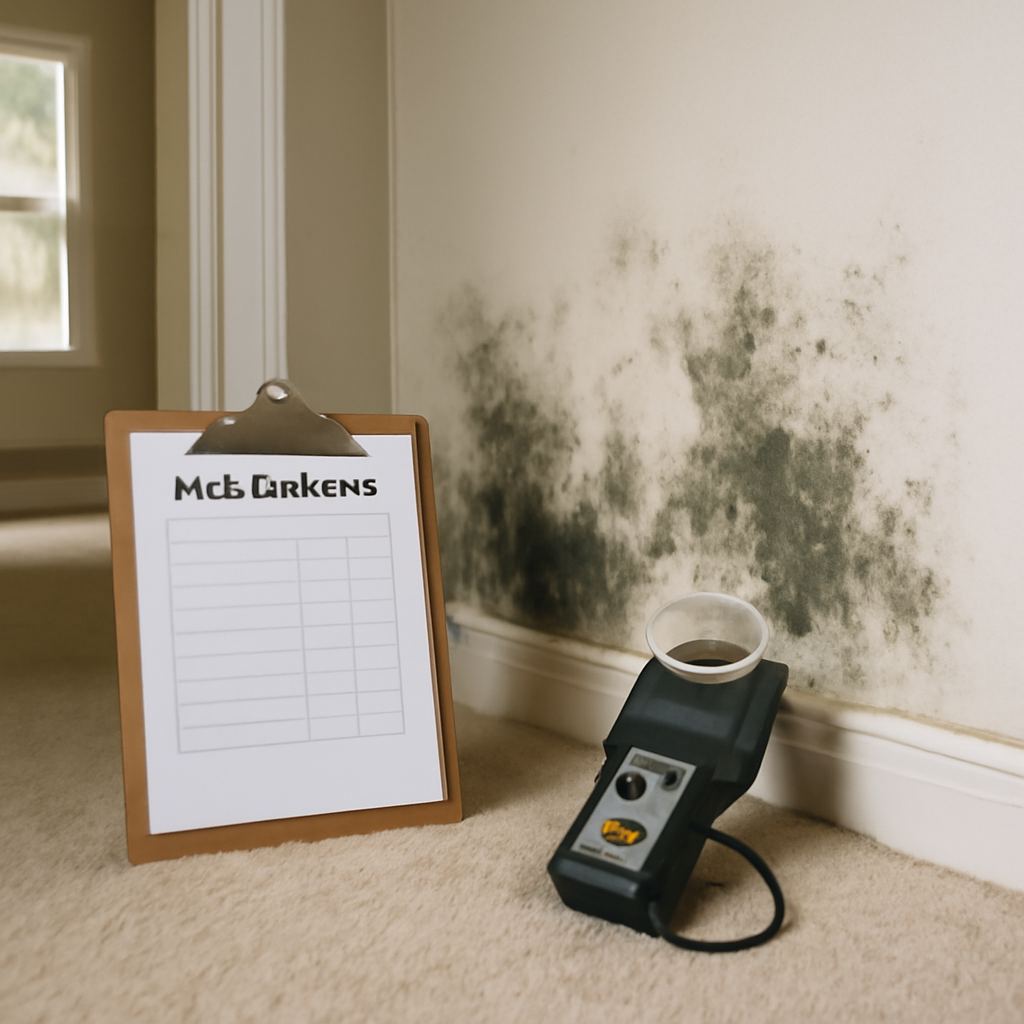
Platteville is a small historic farm town in southern Weld County, set along the South Platte River near the old Fort Vasquez fur-trading post. Its older downtown grid dates to the late 1800s and early 1900s, surrounded by agricultural land, oil-and-gas activity, and newer subdivision edges, with many properties on private wells and septic. A mold inspection finds the moisture source and the visible or hidden growth it feeds. This page explains how mold inspection platteville homeowners should plan, why the local setting matters, and what an inspection covers. This summary reflects EPA and CDPHE guidance current as of 2026; consult a certified professional for decisions about your home.
Part of our Mold Testing & Inspection guide — start there for the full picture →
Is this mold, asbestos, or water damage? Get a free instant screen
Upload a clear photo of the suspect area. You'll get an instant AI screening opinion and what to do next. This is screening guidance, not a professional determination.
Screening guidance only. AI can be wrong. Confirm asbestos, mold type, or lead with lab testing or a licensed professional before acting.
Mold inspection in Platteville: what to know
A mold inspection is a visual and moisture-based assessment of a home. The inspector looks for active growth, water staining, and the conditions that allow mold to colonize, then traces those conditions back to a source such as a leaking roof, a plumbing failure, or chronic basement humidity. Mold is a symptom of a moisture problem, so a thorough inspection targets the water intrusion rather than just the visible patch.
Platteville’s setting makes moisture a genuine concern despite Colorado’s dry air. The town sits in the South Platte River valley, where a high water table and surrounding irrigated farmland keep groundwater near the surface, a direct driver of basement and crawl-space dampness. An older downtown home with a century of patched repairs and a newer subdivision house on the edge of town both face this groundwater pressure, just through different building assemblies. For the science behind testing and remediation, our plain-language mold inspection and testing hub walks through the full picture.
Timing matters here. Irrigation season and South Platte high flows raise the water table further, and a basement that stays dry in winter can take on moisture once nearby fields are watered. An inspection looks at current conditions and seasonal patterns rather than assuming a home that was dry last December will stay dry through the irrigation months.
Why Platteville homes need mold inspection
The local drivers are specific and strong. The South Platte River valley gives Platteville a naturally high water table, and the extensive irrigation of surrounding Weld County farmland keeps shallow groundwater elevated through the growing season. That groundwater pushes moisture into basements and crawl spaces, where it feeds mold on framing, drywall, and stored belongings. Homes on lower-lying lots or near irrigation ditches face the strongest pressure.
Platteville’s housing and climate add to it. Many older downtown homes have minimal vapor barriers and shallow or stone foundations that readily wick groundwater, while evaporative coolers, common in this hot, dry plains climate, add humidity to indoor air during summer that can feed growth if a home is not well ventilated. Freeze-thaw cycles crack foundations and admit meltwater, and the heavy clay-and-alluvial soils of the river valley hold water against foundations after storms.
Private wells and septic on rural Platteville properties create another moisture pathway. A slow well-line leak or a saturated septic field can feed persistent dampness that a homeowner never traces to its source. The CDC links damp indoor environments to respiratory symptoms, so finding and drying these spaces protects both the structure and the people in it. A mold inspection in Platteville connects the home’s age, its water table, and the growth an inspector can see or smell into a clear cause-and-fix picture.
What a Platteville mold inspection covers
A thorough inspection moves through the home systematically, prioritizing the basements, crawl spaces, and lower levels where Platteville’s high-water-table moisture concentrates.
Visual assessment and moisture mapping
The inspector documents visible growth, staining, and warped or soft materials, then uses a moisture meter to find elevated readings behind walls and under floors that the eye cannot see. In a Platteville basement, a meter can reveal drywall wicking groundwater moisture long before mold becomes visible on the surface, which is common where the water table sits close to the slab.
Source identification
Finding mold matters less than finding the water feeding it. The inspector traces staining back to its origin: groundwater intrusion through a basement wall, a failed roof valley, condensation on cold ductwork, an evaporative cooler adding summer humidity, or grading that slopes toward the foundation. On rural Platteville acreage, the source might be a well pressure tank weeping into a utility room or a septic field saturating soil near the foundation. If sampling is warranted, the inspector may collect air or surface samples, though the EPA emphasizes that visible mold generally does not require testing to justify cleanup.
Mold inspection cost in Platteville
A professional visual mold inspection in the Platteville and Weld County market typically runs about $300 to $500 for a standard single-family home. Adding laboratory air or surface samples raises the total, often by $100 to $200 per sample analyzed, depending on how many locations the inspector tests.
Larger rural homes on acreage, properties with extensive crawl spaces, or homes with multiple suspected moisture sources sit at the higher end because they take longer to assess thoroughly. A finished basement with groundwater-prone walls or a sprawling farm-property floor plan adds square footage and access challenges that affect the price.
Weigh that against the alternative. Undetected groundwater moisture quietly degrades framing, subfloors, and finishes, and the cost of repairing rotted structure plus remediating established mold far exceeds the price of an early inspection. The EPA recommends prompt cleanup of any indoor mold, and catching a problem while it is small keeps both the health risk and the repair bill manageable. For a Platteville buyer, an inspection before closing can surface a hidden basement moisture issue that becomes a negotiation point rather than a post-purchase surprise.
Platteville regulations and disclosure
Colorado requires sellers to disclose known material defects, and the Seller’s Property Disclosure form asks about water damage, prior mold, and moisture problems. A seller who knows of recurring basement seepage or past remediation is expected to report it, which makes a buyer’s independent inspection the practical safeguard against an incomplete disclosure. Colorado does not license home inspectors or mold assessors, so credentials and protocol carry the weight a state license might elsewhere.
Platteville is an incorporated town in Weld County, so building and remediation permits for repairs that follow an inspection run through the town and county as applicable. For health questions tied to suspected mold exposure, CDPHE provides guidance for Colorado residents and points homeowners toward source control and moisture reduction rather than relying on testing alone. A Platteville buyer who treats disclosure as a starting point and an inspection as verification protects themselves regardless of what the seller knew or reported.
Neighborhoods and areas served
Mold inspection serves all of Platteville’s housing: the older homes of downtown Platteville and the original town grid, the newer subdivision edges, and the rural acreage on wells and septic across the surrounding farmland. Coverage typically extends to adjacent Fort Lupton, Gilcrest, La Salle, Mead, and Hudson, which share the South Platte valley’s high water table and irrigation-driven moisture.
For a deeper regional context, our Weld County mold inspection hub covers the broader moisture picture across the county, and neighboring mold inspection in Fort Lupton shares Platteville’s South Platte valley conditions just downstream.
How to choose a Platteville mold inspection provider
Ask whether the provider performs a full moisture assessment with calibrated meters, not just a visual walk-through, and whether they trace growth back to its water source rather than simply noting where mold appears. In Platteville, that source is frequently groundwater from the high water table, so an inspector who understands valley-floor moisture dynamics will diagnose it correctly.
For a rural Platteville property, confirm the inspector is comfortable assessing crawl spaces, well-equipment rooms, and septic-adjacent areas, since these are common moisture sources a tract-focused inspector may overlook. Pairing a mold inspection with mold testing in Platteville gives you both the visual assessment and lab confirmation when a sensitive occupant or a real-estate negotiation makes documented results worthwhile. Straight guidance about whether testing is even necessary is the mark of a provider worth hiring.
Common Platteville moisture trouble spots
An inspector working a Platteville home heads first to the spaces where the South Platte valley’s high water table concentrates moisture. The basement is the prime concern, since it sits closest to the shallow groundwater that rises with irrigation season and high river flows. Foundation walls are checked for efflorescence, the chalky mineral residue water leaves as it passes through concrete, along with damp baseboards, rusting fasteners, and the musty smell of an active source. In an older downtown Platteville home with a shallow or stone foundation, water wicks through more readily than it would through a modern poured wall, so these signs appear sooner and an inspector weighs them carefully.
Crawl spaces demand equal attention on Platteville’s many rural and older properties. A vented crawl space over damp valley soil can stay humid for months, feeding mold on the underside of the subfloor and on floor joists where no one looks. The inspector checks the vapor barrier, the soil moisture, and any standing water, since a saturated crawl space quietly affects the air in the rooms above. Bathrooms and kitchens round out the interior priorities, where daily water use and slow fixture leaks create localized growth that a moisture meter can find behind tile and under cabinets.
Mechanical and exterior areas finish the survey. The utility room housing the furnace, water heater, and, on a well property, the pressure tank, can hide a slow weep that keeps the space damp. Evaporative coolers, common in Platteville’s hot, dry summers, add indoor humidity that can feed growth if a home is poorly ventilated, so the inspector considers whether summer cooling is contributing to a moisture load. Outside, grading and gutters that direct water toward the foundation worsen the high-water-table problem, and correcting that slope is often the single most effective fix. Pinpointing which trouble spots are active turns the inspection into a clear plan rather than a list of worries.
What happens after a Platteville mold inspection
A worthwhile inspection ends with a path forward. If the inspector finds an active source feeding visible growth, the first move is correcting the water problem, improving drainage and grading to keep the high water table at bay, sealing or managing a damp crawl space, repairing a leak, or addressing a well or septic issue on a rural property. The EPA is consistent that moisture control is the foundation of any mold solution; cleaning visible growth without fixing the source only delays its return, which is a real risk in a town where groundwater pressure is seasonal and persistent.
For small areas of growth, the EPA notes homeowners can often clean hard surfaces themselves with appropriate precautions, while larger affected areas, generally beyond about ten square feet, or growth tied to contaminated water, warrant professional remediation. A Platteville inspector helps you judge which situation you face and what cleanup scope is reasonable. After remediation, a follow-up check or clearance testing confirms the work held and the moisture source stays controlled, which matters most for a household with a sensitive occupant or for a property changing hands, where documentation reassures a buyer that a known basement-moisture issue was properly resolved.
References
- Mold cleanup and moisture control — U.S. Environmental Protection Agency
- Mold and your health — Centers for Disease Control and Prevention
- Mold guidance for Colorado residents — Colorado Department of Public Health and Environment
Frequently asked questions
Why does a dry plains town like Platteville have mold problems?
Platteville sits in the South Platte River valley with a naturally high water table, and surrounding irrigated farmland keeps groundwater elevated. That groundwater pushes moisture into basements and crawl spaces despite the dry outdoor air.
How much does a mold inspection cost in Platteville?
A professional visual inspection typically runs $300 to $500 for a standard home, with lab air or surface samples adding roughly $100 to $200 each when sampling is warranted.
Do I need mold testing or just an inspection?
The EPA notes visible mold generally does not require testing to justify cleanup. Testing helps when a source is hidden, an occupant is sensitive, or a real-estate negotiation calls for documented results.
What causes mold in Platteville homes specifically?
Common drivers include the South Platte high water table and irrigation, groundwater wicking through older shallow foundations, evaporative-cooler humidity in summer, and well or septic moisture on rural acreage.
Does irrigation season affect basement moisture in Platteville?
Yes. Irrigation of surrounding farmland and South Platte high flows raise the water table during the growing season, so a basement dry in winter can take on moisture once nearby fields are watered.
Platteville’s South Platte water table and irrigation-fed groundwater give basement moisture a steady push, so a mold inspection is practical protection rather than an afterthought. To connect with a vetted Weld County inspector before your purchase deadline or your next irrigation season, get in touch through our contact page.