Mold Inspection in Lakewood, CO | InspectandTest
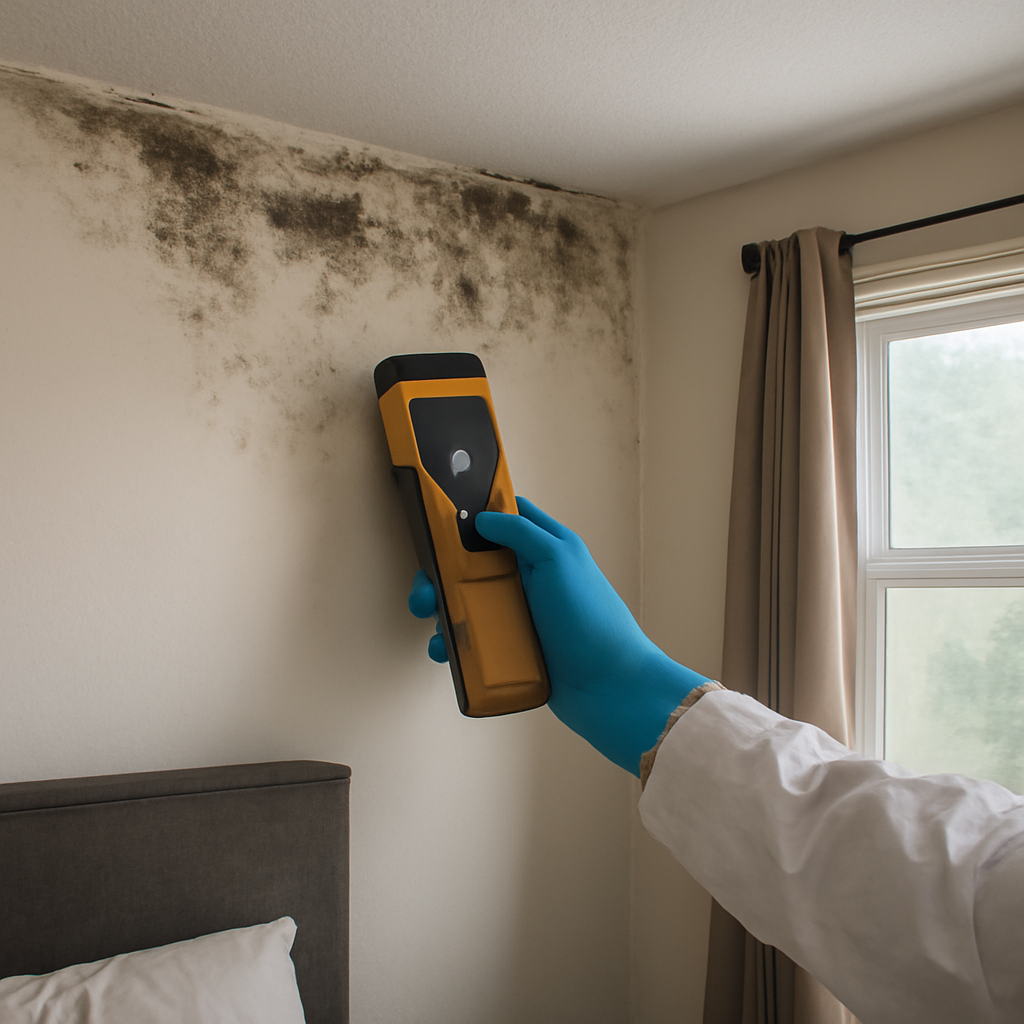
Lakewood sits in Jefferson County, pressed against the foothills just west of Denver, and its housing stock leans heavily toward postwar and mid-century homes. That mix of older construction, basements, and a semi-arid climate that still produces real moisture problems makes mold inspection in Lakewood a practical step for buyers and longtime owners alike. This guide summarizes EPA and CDC guidance current as of 2026 and explains what a local inspection covers, what it costs, and how to choose a qualified professional. Consult your physician for health symptoms and a certified inspector for any testing decisions.
Part of our Mold Testing & Inspection guide — start there for the full picture →
Is this mold, asbestos, or water damage? Get a free instant screen
Upload a clear photo of the suspect area. You'll get an instant AI screening opinion and what to do next. This is screening guidance, not a professional determination.
Screening guidance only. AI can be wrong. Confirm asbestos, mold type, or lead with lab testing or a licensed professional before acting.
Mold inspection in Lakewood: what to know
A mold inspection is a visual and instrument-based assessment of where moisture is entering a building and whether fungal growth has taken hold. In Lakewood, inspectors pay close attention to basements and crawl spaces in the 1950s-to-1970s homes that fill neighborhoods like Green Mountain, Belmar, and Glennon Heights. These houses often have below-grade living space, original drainage, and decades of small leaks that never got addressed.
The CDC and EPA both stress that there is no practical way to eliminate all mold spores indoors; the goal is controlling moisture so colonies cannot establish. An inspector uses moisture meters, sometimes a borescope, and visual checks to find the water source first. A credible Lakewood inspection always identifies why moisture is present, not just where the staining shows.
Lakewood spreads across a wide range of elevations as it climbs from the flats near Sheridan Boulevard toward the foothills, and that elevation change influences how water moves around a home. Properties lower on the slope can receive runoff from uphill lots, while homes built into hillsides near Green Mountain often have one or more walls below grade on the uphill side. These below-grade walls are classic locations for slow seepage, and an experienced inspector reads the lot grading before even entering the basement.
A thorough inspection is also a documentation exercise. The report should include dated photographs, moisture-meter readings expressed as a percentage or relative scale, and a plain-language explanation a buyer or lender can understand. For a real-estate transaction, that paper trail matters as much as the findings themselves, because it lets both sides negotiate from the same facts rather than guesses about a stain on a basement wall.
Why Lakewood homes need mold inspection
Lakewood’s climate is dry on paper, but the local moisture drivers are real. Snowmelt off the foothills, lawn irrigation against foundations, and freeze-thaw cycles that crack older concrete all push water toward basements. Many mid-century Lakewood homes were built before modern foundation waterproofing, so spring runoff from areas near Green Mountain and Bear Creek Lake can saturate soil and seep through walls.
Evaporative (swamp) coolers, still common in older Front Range homes, add another wrinkle. They introduce significant humidity in summer, and when ductwork or pans leak, they create damp pockets in ceilings and attics. For a broader look at how indoor humidity feeds growth, our homeowner’s guide to controlling humidity and stopping mold covers the thresholds that matter. Homes with finished basements added in later decades are especially worth checking, since retrofitted spaces often trap moisture behind drywall.
Seasonal moisture patterns in Lakewood
The Front Range climate is dry for most of the year, but it concentrates moisture into a few predictable windows. Spring brings the heaviest snowmelt off the foothills, and that is when basements that stayed dry all winter suddenly show water at the base of a wall. Late-summer monsoon storms can dump intense rain over a short period, overwhelming gutters and grading that handle normal precipitation fine. Inspectors often recommend scheduling an assessment after a wet stretch, because that is when problems reveal themselves.
Winter introduces a different mechanism. Warm, humid indoor air meets cold exterior surfaces and condenses, which is why mold sometimes appears around poorly insulated windows, in cold corners, and in unconditioned attics even in homes with no plumbing leak at all. A good inspector distinguishes condensation-driven growth from intrusion-driven growth, because the fixes are completely different.
Common problem spots in mid-century homes
In Lakewood’s 1950s-to-1970s housing, certain locations come up again and again. Original single-pane or early double-pane windows sweat in winter. Bathroom exhaust fans that vent into the attic instead of outside dump moist air into insulation. Crawl spaces with bare dirt floors and no vapor barrier wick ground moisture upward year-round. Each of these is a fixable condition, but only if the inspection finds it first.
What a Lakewood mold inspection covers
A standard inspection walks the property from roof to foundation. Inspectors check the attic for roof leaks and condensation, examine bathrooms and kitchens for plumbing seepage, and probe basements and crawl spaces where Lakewood’s groundwater and runoff problems concentrate. Moisture meters read behind baseboards and around windows; thermal imaging can reveal cold, damp areas hidden inside walls.
When visible growth or musty odor is present, the inspector may recommend air or surface sampling sent to an accredited lab. Sampling is optional and should follow a visual finding, not replace it. If you want to understand what your nose is already telling you, our explainer on what mold smells like in walls is a useful primer. The written report should map every moisture source, the suspected cause, and clear next steps.
The order of operations matters. A competent inspector starts outside, checking grading, downspout discharge, window wells, and the slope of patios and driveways, because most basement moisture in Lakewood originates with how water is handled at the surface. Only after understanding the exterior does the inspector move inside to read the symptoms. This outside-in approach prevents the common mistake of treating a stain while leaving the cause untouched, which guarantees the problem returns.
Attic inspection deserves its own mention. In Lakewood homes with original or upgraded swamp coolers, the attic can hold trapped humidity, and roof penetrations around vents and the cooler unit are frequent leak points. The inspector checks for stained sheathing, rusted nail tips that indicate chronic condensation, and matted or discolored insulation. These signs often point to ventilation problems that a homeowner would never notice from the living space below.
Mold inspection cost in Lakewood
A visual mold inspection in the Lakewood and west-Denver area typically runs from about $200 to $450, depending on home size and crawl-space access. Adding laboratory air or surface samples generally raises the total to roughly $450 to $700, since each sample carries a lab fee. Larger homes near Green Mountain with multiple levels or finished basements sit at the higher end.
Be cautious of “free” mold inspections offered by remediation companies, since they have an incentive to find work. An independent inspection separates assessment from the company that would do the cleanup. For context on no-cost options and their limits, see our overview of free mold testing near you. Spending a few hundred dollars on an unbiased assessment before a six-figure purchase is reasonable risk management.
It helps to understand what drives the price. Crawl-space access is the biggest variable: a tight, low crawl space takes longer to inspect safely than a full standing basement, and some inspectors charge accordingly. The number of lab samples is the second variable, since each sample carries its own analysis fee. A home with a single visible problem area costs less to evaluate than one with multiple suspect rooms scattered across two finished levels.
Weigh the inspection cost against the alternative. Undiagnosed moisture in a Lakewood basement can rot framing, ruin finished walls, and create an indoor-air problem that affects the whole house. Catching the source early, while it is still a small repair, is far cheaper than addressing structural damage and a large remediation job later. For most buyers, the inspection fee is a rounding error next to the purchase price.
Lakewood regulations and disclosure
Colorado does not license home inspectors, so credentials matter more here than in licensed states. The state uses a Seller’s Property Disclosure form in residential transactions, and sellers must disclose known material defects, which can include past water damage and mold. Buyers should read the disclosure carefully and treat any history of basement flooding or roof leaks as a reason to inspect.
Mold itself is not separately regulated by a Colorado state mold statute, but related moisture and structural issues fall under standard real-estate disclosure. Jefferson County issues permits for remediation work that involves structural repair or drywall replacement, so significant projects may require county sign-off. The deeper resource on testing and remediation lives on our mold inspection and testing hub for homeowners.
Renters in Lakewood have protections worth knowing. Colorado’s warranty of habitability requires landlords to address conditions that materially affect health, and mold tied to a leak or chronic moisture can fall under that umbrella. A documented inspection gives a tenant the evidence needed to request repairs in writing and to escalate if a landlord does not respond. For buyers, the same documentation supports negotiating a repair credit before closing rather than inheriting the problem.
Neighborhoods and areas served
Lakewood mold inspectors regularly work across Belmar, Green Mountain, Glennon Heights, and the established neighborhoods near Bear Creek Lake. The Belmar redevelopment district mixes newer construction with older surrounding blocks, so inspection needs vary street to street. Service typically extends into adjacent communities including Golden, Wheat Ridge, Morrison, and the western edge of Denver.
Because Jefferson County’s foothill drainage affects so many of these areas, an inspector familiar with local grading and runoff patterns brings real value. Buyers comparing homes across the metro may also want to review mold guidance for nearby cities; our Boulder mold inspection guide covers a county with even higher flood-driven moisture history.
Each Lakewood area carries its own quirks. Green Mountain’s hillside lots create below-grade walls and uphill runoff concerns. Belmar mixes newer townhome construction with older surrounding blocks, so two homes a street apart can have very different moisture profiles. The established neighborhoods near Bear Creek Lake sit closer to a major water feature, where higher groundwater can matter for the lowest homes. An inspector who works the area regularly knows these distinctions and adjusts the assessment accordingly.
How to choose a Lakewood mold inspection provider
Look for certification through InterNACHI or ASHI, plus specific mold or indoor-air-quality training. Ask whether the inspector is independent of any remediation company, what equipment they use, and whether the report includes photographs and moisture readings. A good provider explains the moisture source, not just the visible stain.
Request a sample report before booking. It should be detailed, source-focused, and free of vague language that pushes you toward immediate, expensive remediation. Confirm they carry errors-and-omissions insurance and have local Front Range experience with mid-century Jefferson County housing.
Ask a few pointed questions when you call. Does the inspector check exterior grading and drainage, or only interior surfaces? Will the report distinguish between active moisture and old, dried staining? If sampling is recommended, which accredited lab do they use, and how long until results come back? Providers who answer these clearly tend to deliver the kind of thorough, defensible assessment a Lakewood home deserves, while vague answers are a sign to keep looking.
References
- Mold Cleanup in Your Home — U.S. Environmental Protection Agency
- About Mold and Health — Centers for Disease Control and Prevention
- Indoor Air Quality and Mold Guidance — Colorado Department of Public Health and Environment
- InterNACHI Standards of Practice — International Association of Certified Home Inspectors
Frequently asked questions
Is mold common in Lakewood basements?
Yes. Many Lakewood homes from the 1950s through 1970s have below-grade living space built before modern waterproofing. Snowmelt off the foothills and irrigation against foundations push moisture into these basements, making them the most common location for growth.
Do swamp coolers cause mold in Lakewood homes?
They can. Evaporative coolers add summer humidity, and leaking pans or ducts create damp pockets in ceilings and attics. Inspectors check cooler components and surrounding materials when these units are present.
How much does a mold inspection cost in Lakewood?
A visual inspection generally runs $200 to $450. Adding lab air or surface samples raises the total to roughly $450 to $700, depending on home size and the number of samples collected.
Does Colorado require mold disclosure when selling a home?
Colorado uses a Seller's Property Disclosure form requiring sellers to disclose known material defects, which can include past water damage and mold. Buyers should review this disclosure and inspect any home with a history of leaks or flooding.
If you are buying or own a home in Lakewood, Green Mountain, or anywhere along the Jefferson County foothills and want an unbiased moisture assessment, connect with a vetted local inspector through our contact page.