Mold Inspection in Englewood, CO | InspectandTest
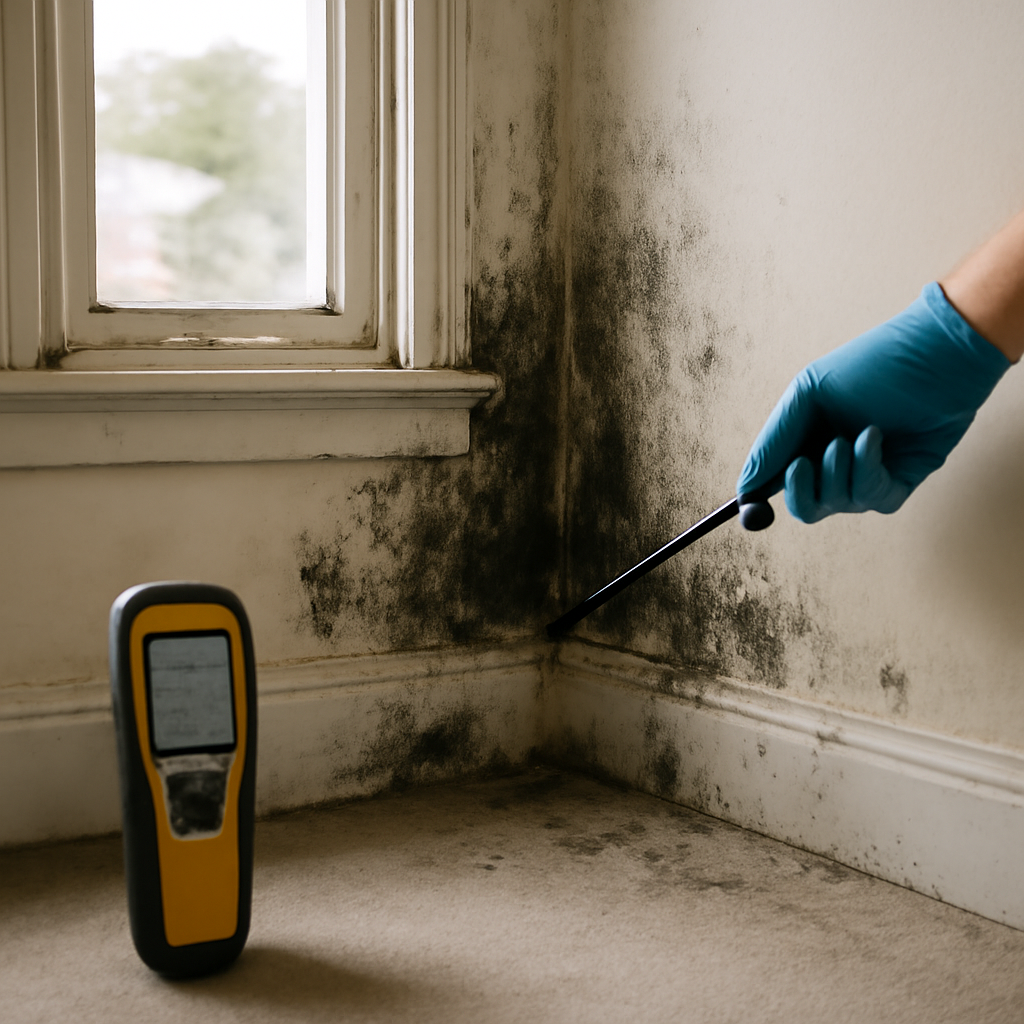
A mold inspection englewood homeowners trust starts with the age and the water nearby. Englewood is an older, fully built-out inner-ring suburb just south of Denver in Arapahoe County, with one of the metro’s oldest housing stocks, dominated by 1940s-to-1960s post-war ranches and bungalows. Those aging homes, paired with the nearby South Platte River corridor and decades-old plumbing and ductwork, give mold plenty of footholds. A mold inspection finds the moisture source and the growth it feeds. This summary reflects EPA and CDC guidance current as of 2026; consult a certified professional for testing decisions and your physician about health symptoms.
Is this mold, asbestos, or water damage? Get a free instant screen
Upload a clear photo of the suspect area. You'll get an instant AI screening opinion and what to do next. This is screening guidance, not a professional determination.
Screening guidance only. AI can be wrong. Confirm asbestos, mold type, or lead with lab testing or a licensed professional before acting.
Mold inspection in Englewood: what to know
A mold inspection is a visual and moisture-based assessment of where mold is growing, why, and how far it has spread. The inspector reads the building, relative humidity, surface moisture, the dew point behind basement walls, and the water-intrusion paths that feed colonies, rather than guessing from a single stain. In Englewood, the inspection focuses on aging building systems and the moisture they let in over decades.
Mold is a living organism that needs a water source, so removing a visible patch without fixing the moisture guarantees it returns. Our guide to mold inspection across Arapahoe County covers the county-wide patterns Englewood shares with neighbors like Littleton and Sheridan, and the plain-language mold inspection hub explains how growth starts and spreads.
Englewood’s housing age shapes the inspection. A 1950s ranch in Old Englewood has original or partially updated plumbing, decades-old ductwork, and an aging sewer line, each a potential moisture source. An inspector here looks hard at the basement, the crawlspace where present, and the points where old systems leak, because that is where Englewood mold typically begins.
Why Englewood homes need mold inspection
Aging infrastructure is the driver. Englewood’s post-war ranches and bungalows are now seventy to eighty years old, and the plumbing, ductwork, and sewer lines that came with them have had decades to corrode, leak, and let moisture into wall cavities and below-grade spaces. A slow supply-line drip or a cracked drain behind a 1950s wall feeds mold long before anyone notices a stain.
The South Platte corridor adds a moisture layer. Englewood sits along the river just south of Denver, and the corridor’s groundwater and drainage can keep basements and crawlspaces damp, especially during spring snowmelt. Combined with Colorado’s sealed winters, when homes trap cooking and bathing humidity for months, that dampness gives mold the conditions it needs on cool basement surfaces and behind drywall.
Mature trees and aging sewer lines compound it. Englewood’s established neighborhoods have large old trees whose roots intrude into aging clay sewer lines, causing backups and below-grade moisture. A finished basement over a compromised line is a classic Englewood mold scenario. The age of the housing, the river corridor, and the aging utilities together make moisture, and therefore mold, a recurring concern across the city.
Renovation history adds a layer of risk in these older homes. Many Englewood ranches and bungalows have been remodeled in stages over the decades, and a basement finished without a proper vapor barrier, or a bathroom added without adequate exhaust, can quietly trap moisture for years. Mismatched repairs, where one owner patched a leak the next never knew about, leave hidden damp pockets behind newer drywall. An inspection in an Englewood home with a long renovation history pays close attention to these transitions, because that is where past moisture often hides.
What an Englewood mold inspection covers
A thorough inspection moves from the obvious to the hidden, using moisture meters, a hygrometer, and often a thermal camera to find dampness the eye misses behind finished surfaces.
The moisture investigation
Because Englewood mold usually traces to aging plumbing, the South Platte corridor, or a sewer issue, the inspector hunts the water before the spores. That means checking the basement and crawlspace, the foundation perimeter, the sump if present, aging supply and drain lines, and the grading and downspouts outside. Naming the water source is what turns an inspection into a fix rather than a confirmation of a stain.
Sampling, when warranted
Visible mold on a basement wall rarely needs lab confirmation. Sampling earns its place when growth is suspected behind walls, when a buyer needs documentation, or when air quality is in question. Air and surface samples go to an accredited lab, and the report compares indoor spore counts to an outdoor baseline so the numbers mean something.
Inspecting aging systems
An Englewood inspection pays particular attention to the home’s seventy-year-old infrastructure. The inspector checks accessible supply and drain lines for corrosion and slow leaks, examines the ductwork for moisture and condensation, and looks for signs of past sewer backups in the lowest level. Original galvanized supply lines and cast-iron drains common in mid-century homes corrode from the inside, and a pinhole leak inside a wall can feed mold for months before it surfaces. Tying these system-specific risks to the moisture readings is what makes an Englewood inspection more than a generic walk-through.
Common mold problems in Englewood homes
A few patterns recur across Englewood’s older housing. The most common is a slow plumbing or drain leak behind a wall or under a floor in a post-war ranch, where decades-old pipes have begun to fail. The water is hidden, the growth spreads inside the cavity, and the first sign is often a musty smell or a buckling floorboard rather than a visible stain.
Sewer-related moisture is a second pattern unique to older neighborhoods. Mature trees, a hallmark of established Englewood streets, send roots into aging clay sewer lines, causing backups and chronic below-grade dampness. A finished basement built over a compromised line can develop mold along the lower walls and flooring, and the cause is easy to miss without checking the sewer condition.
Crawlspaces are the third front. Many Englewood ranches have crawlspaces with minimal vapor barriers and limited ventilation, where ground moisture and the South Platte corridor’s groundwater keep humidity high. Mold grows on joists and subflooring out of sight, and the spores migrate up into the living space. A complete Englewood inspection checks the crawlspace, the sewer condition, and the aging plumbing together, because the city’s mold rarely has just one cause.
Mold inspection cost in Englewood
A professional visual mold inspection in the Englewood market typically runs about $300 to $500 for a standard single-family home, depending on size and basement finish. Adding laboratory air or surface samples usually costs another $100 to $250 per sample including lab fees. A full assessment with multiple samples and a written report can reach $600 to $1,000 for a larger or more complicated home.
Weigh that against what hidden mold costs if missed. A slow leak behind a 1950s Old Englewood wall can rot framing, ruin finishes, and trigger a remediation bill in the thousands. A few hundred dollars spent finding the water source early is far cheaper than tearing out a finished basement twice.
For a home purchase, bundling mold into the broader inspection is efficient. The inspector is already examining the basement and aging systems, so flagging mold risk alongside the structural and mechanical review gives a buyer one coordinated picture of an older Englewood home’s water story before closing.
There is a hidden cost to skipping the moisture investigation: paying twice. A homeowner who cleans a visible basement patch without finding the failing pipe or compromised sewer line behind it watches the mold return, then pays for both the failed cleanup and the eventual proper remediation. In an Englewood home where aging infrastructure is the usual culprit, the inspection that names the water source up front is what breaks that cycle and keeps the total spend down.
Englewood regulations and disclosure
Colorado does not license mold inspectors or remediators, and there is no statewide mold remediation standard, so homeowners and buyers must vet credentials themselves. Colorado’s Seller’s Property Disclosure does ask sellers to report known moisture, water damage, and mold, which makes a documented inspection valuable on both sides of a transaction, especially for Englewood’s older homes with long maintenance histories.
Arapahoe County and Englewood’s building department govern the repairs that follow an inspection, from sewer line replacement to basement waterproofing and finishing. A disclosed history of basement seepage or sewer backups is not unusual in older Englewood homes, and buyers should read those disclosures closely rather than assuming a finished basement is a dry one.
Neighborhoods and areas served
Mold turns up across Englewood wherever aging systems meet living space: the post-war ranches of Old Englewood and Broadway, the bungalows of Northwest Englewood, and the homes of Englewood Knolls. Service typically extends to adjacent Littleton, Sheridan, Cherry Hills Village, and south Denver, all sharing the South Platte corridor and Arapahoe County’s older inner-ring housing patterns.
The common thread is age and moisture, not a single neighborhood. A 1948 ranch and a partially remodeled 1960s home can both grow mold through aging plumbing or a compromised sewer line. That is why mold inspection in Englewood is a whole-house moisture and infrastructure question rather than a checkbox tied to one area.
How to choose an Englewood mold inspection provider
Ask whether the provider investigates the moisture source, not just the visible mold. A good Englewood inspector carries a moisture meter and hygrometer, checks the basement, crawlspace, and aging plumbing, and writes a report that names the water cause and recommends a fix. Beware anyone offering a free inspection who also sells the remediation, since that pairing rewards finding more mold than exists.
Confirm the provider follows recognized guidance such as the EPA’s mold remediation framework and uses an accredited lab if sampling. Because Colorado does not license this work, references, clear written scope, and independence from the remediation sale matter more than any certificate. A straight inspector will tell an Englewood homeowner when a small patch is a simple cleanup rather than a remediation project.
Experience with older homes is the differentiator here. An inspector who regularly works Englewood’s post-war housing knows to check the sewer condition, the crawlspace vapor barrier, and the aging supply lines, not just the visible basement walls. That familiarity with seventy-year-old infrastructure is what separates a useful Englewood inspection from a generic one. Ask whether the provider has worked the city’s older neighborhoods and how they approach a home where the building’s own aging systems, rather than the weather, are the likely moisture source.
References
- Mold cleanup and remediation guidance — U.S. Environmental Protection Agency
- Mold and your health — Centers for Disease Control and Prevention
- Colorado indoor air quality and mold — Colorado Department of Public Health and Environment
An older Englewood home with aging plumbing and a finished basement deserves a real moisture investigation, not a guess. To connect with a vetted local mold inspector before you buy, get in touch through our contact page.